
AIによるインサイトを行動へとつなげる

現在のトレンド
Categories
Sophia Space Secures $300 Million Lease to Finance First Orbital Computing Constellation
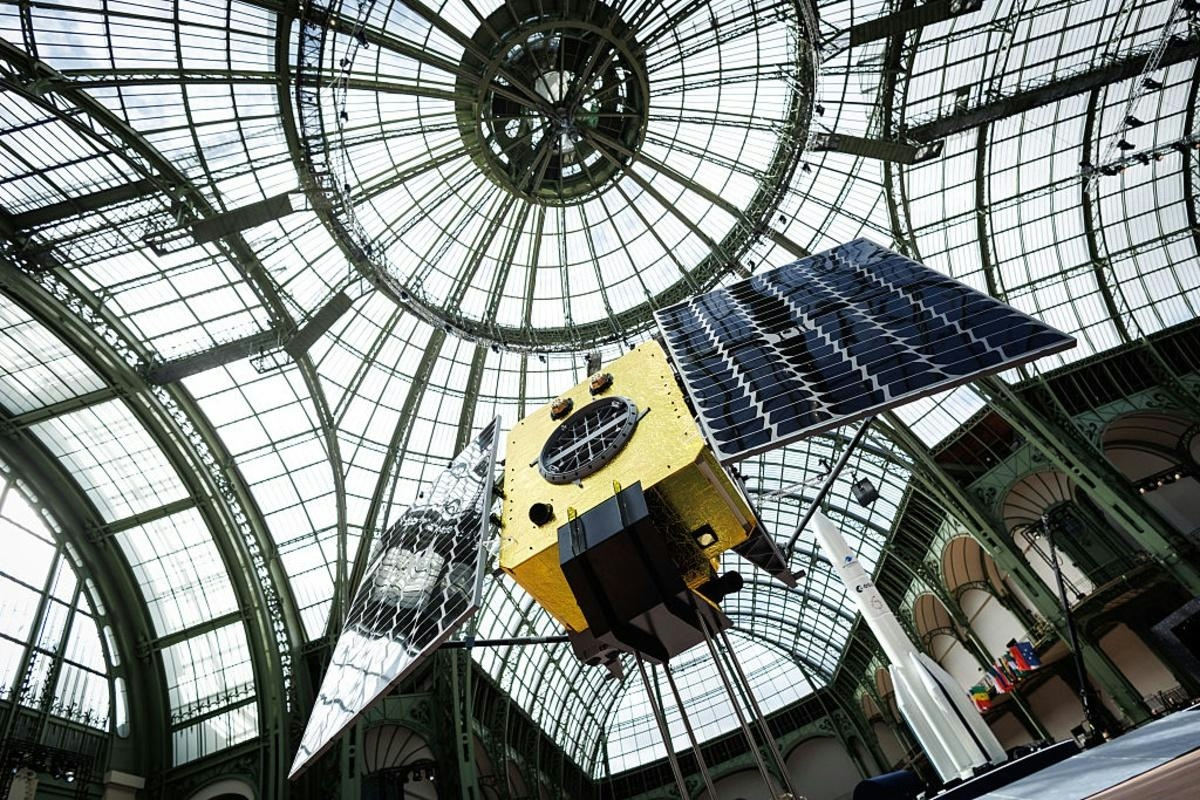
Sophia Space Secures $300 Million Lease to Finance First Orbital Computing Constellation
Sophia Space, a Pasadena-based startup, has announced a landmark $300 million asset-financing agreement with aerospace leasing specialist SLI. This non-binding letter of support outlines a framework in which SLI would purchase satellites from Sophia Space, retain ownership, and lease them to end users through fixed monthly or quarterly payments over the satellites’ operational lifespans. If finalized, this deal would represent the first application of the aviation industry’s sale-and-leaseback model to a satellite constellation designed primarily for orbital computing rather than traditional communications bandwidth.
Adapting Aviation Finance to Space Assets
The sale-and-leaseback model has long been a cornerstone of commercial aviation finance, enabling airlines to operate extensive fleets without incurring massive upfront capital expenditures. Currently, approximately half of the world’s commercial aircraft are leased, a structure that has allowed carriers to expand rapidly even during economic downturns. Founded in 2023 by the Libra Group, SLI has been pioneering the adaptation of this financing approach to space assets. Its previous agreements include leasing a ground station in Sweden back to RBC Signals, a $200 million deal for two Ka-band geostationary satellites, and a €150 million contract with Finnish satellite manufacturer ReOrbit.
What distinguishes the Sophia Space agreement is its focus on an orbital computing constellation. Unlike SLI’s prior transactions, which centered on communications payloads, this framework targets customers who will pay for artificial intelligence inference and data-processing cycles conducted in orbit, rather than for communications bandwidth. Rob DeMillo, CEO and co-founder of Sophia Space, emphasized the transformative potential of this approach, stating, “Asset financing didn’t invent aviation or shipping, but it accelerated them at scale. We’re doing the same for orbital computing.” SLI CEO Praveen Vetrivel added that the framework addresses a critical gap in the industry: “Sophia has the technology, the team, and the vision. What had been missing was access to scalable, non-dilutive capital. This framework provides it.”
Engineering Innovation Underpinning the Financing Model
The feasibility of this financing structure is underpinned by a recent engineering breakthrough. On July 14, 2026, Sophia Space and Caltech were awarded a U.S. patent (No. 12,679,564) for a passive thermal management system designed specifically for orbital compute modules. This innovation eliminates the need for active cooling mechanisms such as heat pumps or fluid loops by relying solely on thermal radiation to dissipate heat—a fundamental challenge for high-density computing in the vacuum of space.
AMD CTO Mark Papermaster underscored the difficulty of thermal management in space in an April 2026 blog post, noting, “In space, there’s no air to carry heat away, so thermal management becomes a first-principles problem.” The patented passive system directly addresses this challenge, enabling the practical deployment of large-scale orbital computing infrastructure.
Market and Industry Challenges Ahead
Despite this significant financing and technological progress, Sophia Space faces considerable challenges. Securing launch capacity is becoming increasingly difficult, particularly as SpaceX’s Falcon 9 program is scheduled to conclude in 2028, which is expected to tighten available launch options and potentially increase costs. The high expenses associated with launching and operating data centers in orbit remain a substantial barrier to entry.
Market responses to Sophia Space’s announcement have been mixed. While some investors express enthusiasm about the potential of orbital computing, others remain cautious given the nascent stage of the industry. Competition is intensifying, with companies such as Starcloud raising substantial funding to develop their own orbital data centers.
As Sophia Space advances, its ability to overcome these technical, financial, and market challenges will be crucial to realizing the promise of orbital computing.

Precision and Care Essential in Aerospace Coating Applications
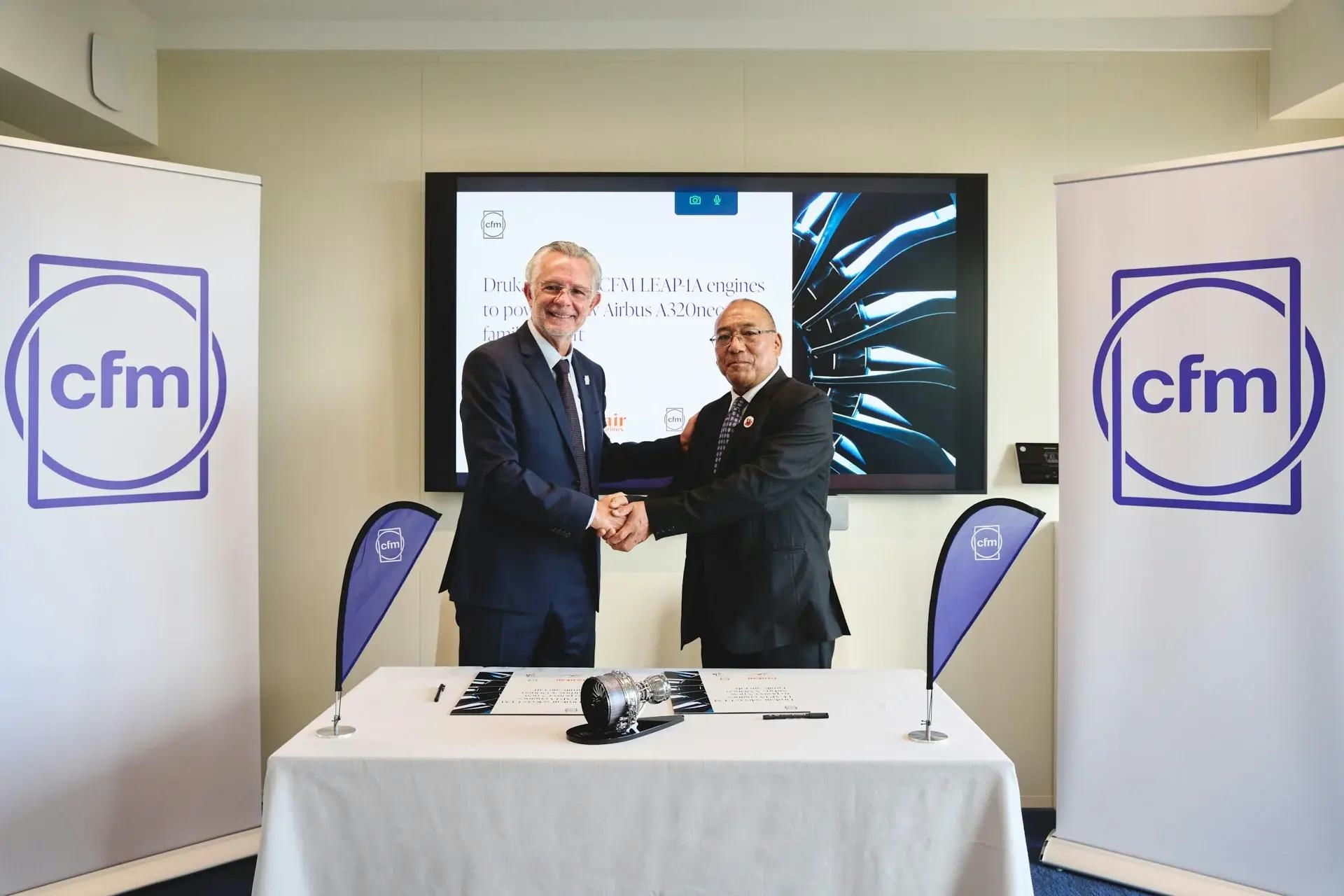
Drukair Chooses LEAP Engines for Five Airbus Aircraft

Russia Tests Air Taxis with Passenger Flights Possible in 2-3 Years
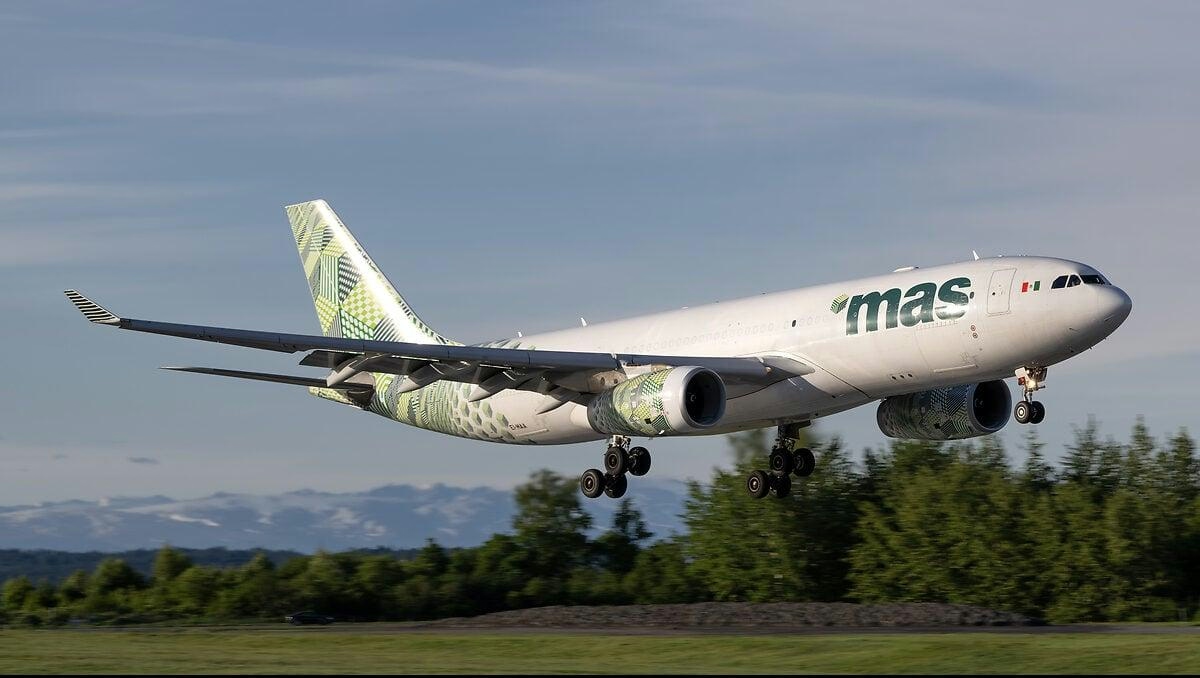
EPCOR and MAS Sign Five-Year A330 APU Support Agreement
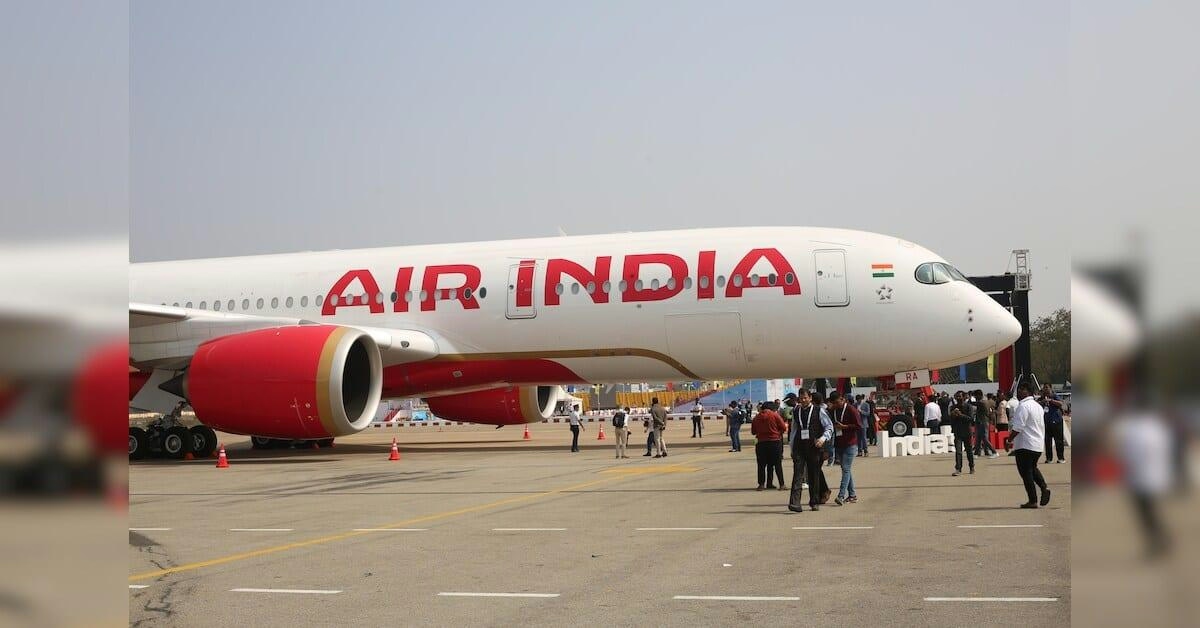
Air India Expands Use of Salesforce AI to Enhance Customer Service
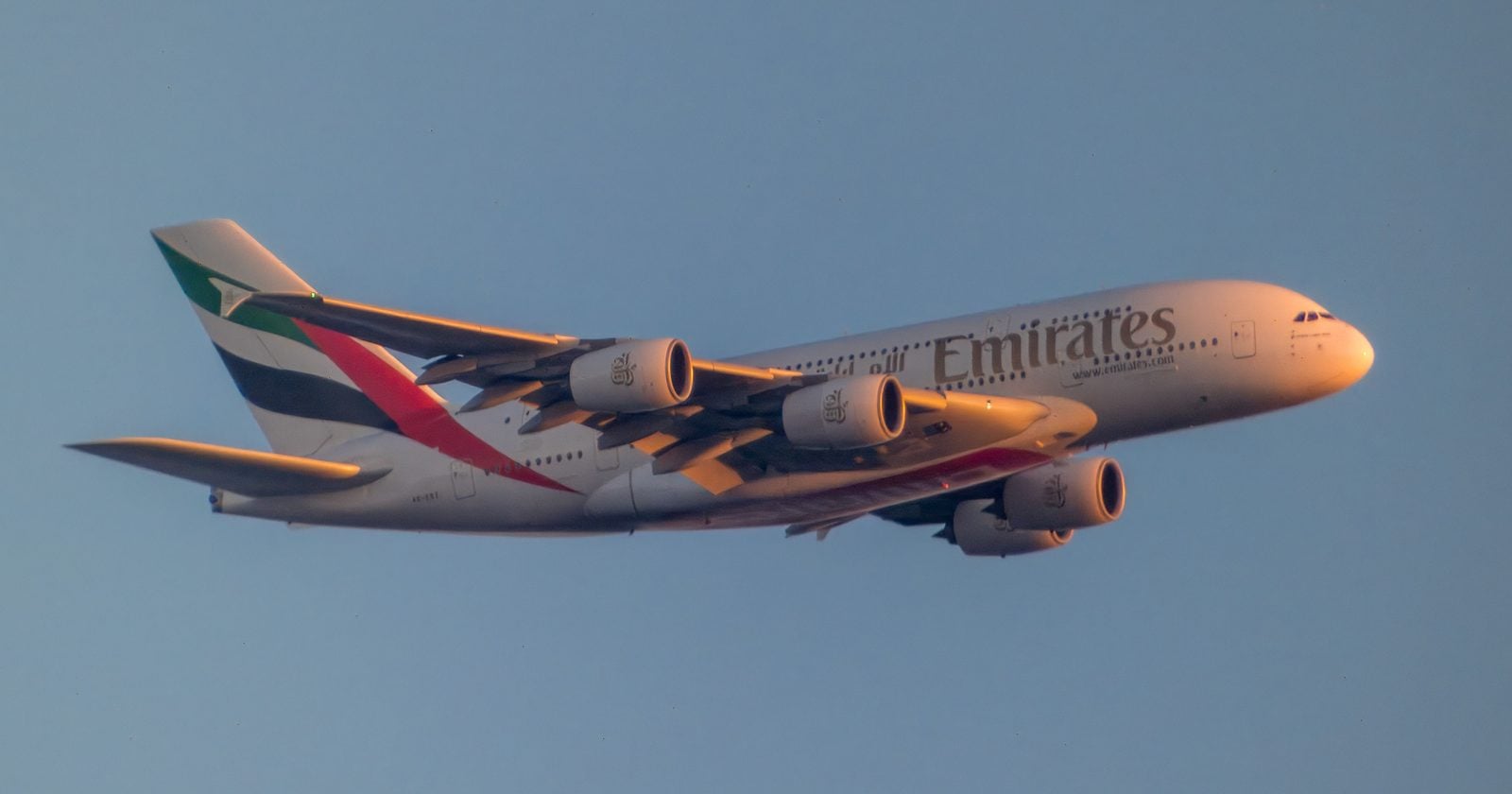
European Regulators Order Urgent Inspections After Cracks Found in Airbus A380 Wing Spars

GCAA Strengthens Drone Regulations Amid Growing Unmanned Aviation
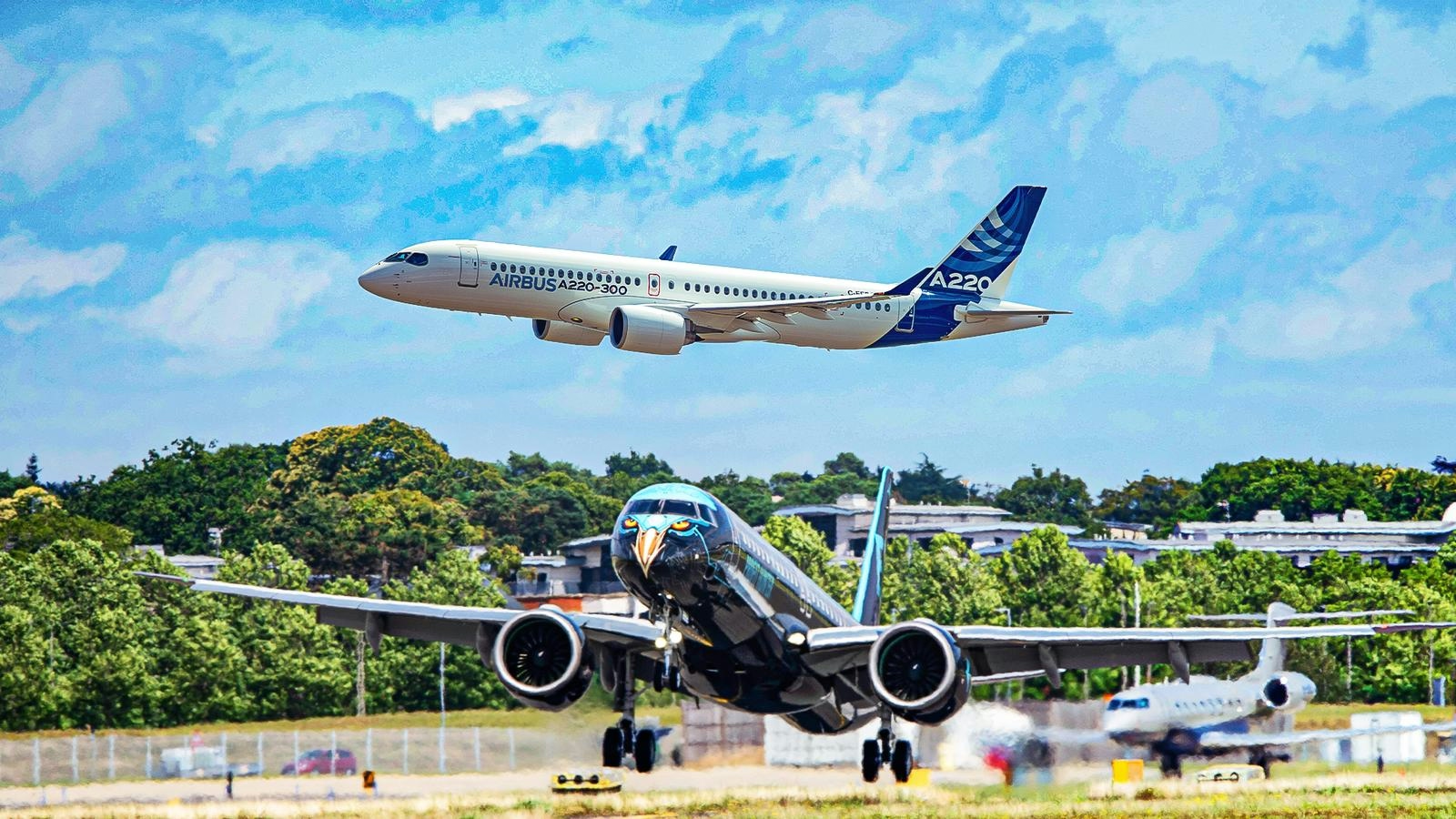
Embraer Delivers 2,000th E-Jet as Airbus A220 Seeks Market Share
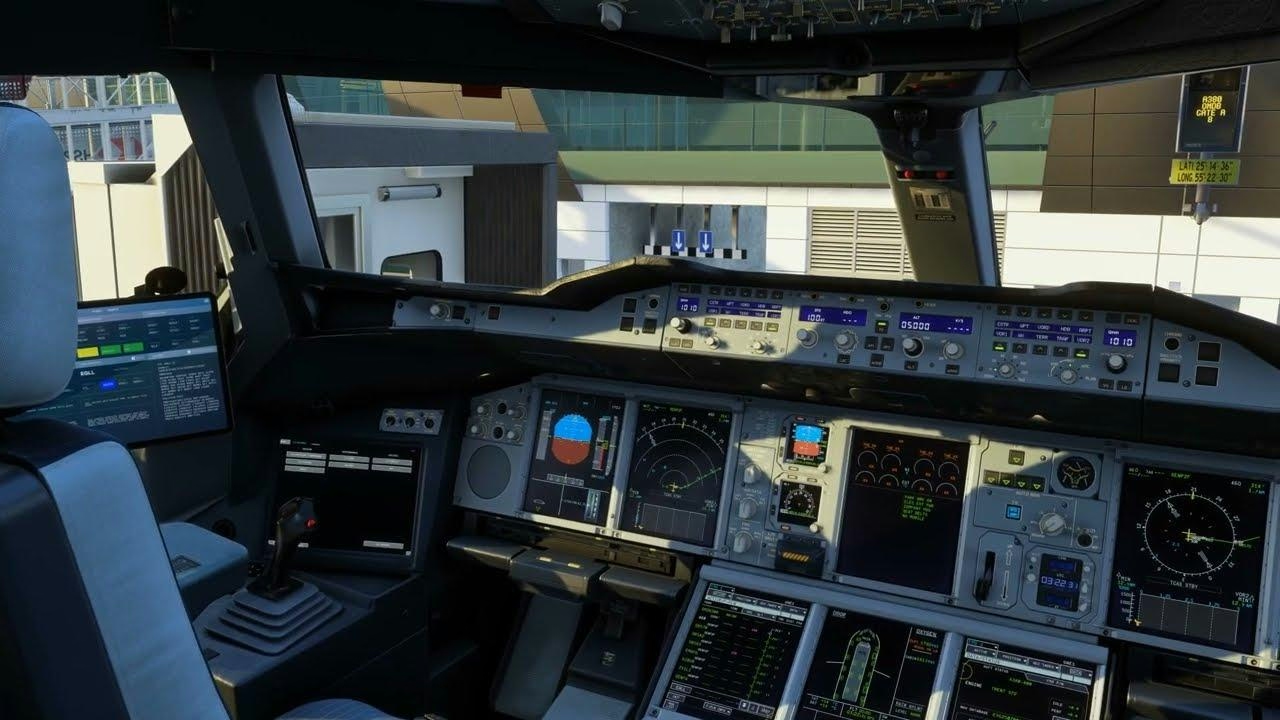
iniBuilds Releases Second In-Depth A380 Video
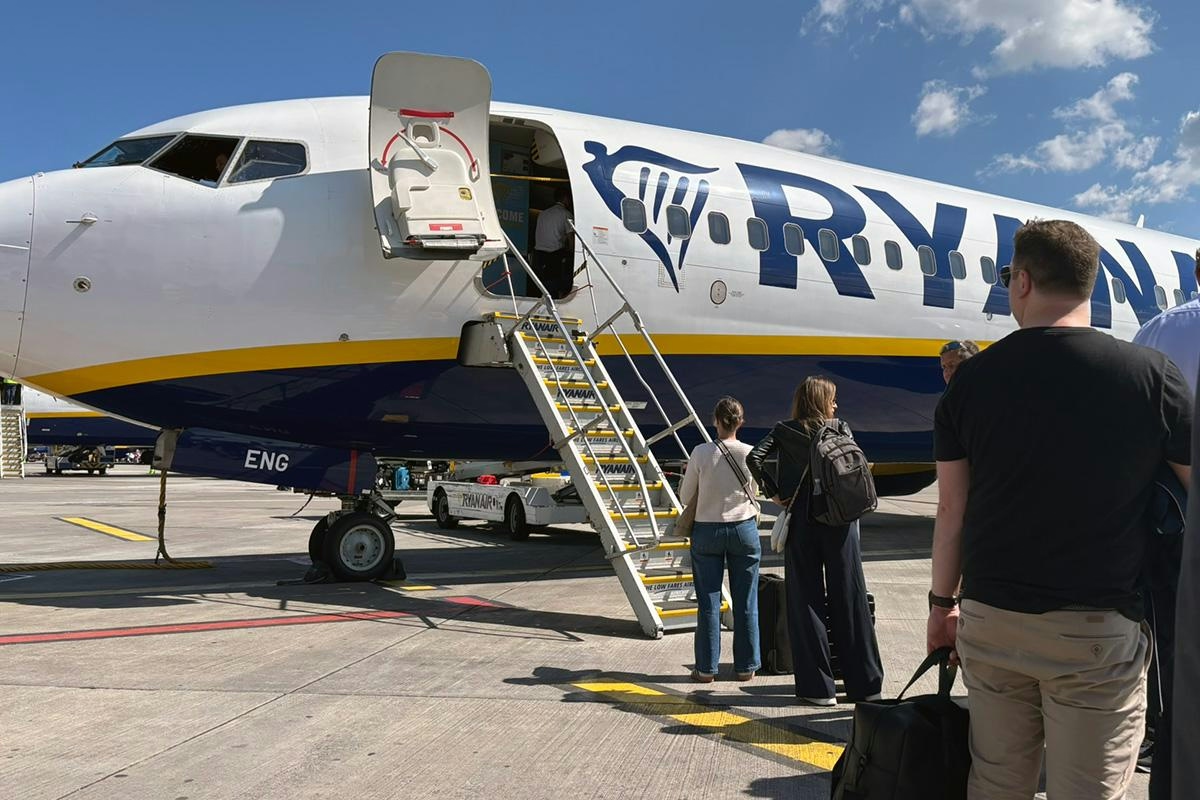
Ryanair and Alaska Airlines Apply AI to Operational Decision-Making
