
画像

AIによるインサイトを行動へとつなげる

今すぐAeroGenieのウェイティングリストに登録しよう!

現在のトレンド

Categories

Southwest Airlines Takes a Firm Stance on Humanoid Robots Amid AI Advances in Aviation
May 17, 2026By ePlane AI
Southwest Airlines Takes a Firm Stance on Humanoid Robots Amid AI Advances in Aviation
0
0
Southwest Airlines
Humanoid Robots
AI Regulation

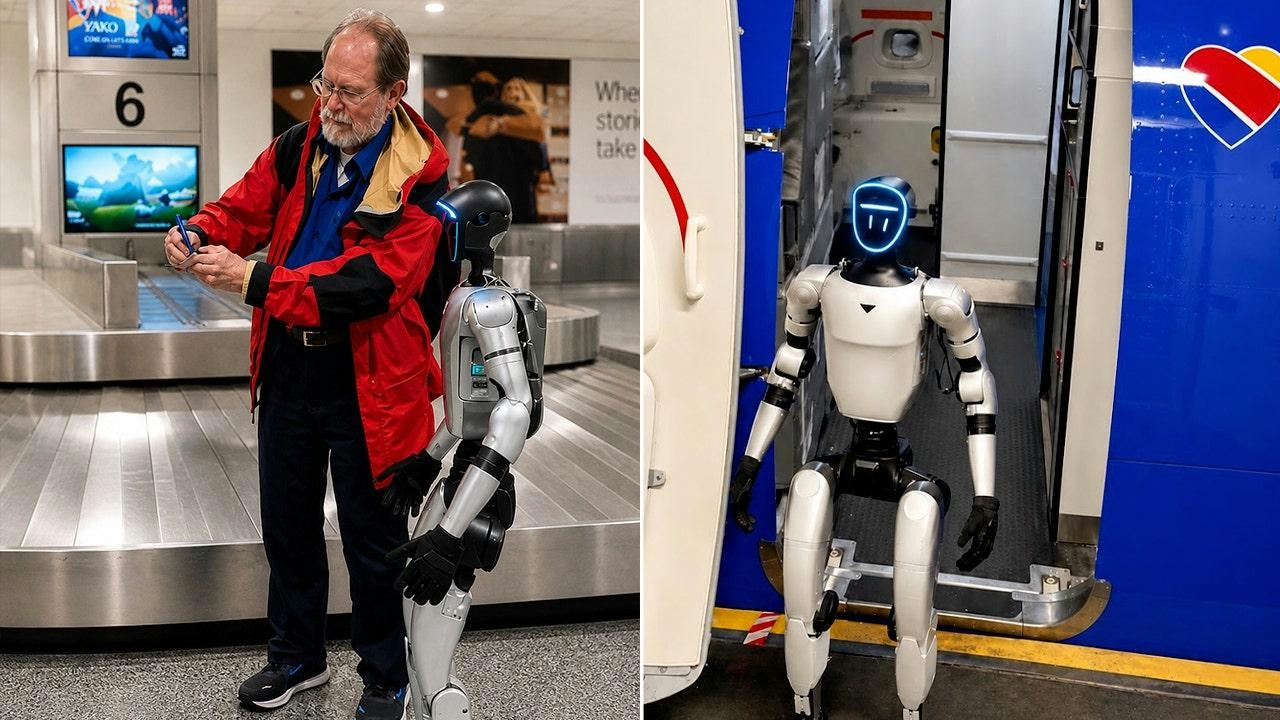
Southwest Airlines Bans Humanoid Robots Amid Growing AI Integration in Aviation

Southwest Airlines has taken a definitive stance on the presence of humanoid robots in air travel, instituting a formal ban on such devices aboard all its flights. The Dallas-based carrier’s updated policy prohibits humanoid and animal-like robots from both passenger cabins and cargo holds, regardless of their size or purpose. This move reflects growing concerns as advanced robotics transition from experimental settings into everyday environments, including commercial aviation.

Incident Sparks Policy Change

The airline’s decision follows a recent incident that brought the issue to national attention. A Dallas robotics entrepreneur purchased a ticket for a human-like robot named “Stewie,” allowing the machine to travel as a passenger on a Southwest flight from Las Vegas to Dallas. Images and videos of Stewie seated among travelers quickly circulated online, igniting debate over the regulatory status of such robots. Flight crews reportedly faced challenges in categorizing the robot—whether as cargo, electronic equipment, hazardous material, or a passenger—highlighting a regulatory ambiguity that Southwest’s new policy now seeks to eliminate.

Safety Concerns and Regulatory Clarity

Southwest’s updated guidelines explicitly ban any robot designed to mimic human or animal appearance, movement, or behavior from being transported on its aircraft, whether as checked baggage, cargo, or in the cabin. The airline cites significant safety concerns, particularly regarding the lithium-ion batteries that power these robots’ motors, sensors, cameras, and AI processors. These batteries pose a well-documented fire risk if they malfunction. Unlike conventional electronic devices, humanoid robots often contain concealed battery systems and intricate mechanical components, complicating safety inspections during boarding and screening procedures.

This policy represents one of the first comprehensive bans on humanoid robots by a major U.S. airline. Industry analysts suggest that Southwest’s firm position may prompt other carriers to clarify their own policies as robotics technology becomes increasingly accessible and visible in public spaces.

Divergent Industry Approaches to Robotics

Despite Southwest’s restrictive approach, the aviation industry remains divided on the integration of robotics. While Southwest opts for caution, other airlines are actively exploring the use of humanoid robots to enhance operational efficiency. For instance, Japan Airlines is testing humanoid robots for ground-handling tasks to address labor shortages, exemplifying a broader trend toward automation within the sector. This divergence underscores a market balancing the potential benefits of robotics against safety and operational challenges.

Broader Implications for AI and Travel

Southwest’s ban reflects a wider societal shift as artificial intelligence and robotics become more prevalent in daily life. Machines capable of speech, facial recognition, and autonomous movement are increasingly common outside research laboratories, compelling airlines and regulators to confront complex questions surrounding safety, liability, and the evolving role of technology in travel. For now, Southwest’s policy signals a clear boundary: the skies remain a domain reserved for human passengers.

More news
Airbus Addresses A350 Cracking Issue Without Grounding Fleet

Airbus Addresses A350 Cracking Issue Without Grounding Fleet

Airbus Addresses A350 Cracking Issue Without Grounding Fleet Technical Challenges and Material Complexities Airbus has recently confronted a significant technical challenge with its A350 widebody aircraft following reports of localized surface cracking and paint degradation. This issue has sparked public debate and legal disputes, focusing attention on the long-term airworthiness of composite commercial aircraft—a relatively novel area in aviation engineering. Unlike traditional aluminum airliners, the A350 extensively employs carbon fiber-reinforced polymer (CFRP) to reduce weight and enhance fuel efficiency on long-haul flights. However, the use of CFRP introduces new complexities, particularly in the interaction between exterior coatings and lightning-protection layers applied to the composite structure. The root cause of the surface cracking lies in the differing thermal expansion properties of these materials. While CFRP remains dimensionally stable across a wide temperature range, the outer paint and expanded copper foil used for lightning protection expand and contract more significantly. When the aircraft transitions rapidly from the heat of a runway to the cold temperatures at cruising altitude, mechanical stress develops at the interface between these layers. This stress results in fine cracks, flakes, and blisters in the paint, especially along fuselage joints. Although these blemishes are visible to passengers and maintenance personnel, non-destructive testing has confirmed that the damage is confined to superficial exterior layers, leaving the underlying carbon-fiber structure intact and structurally sound. Regulatory Response and Airbus’s Mitigation Strategy Despite calls from Qatar Airways for an immediate global grounding of the A350 fleet, aviation regulators including the European Union Aviation Safety Agency (EASA) and the Federal Aviation Administration (FAA) adopted a measured, data-driven approach. Comprehensive technical assessments concluded that the paint degradation did not compromise the aircraft’s structural integrity or flight safety. Rather than grounding the entire fleet, regulators mandated targeted inspections of the lightning protection mesh on specific early-production aircraft. Airbus responded by implementing material adjustments and localized repairs, enabling the manufacturer to address the issue without the operational and financial disruption associated with a fleet-wide grounding. Nevertheless, the incident has intensified scrutiny from regulators and airline operators, raising broader concerns about the long-term durability and maintenance requirements of composite airframes. Broader Industry Implications and Market Reactions This challenge comes amid additional technical and financial pressures for Airbus, including the need for further inspections and repairs on A380 wing spars, which could result in substantial costs and operational disruptions. Meanwhile, competitors such as Boeing are leveraging the situation to emphasize the reliability of their own wide-body aircraft, potentially influencing airline purchasing decisions. Market responses are already emerging. For instance, Qantas is reportedly considering an order for 20 wide-body jets, evaluating options from both Airbus and Boeing. The outcome of such procurement decisions may signal a shift in airline strategies as operators reassess the structural integrity and long-term maintenance demands of their fleets. While Airbus has managed to contain the A350 surface cracking issue without grounding its fleet, the episode highlights the evolving challenges associated with advanced aircraft materials and the heightened scrutiny manufacturers face from regulators and the global marketplace.
Boeing’s Air Taxi Unit Faces Lawsuit Over Discrimination and Safety Issues

Boeing’s Air Taxi Unit Faces Lawsuit Over Discrimination and Safety Issues

Boeing’s Air Taxi Unit Faces Lawsuit Over Discrimination and Safety Issues Background and Industry Context Founded in 2019, Wisk Aero operates as Boeing’s subsidiary focused on developing electric vertical takeoff and landing (eVTOL) aircraft, with a particular emphasis on achieving full autonomy. The company is among a select group of innovators in the emerging eVTOL sector, which aims to revolutionize urban air mobility. Earlier this year, the Federal Aviation Administration (FAA) recognized Wisk’s leading role by approving it as one of eight companies to participate in a three-year program designed to test autonomous eVTOL aircraft. This endorsement underscores Wisk’s prominence in advancing next-generation aviation technology. Allegations and Legal Challenges Wisk Aero now faces a lawsuit filed by former software manager Briahna O’Neill, who alleges wrongful termination after raising safety concerns regarding the company’s autonomous air taxis. O’Neill claims that engineers at Wisk deliberately reduced the scope of FAA-mandated software testing to meet an aggressive deadline for test flights scheduled in 2025. These allegations have intensified scrutiny over the safety protocols governing eVTOL vehicles, which are widely viewed as a transformative innovation in the future of air transportation. The lawsuit not only calls into question Wisk’s internal safety and management practices but also highlights the fierce competition within the eVTOL industry. Companies in this sector are under significant pressure to accelerate development and be the first to commercialize autonomous air taxis. As the legal proceedings progress, they are expected to reveal critical insights into the challenges and risks associated with rapid technological advancement in this nascent field. Company Response and Industry Implications Wisk Aero has declined to comment publicly on the lawsuit. Despite the legal dispute, the company’s ongoing participation in the FAA’s testing program signals its continued commitment to regulatory compliance and technological innovation. The outcome of this case may have far-reaching consequences for the regulatory standards and oversight mechanisms governing autonomous aviation, particularly as the industry approaches the threshold of commercial deployment.
Air India and SIA Engineering Company Form MRO Partnership

Air India and SIA Engineering Company Form MRO Partnership

Air India and SIA Engineering Company Form MRO Partnership to Strengthen India’s Aviation Sector Air India has signed a Memorandum of Understanding (MoU) with SIA Engineering Company Limited (SIAEC) to explore collaboration in Maintenance, Repair, and Overhaul (MRO) services. This strategic move aims to bolster India’s aviation maintenance capabilities amid the rapid expansion of the country’s aviation industry. Details of the Agreement and Previous Collaborations The MoU was formalized in Mumbai on July 3, 2026, with Air India CEO and Managing Director Campbell Wilson and SIAEC CEO Chin Yau Seng leading the signing ceremony. This agreement builds upon a series of prior collaborations between the two companies. Notably, in February 2024, they entered into a 12-year Inventory Technical Management (ITM) agreement to support component maintenance for Air India’s Airbus A320 fleet. Additionally, in May 2024, SIAEC was appointed as Air India’s strategic partner for developing base maintenance facilities in Bengaluru. The current partnership seeks to leverage SIAEC’s technical expertise alongside Air India’s expanding operations to establish a robust MRO infrastructure within India. Discussions also include the potential formation of a joint venture aimed at addressing the growing maintenance demands of both the Indian and regional aviation markets. Competitive Landscape and Market Implications Despite the promising prospects, the partnership faces challenges within a competitive Indian MRO environment. Established joint ventures, such as the alliance between SIA Engineering and Safran for CFM Leap engine maintenance, already hold significant market presence. These competitors may respond to the new collaboration by intensifying efforts to secure exclusive contracts or by capitalizing on their existing strengths to retain clients. Market reactions to the Air India-SIAEC partnership are expected to be mixed, with some stakeholders viewing it as a strategic enhancement of domestic maintenance capabilities, while others express concerns about its potential impact on incumbent MRO providers. Leadership Perspectives on the Partnership Campbell Wilson emphasized the critical need to develop stronger domestic maintenance infrastructure to support India’s growing fleet and aviation operations. He stated, “Partnerships like this can help develop a more resilient MRO ecosystem and support India’s ambitions to become a global aviation hub.” Echoing this sentiment, Chin Yau Seng highlighted India’s importance as a key aviation market and the value of advancing its MRO capabilities. “Strengthening India’s MRO sector will help enhance its position within the global aerospace industry. We look forward to exploring opportunities to support the development of technical expertise and maintenance capacity in India through this collaboration,” he remarked. Future Outlook The MoU remains non-binding, with both Air India and SIAEC committed to ongoing discussions to evaluate and develop future collaboration opportunities. The ultimate success of this partnership will depend on its ability to efficiently meet the increasing global demand for engine maintenance services while navigating a competitive and evolving MRO market.
How AI-Powered Real-Time Price Matching Is Transforming Hotel and Airfare Bookings

How AI-Powered Real-Time Price Matching Is Transforming Hotel and Airfare Bookings

How AI-Powered Real-Time Price Matching Is Transforming Hotel and Airfare Bookings Artificial intelligence is fundamentally altering the pricing strategies of hotels and airlines, introducing a new paradigm of real-time price matching that automatically identifies and aligns with lower public rates. Leading hotel groups such as Radisson, alongside prominent airlines and online travel agencies (OTAs), are harnessing AI to make travel bookings faster, more transparent, and increasingly competitive. This technological evolution, however, also prompts critical discussions regarding dynamic pricing, consumer trust, and the future of price fairness in the travel industry. The Mechanics of AI-Powered Real-Time Price Matching AI-powered real-time price matching employs machine learning algorithms, automated web monitoring, and sophisticated pricing intelligence to continuously scan and compare hotel and airfare prices across a vast array of booking channels. Unlike traditional systems that require travelers to submit claims after discovering a lower rate, AI now actively monitors prices on OTAs and metasearch engines, identifies identical products—including the same room type, fare, and cancellation policy—verifies the eligibility of lower prices, and instantly updates direct booking prices or recommends the lowest available option. This process is repeated continuously as market prices fluctuate. Given that hotel and airline prices can change multiple times per hour, AI’s capacity to analyze millions of price combinations in real time far exceeds manual methods. Modern platforms respond instantaneously to changes in inventory, promotions, and competitor pricing, ensuring that travelers are presented with the most competitive rates available at any given moment. Adoption Across the Travel Industry Radisson Hotel Group stands out as one of the first global hotel companies to automate its Best Rate Guarantee using AI, offering instant price matching directly on its website and eliminating the need for manual claims. Across the hotel sector, many brands are investing in AI-driven revenue management and distribution systems designed to monitor competitor pricing, optimize direct booking offers, and personalize promotions. Despite these advances, the majority of hotels still rely on traditional price-match requests rather than fully automated solutions. A notable challenge in this transition is that only approximately 6% of hotels currently appear in AI-driven search results, highlighting the critical importance of visibility and integration with these platforms. Hotels that fail to adapt risk losing market share to competitors leveraging AI for superior pricing strategies and personalized recommendations. This shift necessitates close collaboration with technology partners to ensure inventory and offers are visible in AI-powered searches, as well as the adoption of anticipatory revenue management strategies that rely on real-time guest intent rather than solely on historical data. In the realm of online travel agencies, major players such as Booking.com, Expedia, Agoda, Hotels.com, and Trip.com have already integrated advanced AI pricing systems to aggregate inventory and display competitive real-time prices. For instance, Agoda has developed AI tools that determine optimal timing and sources for retrieving live hotel prices, thereby enhancing booking performance and reducing unnecessary pricing requests. Airfare platforms and airlines are also embracing AI, albeit with a slightly different focus. Companies like Hopper utilize AI to predict airfare price trends, offering features such as Price Freeze to shield travelers from future price increases. While these systems emphasize forecasting rather than direct price matching, airlines themselves are beginning to adopt AI for more sophisticated and dynamic pricing strategies. Future Implications for the Travel Industry As AI continues to reshape the travel landscape, the competitive dynamics within the industry are evolving rapidly. Hotels and airlines that adopt AI-powered price matching and integrate effectively with AI-driven search platforms are better positioned to attract price-sensitive travelers. Conversely, those that lag in embracing these technologies risk becoming invisible in the increasingly digital marketplace and losing relevance in distribution strategies. The rise of AI in travel pricing represents more than a technological advancement; it signals a fundamental shift toward a new reality where speed, transparency, and visibility are essential to success.
Daher Opens Aircraft Support Hub in France

Daher Opens Aircraft Support Hub in France

Daher Expands Aircraft Support Operations with New Hub in Western France Daher Aircraft has officially opened a new, state-of-the-art spare parts, maintenance, equipment overhaul, and logistics center at Jonzac-Neulles Airport (LFCJ) in western France. This purpose-built 6,000 square meter facility, situated in the Charente-Maritime department, replaces the company’s previous site in Merpins, located 25 kilometers to the north. The new hub is designed to maintain continuity for existing support and service contracts while significantly increasing capacity to accommodate future growth across a broad range of aircraft. Enhanced Capabilities and Strategic Location The Jonzac-Neulles facility benefits from direct access to the airport’s 1,370-meter runway, enabling improved on-aircraft maintenance and technical support. It caters to helicopters, training aircraft, and legacy general aviation models originally produced by Daher's predecessor companies. The center was developed by the Communauté des Communes de Haute Saintonge, under the leadership of former president Claude Belot, who attended the inauguration alongside Christophe Cabri, the current president of the Communauté and Mayor of Jonzac, as well as other elected officials and government representatives. Navigating a Competitive Aircraft Support Market Daher’s expansion arrives amid intensifying competition within the aircraft support sector. Established firms such as Aviation Technology, which recently expanded its aircraft interiors division in Indiana, continue to challenge Daher's efforts to consolidate its market position. Industry analysts anticipate that business aircraft operators and corporate flight departments will closely evaluate the quality and cost-effectiveness of Daher's enhanced services as the company scales its operations. In response to Daher's strategic move, competitors including Textron Aviation and Honda Aircraft Company are expected to strengthen their own maintenance and logistics capabilities to safeguard market share. As the industry landscape evolves, Daher's new hub positions the company to meet growing demand while addressing the dual imperatives of service excellence and operational efficiency.
Honeywell Secures T55 Engine Repair Contract

Honeywell Secures T55 Engine Repair Contract

Honeywell Secures U.S. Army Contract for T55 Engine Repairs Honeywell Aerospace has been awarded a three-year Indefinite Delivery, Indefinite Quantity (IDIQ) contract by the U.S. Army to repair and overhaul the T55-GA-714A turboshaft engines. These engines power the CH-47 Chinook helicopters, which serve not only the U.S. Army but also military operators worldwide. The contract is designed to ensure sustained fleet readiness and optimal performance for both domestic and international Chinook users. Enhanced Repair Capabilities at Phoenix Facility All repair and overhaul operations will take place at Honeywell’s Engine Maintenance, Repair, and Overhaul (MRO) Centre, situated at the company’s Aerospace headquarters in Phoenix, Arizona. The facility has integrated commercial best practices to expand its capacity for T55 engine repairs while simultaneously reducing turnaround times. Brian Laughton, Senior Director and Site Leader of Honeywell Aerospace’s Phoenix MRO facility, emphasized that the repair line employs the same rigorous processes used in their FAA-certified operations for turbofan engines in premium business jets. This approach has effectively doubled the facility’s capacity and significantly shortened cycle times, enabling Honeywell to consistently fulfill delivery commitments. The CH-47 Chinook and Honeywell’s Legacy The CH-47 Chinook remains the world’s premier heavy-lift helicopter, operated by the U.S. Army, more than 15 international military forces, and several commercial entities. Since 1961, Honeywell has substantially enhanced the T55 engine, tripling its horsepower while improving fuel efficiency and reducing maintenance demands. This longstanding relationship underscores Honeywell’s critical role in supporting the Chinook fleet’s operational effectiveness. Challenges and Competitive Landscape Despite the contract’s potential, Honeywell faces challenges in scaling its repair capacity to meet increasing market demands without compromising service quality. The company also contends with competition from other engine manufacturers seeking to expand their presence in the engine repair and maintenance sector. This competitive environment may introduce pricing pressures and drive innovation as companies vie for market share. Industry analysts suggest that Honeywell’s success in securing and executing such contracts could bolster investor confidence in the company’s aerospace division, especially following recent corporate restructuring. As Honeywell consolidates its position in military engine support, competitors are likely to intensify efforts to capture business, potentially altering the competitive dynamics within the sector. By leveraging advanced commercial methodologies and prioritizing operational efficiency, Honeywell aims to address the evolving requirements of both military and commercial customers while navigating a complex and rapidly evolving aerospace market.
Duncan Aviation Opens 36,000-Square-Foot Engine Overhaul Facility at Lincoln Headquarters

Duncan Aviation Opens 36,000-Square-Foot Engine Overhaul Facility at Lincoln Headquarters

Duncan Aviation Expands Engine Overhaul Capabilities with New Facility in Lincoln Duncan Aviation has inaugurated a 36,000-square-foot Turbine Engine Overhaul Shop at its headquarters in Lincoln, Nebraska, marking a significant expansion designed to address the growing global demand for business aviation engine maintenance. This development reinforces the company’s position as a Designated Overhaul Facility for Pratt & Whitney’s PW300 and PW500 turbofan engines. The enhanced capacity is expected to attract new international clients while reducing turnaround times for existing customers. Scott Stoki, vice president of Engine Operations at Duncan Aviation, emphasized the strategic importance of the investment, stating that it ensures the company will have the necessary capacity to support customer needs well into the future. Advanced Facilities and Capabilities The newly expanded facility boasts twelve dedicated maintenance bays and centrally located backshops outfitted with advanced tooling. A new test cell and control room, supplied by Atec Inc., complement the infrastructure, supported by a 12,000-gallon fuel tank with a backup system to guarantee uninterrupted test cell operations. To facilitate the handling of large engine components, sixteen overhead cranes with capacities ranging from one to two tons have been installed. The expansion also includes modern office spaces, conference rooms, and crew amenities designed to enhance the experience for both customers and staff. Duncan Aviation’s in-house manufacturing division, Duncan Manufacturing Solutions, will play a critical role in supporting the engine program by providing service bulletins, complex repairs, and parts support. The facility’s official opening was marked by a ceremony attended by state and local dignitaries, airport officials, representatives from Pratt & Whitney and Rolls-Royce, as well as customers and company personnel. Market Position and Industry Context The PW300 engine powers a variety of midsize business jets, including the Dassault Falcon 2000 series, Falcon 7X, and Learjet 60, while the PW500 engine supports light to midsize aircraft such as the Embraer Phenom 300 and Cessna Citation Bravo. By expanding its overhaul capabilities, Duncan Aviation aims to capture a larger share of the Maintenance, Repair, and Overhaul (MRO) market, which continues to grow in response to increasing business aviation activity. However, the company faces several challenges, including regulatory compliance, labor shortages, and intensified competition from established MRO providers. Competitors are actively responding to these market dynamics; for instance, Bombardier is expanding its maintenance facility in Singapore, and Altus Aerospace is enhancing Falcon support operations in Australia. These rivals may further strengthen their market positions through capability enhancements, strategic partnerships, or acquisitions. Despite these pressures, Duncan Aviation’s investment is anticipated to be well received by the market. The new facility underscores the company’s commitment to delivering faster, more comprehensive engine services to a global clientele, positioning it to meet evolving industry demands amid a competitive and dynamic landscape.
Aviation Technology Establishes New Interiors Division

Aviation Technology Establishes New Interiors Division

Aviation Technology Expands with New Interiors Division Following Indiana Acquisition Aviation Technology has announced the establishment of Aviation Technology Interiors, a new division created through the acquisition of a turnkey aircraft interiors facility located at Anderson Municipal Airport in Indiana. This strategic expansion marks one of the company’s most significant developments as it commemorates its 25th anniversary, broadening its service offerings beyond traditional aircraft maintenance and inspections. Enhancing Service Capabilities and Operational Efficiency The newly formed Interiors Division enables Aviation Technology to provide comprehensive interior refurbishment and customization services tailored to business aircraft operators, corporate flight departments, charter companies, and private owners. By integrating interior upgrades with maintenance projects at its Louisville, Kentucky headquarters, the company offers clients the convenience of coordinating multiple services during a single visit, thereby minimizing aircraft downtime and streamlining operational efficiency. The acquired facility spans 10,000 square feet and is fully equipped with specialized production machinery, woodworking and finishing capabilities, a paint booth, and an existing inventory. The site is managed by General Manager Gary Lykins, who brings 19 years of expertise in aircraft interiors. The team collectively possesses nearly five decades of experience, ensuring a high level of craftsmanship and industry knowledge. Strategic Growth and Market Positioning Opting to acquire an established operation rather than developing a new business from scratch allows Aviation Technology to accelerate its entry into the aircraft interiors market while supporting regional employment and positioning itself for future growth. This expansion also extends the company’s presence into the Indianapolis market, enabling it to serve a wider client base across the region. Nonetheless, the integration of the Interiors Division presents challenges. Aviation Technology must harmonize the operations of the acquired facility with its existing maintenance and inspection services to deliver a seamless customer experience and uphold consistent quality standards. Additionally, the company is focused on ensuring a smooth transition for the existing clientele of the acquired business. Industry analysts observe that Aviation Technology’s move into interiors may intensify competition within the sector, as the company now offers a comprehensive, one-stop solution encompassing maintenance, inspections, and premium cabin refurbishments. Competitors may respond by enhancing their own service offerings or pursuing strategic partnerships to maintain market share. As Aviation Technology marks 25 years in operation, the launch of its Interiors Division highlights its commitment to growth and diversification, while also underscoring the complexities involved in integrating new capabilities within a competitive marketplace.
Vietjet Qazaqstan Completes AMOS Implementation

Vietjet Qazaqstan Completes AMOS Implementation

Vietjet Qazaqstan Completes AMOS Implementation Vietjet Qazaqstan has successfully finalized the implementation of Swiss-AS’s AMOS Airline Edition, officially going live with the advanced maintenance software in April 2026. Operating a fleet of five De Havilland Canada Dash 8-400 aircraft across 16 destinations within Kazakhstan and neighboring regions, the airline is now fully leveraging the system following a stable post-implementation phase. Advancing Digital Transformation in Maintenance Operations The integration of AMOS represents a pivotal advancement in Vietjet Qazaqstan’s ongoing digital transformation, aimed at modernizing its maintenance and engineering functions. The AMOS Airline Edition consolidates maintenance planning, engineering, logistics, inventory management, technical records, and regulatory compliance into a unified platform. This comprehensive approach is anticipated to enhance operational efficiency, improve data accuracy, reinforce compliance with aviation regulations, and increase aircraft availability, all while reducing administrative burdens. To ensure system reliability and scalability, Vietjet Qazaqstan has also adopted AMOS Hosting Services, a managed hosting solution that alleviates internal IT demands and strengthens cybersecurity measures. This strategic move aligns with the airline’s broader transformation following its acquisition by Vietnam’s Sovico Group, co-founder and owner of Vietjet Air. Subsequently, the carrier has rebranded as Vietjet Qazaqstan, harmonizing its operations and standards with the wider Vietjet network. Navigating Challenges Amid Expansion The implementation of AMOS occurs within a complex operating environment. Vietjet Qazaqstan faces potential regulatory scrutiny in Kazakhstan as authorities evaluate the integration of new digital systems alongside the airline’s expansion plans. The competitive landscape is intensifying, with established local carriers expected to respond by upgrading their own operational systems or launching new services to protect market share. Furthermore, logistical challenges inherent in deploying AMOS across Vietjet Qazaqstan’s network may test the airline’s capacity to fully capitalize on the system’s advantages. Despite these obstacles, the project extends Swiss-AS’s longstanding partnership with Vietjet, which has utilized the AMOS platform since 2012. Over this period, Vietjet’s mainline fleet has expanded from six to more than 100 aircraft. The newly implemented system is poised to support Vietjet Qazaqstan’s future growth ambitions, including the potential introduction of Boeing 737 aircraft. Market reactions to the AMOS implementation have included increased investor interest in Vietjet’s regional expansion, alongside heightened attention from aviation authorities focused on compliance and safety standards. As Vietjet Qazaqstan continues to integrate AMOS and align with the Vietjet brand, its ability to manage regulatory, competitive, and operational challenges will remain under close observation by industry stakeholders.
EdgeCortix Tests Edge AI Technology on U.S. Air Force Aircraft

EdgeCortix Tests Edge AI Technology on U.S. Air Force Aircraft

EdgeCortix Advances Edge AI Technology with U.S. Air Force Flight Tests EdgeCortix, a Japan-based artificial intelligence firm, has successfully completed flight testing of its SAKURA-II edge AI accelerator aboard U.S. Air Force aircraft. Conducted during a large-force exercise, these tests showcased the platform’s capability to perform real-time AI inference at the tactical edge, a critical function increasingly valued in modern battlefield operations. The SAKURA-II system was integrated into a prototype Advanced Intelligent Gateway System, which aims to provide resilient, multi-domain connectivity across joint and coalition forces. Following the exercise, EdgeCortix received a Defense Innovation Unit Success Memorandum, confirming that all prototype project objectives had been met. This milestone underscores the potential of edge AI technology to enhance situational awareness and decision-making in complex operational environments. Challenges and Industry Response Despite this progress, EdgeCortix faces significant challenges in scaling its technology for broader military use. Integrating advanced AI systems with existing legacy hardware remains a complex task, compounded by the need to comply with stringent U.S. military security protocols. Moreover, ensuring reliable real-time data processing in dynamic and high-pressure scenarios presents ongoing technical difficulties that must be resolved before widespread deployment can be realized. The market reaction to EdgeCortix’s innovation has been mixed. While the successful demonstration signals a possible shift toward AI-driven combat systems, some traditional defense contractors have expressed skepticism, perceiving the technology as a disruptive threat to established military hardware solutions. In response, competitors such as Anduril and General Atomics are reportedly accelerating efforts to enhance their own AI-enabled platforms. Concurrently, lobbying within the defense sector has intensified to maintain prioritization of conventional military equipment over emerging technologies like edge AI. As the U.S. military continues to explore next-generation solutions for battlefield connectivity and decision-making, EdgeCortix’s flight test represents a significant advancement in integrating artificial intelligence at the tactical edge. Nonetheless, the journey toward full adoption will require overcoming both technical and institutional barriers amid a rapidly evolving defense landscape.
line









