
画像

AIによるインサイトを行動へとつなげる

今すぐAeroGenieのウェイティングリストに登録しよう!

現在のトレンド

Categories

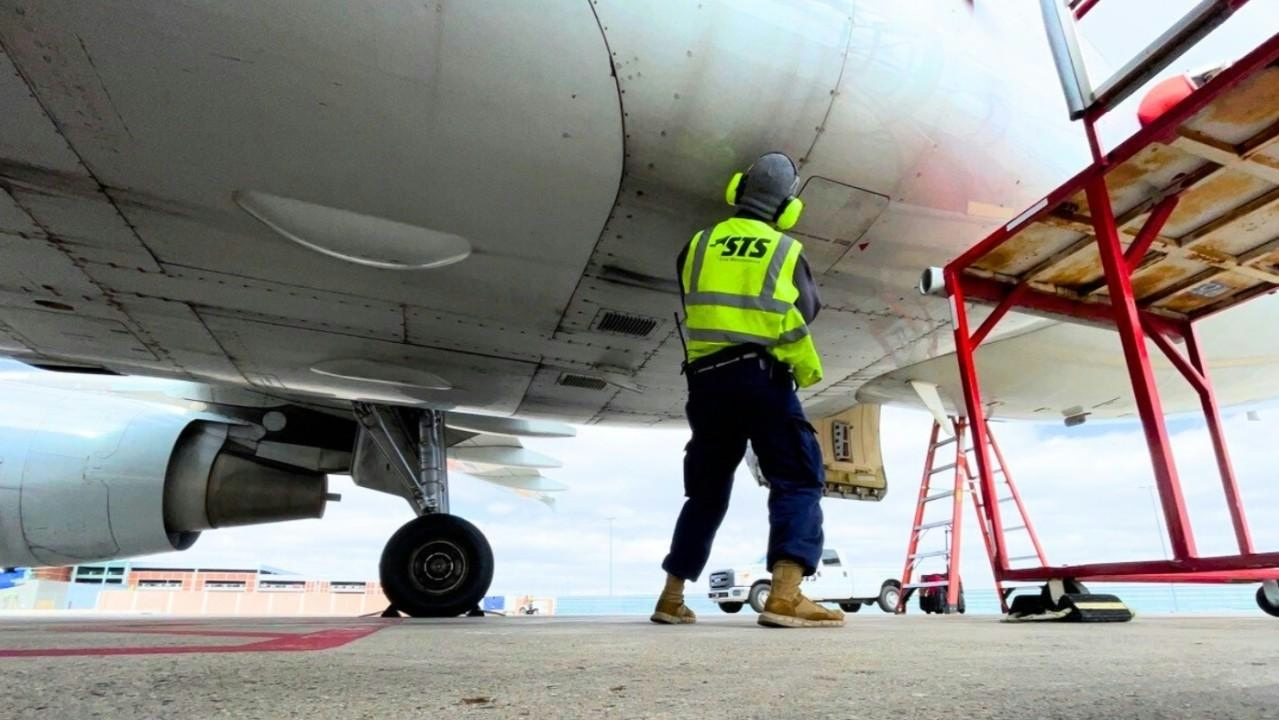
STS Receives CAR-145 C6 Component Maintenance Approval in Dubai
August 18, 2026By ePlane AI
STS Receives CAR-145 C6 Component Maintenance Approval in Dubai
0
0
STS Aviation Services
CAR-145 Certification
Component Maintenance

STS Receives CAR-145 C6 Component Maintenance Approval in Dubai

Expansion of Maintenance Capabilities in the Middle East

STS Aviation Services has secured approval from the UAE General Civil Aviation Authority (GCAA) for a CAR-145 C6 Equipment Rating at its Dubai CommerCity facility. This certification, granted under GCAA CAR-145 approval UAE.145.0101, authorizes STS to conduct approved component maintenance activities within the C6 Equipment category. The new approval significantly enhances the company’s maintenance, repair, and overhaul (MRO) capabilities in the region, allowing it to offer a broader range of services to its clients.

Situated near Dubai International Airport, the CommerCity facility caters to both regional and international operators across the UAE, the Gulf, and the wider Middle East. The certification is expected to strengthen STS’s competitive position in the Middle Eastern MRO market, where established players such as KEC International Limited and Petronas are also actively expanding their maintenance offerings and regional presence.

Strategic Importance and Market Context

Paul Curry, Vice-President and General Manager of STS Aviation Services Middle East, emphasized the significance of the approval, describing it as a crucial advancement for both the company and its customers. He noted that the certification expands the scope of work STS can perform locally, enabling the delivery of a wider array of component maintenance services from Dubai. Curry also highlighted that the approval reflects STS Aviation Group’s continued investment in its Middle East operations and its confidence in the region’s aviation market.

This development occurs amid a complex economic environment for the aviation maintenance sector. Global energy market disruptions and ongoing supply chain adjustments are reshaping operational dynamics across the industry. For STS, maintaining compliance with evolving regulatory standards and managing operational risks will be essential as it scales its services. The expanded capabilities are likely to attract increased demand from operators seeking dependable maintenance solutions in the face of these broader market challenges.

As STS strengthens its presence in Dubai, competitors are expected to respond by enhancing their own maintenance capacities or exploring new opportunities across the Middle East and Africa. The approval not only marks a significant milestone for STS but also highlights the intensifying competition and evolving challenges within the region’s aviation maintenance sector.

More news
Google Acquires Spirit Airlines Data for AI Training in $10 Million Deal

Google Acquires Spirit Airlines Data for AI Training in $10 Million Deal

Google Acquires Spirit Airlines Data for AI Training in $10 Million Deal Google has secured a substantial dataset from Spirit Airlines in a $10 million transaction, aiming to enhance its artificial intelligence training capabilities. The acquisition encompasses approximately 7.5 billion transaction entries dating back to 2008, alongside 7.25 billion records of competitors’ flight prices, data on over 763,000 Spirit flights, and more than 5 million crew pairings. This extensive trove of operational data represents a significant milestone in the emerging market where corporate information is increasingly regarded as a strategic asset. Detailed Operational Insights for AI Development The dataset provides an intricate record of Spirit Airlines’ internal operations, capturing sequences of workplace activities such as problem emergence, employee communications, software modifications, operational responses, and measurable outcomes. Such comprehensive information is particularly valuable for training AI systems tasked with managing complex, multi-stage office, engineering, and logistical processes. Unlike publicly available internet text, which primarily reflects how people discuss tasks, internal communications and operational logs reveal the actual execution of these tasks, exposing points of coordination failure and illustrating how decisions manifest in real-world results. Google has offered limited details regarding its specific plans for the Spirit data. A company spokesperson stated, “We acquired part of an enterprise dataset from Spirit Airlines, which can be helpful in improving our products and AI models,” as reported by Axios. However, Google has not clarified which products or AI models will incorporate the data, how it intends to assess the quality of Spirit’s operational decisions, or whether records related to the airline’s recent financial struggles will be treated differently from routine operational data. Industry Impact and Regulatory Concerns The acquisition has elicited varied reactions across the technology and travel sectors, underscoring the growing importance of corporate data in AI development. As companies facing financial distress seek new revenue streams, monetizing digital records is becoming an increasingly attractive strategy. This trend is prompting competitors to reassess the value of their own data archives, potentially transforming how corporate assets are appraised and managed, particularly in bankruptcy contexts. At the same time, the deal raises significant privacy and ethical questions. The repurposing of internal communications and operational logs for AI training has attracted regulatory scrutiny, with authorities considering new frameworks to govern the use of such data. Proposed measures include enhanced transparency requirements and restrictions on the use of sensitive information. The outcomes of these regulatory deliberations may influence judicial and administrative approaches to corporate archives in future bankruptcies and mergers. Within the broader travel industry, Google’s acquisition is prompting airlines and related companies to reevaluate their strategies regarding operational data—whether to retain, license, or sell it—given its emerging competitive value. As the market for corporate data intensifies, the Spirit Airlines transaction may set a precedent, shaping both industry practices and regulatory policies in the evolving landscape of artificial intelligence development.
Airbus Shares Steady Amid Growing 2026 Order Backlog

Airbus Shares Steady Amid Growing 2026 Order Backlog

Airbus Shares Maintain Stability Amid Expanding 2026 Order Backlog Airbus shares demonstrated resilience on August 18, 2026, trading at €212.75 on the Paris market as of 12:38 p.m. CEDT, reflecting a modest decline of 0.70% from the previous close of €214.25. Despite this slight dip, the stock remains well above its levels from January, supported by Tradegate data indicating a price of €213.95 and a year-to-date gain of 9.09%. This steady performance highlights sustained investor confidence, underpinned by a robust order backlog and consistent operational progress. In the United States, Airbus’s over-the-counter listing (EADSF) closed at $246.01 on August 17, marking a daily increase of 0.19%. Since the beginning of 2026, the U.S.-traded shares have appreciated by 5.6%, a somewhat more moderate rise compared to the euro-denominated shares. This discrepancy reflects the influence of currency fluctuations and differing market liquidity on overall returns. Market Dynamics and Operational Performance The single-digit percentage gains observed in both European and U.S. listings signal positive sentiment among long-term investors, buoyed by Airbus’s ongoing delivery reports and financial disclosures. The mid-session price in Paris, slightly below the Tradegate indication, suggests a period of calm trading with limited volatility. The minor daily price movement is negligible when viewed against the backdrop of the stock’s strong year-to-date trajectory. Operationally, Airbus continues to secure new orders across its single-aisle aircraft and helicopter segments, further enlarging an already substantial backlog. This sustained demand has been a critical factor driving the company’s solid performance during the first half of 2026. Challenges and Competitive Pressures Despite these strengths, Airbus confronts significant challenges in fulfilling its expanding order book. Supply chain disruptions, particularly concerning jet engine availability, remain a pressing issue. The company is actively seeking additional engines from suppliers such as Pratt & Whitney to meet rising demand. Failure to resolve these constraints could jeopardize delivery schedules. Competition is also intensifying, notably from China’s COMAC, which is advancing its international presence with the C919 aircraft. While the C919’s global ambitions are notable, the jet remains heavily reliant on foreign components and lacks certification from key U.S. and European aviation regulators. These factors currently limit its immediate threat to Airbus’s market share. Outlook In spite of these headwinds, market reactions have remained largely positive. Airbus’s stable share price, coupled with a growing order backlog and strong first-half results, continues to instill confidence among investors. As the company addresses supply chain challenges and navigates an increasingly competitive landscape, its capacity to sustain operational momentum will be closely monitored in the coming months.
Engine Manufacturers Expand Major MRO Facilities in India

Engine Manufacturers Expand Major MRO Facilities in India

Engine Manufacturers Expand Major MRO Facilities in India Addressing the Global Engine Maintenance Crisis When Willie Walsh assumed the role of chief executive at IndiGo in early August 2026, he immediately confronted the intensifying challenges of the global engine supply chain crisis. Having previously served as director general of the International Air Transport Association (IATA), Walsh had forewarned manufacturers about the growing bottlenecks in engine maintenance, repair, and overhaul (MRO) operations. He emphasized that without substantial changes, these constraints would worsen as the fleet of next-generation single-aisle aircraft expanded. While manufacturers have committed to increasing capacity, Walsh cautioned that capacity alone would not resolve the underlying issues. As the leader of the world’s largest single-aisle airline operator, Walsh now faces the operational realities of a maintenance capacity shortfall that is severely straining the commercial aviation aftermarket. Operators of narrowbody aircraft globally are contending with unprecedented demand for engine overhauls, driven by the rapid production of Airbus A320neo and Boeing 737 Max models. Projections indicate that annual shop visits for single-aisle engines will increase sevenfold by 2040, surpassing 5,000 for the CFM Leap engine family and 2,000 for Pratt & Whitney’s geared turbofan (GTF). The Shift Toward Localized Mega-Scale MRO Hubs This surge in maintenance demand has precipitated significant fleet disruptions. During Pratt & Whitney’s extensive powdered-metal disk inspection campaign in March 2025, 648 narrowbody aircraft—representing 28% of the global GTF fleet—were grounded, awaiting engine slots or replacement parts. Turnaround times escalated dramatically, reaching 230 days for CFM Leap engine overhauls and exceeding 300 days for GTF maintenance. These backlogs have exposed the limitations of traditional Western MRO networks, which are no longer capable of accommodating the growing global demand for narrowbody engine servicing. Operating next-generation turbofan engines in high-cycle and demanding environments has further highlighted systemic inefficiencies in conventional logistics frameworks. In response, original equipment manufacturers (OEMs) are increasingly investing in localized, large-scale overhaul hubs, with India emerging as a strategic focal point for this transformation. Safran’s recent establishment of a major Leap engine MRO facility in Hyderabad exemplifies this trend, alongside a joint venture for Leap-1A and -1B engine maintenance in Singapore. These initiatives underscore the industry’s strategic pivot toward expanding maintenance capabilities across the Asian region. Challenges and Competitive Dynamics in India’s MRO Expansion Despite the promising outlook, expanding major MRO facilities in India presents considerable challenges. Engine manufacturers must navigate a complex regulatory environment, manage ongoing supply chain disruptions, and address substantial workforce training requirements to ensure operational readiness. The rapid expansion of capacity is also intensifying competition among MRO providers, prompting some players to seek strategic partnerships or to develop their own facilities in order to safeguard market share. As the global fleet of next-generation narrowbody aircraft continues to grow, the aviation industry’s capacity to localize and scale engine maintenance operations will be crucial. India’s rise as a regional MRO powerhouse signifies a pivotal shift in the global aviation maintenance landscape. However, the ultimate success of this transformation will depend on overcoming regulatory, logistical, and workforce challenges in the coming years.
Safety Concerns Raised Over Qantas A380 Maintenance Work

Safety Concerns Raised Over Qantas A380 Maintenance Work

Safety Concerns Raised Over Qantas A380 Maintenance Work Investigation Uncovers Critical Lapses An investigation conducted by the Australian Transport Safety Bureau (ATSB) has brought to light serious safety concerns regarding Qantas’ maintenance procedures after a work light was inadvertently left inside the wing of an Airbus A380. The incident occurred following maintenance at Sydney Airport on 7 January 2026. Remarkably, the aircraft completed flights to Dallas and back before the foreign object was discovered and removed on 9 January. The ATSB report highlighted multiple failures in safety checks that allowed the work light to remain undetected. This points to a significant breakdown in foreign object control and tool accountability processes. ATSB Chief Commissioner Angus Mitchell stated, “Maintainers did not find the light during their foreign object clearance inspections at the end of the maintenance. And the work light’s absence was not noticed when the maintainer returned the tools, or during the unreturned tool check at the end of the shift.” Despite the missing equipment, a licensed aircraft maintenance engineer issued a certificate of release to service, underscoring the gravity of the oversight. Systemic Issues and Industry Response Further examination revealed that Qantas’ maintenance information system lacked prompts or controls to alert certifiers about unreturned tools or unactioned tool reports. In response to the incident, Qantas has issued a safety directive aimed at strengthening tooling control procedures. The airline has also established a tooling working group tasked with exploring new technologies and initiatives to enhance tool control across its maintenance facilities. This event is not isolated. It follows a recent case in which a tool was left inside an engine, intensifying scrutiny of Qantas’ maintenance operations. The recurrence of such errors has raised questions about the robustness of the airline’s safety protocols. A Qantas spokesperson confirmed, “Qantas reported this event to the ATSB and since the event, have strengthened our tool control procedures, including introducing a mandatory pre-clearance check to confirm all tooling is accounted for following maintenance.” The ATSB emphasized the necessity of systems that do not rely solely on human performance, particularly given the challenging environments and operational pressures inherent in aircraft maintenance. Mitchell noted, “Tool control systems and procedures must account for this variability, with safeguards to detect and recover from errors.” Market and Industry Implications The market has responded cautiously to these developments. Analysts warn that instability in Qantas’ maintenance operations could invite increased regulatory scrutiny and potentially affect the airline’s reputation and stock performance. Competitors are reportedly monitoring the situation closely, with some highlighting their own maintenance and safety protocols as points of differentiation. These incidents underscore the critical importance of rigorous tool control and foreign object management in aviation maintenance. They also highlight the ongoing need for continual improvement in safety systems to protect passengers and preserve airline reputations.
How Bengaluru Brain Power Is Helping Advance the Future of Flight

How Bengaluru Brain Power Is Helping Advance the Future of Flight

How Bengaluru Brain Power Is Helping Advance the Future of Flight For more than twenty years, Bengaluru’s John F. Welch Technology Centre (JFWTC) has been a cornerstone of innovation in aviation, significantly influencing the trajectory of aerospace technology. As one of General Electric’s largest multidisciplinary research and development hubs outside the United States, JFWTC has contributed to breakthroughs that are redefining the future of flight. Today, as GE Aerospace gains international recognition for pioneering advancements in high-altitude hybrid electric propulsion—showcased at the recent Farnborough International Airshow—engineers in Bengaluru remain at the heart of this transformative progress. Pioneering Next-Generation Propulsion Technologies Nitesh Jain, Consulting Engineer at GE Aerospace, reflects on the centre’s legacy of innovation, noting its work on prominent engine lines such as the GE90, GEnx, GE9X, and CFM LEAP. Each of these engines delivered fuel efficiency improvements ranging from 10 to 15 percent. The current ambition, driven by the CFM RISE program, is to double that gain, targeting a 20 percent increase in fuel efficiency. This leap is to be achieved through next-generation propulsion technologies including the ductless Open Fan architecture, compact core engine designs, and hybrid electric systems—areas where Bengaluru’s expertise is indispensable. The RISE program’s Open Fan design eliminates the traditional engine nacelle, enabling a larger fan diameter that produces greater thrust without incurring excessive weight or drag penalties. Internally, the compact core technology enhances the performance of high-pressure compressors and turbines, while adaptive cycle engine capabilities optimize efficiency across all flight phases. This integrated approach not only aims to improve fuel economy but also enhances engine durability and reduces dust ingestion, particularly in challenging operating environments. Multidisciplinary Innovation and Global Collaboration Achieving these advancements requires a sophisticated blend of disciplines, including aerodynamics, thermal systems, structural engineering, systems analysis, advanced materials, and additive manufacturing. Bengaluru’s teams are uniquely equipped to navigate these complex challenges, balancing the competing demands of weight reduction, operational efficiency, manufacturability, and reliability. Aeroacoustics plays a critical role in the success of the Open Fan design. Without the noise-mitigating nacelle, engineers had to develop quieter fan blades by thoroughly understanding and addressing noise generation mechanisms. Ravish Karve, advanced lead engineer at JFWTC, led global collaborations to simulate airflow and acoustic phenomena using Frontier, one of the world’s most powerful supercomputers. This capability allowed for precise modeling of full-scale Open Fan configurations, significantly accelerating the pace of innovation. Beyond engine development, Bengaluru’s influence extends to broader aviation technology. The city’s airport has been a pioneer in implementing parallel runway operations, reflecting a forward-looking approach to air traffic management. Looking ahead, the upcoming Drone Expo at Yashobhoomi (IICC) in September 2026 underscores India’s commitment to integrating drones and artificial intelligence-driven solutions into mainstream aviation. Navigating Challenges in a Rapidly Evolving Industry The rapid technological evolution in aviation also presents significant challenges. Industry leaders, including Bill Gates, have cautioned that the rise of artificial intelligence in aviation could disrupt traditional employment patterns, necessitating careful workforce management and reskilling initiatives. Concurrently, increased investment in AI-powered aviation technologies is prompting competitors worldwide to enhance their own capabilities in AI and drone systems to maintain competitiveness. As the global aviation landscape continues to evolve, Bengaluru’s combination of technical expertise, collaborative innovation, and readiness to address emerging challenges positions the city as a vital hub in shaping the future of flight.
Textron Aviation Delivers Citation CJ4 to Philippine Customer

Textron Aviation Delivers Citation CJ4 to Philippine Customer

Textron Aviation Celebrates 500th Citation CJ4 Delivery with Philippine Customer Textron Aviation has reached a significant milestone with the delivery of its 500th Cessna Citation CJ4 series business jet, marking over a decade of sustained customer confidence in the company’s largest light jet. The landmark aircraft, a Citation CJ4 Gen2, was delivered to a client in the Philippines, underscoring the global reach and appeal of the CJ4 platform. The CJ4’s Enduring Appeal and Versatility Since its introduction, the CJ4 series has become a preferred choice for both owner-operators and fleet customers worldwide. Renowned for its balance of performance, efficiency, and mission flexibility, the aircraft serves a broad spectrum of roles, from business travel to specialized mission operations. This versatility has cemented the CJ4’s reputation as a reliable and adaptable aircraft in the competitive light jet market. Lannie O’Bannion, senior vice president of Sales & Marketing at Textron Aviation, emphasized the company’s ongoing commitment to innovation. “The Citation CJ4 has set the standard in its class for more than a decade, and with the Citation CJ4 Gen2 and the upcoming Citation CJ4 Gen3, we’re continuing to invest in the innovation, technology, and capabilities our customers value most,” O’Bannion stated. He added that Textron’s focus remains on delivering the performance, efficiency, and confidence operators require to succeed amid an evolving aviation landscape. Future Prospects and Industry Challenges Looking ahead, Textron Aviation is preparing for the Federal Aviation Administration’s anticipated certification of the Citation CJ4 Gen3 later this year. The Gen3 model has already undergone an extensive flight test program, accumulating over 880 hours across two test aircraft, signaling the company’s dedication to advancing the CJ4 series. However, this milestone arrives amid notable challenges within Textron Aviation and the broader aerospace industry. The company’s Bell segment has recently encountered productivity issues stemming from supply chain bottlenecks and an inexperienced workforce, raising concerns about maintaining production momentum. These difficulties reflect wider industry pressures, as major competitors like Boeing grapple with their own supply chain disruptions, including FAA-mandated inspections for potential structural issues in 737 MAX jets. Market analysts are closely monitoring how Textron and its peers will navigate these headwinds, particularly as external factors such as new tariffs and ongoing legal disputes add complexity to the global aerospace environment. These dynamics may impact Textron’s competitive positioning and its ability to meet the growing demand for business jets like the CJ4. Despite these challenges, the delivery of the 500th CJ4 highlights the enduring strength of the Citation series and Textron Aviation’s commitment to innovation and customer satisfaction in a rapidly changing market.
Airline Updates — August 18, 2026

Airline Updates — August 18, 2026

Airline Updates — August 18, 2026 Hong Kong Air Cargo Initiates Operations at Navi Mumbai International Airport Hong Kong Air Cargo has achieved a landmark by becoming the first international airline to launch dedicated freighter services from Navi Mumbai International Airport (NMIA). The inaugural flight on August 16, 2026, signifies a historic collaboration between Hong Kong Air Cargo, the Aeroprime Group, and NMIA. This development enhances India’s international air cargo connectivity and is the result of meticulous planning and coordination among Aeroprime Group—serving as Hong Kong Air Cargo’s Cargo GSSA in Mumbai—the airline, airport authorities, and regulatory agencies. The rapid implementation of these operations highlights the teams’ proficiency in managing commercial, operational, and regulatory challenges, successfully establishing international freighter connectivity at NMIA in record time. Vietjet Expands Its Asian Network with New Routes Vietjet is extending its international footprint by introducing five new direct routes across Asia. Starting November 10, 2026, the airline will launch three new services to the Philippines, connecting Ho Chi Minh City and Hanoi with Cebu, and Ho Chi Minh City with Clark, each operating three round-trip flights weekly. The Ho Chi Minh City–Chiang Mai route will resume on October 25, 2026, while a new Da Nang–Osaka (Kansai) service will commence on December 20, 2026, offering four round-trip flights per week. This expansion further integrates central Vietnam’s UNESCO heritage sites with Japan and broadens Vietjet’s existing Japan network, which already links major Vietnamese cities to Tokyo, Osaka, Nagoya, Fukuoka, Hiroshima, and Shizuoka. Singapore Airlines Group Reports July 2026 Performance In July 2026, the Singapore Airlines (SIA) Group recorded a 2.6% year-on-year increase in passenger traffic, supported by a 5.5% rise in capacity driven by network growth across East Asia, Europe, and the South West Pacific. The Group’s overall passenger load factor reached 86.0%, with SIA and its low-cost subsidiary Scoot achieving load factors of 84.8% and 90.2%, respectively. Together, the airlines transported 3.7 million passengers, marking a 4.0% increase compared to the previous year. Cargo volumes remained stable despite a 1.5% reduction in cargo capacity, primarily due to maintenance activities, which resulted in a 0.8 percentage point increase in cargo load factor to 57.9%. Operational adjustments included Scoot’s suspension of services to Jeddah from July 14, 2026, amid escalating conflict in the Middle East, while SIA’s flights to Dubai remain suspended. As of July 31, the Group’s passenger network encompassed 136 destinations across 35 countries. Industry Context and Competitive Landscape The global airline industry in 2026 continues to confront significant challenges, including barriers to market entry, complex regulatory environments, and limitations in fleet availability. Airlines such as Global Crossing Airlines are actively addressing these issues through fleet modernization and new service agreements aimed at strengthening their competitive positions. Concurrently, carriers like Frontier Airlines, Hawaiian Airlines, and Philippine Airlines are expanding their route networks, intensifying competition within the sector. The industry also faces broader vulnerabilities, including weather-related disruptions and economic pressures, which have impacted operations for airlines such as Nepal Airlines and Cebu Pacific PAL. These factors collectively underscore the resilience and adaptability required for airlines to sustain growth and navigate an evolving market landscape.
The Dornier Do 31: The Only VTOL Jet Transport Ever Built

The Dornier Do 31: The Only VTOL Jet Transport Ever Built

The Dornier Do 31: The Only VTOL Jet Transport Ever Built The Dornier Do 31 remains a unique chapter in aviation history as the only jet-powered vertical takeoff and landing (VTOL) transport aircraft ever constructed. Its distinctive design featured an extraordinary total of ten engines: two Rolls-Royce Pegasus vectored-thrust turbofans, identical to those used in the Harrier jump jet, and eight additional lift jets housed in pods on the wingtips—four on each side. These lift engines were dedicated solely to vertical takeoff and landing, providing the necessary thrust to keep the 22-tonne aircraft airborne without forward motion. While the lift jets were inactive during cruise, the Pegasus engines powered the aircraft in conventional flight. The Do 31 first took to the skies in 1967, set several world records by 1969, but was ultimately cancelled in 1970. Nearly six decades later, it stands alone in its category. Design and Specifications The Do 31E was an experimental VTOL transport developed in West Germany during the Cold War. It was crewed by two pilots and capable of carrying 36 troops or 24 stretchers, with a useful load of approximately 3,500 kilograms. The aircraft’s maximum speed reached 730 kilometers per hour (452 miles per hour), and it had a range of 1,800 kilometers when fully loaded. The gross weight for vertical takeoff was 22,453 kilograms, increasing to a maximum of 27,422 kilograms for conventional flight. Only three airframes were built: the E1, which flew using only the Pegasus engines; the E2, a static test model; and the E3, which flew with all ten engines operational. Today, the E1 is preserved at the Dornier Museum Friedrichshafen, while the E3 is displayed at the Deutsches Museum Flugwerft Schleissheim. Strategic Imperatives Behind the Do 31 The development of the Do 31 was deeply rooted in the strategic context of the Cold War. In 1960, West Germany was anticipated to be a primary battleground in a potential NATO–Warsaw Pact conflict. Military planners feared that airfields would be quickly rendered unusable by bombing or nuclear contamination, effectively grounding conventional aircraft. To counter this vulnerability, the German military pursued a strategy of dispersal, envisioning aircraft operating from autobahns, forest clearings, and other improvised locations. This approach led to various experimental projects, including zero-length launches of F-104 Starfighters and the supersonic VTOL fighter EWR VJ 101. Under NATO’s NBMR-4 requirement, a VTOL transport capable of operating without runways was mandated. Dornier formalized its design in 1961 under the leadership of Gustav Wieland and secured government funding the following year. Engineering Challenges and Operational Complexity Operating an aircraft powered by ten separate jet engines presented formidable engineering and piloting challenges. While generating sufficient lift was achievable by simply adding more engines, controlling the aircraft during hover was complicated by the interaction of sixteen distinct jets of hot exhaust gas—eight lift jets producing vertical thrust and two vectored-thrust engines. These “fountains” of hot gas created complex aerodynamic effects that demanded precise management to maintain stability and safety during vertical takeoff and landing. Legacy and Influence on Modern VTOL Development Despite its groundbreaking achievements, the Do 31 was ultimately hampered by excessive fuel consumption, which severely limited its payload capacity and operational range. These practical limitations contributed to the program’s cancellation in 1970. Since then, the landscape of VTOL aviation has evolved significantly. Contemporary efforts focus on electric and hybrid-electric VTOL (eVTOL) aircraft, driven by stringent environmental regulations and the global push toward carbon neutrality. These new technologies promise near-zero emissions and reduced noise levels, addressing critical challenges such as urban air congestion. However, scaling eVTOL technology to accommodate larger transport aircraft remains a significant hurdle, as energy requirements and propulsion complexity increase exponentially with size. The future of vertical flight now depends heavily on government policies, incentives, and public-private partnerships to stimulate demand and develop the necessary infrastructure. The Dornier Do 31, once a solitary technological experiment, now serves as a historical touchstone informing the pursuit of cleaner, quieter, and more sustainable VTOL solutions.
Increase in Power Bank Incidents Highlights Need for Stricter Onboard Regulations

Increase in Power Bank Incidents Highlights Need for Stricter Onboard Regulations

Increase in Power Bank Incidents Highlights Need for Stricter Onboard Regulations Rising Incidents of Lithium-Ion Battery Failures on Aircraft Portable chargers, commonly referred to as power banks, have become the leading cause of lithium-ion battery thermal runaway incidents aboard passenger aircraft, according to a recent report by UL Standards & Engagement (ULSE). The "Lithium-ion Battery Incidents in Aviation: 2025 Data Review" documents a 15% year-on-year increase in overall thermal runaway events, with incidents involving portable chargers surging by 42%. This significant rise has resulted in power banks surpassing e-cigarettes as the most frequently implicated devices in onboard battery-related emergencies. The report aggregates data voluntarily submitted by over 40 airlines through ULSE’s Thermal Runaway Incident Program. It reveals an average of 2.36 passenger-related battery incidents per week in 2025, up from 2.05 incidents per week in the previous year. These events have imposed substantial costs on commercial passenger airlines, estimated at $7.3 million between 2021 and 2024, accounting for operational disruptions, equipment damage, and related losses. Industry and Regulatory Responses In light of the escalating risks, major airlines including United, Delta, American, and Southwest have implemented stricter policies governing the carriage and use of portable chargers. Many carriers now enforce tighter restrictions on both the quantity and capacity of power banks permitted onboard. While the Federal Aviation Administration (FAA) allows rechargeable batteries under 100 watt-hours (Wh) for personal use and limits passengers to two spare batteries with capacities between 101 and 160 Wh, individual airlines frequently impose additional constraints to further reduce potential hazards. This increased regulatory scrutiny is also influencing consumer behavior and the electronics market. Heightened awareness of airline restrictions is prompting travelers to select power banks that meet safety standards, while manufacturers are responding by enhancing product safety features and ensuring compliance with evolving airline and regulatory requirements to maintain competitiveness. Challenges in Passenger Awareness and Safety Education Despite these efforts, ULSE president and CEO Jeff Marootian highlighted that passenger awareness remains a critical challenge. He noted, "Every incident is a safety risk, and the trend line is moving in the wrong direction." The report underscores the urgent need for the aviation industry to intensify educational initiatives aimed at informing travelers about the safe handling and storage of rechargeable devices during flights. It calls for a combined approach of regulatory enforcement and public awareness campaigns to effectively address the growing number of onboard battery incidents.
Menzies Tests AI-Powered Cargo Dimensioner at Heathrow

Menzies Tests AI-Powered Cargo Dimensioner at Heathrow

Menzies Aviation Trials AI-Powered Cargo Dimensioner at Heathrow Menzies Aviation has initiated a trial of an artificial intelligence-driven cargo measurement system at its Heathrow facility, aiming to enhance efficiency and accuracy in cargo handling operations. The trial, conducted in collaboration with technology partner CIND, employs an advanced dimensioner that automatically scans cargo as it moves through the warehouse. This system captures critical data including pallet dimensions, weight, stackability, and shipment references without manual intervention. Enhancing Data Accuracy and Operational Efficiency Menzies emphasizes that the technology delivers precise and consistent data at the earliest stage of cargo intake, significantly reducing the reliance on manual data entry and the associated risk of errors. The system also provides real-time visibility and automated build-up checks, which are expected to improve operational workflows and support more informed decision-making throughout the cargo handling process. In addition to the dimensioner, Menzies is piloting CIND’s ContourCheck tool during Unit Load Device (ULD) build-up. This application generates a visual model of cargo as it is loaded onto a ULD, instantly verifying the load against approved aircraft contours. By identifying potential overhang or contour issues early, the tool aims to enhance loading safety, optimize space utilization, and reduce last-minute adjustments. “These technologies are expected to support more efficient warehouse flows, improved load accuracy, better utilization of ULD capacity, and enhanced flight safety, while giving teams greater confidence in the quality and availability of cargo data,” Menzies stated. Challenges and Industry Implications Despite the promising benefits, the integration of AI-powered dimensioning technology presents several challenges. These include aligning the new system with existing warehouse operations, ensuring the precision of automated measurements, and addressing resistance from staff accustomed to traditional manual processes. Initial skepticism from cargo handlers and airlines may arise, though positive feedback is anticipated as the system proves its reliability and efficiency. Competitors in the industry may respond by developing similar AI-driven solutions or upgrading their cargo measurement technologies to remain competitive. Rory Fidler, Senior Vice President Cargo Technology at Menzies Aviation, remarked, “This proof-of-concept deployment with CIND gives us the opportunity to test how reliable, real-time data can transform the way we plan, load, and manage cargo. The learnings from this pilot will help us assess the potential for wider application across our cargo network, supporting safer operations, smarter use of capacity, and better decision-making.” Broader Digital Transformation Efforts The Heathrow trial follows a recent technological advancement by Menzies, which introduced a new payment feature on its customer portal through a partnership with PayCargo. The Quick Pay function, now available on the Menzies Aviation Cargo Handling (MACH) portal, is designed to streamline payments and expedite cargo release. This proof-of-concept deployment at Heathrow will inform Menzies’ evaluation of the potential for broader adoption of AI-powered cargo measurement across its global network, reflecting the company’s ongoing commitment to digital transformation and operational innovation.
line









