
AIによるインサイトを行動へとつなげる

現在のトレンド
Categories
Swiss International Air Lines Receives First A350-900 Aircraft
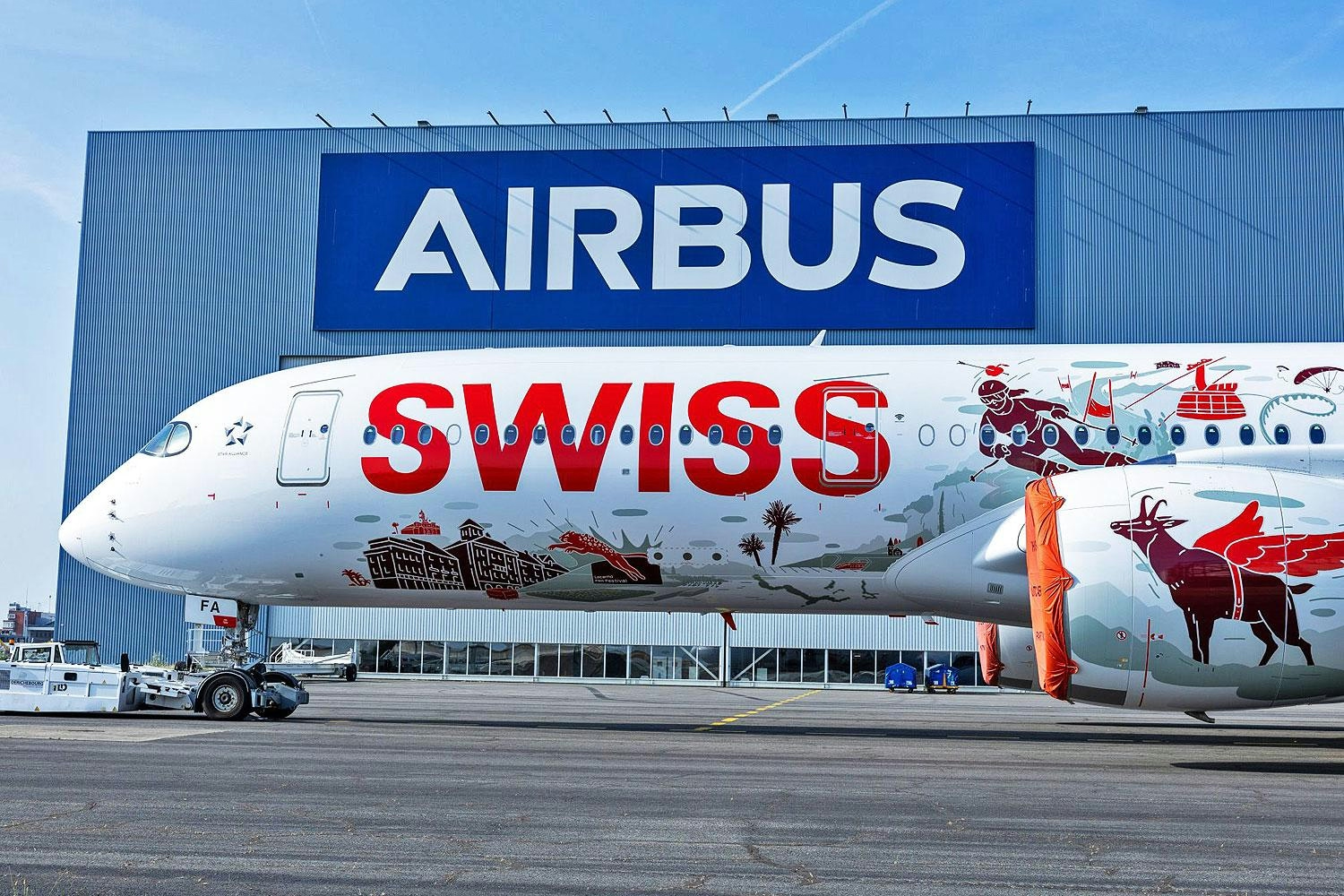
Swiss International Air Lines Takes Delivery of First Airbus A350-900
Swiss International Air Lines (SWISS), a member of the Lufthansa Group, has officially received its first Airbus A350-900 aircraft, marking a pivotal advancement in the airline’s fleet modernization efforts. This widebody aircraft, the initial unit of a ten-aircraft order, is poised to become the flagship of SWISS’s long-haul operations. It will be deployed on key routes from Zurich, including services to Boston, thereby reinforcing the airline’s global network and long-distance connectivity.
Enhanced Passenger Experience and Environmental Performance
The A350-900 introduces the new SWISS Senses cabin, featuring a four-class configuration designed to elevate passenger comfort and onboard experience. Recognized as one of the most advanced widebody aircraft globally, the A350-900 incorporates cutting-edge engines and lightweight composite materials that contribute to superior fuel efficiency and reduced operating costs. These technological advancements also result in significantly lower carbon dioxide (CO₂) emissions compared to earlier aircraft models. Notably, the A350 is capable of operating with up to 50% Sustainable Aviation Fuel (SAF), aligning with broader industry objectives to achieve full SAF compatibility by 2030.
Competitive and Operational Context
SWISS’s fleet renewal occurs within a highly dynamic and competitive aviation landscape. The Lufthansa Group has announced plans to streamline its long-haul fleet by 2030, reducing the number of aircraft types from 14 to eight. This consolidation strategy is expected to intensify competition and exert pricing pressures across the group’s airlines, including SWISS. Meanwhile, rival carriers are actively expanding their long-haul operations. Cathay Pacific has resumed flights between Seattle and Hong Kong using its own A350-900s, and Air India has increased its UK connectivity by adding a fourth daily service between Delhi and London. These developments may prompt further competitive responses in key international markets served by SWISS.
Operational challenges have also emerged during the introduction of the new aircraft. A recent incident involved a SWISS flight departing Boston that was forced to abort takeoff after flames and smoke were detected from one of its engines. Although no injuries occurred, the event highlights the complexities associated with integrating new aircraft types while maintaining stringent safety standards.
Despite these challenges, the Airbus A350-900 continues to enjoy strong demand worldwide. By the end of September 2025, Airbus had secured over 1,400 orders for the model from 63 customers, underscoring widespread industry confidence in the aircraft’s performance and sustainability credentials.
With the arrival of its first A350-900, SWISS aims to enhance its long-haul service offering, improve environmental sustainability, and sustain its competitive position in an evolving global aviation market.

Etihad Airways Suspends Airbus A380 Flights on Key Route

Aditya Birla Group Seeks Approval for Aircraft Leasing in GIFT City

Qatar Airways Highlights Innovation and Connectivity at Arabian Travel Market 2026

Hong Kong's Five-Year Plan Includes Andrew Fan's Aircraft Parts Processing Hub Proposal

ACIA Aero Leasing Delivers ATR72-600 to Air Nostrum

RTX Appoints Jill Albertelli as Head of Pratt & Whitney

TAT Technologies Joins Beyond Aero Hydrogen Aircraft Program

AURAK Study Highlights Barriers to Air Taxi Adoption in Emerging Economies

Xiamen Air Selects Altitude for 787 Maintenance at Heathrow

Etihad and Swissport Extend Global Partnership
