
AIによるインサイトを行動へとつなげる

現在のトレンド
Categories
The Airbus A321XLR and the Decline of the Hub-and-Spoke Model
The Airbus A321XLR and the Decline of the Hub-and-Spoke Model
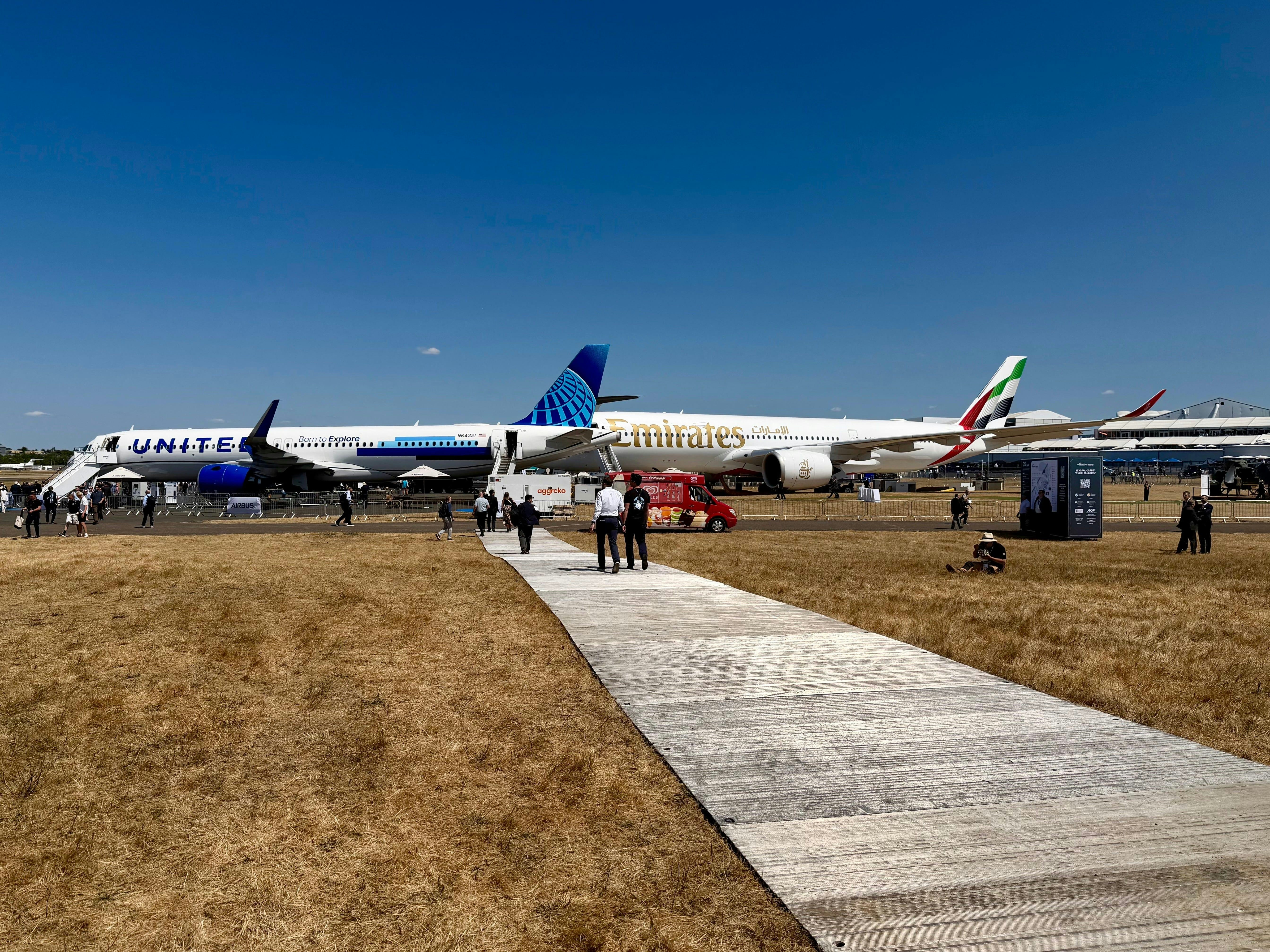
For decades, the hub-and-spoke model has underpinned long-haul international air travel. Airlines have traditionally gathered passengers from regional airports and routed them through major hubs such as London Heathrow, Frankfurt, or Atlanta. From these central points, travelers are consolidated onto large widebody aircraft, typically twin- or four-engine jets seating between 250 and 300 passengers. This system emerged from economic necessity, as filling such large aircraft on transoceanic flights required connecting traffic from multiple origins. However, the introduction of the Airbus A321XLR is challenging this long-established framework by offering airlines a new approach to serving long-haul markets.
Redefining Long-Haul Connectivity
The A321XLR is a single-aisle aircraft capable of flying up to 4,700 nautical miles (8,704 kilometers) and remaining airborne for as long as 11 hours. This capability pushes narrowbody jets into operational ranges once exclusive to widebody aircraft. Rather than immediately displacing major hubs, the A321XLR is gradually diminishing their dominance by enabling direct, long-distance flights between secondary cities. These routes were previously unfeasible due to insufficient demand to justify larger aircraft.
Airbus is actively encouraging airlines to reconsider their dependence on large connecting flows. The A321XLR’s lower operating costs and reduced break-even passenger numbers mean that even markets with relatively low daily traveler volumes can sustain nonstop service. While a typical 300-seat widebody requires between 200 and 250 passengers per direction to break even, the A321XLR allows airlines to operate profitably with significantly fewer passengers.
This evolution carries profound implications for both carriers and travelers. Airlines can now establish point-to-point routes that bypass congested hubs, thereby reducing exposure to weather disruptions and slot limitations. Passengers benefit from shorter overall travel times and the elimination of lengthy layovers. Although major hubs will continue to play a critical role for dense trunk routes and cargo operations, the trajectory of long-haul aviation is increasingly oriented toward direct, narrowbody networks.
Technical Innovations and Operational Challenges
The A321XLR’s extended range is made possible by an innovative fuel system. Unlike earlier long-range narrowbodies that relied on removable additional center tanks (ACTs) which compromised cargo space, the A321XLR incorporates a permanent rear center tank (RCT) integrated into the fuselage. This tank holds 3,408 gallons (12,900 liters) of fuel without reducing baggage capacity, allowing the aircraft’s maximum takeoff weight to reach 223,000 pounds and enabling longer routes.
Despite its advantages, the transition to this new model is not without obstacles. The A321XLR faces regulatory challenges and demands significant upfront investment from airlines. As carriers move quickly to capitalize on new direct routes, competitors may respond by developing their own high-speed or ultra-efficient aircraft to protect market share. Furthermore, the decline of the hub-and-spoke system may compel airlines to reassess their strategies, particularly in markets unable to support frequent direct flights.
The Airbus A321XLR is fundamentally reshaping the economics of long-haul air travel. By lowering the barriers to profitable nonstop service, it is ushering in a new era of point-to-point connectivity that promises enhanced convenience for passengers and a transformative shift in airline network strategies.

Etihad Airways Suspends Airbus A380 Flights on Key Route

Aditya Birla Group Seeks Approval for Aircraft Leasing in GIFT City

Qatar Airways Highlights Innovation and Connectivity at Arabian Travel Market 2026

Hong Kong's Five-Year Plan Includes Andrew Fan's Aircraft Parts Processing Hub Proposal

ACIA Aero Leasing Delivers ATR72-600 to Air Nostrum

RTX Appoints Jill Albertelli as Head of Pratt & Whitney

TAT Technologies Joins Beyond Aero Hydrogen Aircraft Program

AURAK Study Highlights Barriers to Air Taxi Adoption in Emerging Economies

Xiamen Air Selects Altitude for 787 Maintenance at Heathrow

Etihad and Swissport Extend Global Partnership
