
AIによるインサイトを行動へとつなげる

現在のトレンド
Categories
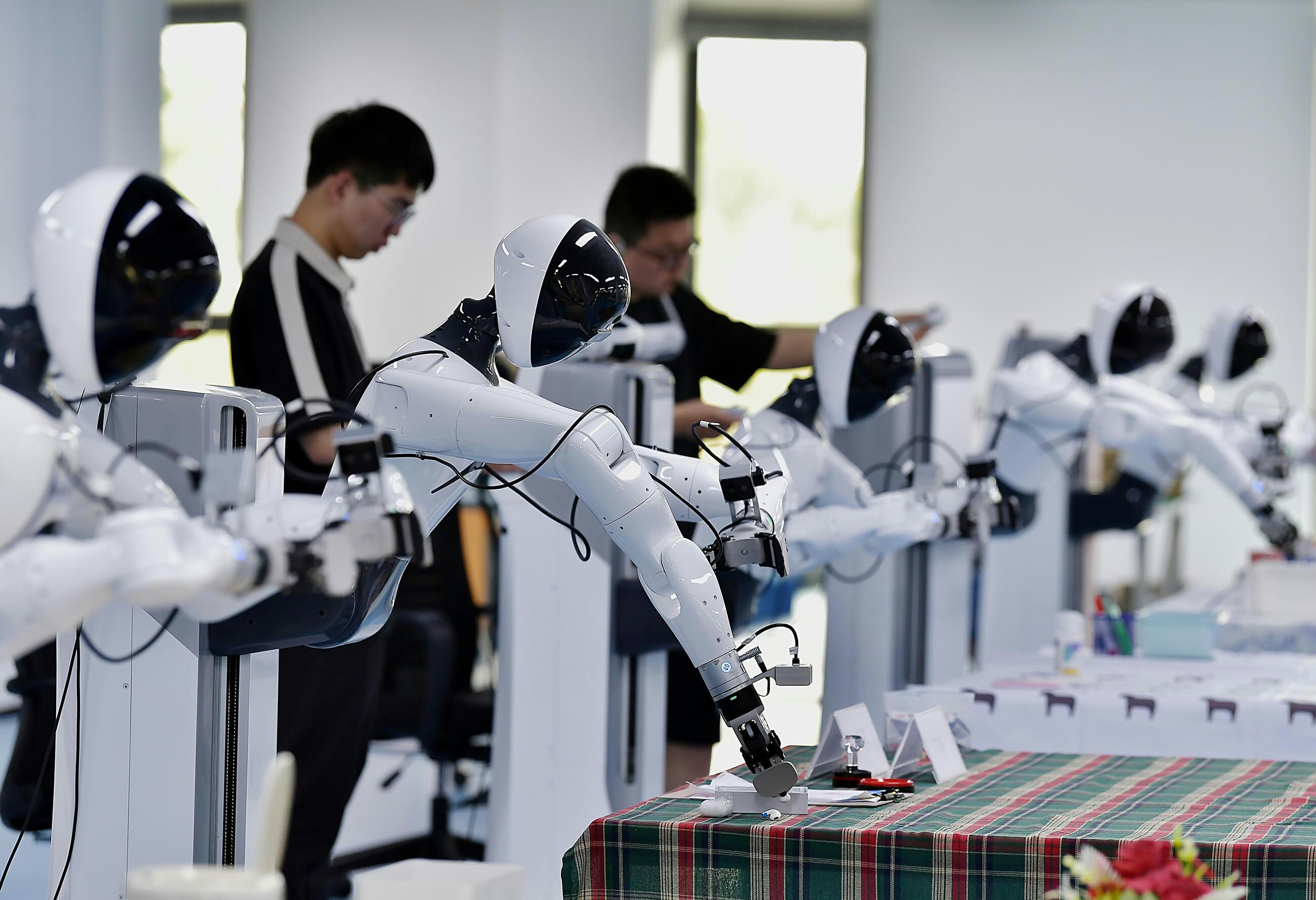
The Future of Industry in an AI-Driven Era
The Future of Industry in an AI-Driven Era
The rapid integration of artificial intelligence (AI) is fundamentally transforming industries across the globe, eliciting a mixture of optimism and caution regarding the trajectory ahead. This evolving landscape was the central focus of the second AI seminar of the year organized by the Association of Aerospace Industries (Singapore) (AAIS) on July 2 at the NTUC Centre. Under the theme “The Path Forward: EASA, ASTAR and Industry on AI-Driven Transformation,” the event brought together over 100 aerospace professionals, researchers, regulators, and technology providers to explore the practical challenges and opportunities of AI adoption within aviation—a sector governed by rigorous safety and regulatory standards.
Regulatory Frameworks and Industry Collaboration
The seminar commenced with a detailed overview from the European Union Aviation Safety Agency (EASA). Ms Inês Berlenga, Project Manager for AI Ethics, alongside Mr François Triboulet, Project Manager for AI Assurance, presented EASA’s evolving frameworks designed to ensure the safe and responsible deployment of AI technologies. Their discourse underscored the critical importance of governance, risk-based assurance, and human oversight. They emphasized that fostering trust in AI systems requires close collaboration between regulators and industry stakeholders as AI capabilities continue to advance.
Following this, Mr Nelson Low, Director of the Singapore Aerospace Programme at ASTAR, highlighted the agency’s efforts to partner with industry players in leveraging AI to tackle operational challenges in aerospace maintenance, repair, and overhaul (MRO). He showcased ongoing research initiatives and collaborative projects aimed at enhancing productivity, optimizing maintenance processes, and improving decision-making. Mr Low advocated for deeper industry engagement to co-develop AI solutions that are finely attuned to practical, real-world requirements.
Industry Perspectives and Emerging Challenges
Representatives from solution providers contributed valuable insights into the evolving AI landscape. Mr Biju Alex Thomas, Operations Director at Emage Vision, illustrated how intelligent automation is revitalizing legacy industrial processes. Meanwhile, Mr Jeremy Ang, Co-Founder and CEO of Axium Industries Group, discussed the development of agentic AI solutions tailored for supply chain operations, highlighting the growing sophistication of AI applications in complex industrial environments.
A recurring theme throughout the seminar was the imperative for industries to recalibrate their strategies as AI-driven solutions increasingly supplant traditional partners and processes. This transition presents significant challenges. Established companies face mounting pressure to innovate or risk obsolescence, while market responses to the AI surge evoke historical parallels with previous technological revolutions that culminated in financial downturns. Concerns were voiced regarding the risks of overinvestment and the potential systemic impacts on financial markets if expectations outpace technological realities.
During facilitated table discussions, participants exchanged candid views on AI adoption within their organizations, identifying both promising opportunities and notable obstacles. A live poll revealed a shared conviction that the success of AI initiatives depends fundamentally on the quality of underlying data rather than the mere speed of adoption. This perspective was reinforced during a panel discussion moderated by Mr Tay Gek Peng, Founding Director of Grounded Practice and former Chief Digitalisation Officer of the Republic of Singapore Air Force. Panelists representing Collins Aerospace, EASA, ASTAR, and Emage Vision examined critical issues including governance, workforce readiness, data integrity, organizational transformation, and return on investment.
Navigating the AI-Driven Competitive Landscape
As industries adapt to the AI-driven era, the competitive environment is increasingly shaped by the deployment of agentic AI applications. There is a growing emphasis on whether the application layer can generate sufficient revenue to justify the substantial investments in AI infrastructure. In sectors such as hospitality, the transparency and responsiveness of AI-driven systems are becoming essential factors in maintaining competitive relevance.
The seminar underscored that while AI holds transformative potential, its successful implementation hinges on robust data management, thoughtful governance frameworks, and strategic organizational adaptation. These lessons resonate broadly across industries confronting the complex realities of an AI-powered future.

Etihad and Swissport Extend Global Partnership

Sepehran Airlines B737 Returns to Mashhad After Tyre and Engine Issues

Etihad Deploys Widebody Fleet to Meet Strong Demand

Korean Air Finalizes $36.2 Billion Deal with Boeing
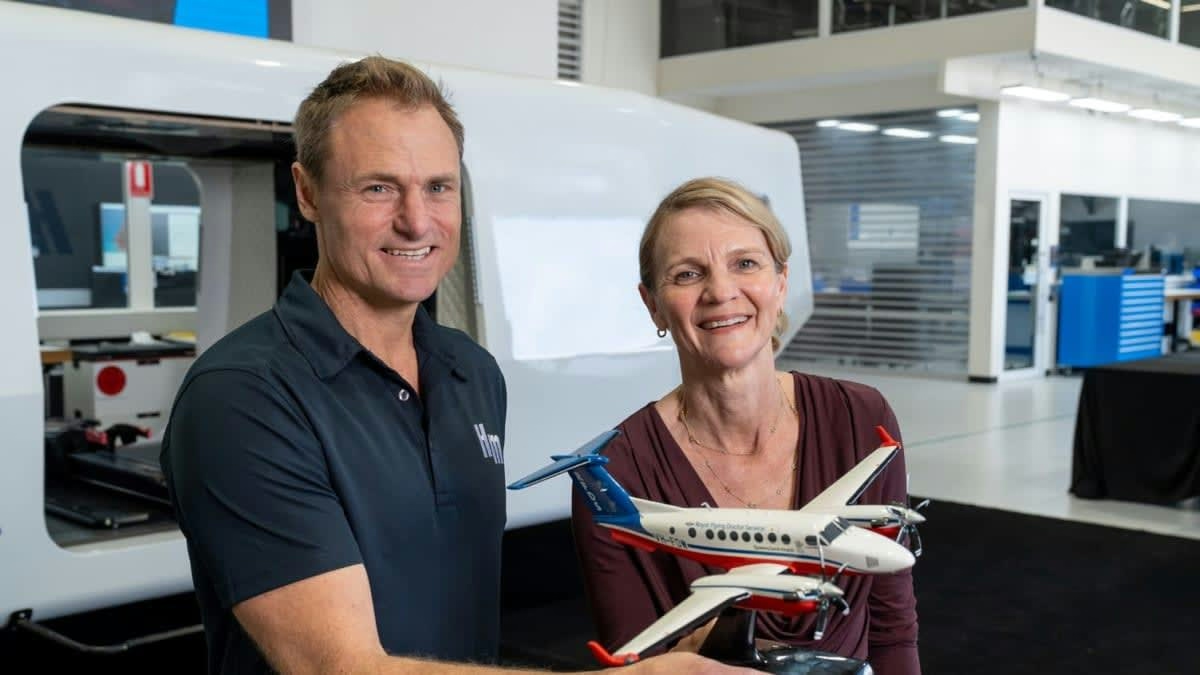
Australia’s RFDS Queensland Section Orders Six King Air 260Cs
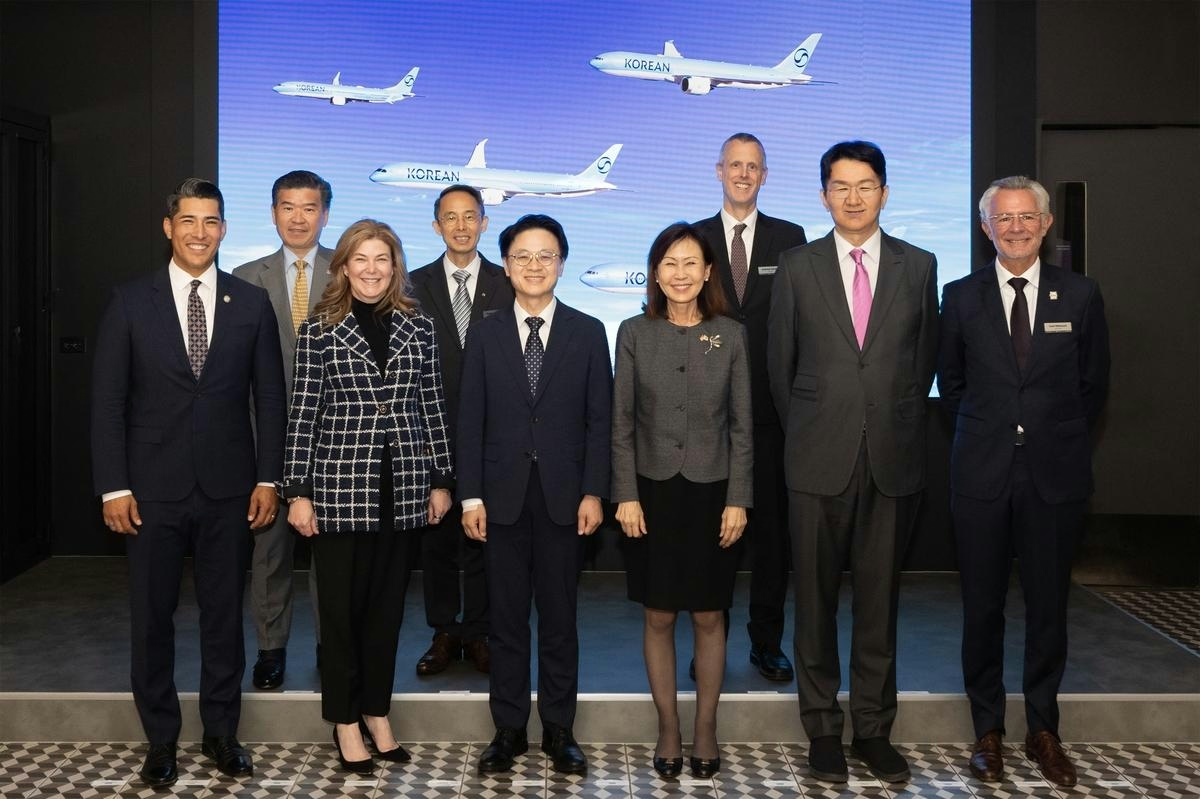
Korean Air Finalizes Order for 103 Boeing Jets and Engines
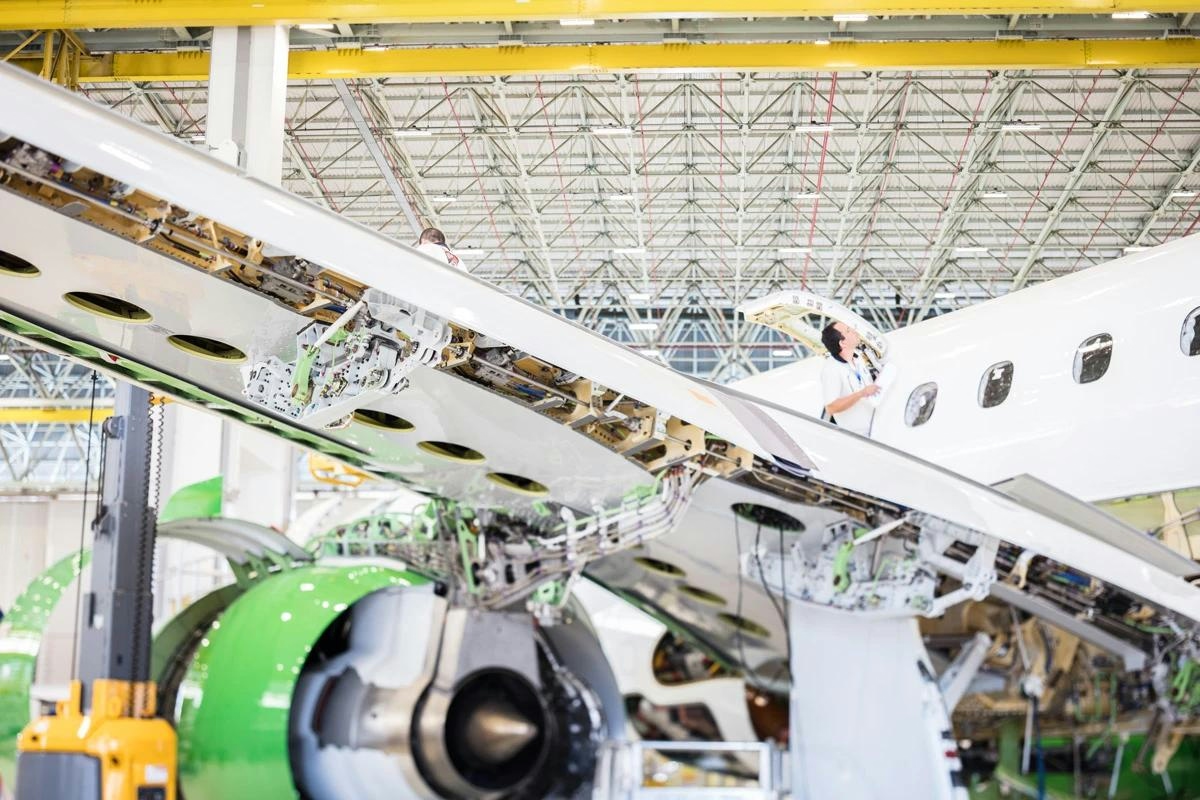
Embraer E195-E2 Features Distinctive Engine Placement Among Regional Jets

What Passengers Can Expect on Boeing’s New 777X Jet
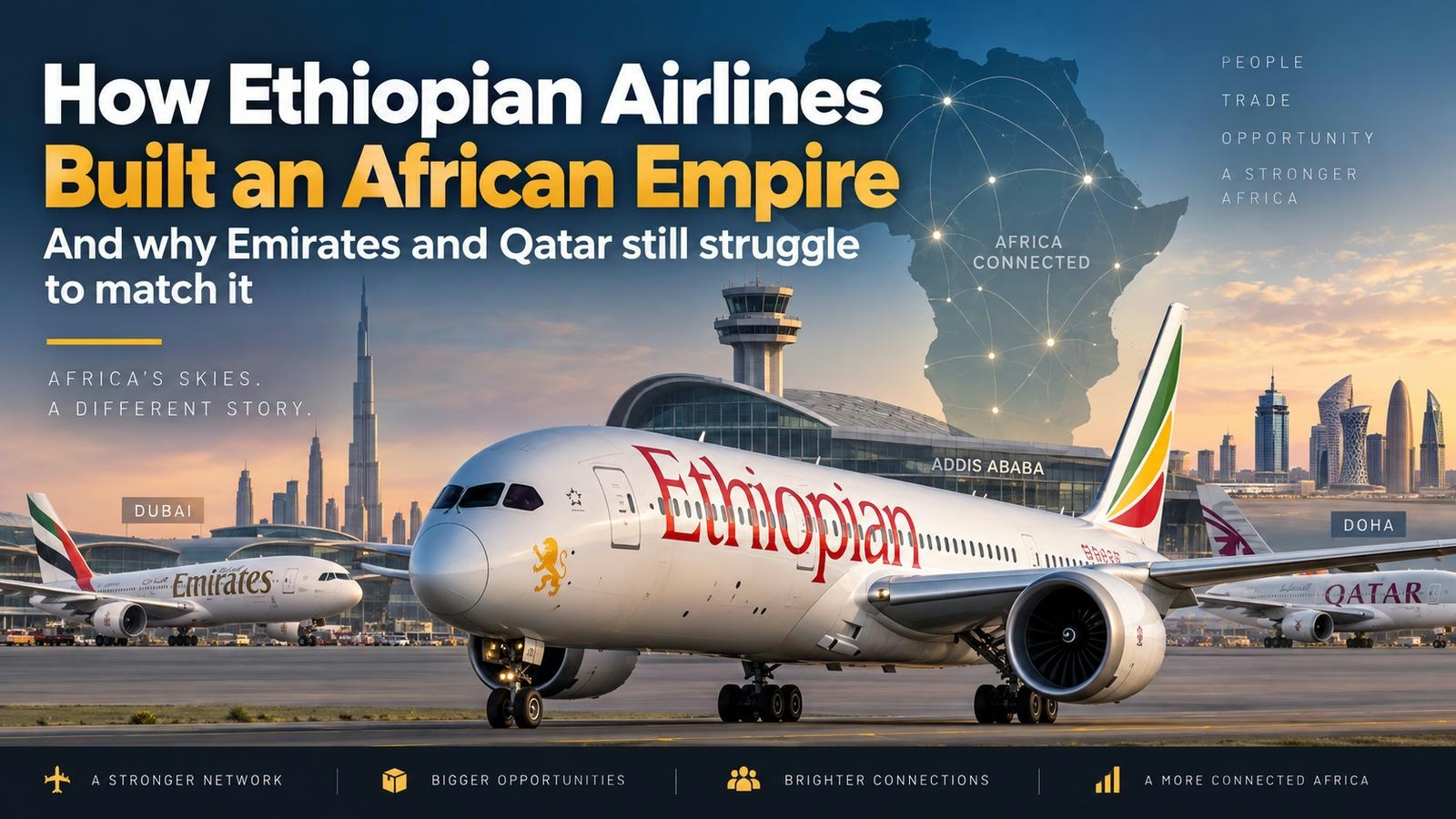
How Ethiopian Airlines Became Africa’s Leading Carrier Amid Gulf Competition
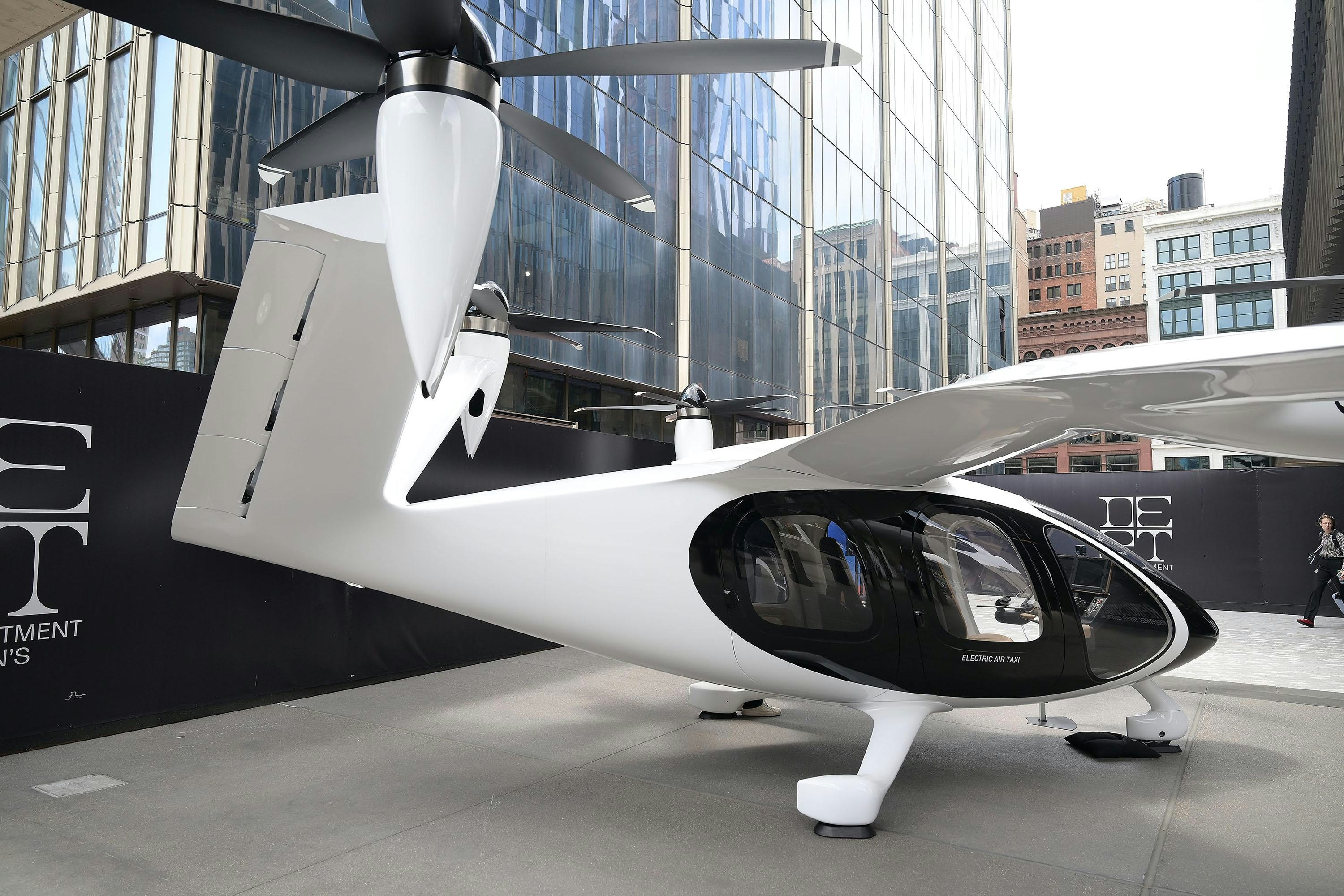
Joby Aviation Extends Autonomous Flight Capabilities with Cross-Country Tour
