
AIによるインサイトを行動へとつなげる

現在のトレンド
Categories
The Sikorsky Ilya Muromets: History’s First Heavy Bomber
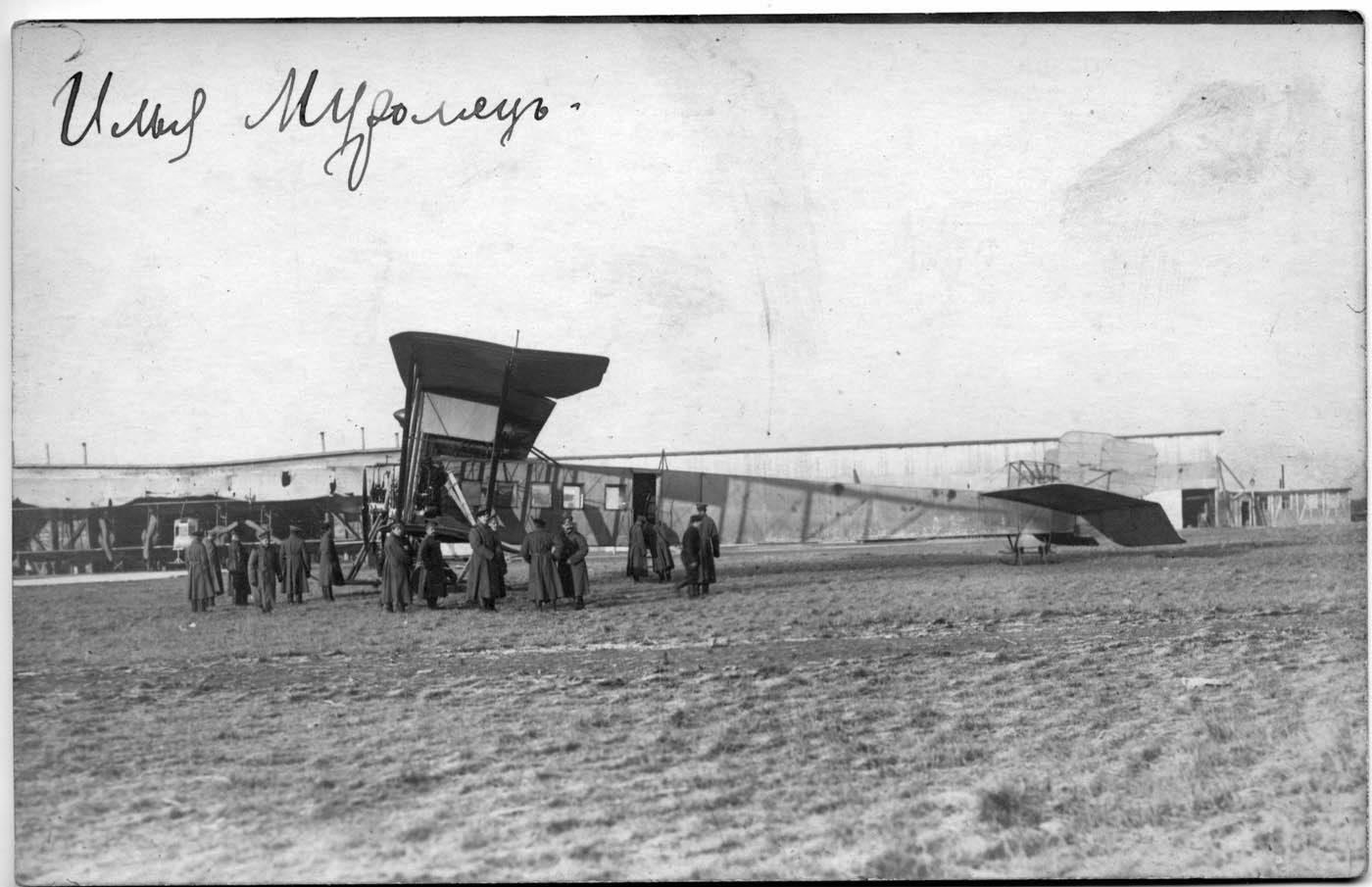
The Sikorsky Ilya Muromets: History’s First Heavy Bomber
In 1913, while much of the world was still grappling with the limitations of fragile single-engine biplanes, a young Russian engineer named Igor Sikorsky introduced a revolutionary aircraft: the Ilya Muromets. Named after a legendary figure from Russian folklore, this four-engine behemoth was a remarkable achievement, featuring innovations such as a heated passenger lounge, electric lighting, and even an airborne lavatory—amenities that were far ahead of its time.
From Luxury Airliner to Military Bomber
Originally designed as a luxury airliner, the Ilya Muromets offered an insulated saloon furnished with wicker chairs, a private compartment equipped with a bed and table, and heating systems that utilized engine exhaust pipes. Electric lights powered by a wind generator illuminated the cabin, while passengers could enjoy views through real windows at the rear of the aircraft. Mechanics were able to walk along the broad wings during flight to service the engines, an extraordinary capability for the era.
On February 11, 1914, the aircraft set a world record by carrying sixteen people aloft. Later that summer, it completed a round-trip journey from St. Petersburg to Kiev, covering over 2,000 kilometers. This demonstrated the practical value of large, multi-engine airplanes and quickly caught the attention of the Russian Army, which ordered ten units, thereby ushering in a new chapter in aviation history.
With the outbreak of World War I, Sikorsky adapted the Ilya Muromets into the world’s first four-engine heavy bomber. In December 1914, Russia formed the Squadron of Flying Ships, the first dedicated heavy-bomber unit centered around this aircraft. Throughout the war, these bombers flew approximately 400 sorties and dropped 65 tons of bombs. Remarkably, only one was lost to enemy fighters, underscoring the aircraft’s durability and defensive capabilities. German pilots soon learned to avoid direct confrontations with these formidable flying machines.
Challenges and Enduring Legacy
Despite its groundbreaking design and operational success, the Ilya Muromets faced significant challenges. Its large size and advanced technology required complex maintenance and extensive logistical support, resulting in high operational costs. These factors limited its widespread deployment and necessitated a dedicated infrastructure to maintain mission readiness.
Nonetheless, the legacy of the Ilya Muromets endures. Its recent appearances at airshows have rekindled interest among military historians and aviation enthusiasts, highlighting its historical importance and engineering ingenuity. The aircraft’s pioneering role has also drawn renewed attention from global competitors, inspiring the development of advanced heavy bombers such as the U.S. B-52 and Russia’s Su-34, as nations continue to vie for aerial supremacy.
Igor Sikorsky, who later fled the Russian Revolution and gained renown in America as a helicopter pioneer, left behind the Ilya Muromets as a testament to innovation. This “flying ship” redefined the possibilities of early aviation and remains a symbol of engineering excellence and visionary design.

Etihad Airways Suspends Airbus A380 Flights on Key Route

Aditya Birla Group Seeks Approval for Aircraft Leasing in GIFT City

Qatar Airways Highlights Innovation and Connectivity at Arabian Travel Market 2026

Hong Kong's Five-Year Plan Includes Andrew Fan's Aircraft Parts Processing Hub Proposal

ACIA Aero Leasing Delivers ATR72-600 to Air Nostrum

RTX Appoints Jill Albertelli as Head of Pratt & Whitney

TAT Technologies Joins Beyond Aero Hydrogen Aircraft Program

AURAK Study Highlights Barriers to Air Taxi Adoption in Emerging Economies

Xiamen Air Selects Altitude for 787 Maintenance at Heathrow

Etihad and Swissport Extend Global Partnership
