
画像

エアロジニー — あなたのインテリジェントな副操縦士。

何でも尋ねてください。全てを分析してください。即座に行動してください。

現在のトレンド

Categories

The Six Commercial Aircraft with the Largest Wingspans in Operation
March 29, 2026By ePlane AI
The Six Commercial Aircraft with the Largest Wingspans in Operation
0
0
Large Wingspan Aircraft
Airbus A380
Boeing 747

The Six Commercial Aircraft with the Largest Wingspans in Operation

The evolution of commercial aviation continues to be marked by a pursuit of greater fuel efficiency and increased payload capacity, driving manufacturers to design aircraft with ever-larger wingspans. This trend reflects the industry's response to shifting demands for enhanced performance, operational efficiency, and environmental sustainability.

Leading the Field: Airbus A380 and Boeing 747

At the forefront of this category stands the Airbus A380, the world’s largest passenger aircraft by seating capacity. Despite its remarkable size and range, the A380 has experienced a decline in orders as airlines increasingly prioritize smaller, more fuel-efficient jets. Similarly, the iconic Boeing 747, once a symbol of long-haul travel, is witnessing reduced demand, mirroring a broader industry shift away from four-engine aircraft in favor of more economical twin-engine models.

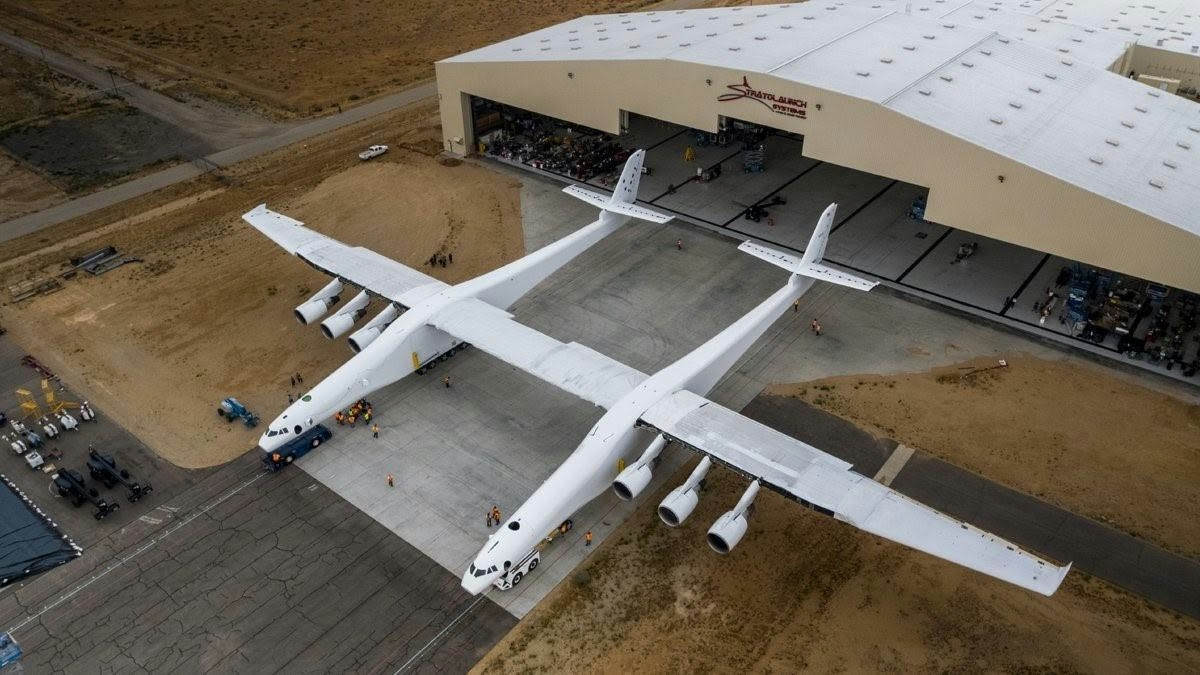
The Antonov An-225 Mriya, which previously held the record for the largest commercial wingspan, was destroyed during the Russian invasion of Ukraine in 2022. Although there is hope that a second unfinished prototype may eventually be completed, the following six aircraft currently represent the widest commercial jets in active service.

The Six Largest Commercial Aircraft by Wingspan

The Airbus A350-1000, with a wingspan of 212 feet, is the largest and most advanced member of the A350 family. As a clean-sheet, next-generation widebody, it incorporates advanced composite materials and is powered by Rolls-Royce Trent XWB-97 engines, delivering exceptional fuel efficiency and range. Airlines such as Qantas are preparing to deploy specially modified A350-1000ULR variants for ultra-long-haul routes, including the world’s longest nonstop flights from Australia to London and New York, scheduled to commence in 2027. Passenger comfort is a key feature of the A350, which offers the Airspace cabin with lower cabin altitude, enhanced air quality, quieter interiors, and customizable LED lighting. Qatar Airways is currently the largest operator, with 28 aircraft in service.

The Boeing 777-300ER also features a wingspan of 212 feet and has been instrumental in the transition from four-engine to twin-engine long-haul aircraft. Equipped with powerful GE90-115B engines, it has enabled reliable transoceanic flights and remains a favorite among airlines. With approximately 700 units still in active service, the 777-300ER is one of the most significant widebodies in commercial aviation history.

Market Trends and Industry Responses

The mixed market reception to large aircraft reflects evolving airline strategies. While some carriers continue to value the capacity and range offered by superjumbos, many are shifting toward more modern and efficient models. Manufacturers are responding with innovative designs such as the Boeing 777X, which features folding wingtips to maximize wingspan while maintaining compatibility with existing airport infrastructure. Similarly, the Airbus A350 XLR targets ultra-long-range routes with enhanced efficiency.

Environmental considerations are increasingly shaping the competitive landscape, with growing interest in electric and hybrid-electric propulsion technologies. These advancements have the potential to further transform the market as airlines strive to balance capacity, range, and sustainability.

As the aviation industry advances, the six commercial aircraft with the largest wingspans remain engineering marvels, embodying both the ambition of past decades and the ongoing pursuit of smarter, greener flight.

More news
Airbus Wins Air China Cargo Order Despite Boeing Share Gains

Airbus Wins Air China Cargo Order Despite Boeing Share Gains

Airbus Secures Major Air China Cargo Order Amid Intensifying Competition with Boeing Air China Cargo has placed a significant order for up to ten Airbus A350 freighters, marking a notable development in the ongoing rivalry between Airbus and Boeing. This deal, reportedly secured at a substantial price discount, highlights the increasingly aggressive pricing strategies and shifting airline preferences that are reshaping the global widebody freighter market. Air China Cargo’s Strategic Shift to Airbus The agreement involves six firm orders for Airbus A350F aircraft, with options for an additional four, carrying a list price valuation exceeding $4 billion. However, Air China Cargo has emphasized that the final negotiated price reflects a considerable reduction from the list figures, offering rare insight into the commercial pressures affecting widebody freighter sales. The A350F, expected to enter service later this decade, is positioned as a next-generation freighter designed to meet stringent emissions regulations while delivering improved fuel efficiency and payload capabilities. This acquisition represents a strategic diversification for Air China Cargo, which currently operates a fleet dominated by Boeing 777 freighters. By incorporating the A350F, the airline is broadening its fleet composition, signaling a shift in procurement strategy that challenges Boeing’s historical dominance in the cargo sector, particularly with its 747 and 777 freighter models. The deal underscores how competitive pricing and delivery availability can influence airline decisions, even when existing fleet loyalties might suggest otherwise. Boeing’s Resilience Amid Market Challenges Despite losing this high-profile contract, Boeing’s shares have risen in recent trading sessions, reflecting investor confidence in the company’s broader operational and financial outlook. The firm’s performance in February, which saw deliveries reach a nine-year high, alongside ongoing efforts to stabilize production lines, has bolstered market sentiment. Boeing is also intensifying production of its 737 MAX to maintain competitiveness in the single-aisle segment, while focusing on generating positive free cash flow and reducing debt levels. These initiatives are critical as Boeing navigates supply chain challenges and responds to sustained demand for both passenger and cargo aircraft. The company’s ability to restore margins and ramp up output will be pivotal in maintaining its market position amid Airbus’s aggressive pricing and delivery strategies. Broader Market Implications and Competitive Dynamics The Air China Cargo order is part of a wider trend in the aviation industry, with other carriers such as Atlas Air Worldwide Holdings also opting for Airbus freighters. This shift reflects Airbus’s success in leveraging delivery performance and competitive pricing to capture market share in segments traditionally dominated by Boeing. For investors, the modest appreciation in Boeing’s stock price suggests confidence in the company’s long-term fundamentals, including the recovery of global air travel and ongoing fleet renewal demands. The evolving strategies of both manufacturers—Airbus’s discounting approach and Boeing’s production ramp-up—are set to continue shaping the competitive landscape as airlines adapt to new regulatory requirements and operational priorities.
Why Airlines Choose Airbus or Boeing, Not Both

Why Airlines Choose Airbus or Boeing, Not Both

Why Airlines Choose Airbus or Boeing, Not Both As global air travel recovers and aircraft orders increase, a distinct pattern has emerged within the aviation industry: airlines are increasingly committing to either Airbus or Boeing, rather than dividing their fleets between the two manufacturers. This trend reflects not only the dominance of these two aerospace giants but also the strategic, financial, and operational factors that influence contemporary fleet management decisions. The Duopoly Shaping Commercial Aviation For many decades, Airbus and Boeing have effectively controlled the commercial aircraft market, supplying the overwhelming majority of jets worldwide. Recent industry data confirms their sustained dominance, with Airbus currently leading in overall deliveries, particularly in the high-demand single-aisle segment, while Boeing retains a strong position in the long-haul widebody category. Between 2015 and 2024, Airbus secured more orders, yet Boeing delivered a comparable number of aircraft, underscoring the close competition between the two manufacturers. This duopoly provides airlines with both advantages and limitations. The extensive production capabilities and substantial order backlogs of Airbus and Boeing guarantee long-term support, parts availability, and ongoing development of new models well into the 2040s. However, the absence of similarly sized competitors means that selecting one manufacturer carries significant implications across all facets of an airline’s operations. Strategic Considerations and Market Dynamics Airlines’ preferences for Airbus or Boeing are shaped by the distinct strengths each company offers. Airbus has cultivated a strong reputation for its widebody aircraft, while Boeing is often favored for its narrowbody jets. These choices are influenced by factors such as fleet compatibility, maintenance expenses, and specific aircraft performance characteristics. The market closely monitors major fleet decisions, which can have notable impacts on investor sentiment. For example, Airbus’s robust delivery figures reported in February 2026 and Boeing’s best January delivery performance since 2019 were met with positive investor reactions. Competitors also respond strategically; GOL’s recent decision to incorporate Airbus A330-900s into its fleet exemplifies a tactical move to maintain competitiveness in a shifting market. The Importance of Fleet Commonality A compelling rationale for airlines to concentrate their fleets with a single manufacturer is the operational efficiency gained through fleet commonality. Operating a homogeneous fleet enables airlines to standardize pilot training, maintenance protocols, spare parts inventories, and cabin configurations. This standardization reduces operating costs and enhances scheduling flexibility. For instance, pilots trained on the Airbus A320neo can transition to other Airbus models with minimal additional training, a benefit similarly observed within Boeing’s product families. Maintenance operations also become more streamlined. Airlines can minimize the number of spare engines, landing gear components, and avionics units required when their fleet shares common designs. Engineering teams operate more efficiently, and technicians can service multiple aircraft types with greater expertise. These efficiencies are particularly valuable as airlines expand capacity to meet growing passenger demand. Future Outlook Industry forecasts indicate that narrowbody aircraft will continue to represent approximately three-quarters of global deliveries through the early 2030s, reinforcing the central role of the Airbus A320neo and Boeing 737 MAX families. Given the significant future seat capacity tied to these platforms, airlines are incentivized to consolidate orders with a single supplier to secure more favorable pricing and earlier delivery schedules. Ultimately, the choice between Airbus and Boeing extends beyond the acquisition of aircraft; it represents a long-term strategic partnership that will influence an airline’s competitive position for decades.
Air India Withdraws A350-900 from Domestic Routes to Focus on London, New York, and Newark for Summer 2026

Air India Withdraws A350-900 from Domestic Routes to Focus on London, New York, and Newark for Summer 2026

Air India Withdraws A350-900 from Domestic Routes to Prioritize London, New York, and Newark for Summer 2026 In a notable realignment of its fleet strategy, Air India has announced the withdrawal of its Airbus A350-900 aircraft from domestic routes, redirecting these widebody jets to key international services for the Summer 2026 schedule. Official flight program documents and airline deployment data confirm that the A350-900s will now primarily serve the Delhi-London Heathrow, Delhi-New York JFK, and Delhi-Newark Liberty corridors. This strategic shift reflects the airline’s ongoing fleet modernization efforts and a renewed focus on high-yield long-haul markets. Strategic Shift Amid Changing Aviation Landscape This decision coincides with broader transformations within India’s aviation sector. Government statistics reveal a 10% reduction in weekly domestic flights across all carriers for Summer 2026, signaling shifting demand patterns that have compelled airlines to reassess their resource allocation. Air India’s redeployment of the A350-900, an aircraft optimized for extended range, enhanced passenger comfort, and premium cabin configurations, aligns with this trend by concentrating its most advanced aircraft on international routes that promise greater revenue potential. Previously, the A350-900 had been sporadically deployed on major domestic trunk routes such as Bengaluru, Mumbai, Hyderabad, and Chennai, primarily for crew training and aircraft familiarization purposes. However, these deployments were not formalized in published schedules. The Summer 2026 timetables now clearly designate the A350-900 exclusively for international operations, where the aircraft’s capabilities can be fully leveraged to meet complex regulatory requirements and passenger expectations. This reallocation occurs amid regulatory pressures aimed at making domestic air travel more affordable, including mandates that at least 60% of seats be sold without additional fees. Air India’s decision to limit the use of widebody aircraft like the A350 on domestic routes may invite scrutiny from regulators and passengers concerned about diminished domestic capacity and fewer premium travel options within India. Financial and Competitive Context The airline’s move also reflects the financial and competitive challenges facing Indian carriers. Despite strong growth in domestic air travel demand, the sector collectively reported losses amounting to $576 million in the 2024-25 fiscal year, underscoring persistent operational difficulties. Concurrently, international competitors such as China Eastern Airlines are expanding their presence on Europe-Asia routes, potentially capturing market share as Indian airlines concentrate resources on select international sectors. Implications for Domestic Services Earlier industry reports had suggested the possibility of A350 services to Bengaluru and Hyderabad, with daily and twice-weekly frequencies respectively. However, these plans have not been incorporated into Air India’s official Summer 2026 schedules or government filings. Aviation analysts interpret these earlier projections as preliminary and not indicative of confirmed service allocations. The absence of these routes in booking systems further highlights Air India’s strategic prioritization of international sectors, where the A350’s advanced features and premium offerings can be most effectively utilized. As Air India advances its fleet transformation, the redeployment of the A350-900 underscores the airline’s commitment to strengthening its international network, even as it contends with regulatory expectations and a challenging domestic financial environment.
Inside MRO: Key Maintenance Deals Shaping March–April 2026

Inside MRO: Key Maintenance Deals Shaping March–April 2026

Inside MRO: Key Maintenance Deals Shaping March–April 2026 The maintenance, repair, and overhaul (MRO) sector is experiencing a notable surge in activity during March and April 2026, driven by airlines and aerospace companies striving to secure capacity and support for the coming decade. This period has seen significant developments ranging from expanded airframe support pools to the adoption of advanced digital maintenance systems, reflecting the industry's response to evolving market demands. Airlines Secure Long-Term Support Amid Fleet Expansion Recent weeks have witnessed airlines strengthening their partnerships with established MRO providers, underscoring confidence in sustained fleet growth and the necessity of securing shop capacity well into the 2030s. Industry analysts observe that the commercial aircraft MRO market is closely aligned with rising global air traffic and the expansion of narrowbody fleets. This trend has prompted carriers to proactively enter into multi-year agreements to ensure maintenance continuity. Notable contracts have been finalized between leading airlines and prominent global MRO firms such as Lufthansa Technik, ST Engineering, AFI KLM E&M, Delta TechOps, and AAR. These agreements typically encompass scheduled shop visits, on-wing support, and access to pooled spare parts, providing airlines with predictable maintenance costs while guaranteeing providers a steady workflow across engine and component portfolios. Increasingly, these long-term contracts are structured around usage and flight-hour metrics, aligning maintenance expenditures with actual aircraft utilization and mitigating volatility linked to traffic fluctuations. The months of March and April 2026 have been particularly active for the signing or extension of these comprehensive frameworks. On the narrowbody front, engines from the CFM56 family and the newer Leap variants remain central to long-term arrangements. MRO providers are investing in additional overhaul lines and capability enhancements, especially in Asia and the Middle East, to meet anticipated demand. Airlines, in turn, are seeking assurances regarding turnaround times and pricing for these high-demand engine types. Regional and Niche Carriers Embrace OEM Pool Programs Beyond the major global airlines, regional and niche operators are increasingly adopting OEM-backed pool programs and integrated support packages. Recent agreements include multi-year maintenance and spares access tailored for regional jet fleets, with Embraer emerging as a key provider of comprehensive component coverage for E-Jet operators. These arrangements typically grant carriers access to centralized inventories of rotable components, repair and overhaul services, and technical support, often structured around fixed monthly fees linked to the number of aircraft in service. For smaller operators, this model reduces capital tied up in parts and simplifies logistics, particularly for aircraft operating in remote or underserved regions. Analysts monitoring the deal flow in March 2026 highlight the growing appeal of these models in emerging markets, where local MRO infrastructure remains limited despite robust traffic growth. By leveraging OEM or global provider networks, smaller carriers can enhance dispatch reliability without the need to develop full in-house maintenance capabilities. Cargo and charter operators are also exploring similar support structures for converted freighter fleets and specialized cabin configurations. Market Challenges and Competitive Responses Despite the sector’s momentum, the MRO industry faces mounting challenges. Intense competition for used aircraft and engine feedstock is driving acquisition costs higher, a concern underscored by AerSale, which has highlighted the hypercompetitive nature of the market for pre-owned assets. This environment is encouraging airlines to diversify their MRO partnerships to better manage unpredictable engine overhaul costs and turnaround times. For instance, StandardAero’s recent agreement with Robinson Helicopter Company exemplifies this broader trend of carriers seeking alternative maintenance providers. In response to these challenges, competitors are expanding their capabilities to capture new business opportunities. Setna iO’s acquisition of J&C Aero, aimed at enhancing aircraft interior services, signals a wider industry push to offer more comprehensive MRO solutions amid shifting market dynamics. As airlines and MRO providers navigate these evolving challenges, the agreements and strategic initiatives established in March and April 2026 are poised to influence the sector’s trajectory for years ahead.
Why U.S. Airlines Continue to Use the Boeing 757

Why U.S. Airlines Continue to Use the Boeing 757

Why U.S. Airlines Continue to Use the Boeing 757 More than twenty years after Boeing ceased production of the 757, this narrowbody aircraft remains a vital component of major U.S. airline fleets. It continues to serve as a cornerstone for key transatlantic and premium domestic routes, maintaining a unique position in the market. Despite the aviation industry's shift toward newer aircraft models and enhanced premium services, the 757’s distinctive combination of range, capacity, and operational efficiency sustains its relevance in a niche that neither modern narrowbodies nor widebodies have fully supplanted. An Aging Airframe That Still Fits the Mission The Boeing 757 was engineered with powerful engines and a high maximum takeoff weight, delivering the economics of a single-aisle aircraft with a range approaching that of widebody jets. This design enables airlines to operate routes that are too long or operationally demanding for most narrowbodies, yet insufficiently trafficked to justify deploying larger twin-aisle aircraft. As of 2025, Delta Air Lines operates over 100 passenger 757s, while United Airlines maintains a fleet exceeding 60, underscoring the model’s enduring significance within U.S. mainline operations. The 757’s moderate seating capacity combined with a strong payload capability makes it particularly well-suited for city pairs characterized by variable business and leisure demand. Airlines can offer full-service cabins, including lie-flat premium seating, without incurring the higher costs and risks associated with widebody aircraft that may be challenging to fill consistently throughout the year. This operational flexibility allows carriers to sustain schedule frequency and nonstop service on markets that might otherwise lose direct connections. Transatlantic “Long and Thin” Routes The 757’s strategic value is especially pronounced on transatlantic routes. United Airlines, for example, deploys 757-200s from Newark to secondary European destinations such as Faro, Malaga, and Reykjavik, as well as additional frequencies to Brussels. Seasonal services like Newark to Stockholm further demonstrate the aircraft’s ability to extend the operational reach of narrowbodies, serving airports that may not consistently support widebody operations but experience strong demand during peak travel periods. This aircraft facilitates daily or near-daily service featuring premium cabins and extra-legroom economy seating, aligning the onboard product with offerings at larger hubs while matching capacity to fluctuating seasonal demand. Analyses of transatlantic schedules reveal that the 757 continues to account for a substantial portion of U.S. carrier departures to secondary European markets each summer. Although new long-range narrowbodies such as the Airbus A321LR and XLR are entering service, delays in delivery and certification mean the 757 will continue to bridge the gap on these “long and thin” routes well into the mid-2020s. Navigating Market and Regulatory Pressures The sustained use of the 757 by U.S. airlines also reflects broader market and regulatory dynamics. Rising fuel prices have exerted pressure on airline profit margins, prompting fare increases and contributing to periods of market volatility. The 757’s operational efficiency and cost-effectiveness assist carriers in managing these economic challenges, even as competitors expand premium seating options to attract higher-yield passengers. Regulatory developments further influence operational decisions. Recent Federal Aviation Administration (FAA) directives, including inspections for winglet cracks on certain 757 models, have necessitated adjustments to maintenance protocols to ensure continued safety and compliance. These factors, combined with the aircraft’s unique operational capabilities, explain why the Boeing 757 remains a mainstay in U.S. airline fleets despite its age and the evolving competitive environment.
China Reaches Key Milestone in Megawatt-Class Liquid Hydrogen Aviation Engine

China Reaches Key Milestone in Megawatt-Class Liquid Hydrogen Aviation Engine

China Advances Megawatt-Class Liquid Hydrogen Aviation Engine China has achieved a pivotal breakthrough in aviation technology with the successful ground testing of its first megawatt-class liquid hydrogen engine, the AEP100 turboprop. Developed independently by the Aero Engine Corporation of China (AECC) Hunan Aviation Powerplant Research Institute in Zhuzhou, Hunan province, the engine completed a series of ignition and performance adjustment tests, meeting all full-performance standards, according to Science and Technology Daily. Throughout the testing phase, both the engine and the liquid hydrogen transport system operated stably, with all performance indicators remaining within normal parameters. Technological Significance and Industry Implications This milestone represents a significant advancement in China’s liquid hydrogen turbine power technology, demonstrating the technical feasibility of employing liquid hydrogen—a fuel noted for its high energy density and zero emissions—in aviation applications. The successful tests pave the way for transitioning liquid hydrogen turbine power from experimental stages to practical engineering use. In the near term, the technology is expected to be deployed in unmanned aerial logistics and regional aviation, with plans for gradual expansion into mainline aviation sectors. The development is poised to stimulate the growth of a trillion-yuan industrial chain encompassing green hydrogen production, hydrogen liquefaction, cryogenic storage and transport, and refueling infrastructure. Additionally, it is anticipated to drive innovation in high-end equipment manufacturing and new materials, reinforcing China’s position in advanced aviation technology and strategic emerging industries. Global Context and Challenges Ahead China’s progress unfolds amid intensifying global competition in hydrogen technology. As the world’s leading producer of electrolysers, China’s advancements in liquid hydrogen aviation engines are likely to attract increased scrutiny and potential resistance from international competitors. Major aerospace companies such as Airbus, which is advancing its ZEROe hydrogen fuel cell aircraft concept, may accelerate their own development efforts and forge strategic partnerships to enhance hydrogen propulsion systems. The broader geopolitical environment, including trade policies and ongoing tensions, is expected to influence market dynamics and shape responses from global aviation firms. Despite the promise of decarbonization, experts caution that liquid hydrogen aviation engines remain largely in the exploratory phase worldwide. Wang Yanan, editor-in-chief of Aerospace Knowledge magazine, highlighted ongoing challenges related to equipment lifespan, energy density, storage costs, and safety, which currently limit the immediate application of such engines in commercial passenger aircraft. Initial uses are more likely to focus on research and specialized aviation fields, with the feasibility of emerging low-altitude applications yet to be demonstrated. Wang further emphasized that for new technologies to supplant existing aviation engine systems, they must not only achieve decarbonization but also meet or exceed current standards in cost, performance, safety, and reliability. While China’s breakthrough marks a major step forward, significant obstacles remain before liquid hydrogen engines can become a mainstream solution in global aviation.
Thailand’s Songkran Aviation Strategy and Its Impact on Global Travel

Thailand’s Songkran Aviation Strategy and Its Impact on Global Travel

Thailand’s Songkran Aviation Strategy and Its Impact on Global Travel Thailand’s aviation approach during the Songkran festival is gaining recognition as a significant example of effective tourism management on the global stage. Led by the Civil Aviation Authority of Thailand, the strategy focuses on expanding flight capacity and encouraging airlines to moderate ticket prices during one of the nation’s busiest travel seasons. Songkran, the traditional Thai New Year, generates a substantial increase in both domestic and international travel, compelling the government to implement measures that ensure the aviation infrastructure can accommodate millions of passengers efficiently. Managing Peak Travel Demand: A Model for Tourism-Dependent Nations Thailand’s coordinated efforts to increase flight availability while stabilizing airfare present a potential framework for other countries experiencing seasonal travel surges. Similar peaks occur worldwide during events such as Japan’s Golden Week, China’s Lunar New Year, and India’s Diwali, often resulting in overcrowded airports, limited flight options, and sharply rising ticket prices. By collaborating closely with airlines to add extra flights and monitoring pricing strategies, Thailand aims to facilitate smoother passenger flows and mitigate the typical challenges associated with peak travel periods. This proactive stance marks a departure from the reactive measures commonly employed during travel spikes, positioning Thailand as a leader in managing tourism demand through strategic aviation planning. Rethinking Airfare Pricing: Consumer Protection and Industry Implications A key component of the Songkran strategy involves urging airlines to reduce ticket prices by as much as 30 percent during peak travel times. This initiative reflects a broader movement toward enhancing consumer protection in the aviation sector, particularly in markets where dynamic pricing often renders holiday travel prohibitively expensive. Thailand’s intervention suggests a shift toward increased regulatory oversight of airfare structures, with potential ramifications for the global airline industry. Such measures may raise expectations for fair pricing during high-demand seasons, invite closer scrutiny of airline pricing models, and compel carriers to strike a balance between profitability and accessibility. For travelers, this could mean more predictable and affordable fares during major holidays, improving overall travel experience and accessibility. Strengthening Regional Connectivity Amid Global Challenges Thailand’s focus on expanding domestic flight capacity underscores a wider global trend favoring regional travel. Short-haul journeys are becoming increasingly popular due to their lower costs, reduced travel times, and greater flexibility—a pattern evident not only in Southeast Asia but also across Europe and other regions. By prioritizing domestic connectivity during Songkran, Thailand is bolstering the resilience of its internal tourism sector. This may prompt airlines to reallocate resources toward short-haul routes while optimizing long-haul operations, fostering more balanced and sustainable travel patterns. Nevertheless, the strategy faces notable challenges. Geopolitical tensions, particularly in the Middle East, threaten to disrupt global travel flows and potentially diminish the anticipated influx of long-distance visitors. Market volatility during peak periods like Songkran could impact Thailand’s ability to meet its annual target of thirty million arrivals. Additionally, the concentration of global connectivity among a limited number of key airlines introduces vulnerabilities, as disruptions affecting these carriers could have outsized effects on travel networks. Competitor airlines may also adjust their strategies in response, especially as regional routes and secondary cities in Asia gain prominence, further reshaping the competitive landscape. Conclusion Thailand’s Songkran aviation strategy represents an innovative and forward-looking approach to managing peak travel demand. While it offers valuable lessons for other tourism-dependent countries, its ultimate success will hinge on effectively navigating geopolitical uncertainties, market fluctuations, and the evolving dynamics of global airline networks.
Jet Contractors: Business Model and Market Position Analysis

Jet Contractors: Business Model and Market Position Analysis

Jet Contractors: Business Model and Market Position Analysis Jet Contractors (ISIN: MA0000012247), listed on the Casablanca Stock Exchange in Moroccan Dirhams (MAD), has established itself as a significant entity within Morocco’s aviation services sector. Specializing in aircraft maintenance, repair, and overhaul (MRO), the company presents an attractive opportunity for North American investors seeking exposure to Africa’s growing aviation market, offering diversification with limited sensitivity to commodity price fluctuations. Company Overview and Core Business Model Jet Contractors functions as a comprehensive aviation contractor, providing maintenance services for both commercial and business jets. Its business model is primarily based on securing long-term contracts with airlines operating across North Africa and Europe. Revenue streams are generated through scheduled maintenance, unscheduled repairs, and component overhauls, which collectively contribute to stable and predictable cash flows in an industry marked by consistent demand. The company benefits from Morocco’s strategic geographic position, serving as a vital link between Europe and Africa. Its main facility, located near Casablanca’s Mohammed V International Airport, facilitates efficient aircraft turnaround times. Jet Contractors has invested heavily in certified technicians and state-of-the-art infrastructure, adhering to rigorous global standards such as those mandated by the European Union Aviation Safety Agency (EASA). Over time, Jet Contractors has cultivated a strong reputation through partnerships with regional flag carriers. It has also expanded its service offerings to include interior refurbishments and avionics upgrades, addressing the modernization requirements of emerging market fleets. This diversification helps mitigate risks associated with the cyclical nature of airline profitability. Market Position and Competitive Landscape Within Morocco’s aviation services market, Jet Contractors holds a solid mid-tier position. Although it competes with larger international MRO providers, the company leverages local advantages such as lower labor costs and a deep understanding of regulatory frameworks to deliver cost-effective, quality-certified services to regional clients. Strategic alliances with original equipment manufacturers (OEMs) further enhance its supply chain resilience and operational capabilities. The African aviation sector is experiencing robust growth, fueled by increasing passenger traffic, a rebound in tourism, and expanding business connectivity. Jet Contractors is capitalizing on these trends by expanding capacity at its Casablanca facility. High barriers to entry—including stringent certification requirements and the need for substantial capital investment in infrastructure—serve to protect established players like Jet Contractors from new low-cost competitors. Sector Drivers, Growth Catalysts, and Emerging Challenges The global demand for MRO services is underpinned by aging aircraft fleets and rising flight hours. In Africa, the combination of underpenetrated markets and rapid growth in air travel presents significant opportunities for expansion. Nonetheless, Jet Contractors faces several challenges that could impact its operations. Geopolitical risks, such as regional conflicts exemplified by the Gulf War, have the potential to suppress demand and disrupt aviation activities. Regulatory fragmentation, particularly in regions like Asia-Pacific, has led to issues such as illegal charter operations, underscoring the necessity for stringent compliance measures. Additionally, increasing scrutiny over financial transparency in private aviation highlights the importance of maintaining robust and transparent financial practices. The market is also evolving in response to shifting customer preferences and technological advancements. There has been a marked increase in bookings for helicopters and group charter flights, alongside the adoption of digital booking platforms and sophisticated flight data software. Competitors are adapting accordingly: Wheels Up is streamlining its fleet with a focus on Challenger and Phenom jets, Talon Air has implemented the MySky platform to enhance sales efficiency, and NetJets reported an 11% revenue increase in 2025. Outlook Positioned at the nexus of Morocco’s aviation ambitions and the global MRO market, Jet Contractors benefits from a diversified business model, strategic location, and responsiveness to sector trends. These factors collectively contribute to its resilience within North Africa’s evolving aviation landscape. However, sustained vigilance regarding geopolitical developments, regulatory changes, and technological innovation will be critical to maintaining its competitive advantage.
Air Algerie Plans to Serve 10 Million Passengers by 2026

Air Algerie Plans to Serve 10 Million Passengers by 2026

Air Algerie Aims to Serve 10 Million Passengers by 2026 Through Extensive Fleet Expansion Air Algerie is embarking on one of the most ambitious transformations in North African aviation history, targeting nearly 10 million passengers by 2026. This strategic vision is underpinned by a comprehensive fleet renewal program, supported by substantial orders from Boeing, Airbus, and ATR, alongside a robust overhaul of its network and service offerings designed to stimulate growth in both domestic and international markets. Comprehensive Fleet Renewal and Expansion Since 2023, Air Algerie has transitioned from modest fleet upgrades to an assertive multi-manufacturer acquisition strategy. With backing from Algeria’s National Investment Fund, the airline has secured 15 new aircraft, including Boeing 737 MAX narrowbodies and Airbus A330neo and A350 widebodies, aimed at enhancing its intercontinental and regional capabilities. Recent developments indicate an expansion of Airbus widebody orders, reflecting the airline’s intent to strengthen long-haul connections to Europe, the Middle East, Asia, and North America. In a landmark move for African aviation, Air Algerie has placed an order for 16 ATR 72-600 turboprops, scheduled for delivery starting in 2026. These aircraft will primarily serve a newly established domestic operation and thinner regional routes, improving connectivity to Algeria’s interior and southern regions, which have traditionally been underserved by jet services. The fleet renewal is already underway, with new Airbus A320-family jets and early deliveries of the A330neo replacing older widebody aircraft. By the late 2020s, Air Algerie anticipates operating a significantly younger and more fuel-efficient fleet, with an increasing proportion of seats offered on next-generation Boeing and Airbus models. A pivotal moment arrived in March 2026 when the airline announced an additional order for ten Boeing 737 MAX 8 aircraft, supplementing eight previously confirmed MAX 9s. Combined with commitments for widebody and ATR aircraft, Air Algerie’s long-term expansion plan now encompasses approximately 60 new planes, signaling a shift from fleet replacement to substantial growth. Passenger Growth and Market Challenges According to recent data presented at an internal summit and reported by local media, Air Algerie carried around 8.8 million passengers in 2025, representing an 11% increase over the previous year. This growth marks a significant post-pandemic recovery and positions the airline close to its 10-million-passenger target for 2026. To achieve this goal, Air Algerie is increasing aircraft capacity while implementing a more assertive network strategy. The airline is introducing new and reinstated routes to destinations such as Guangzhou and Kuala Lumpur, alongside several cities in sub-Saharan Africa, coinciding with the acceleration of widebody aircraft deliveries. Additionally, higher frequencies are planned on key European and Middle Eastern routes, leveraging Algiers as a strategic hub connecting African, European, and Gulf markets. Domestically, the introduction of the ATR fleet will support a new regional operation, further enhancing passenger volumes. Despite these promising developments, Air Algerie faces considerable challenges. Competition from established regional carriers, particularly Ethiopian Airlines—which dominates the African aviation sector—may intensify, potentially prompting rivals to expand their fleets or improve services to protect market share. Industry observers are also closely monitoring Air Algerie’s financial stability and its ability to integrate new aircraft efficiently, especially the Boeing 737 MAX 8s. Operational complexities and investor scrutiny could test the airline’s capacity to fulfill its ambitious growth plans. As Air Algerie accelerates its transformation, its success in navigating competitive pressures and operational hurdles will be critical to reaching the 10-million-passenger milestone by 2026.
MRO facility set to boost self-reliance in aircraft maintenance

MRO facility set to boost self-reliance in aircraft maintenance

MRO Facility Set to Boost Self-Reliance in Aircraft Maintenance A Strategic Step Towards Domestic Capability Prime Minister Narendra Modi laid the foundation stone for a cutting-edge Maintenance, Repair, and Overhaul (MRO) facility at Noida International Airport on Saturday, marking a pivotal moment in India’s pursuit of self-reliance in aircraft maintenance. This initiative aims to reduce the country’s heavy dependence on foreign MRO services, which currently account for approximately 85% of aircraft maintenance work being outsourced abroad. The resulting outflow of foreign exchange has long been a concern for the government, which now seeks to reverse this trend by fostering domestic capabilities. Prime Minister Modi underscored the urgency of developing a robust MRO sector within India, aligning the project with the broader ‘Atmanirbhar Bharat’ (self-reliant India) vision. The new facility, established in partnership with Akasa Air, is designed to serve as a state-of-the-art centre for aircraft maintenance, repair, and technical services. It is expected to not only cater to the needs of Indian airlines but also position India as a regional hub capable of servicing aircraft from other countries. Economic and Industry Implications The establishment of the Noida MRO hub is anticipated to bring multiple benefits to the domestic aviation industry. By enabling Indian carriers to conduct maintenance locally, the facility will help reduce turnaround times and operational costs significantly. Moreover, the project is poised to generate substantial employment opportunities, particularly for young professionals seeking training and careers in aircraft maintenance and aviation technology. However, the sector’s expansion is not without challenges. Industry experts, including representatives from AerSale, have highlighted the intense competition in the market for used aircraft and engines, which has created a highly competitive feedstock environment. As demand for domestic MRO services grows, competitors such as StandardAero and West Star Aviation are actively expanding their footprints by acquiring new facilities and enhancing their service offerings to capture a larger share of the market. Geopolitical uncertainties also present risks to the sector’s stability. Conflicts in regions like Iran have the potential to disrupt supply chains and delay maintenance schedules, which could impact the overall growth trajectory of India’s MRO industry. Despite these hurdles, the inauguration of the Noida MRO facility represents a significant strategic investment. It signals India’s intent to emerge as a key player in the global aviation maintenance landscape, supporting both economic development and technological progress.
line









