
画像

エアロジニー — あなたのインテリジェントな副操縦士。

何でも尋ねてください。全てを分析してください。即座に行動してください。

現在のトレンド

Categories

UAE Launches First Hospital Flying Taxi Port to Reduce Patient Travel Time
October 8, 2025By ePlane AI
UAE Launches First Hospital Flying Taxi Port to Reduce Patient Travel Time
0
0
Hospital Vertiport
Archer Aviation
Midnight Aircraft

UAE Launches First Hospital Flying Taxi Port to Reduce Patient Travel Time

Innovative Transport Solution at Cleveland Clinic Abu Dhabi

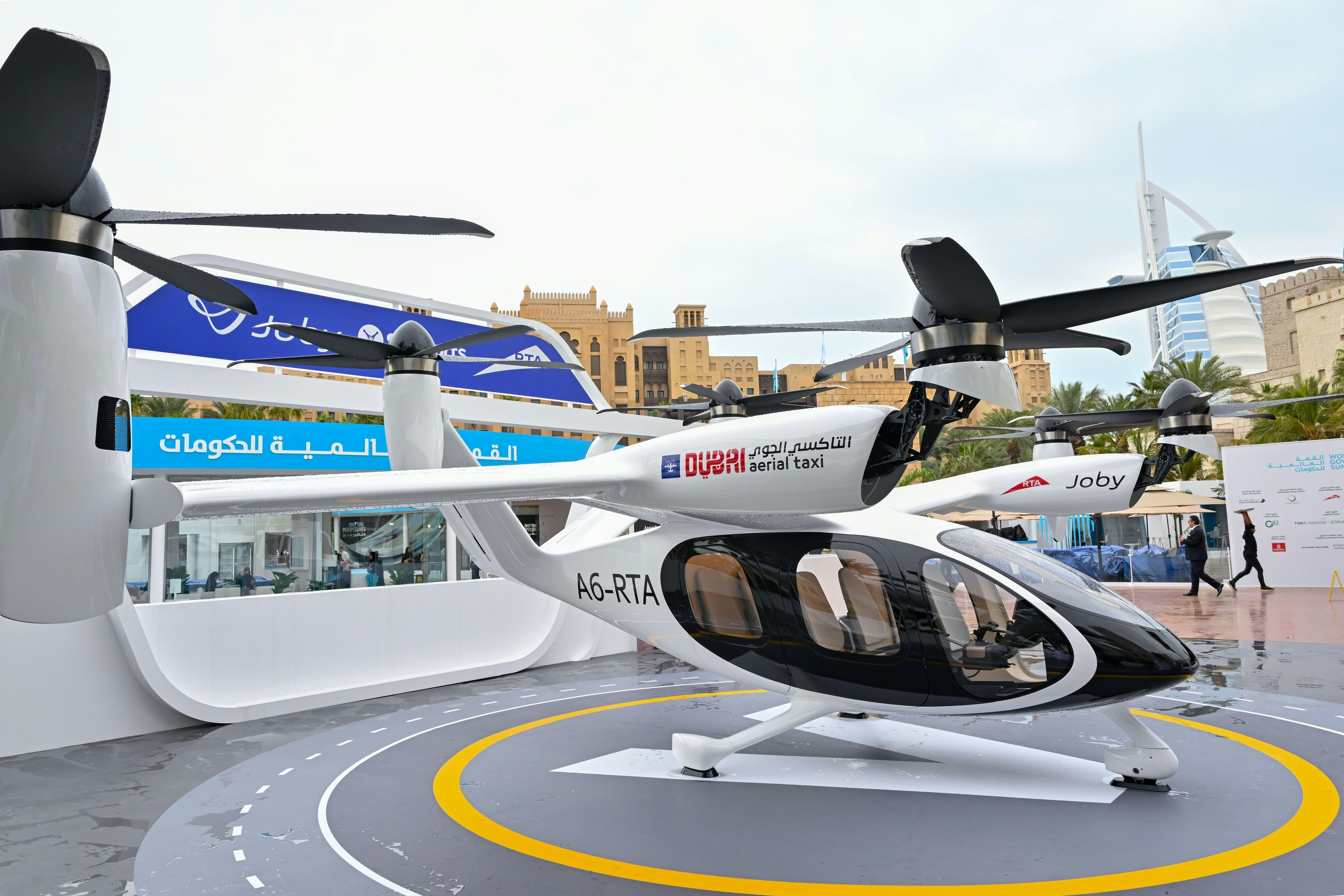
Cleveland Clinic Abu Dhabi has announced plans to establish the United Arab Emirates’ first hospital vertiport dedicated to flying taxis, aiming to significantly reduce patient travel times compared to conventional ground transportation. This initiative, unveiled on Wednesday, is part of a collaboration with Archer Aviation, whose Midnight aircraft is designed to carry up to four passengers while producing less noise and lower emissions than traditional helicopters.

The vertiport will primarily serve non-emergency patients and support the rapid transport of organs for transplantation, enhancing the logistical capabilities of the hospital’s organ transplant programme. Dr Georges-Pascal Haber, the clinic’s chief executive, emphasized that this emission-free mode of transport aligns with the hospital’s sustainability goals, expands travel options for patients, and provides critical logistical support for time-sensitive medical procedures.

Challenges and Industry Context

While the announcement represents a significant milestone in the UAE’s pursuit of advanced mobility solutions—including drones, autonomous taxis, and air taxis—several obstacles remain before the vertiport becomes fully operational. Key challenges include securing regulatory approval, meeting stringent safety standards, and integrating new technologies within existing infrastructure. The hospital has not yet provided a timeline for the vertiport’s opening or detailed operational plans.

Market responses to flying taxis have been mixed, with skepticism surrounding their reliability, cost-effectiveness, and passenger safety. Practical concerns about scaling such services persist despite technological progress. Meanwhile, competition in the air taxi sector is intensifying, with other companies already conducting tests in the UAE potentially accelerating their own launch schedules in response to Cleveland Clinic Abu Dhabi’s announcement.

The UAE’s Broader Vision for Futuristic Mobility

The UAE continues to advance its ambitions in futuristic transportation. Recently, Ras Al Khaimah announced plans to launch its first passenger air taxi service by 2027, complementing similar projects underway in Abu Dhabi and Dubai. As the country progresses, the integration of flying taxis into healthcare and urban mobility systems could establish a regional precedent, contingent on successfully addressing regulatory, safety, and technological challenges.

More news
AerCap Orders 100 Airbus A320neo Jets in Major Leasing Deal

AerCap Orders 100 Airbus A320neo Jets in Major Leasing Deal

AerCap Places Landmark Order for 100 Airbus A320neo Jets AerCap, one of the world’s largest aircraft leasing companies, has announced a significant order for 100 Airbus A320neo-family jets, marking one of the most substantial leasing agreements in recent years. The deal comprises 23 A320neo and 77 A321neo aircraft, with deliveries scheduled to commence in 2028 and extend through 2034. This order reflects AerCap’s strategic intent to expand its fleet and meet growing demand for modern, fuel-efficient narrowbody aircraft. Details of the Agreement and Engine Partnership AerCap’s CEO, Aengus Kelly, revealed that the company will exercise 45 previously agreed Airbus options and add 55 new aircraft to its portfolio. In addition to the aircraft order, AerCap has entered into a long-term lease agreement with CFM International for 48 LEAP-1A engines, which are slated for delivery beginning in the second quarter of 2026. CFM International, a joint venture between General Electric and France’s Safran, produces the LEAP-1A engines, widely recognized for their fuel efficiency and reliability, making them a preferred choice for the A320neo family. Strategic Implications and Market Context This substantial order underscores AerCap’s confidence in the sustained demand for narrowbody jets as airlines worldwide continue to modernize their fleets with more environmentally friendly and cost-effective models. However, the sizeable capital commitment required to fulfill this order presents potential challenges related to financing and balance sheet management, which AerCap will need to navigate carefully. Investor response to the announcement has been predominantly positive, viewing the deal as a strategic move that could enhance AerCap’s competitive position in the aircraft leasing sector. The order arrives amid heightened industry activity, with competitors such as SMBC Aviation Capital pursuing acquisitions like the takeover of Air Lease Corp., signaling intensifying competition among major lessors. Industry Trends and Competitive Landscape The broader aviation market is witnessing a wave of fleet renewals and expansions. Airlines and lessors alike are investing heavily in next-generation aircraft, as evidenced by Cathay Pacific’s ongoing fleet modernization and Atlas Air Worldwide Holdings’ record order for Airbus A350F freighters. These developments highlight a wider industry trend toward upgrading fleets with more efficient aircraft, which will likely influence AerCap’s market dynamics and competitive environment in the coming years. With this latest order, AerCap reaffirms its position as a leading global aircraft lessor, strategically positioning itself to support airlines’ evolving needs as the aviation industry continues its recovery and growth trajectory.
Rolls-Royce Secures Major Cargo Deal Amid Aviation Sector Challenges

Rolls-Royce Secures Major Cargo Deal Amid Aviation Sector Challenges

Rolls-Royce Secures Major Cargo Deal Amid Aviation Sector Challenges Rolls-Royce has secured a landmark order from Atlas Air Worldwide for 40 Trent XWB-97 engines, which will power 20 Airbus A350F freighter aircraft. This agreement represents the largest single order for this engine model and the most significant aircraft purchase in Atlas Air’s history. The deal comes at a challenging time for the aviation industry, which continues to face disruptions linked to ongoing conflicts in the Middle East. Financial Resilience and Strategic Outlook Despite the broader sector difficulties, Rolls-Royce enters this period with considerable financial strength. The company recently reported a 41% increase in underlying operating profit for 2025, reaching £3.46 billion, alongside a free cash flow of £3.3 billion. The civil aerospace division demonstrated a marked improvement in operating margin, rising from 16.6% to 20.5%. Looking forward, management projects underlying operating profit to increase to between £4.0 billion and £4.2 billion in 2026, with further growth anticipated to reach £4.9 billion to £5.2 billion by 2028. In a clear signal of confidence, Rolls-Royce has announced a substantial share buyback program valued between £7 billion and £9 billion ($12 billion), scheduled for 2026 through 2028, with £2.5 billion allocated for the current year. The company has also raised its financial targets for 2028, reflecting optimism about its future growth trajectory. Aftermarket Services as a Core Profit Driver With engine deliveries experiencing a downturn, Rolls-Royce has intensified its focus on aftermarket services to maintain and enhance profitability. The Atlas Air contract is strategically important as it secures long-term revenue through the company’s TotalCare service model, which charges customers based on engine flight hours. This model positions aftermarket services as the primary profit engine for Rolls-Royce, supported by improved contractual margins and increased profitability from spare engines. Further reinforcing its aftermarket capabilities, Rolls-Royce recently appointed StandardAero as the preferred maintenance, repair, and overhaul (MRO) provider for its RR300 engines. This partnership aims to reduce overhaul costs and shorten turnaround times for scheduled maintenance, thereby delivering greater value to operators and strengthening Rolls-Royce’s service-led business strategy. Cargo Sector Provides Stability Amid Market Volatility The air cargo segment, which is less susceptible to disruptions affecting passenger flights, offers a degree of resilience in the current volatile market environment. Deliveries for the Atlas Air order are scheduled to begin in 2029 and continue through 2034, with options for an additional 20 aircraft. This will position Atlas Air as the global launch operator for the A350F and the first U.S.-based carrier to introduce this aircraft type. Industry Challenges and Market Conditions Despite these positive developments, the civil aviation sector continues to face significant challenges. Airspace closures in several Gulf states have resulted in over 4,000 daily flight cancellations, impacting major airlines including Lufthansa, British Airways, and Cathay Pacific. Given that Rolls-Royce’s service revenues are closely linked to engine flying hours, widespread flight groundings present a direct threat to earnings. Nonetheless, Rolls-Royce shares have risen approximately 49% over the past year, although they currently trade about 9% below their 52-week high. The company’s robust aftermarket strategy, strong financial position, and major new contracts place it in a favorable position to navigate ongoing industry turbulence and capitalize on future growth opportunities.
Singapore, France, Spain, and the U.S. Lead Aviation Innovation at IATA World Data Symposium 2026

Singapore, France, Spain, and the U.S. Lead Aviation Innovation at IATA World Data Symposium 2026

Singapore, France, Spain, and the U.S. Lead Aviation Innovation at IATA World Data Symposium 2026 The IATA World Data Symposium 2026, held in Singapore on April 8-9, is set to highlight the forefront of aviation innovation, with Singapore, France, Spain, and the United States emerging as key leaders in this transformative era. The event will focus on pioneering advancements in artificial intelligence (AI) and cybersecurity, featuring prominent industry players such as Singapore Airlines, Accor, and Marriott, who are driving significant change across the sector. Advancements in AI and Cybersecurity The symposium will convene aviation professionals, technology experts, and hospitality leaders to examine how data-driven technologies are reshaping the future of travel. Following a robust recovery in global tourism, with passenger numbers exceeding 5.2 billion in 2025, airlines and hospitality companies are increasingly adopting AI and data analytics to enhance operational efficiency, elevate passenger experiences, and strengthen global connectivity. AI-powered solutions are already revolutionizing flight operations by optimizing scheduling, streamlining check-in procedures, and enabling personalized services. Singapore Airlines, a key participant in the event, has integrated advanced data analytics and automation to improve both operational performance and customer satisfaction. Similarly, hospitality leaders such as Marriott and Accor are investing heavily in digital transformation initiatives aimed at delivering smarter, safer, and more customized experiences for travelers. Cybersecurity remains a critical concern amid the growing reliance on digital platforms. The symposium will address the imperative of implementing robust cybersecurity frameworks to protect passenger data and maintain operational integrity, ensuring seamless and secure journeys in an increasingly interconnected world. Regional Strengths and Challenges in Aviation Innovation While these technological advancements herald a new chapter for aviation and hospitality, each leading nation faces distinct challenges in fostering innovation. Navigating complex regulatory landscapes, securing sufficient funding, and addressing environmental sustainability are among the primary issues confronting these countries. France is taking a proactive stance, exemplified by companies like Aura Aero, which has secured firm orders for hybrid-electric aircraft, reflecting the nation’s commitment to sustainable aviation. Singapore is advancing its aerospace capabilities through initiatives such as the electric vertical takeoff and landing (eVTOL) aircraft project, led by local university innovators, positioning the city-state as a hub for next-generation aviation technologies. The United States continues to benefit from substantial financial support for its aviation sector, a factor industry leaders identify as a key competitive advantage on the global stage. Meanwhile, Spain and other European nations are concentrating on sustainability and digital transformation, responding to evolving market demands and regulatory pressures. Outlook for the Aviation and Hospitality Sectors As the IATA World Data Symposium 2026 progresses, market responses and competitor strategies are expected to focus heavily on sustainability and technological advancement. Each region is leveraging its unique strengths to overcome challenges and propel innovation forward. The event represents a pivotal moment for the aviation and hospitality industries, setting the foundation for smarter, safer, and more sustainable travel experiences for both tourists and business travelers worldwide.
Fuel Shortages in Thailand and China Disrupt Flights for Vietnam Airlines and VietJet

Fuel Shortages in Thailand and China Disrupt Flights for Vietnam Airlines and VietJet

Fuel Shortages in Thailand and China Disrupt Flights for Vietnam Airlines and VietJet Vietnam’s aviation industry is confronting significant operational challenges as fuel shortages in Thailand and China threaten to disrupt flight schedules for the nation’s leading carriers, Vietnam Airlines and VietJet. Beginning in April 2026, the suspension of jet fuel exports by these two primary suppliers—driven by escalating geopolitical tensions in the Middle East—has precipitated a crisis that could severely impact airline operations. Operational and Financial Challenges for Airlines The Civil Aviation Authority of Vietnam (CAAV) has issued urgent advisories to domestic airlines, urging them to prepare for potential flight reductions and to revise operational strategies, particularly on domestic routes most susceptible to fuel supply disruptions. Vietnam Airlines and VietJet, which collectively operate over 400 flights daily with fleets of 93 and 103 aircraft respectively, are expected to bear the brunt of the shortage. The scarcity of jet fuel is anticipated to elevate operational costs substantially, prompting both carriers to consider fare increases and the implementation of additional fuel surcharges in response to rising oil prices. Smaller airlines, which operate with narrower profit margins, face even greater risks of severe schedule disruptions or cancellations. In response to the anticipated grounding of aircraft, airport authorities have been instructed to expand parking capacities to accommodate the increased number of planes unable to operate. Limited Domestic Alternatives Amid Global Supply Chain Pressures Vietnam relies on imports for more than 60% of its jet fuel, primarily sourced from China and Thailand. Domestic refineries are unable to offset the shortfall, as their production focuses predominantly on gasoline and diesel rather than jet fuel. The CAAV has encouraged airlines to explore alternative suppliers in countries such as South Korea, Japan, Brunei, and India. However, securing new supply contracts amid the current volatile market conditions has proven challenging. The repercussions of these supply constraints extend beyond Vietnam, affecting the global aviation sector. Airlines worldwide are adjusting routes to circumvent affected regions, while ongoing conflicts in the Middle East continue to drive oil prices upward, complicating efforts to stabilize airline operations and fare structures. Passenger Impact and Market Implications Passengers traveling to and from Vietnam should anticipate increased volatility in flight availability, especially on domestic routes. The unreliability of fuel supplies is heightening the risk of cancellations and delays. Market responses have already included fare hikes and the introduction of fuel surcharges, placing additional financial burdens on travelers. This situation highlights the vulnerability of Vietnam’s aviation sector to disruptions in global supply chains and geopolitical instability. Without prompt resolution or the identification of new fuel sources, the industry faces a period of uncertainty that may have lasting effects on connectivity, pricing, and the broader travel market across Southeast Asia.
Jet.AI Inc Stock Volatile Amid AI Aviation Developments and Nasdaq Compliance Issues

Jet.AI Inc Stock Volatile Amid AI Aviation Developments and Nasdaq Compliance Issues

Jet.AI Inc Stock Volatile Amid AI Aviation Developments and Nasdaq Compliance Issues Jet.AI Inc (ISIN: US47726L1026), a Nasdaq-listed company specializing in AI-powered software for private aviation, is currently experiencing significant stock volatility. The firm, which emerged from a SPAC merger in 2023, operates within the $30 billion private jet market by offering dynamic pricing, charter services, and AI-driven flight planning tools. As Jet.AI pursues growth in this rapidly evolving sector, it faces regulatory and compliance challenges that have contributed to fluctuations in its share price. Market Dynamics and Investor Sentiment Over the past week, Jet.AI’s shares have exhibited a wide trading range, reflecting a combination of sector-specific developments and broader pressures affecting small-cap AI stocks on the Nasdaq. Positioned at the intersection of AI optimization and luxury aviation, Jet.AI provides solutions such as empty-leg booking software and predictive scheduling. This high-beta profile renders the company particularly sensitive to shifts in technology sector sentiment and the ongoing recovery in business aviation following the pandemic. European investors, particularly those in the DACH region with exposure to luxury travel, are closely monitoring Jet.AI’s performance. The resurgence in private jet demand—highlighted by a 20% increase in Germany’s private jet usage in 2025—has created favorable conditions for cloud-based aviation tools. Nevertheless, the stock’s volatility is also driven by intensified scrutiny from investors and regulators, alongside concerns regarding potential share dilution and compliance with Nasdaq listing standards. Recent Developments and Competitive Landscape Although no major earnings announcements have been made in the last 48 hours, Jet.AI recently expanded its AI charter marketplace by partnering with regional operators to integrate real-time pricing algorithms. This initiative follows the company’s Q4 2025 results, which reported a 150% year-over-year growth in software subscriptions, despite annual revenue remaining modest at under $10 million. The accelerating adoption of AI in aviation has attracted increased competition. Established firms such as Kawak Aviation Technologies Inc. are intensifying their efforts, while the sector has witnessed aggressive moves including patent disputes reminiscent of the ongoing legal battle between Archer Aviation and Joby. These dynamics may complicate Jet.AI’s competitive positioning and introduce additional risks, including potential delays in product launches and rising legal expenses. Business Model and Financial Health Jet.AI operates as a software-centric company rather than an aircraft operator. Approximately 70% of its projected 2026 revenue is expected to derive from SaaS subscriptions and transaction fees on its marketplace. Key growth drivers include recurring revenue from AI-powered flight scheduling and adoption within fractional ownership programs. The company aims to enhance gross margins, currently in the mid-40% range, as cloud infrastructure scales more efficiently relative to user growth. For European investors, Jet.AI’s business model bears resemblance to successful enterprise software firms such as SAP. However, the aviation sector’s regulatory barriers and high customer acquisition costs present distinct challenges. The company’s ordinary shares represent direct equity in the operating entity, featuring a straightforward structure that facilitates valuation. Outlook Jet.AI’s stock remains highly sensitive to both sector-specific trends and broader market volatility. As AI adoption in aviation accelerates and competition intensifies, investors will be closely watching for evidence of sustainable revenue growth and progress in regulatory compliance. The coming months will be pivotal as Jet.AI navigates these challenges amid a rapidly shifting industry landscape.
The Striking Differences Pilots Notice Between The Airbus A330 & A350

The Striking Differences Pilots Notice Between The Airbus A330 & A350

The Striking Differences Pilots Notice Between the Airbus A330 and A350 The Airbus A330 and A350, though produced by the same manufacturer and serving similar roles within airline fleets, represent two distinct generations of Airbus design philosophy. The A330, introduced in the 1990s, is grounded in the mature fly-by-wire technology of that era and has established itself as a reliable widebody workhorse. In contrast, the A350, developed in the 2010s, showcases the advancements of the digital age and composite materials. For pilots transitioning between these aircraft, the experience often feels like moving from a refined classic to a cutting-edge successor. Shared Airbus DNA and Operational Commonality Despite the generational divide, Airbus intentionally engineered the A330 and A350 to maintain strong operational commonality. This approach aligns with Airbus’ longstanding philosophy of creating aircraft that feel familiar to pilots, thereby reducing training demands and enhancing fleet flexibility. A notable example of this is the shared type rating between the two models. Regulatory authorities have approved a common type rating, enabling pilots certified on one aircraft to transition to the other with approximately eight days of differences training, rather than undergoing a full retraining program. This is made possible by the similarities in flight controls, cockpit procedures, and overall design philosophy. Across the Airbus family—from the A320 series to the A380—pilots engage with aircraft through side-stick controllers, automated flight envelope protections, and consistent flight management systems. The “dark cockpit” concept, where instrument panels remain unlit during normal operations and illuminate only to signal warnings or abnormalities, further reduces pilot workload and enhances operational safety. Distinctive Cockpit Features and Handling Characteristics While the foundational design principles remain consistent, the differences between the A330 and A350 become evident in cockpit layout and flight handling. The A330, which entered service in 1994, reflects Airbus’ design ethos of the late 20th century. Its cockpit configuration, automation systems, and handling characteristics are familiar to many pilots, offering the classic Airbus experience marked by reliability and straightforward operation. The A350, however, represents a significant technological advancement. Its cockpit is equipped with larger, more sophisticated displays, enhanced automation, and upgraded flight management systems. The extensive use of composite materials and refined aerodynamics contribute to improved fuel efficiency and extended range. Pilots often remark on the A350’s smoother handling, quieter cabin environment, and more intuitive systems, underscoring its status as a next-generation aircraft. Operational and Market Implications The differences between the two aircraft present both opportunities and challenges. Pilots must adapt to new systems and controls, which can introduce training complexities and operational adjustments during fleet transitions. Airlines are reevaluating their fleet strategies, balancing the operational efficiencies and cost-effectiveness of each model. Meanwhile, the competitive landscape is evolving as rival manufacturers seek to respond to Airbus’ technological advancements. Recent developments highlight the A350’s expanding market presence. Atlas Air Worldwide’s substantial order for up to 40 A350 freighters underscores the aircraft’s competitive advantage in the cargo sector. Concurrently, SWISS is upgrading its A330 fleet with new first and business class cabins, aiming to enhance passenger experience and operational efficiency. For pilots, transitioning from the A330 to the A350 signifies more than a technological upgrade; it marks a shift between two eras of commercial aviation. Airbus’ commitment to cockpit commonality facilitates this transition, yet the pronounced differences in systems, handling, and performance illustrate the remarkable progress in aircraft design over the past three decades.
Two INFORMS Members Elected to National Academy of Engineering

Two INFORMS Members Elected to National Academy of Engineering

Two INFORMS Members Elected to National Academy of Engineering In a significant development for the engineering and operations research communities, John-Paul Clarke of the University of Texas at Austin and Oleg Gusikhin of Ford Motor Company have been elected to the National Academy of Engineering (NAE). Their induction honors groundbreaking contributions that have advanced civil aviation and automotive engineering, highlighting the critical role of engineering in addressing contemporary societal challenges. Advancing Civil Aviation through Innovation John-Paul Clarke’s pioneering research has fundamentally transformed civil aviation, particularly through his work on continuous descent approaches (CDAs). These optimized flight paths facilitate smoother, uninterrupted descents, substantially reducing fuel consumption, noise pollution, and emissions during aircraft landings. Clarke’s methodologies have enhanced the environmental sustainability of air travel on a global scale and established robust frameworks for integrating emerging technologies such as next-generation air traffic management systems and uncrewed aerial vehicles into existing aviation infrastructure. His advanced modeling and simulation techniques have become essential tools for improving airspace design, alleviating congestion delays, and elevating both safety and operational efficiency. Enhancing Automotive Manufacturing and Supply Chain Resilience Oleg Gusikhin’s contributions at Ford Motor Company exemplify the integration of industrial engineering, data analytics, and real-time systems within automotive manufacturing and supply chain management. His innovations in supply chain risk management have provided global manufacturing networks with predictive capabilities to identify vulnerabilities and develop resilience strategies against disruptions—an increasingly vital asset amid volatile global economic conditions. Gusikhin’s optimization frameworks for production scheduling and assembly line design enable dynamic, data-driven adjustments that reduce downtime and maximize resource utilization. Furthermore, his research into connected vehicle analytics and vehicle-to-everything (V2X) communication is laying the groundwork for smarter, safer, and more responsive automotive ecosystems. Recognition of Interdisciplinary Engineering Excellence The election of Clarke and Gusikhin, both members of INFORMS, underscores the growing recognition of interdisciplinary research at the nexus of operations research, data analytics, and engineering design. Their achievements arrive at a time when such fields face challenges in securing recognition and funding, particularly as shifting market dynamics and geopolitical tensions influence research priorities. The increased visibility of their work may stimulate greater interest and investment in related domains, including biomedical engineering and space exploration technologies. Concurrently, competitors are likely to intensify efforts to replicate or surpass these innovations, especially in rapidly evolving sectors such as women’s health technologies and ultraviolet instrument technologies for space exploration. Their induction into the NAE not only affirms their individual excellence and societal impact but also signals the broader significance of engineering-driven innovation in an increasingly complex and interconnected world. As the aviation industry pursues decarbonization and manufacturing adapts to global uncertainties, the work of Clarke and Gusikhin exemplifies the transformative power of engineering to foster sustainable progress and resilience across diverse sectors.
Bay Area Air Taxi Companies Advance Under New Federal Initiative

Bay Area Air Taxi Companies Advance Under New Federal Initiative

Bay Area Air Taxi Companies Advance Under New Federal Initiative The Federal Aviation Administration (FAA) has selected eight proposals nationwide to participate in a pilot program aimed at evaluating the viability of air taxis as a short-range transportation alternative in major metropolitan areas. Among the chosen participants are two Northern California startups: Archer Aviation, based in San Jose, and Joby Aviation, headquartered in Santa Cruz. Both companies are developing electric vertical takeoff and landing (eVTOL) aircraft designed to integrate into urban airspace. Industry Milestone and Government Collaboration Archer Aviation’s CEO, Adam Goldstein, described the initiative as the industry’s “Waymo moment,” marking a critical phase in demonstrating the practical potential of flying car technology. Melissa McCaffrey, Archer’s head of government affairs and policy initiatives, emphasized the transition from science fiction to reality, stating, “For years people talked about the ‘Jetsons’ like it was a cartoon fantasy. Now, we’re bringing that idea to real life in actual cities—that’s the chapter we’re writing.” The program, officially known as the Advanced Air Mobility and Electric Vertical Takeoff and Landing Integration Pilot Program, was initially supported by the Trump administration and is designed to foster collaboration between government agencies and private industry. U.S. Department of Transportation Secretary Sean Duffy highlighted the potential for these partnerships to redefine personal and regional travel, enhance community connectivity, and reinforce American leadership in aviation technology. Although the program does not provide direct federal funding, McCaffrey noted that it “unlocks” essential opportunities for data sharing, operational testing, and regulatory engagement critical to securing eventual FAA certification. Challenges and Industry Dynamics Despite the optimism surrounding eVTOL technology, significant challenges remain. Experts express skepticism regarding the widespread adoption and affordability of air taxis. A 2024 research paper by the American Planning Association points out that while on-demand mobility applications are reshaping consumer access to aviation services, the air taxi sector must address public concerns related to noise pollution, privacy, visual impact, energy consumption, and emissions to gain broader acceptance. Adam Cohen, a transportation researcher at UC Berkeley and lead author of the study, cautioned that “whenever you add new users of the airspace—particularly in congested areas—there could be challenges with integration.” Archer’s “Midnight” aircraft exemplifies the technological advancements underway. The four-passenger, pilot-operated vehicle is powered by a high-performance lithium-ion battery, capable of speeds up to 150 miles per hour and a range of approximately 100 miles. The company aims to reduce typical 60- to 90-minute car commutes to just 10 to 20 minutes by air. Beyond technical and regulatory obstacles, Bay Area air taxi companies are contending with legal disputes and competitive pressures. Archer Aviation recently filed a countersuit against Joby Aviation, alleging fraud related to undisclosed ties to Chinese entities. This legal conflict has drawn scrutiny to the companies’ supply chains and funding sources, potentially affecting investor confidence and market dynamics. In response, Joby Aviation is intensifying efforts to secure government contracts and partnerships, leveraging its participation in the federal pilot program to strengthen its competitive position. The expansion of the federal initiative to states such as New York and Florida is expected to create new opportunities and intensify competition among participating companies. As the industry advances, the coming years will be pivotal in determining whether air taxis can revolutionize urban mobility or remain an aspirational concept beyond reach.
FL Technics Wheels and Brakes Appoints New CEO

FL Technics Wheels and Brakes Appoints New CEO

FL Technics Wheels and Brakes Appoints New CEO FL Technics Wheels and Brakes, the world’s second-largest independent provider of wheels and brakes maintenance, repair, and overhaul (MRO) services, has announced the appointment of Vytautas Jankauskas as its new Chief Executive Officer. Jankauskas brings extensive international leadership experience, having most recently served as CEO of BAA Training Vietnam, where he led significant organizational growth and operational improvements. His appointment arrives at a critical juncture as FL Technics Wheels and Brakes aims to reinforce its commitment to operational excellence and expand its presence across Europe. Jankauskas expressed optimism about his new role, emphasizing his dedication to supporting the company’s growth, enhancing its European MRO footprint, and ensuring the delivery of high-quality, reliable maintenance solutions to clients. The company operates a rapidly expanding network of workshops throughout Europe, providing comprehensive services for aircraft wheels and brakes. With airlines increasingly outsourcing maintenance, FL Technics Wheels and Brakes is positioning itself to become Europe’s largest wheels and brakes MRO network, establishing itself as a trusted partner in the aviation maintenance sector. However, Jankauskas faces a challenging environment marked by evolving market dynamics and intensifying competition. The MRO sector is becoming increasingly crowded, with established players and emerging Chinese electric brands heightening competitive pressures. Additionally, the company must navigate strategic challenges such as maintaining its market position amid shifting industry trends, including the absence of a hybrid model for Subaru and the need to renew Fiat’s import agreements. These factors are likely to influence market responses, with investors closely monitoring strategic developments and competitors potentially accelerating their own initiatives in reaction to the leadership change. By appointing Jankauskas, FL Technics Wheels and Brakes aims to strengthen its management team and position itself to address these challenges, meet growing demand, and sustain its leadership role in aviation maintenance. Vantage Aviation Names New CFO In related industry developments, Vantage Aviation has appointed Torsten Schneider as its new Chief Financial Officer. Schneider brings over twenty years of financial leadership experience, including previous CFO roles at APP Jet Center and an international airport services provider. Vantage Aviation CEO Ryan Maxfield highlighted Schneider’s expertise in building effective finance organizations and driving company growth, noting that he brings the experience and leadership necessary to maintain Vantage’s momentum. Schneider holds an MBA and a Bachelor of Science in International Business and has held leadership positions in Switzerland and Canada before relocating to New York. Reflecting on his appointment, Schneider remarked on the company’s impressive growth over the past year and expressed enthusiasm about contributing to long-term value creation as Vantage Aviation continues to invest in its people, service, and facilities. The company recently expanded its network by adding five new locations in 2025, underscoring its ongoing growth trajectory.
Frontier Airlines Revises Airbus Orders and Cuts Leased Aircraft

Frontier Airlines Revises Airbus Orders and Cuts Leased Aircraft

Frontier Airlines Revises Airbus Orders and Reduces Leased Fleet Amid Industry Challenges Frontier Group Holdings (NASDAQ: ULCC) has announced a significant revision to its fleet strategy, deferring the delivery of 69 Airbus A320neo aircraft and agreeing to return 24 leased jets earlier than planned. This adjustment reflects the airline’s cautious approach to capacity growth in response to ongoing industry uncertainties and supply chain constraints. Deferral of Airbus A320neo Deliveries On March 11, 2026, Frontier Airlines confirmed that it would postpone the arrival of 69 A320neo aircraft originally scheduled for delivery between 2027 and 2030. The new delivery window has been extended to 2031–2033, signaling a deliberate slowdown in fleet expansion over the next decade. This decision allows Frontier to maintain access to advanced aircraft technology while adapting to evolving market conditions and operational demands. The deferral aligns with broader industry challenges, as Airbus has adjusted its production targets due to persistent supply chain disruptions. Frontier’s move mirrors similar actions by other carriers, such as China Airlines, which has also scaled back Airbus orders amid economic uncertainty. However, this cautious stance contrasts with airlines like Atlas Air Worldwide Holdings, which recently placed a record order for Airbus A350 freighters, illustrating divergent strategies within the sector. Early Return of Leased Aircraft and Financial Implications In addition to deferring new aircraft deliveries, Frontier has reached an early return agreement with lessor AerCap to terminate leases on 24 A320neo aircraft currently in operation. These jets are scheduled to be returned in the second quarter of 2026, reducing Frontier’s operating lease right-of-use assets and liabilities by approximately $400 million. The transaction is expected to generate non-cash charges between $125 million and $175 million, alongside additional cash charges ranging from $75 million to $95 million during the first half of 2026. While these charges represent a near-term financial impact, the move is intended to enhance the airline’s long-term operational flexibility. Market Reaction and Outlook Investor response to Frontier’s announcement has been measured, with the stock currently rated as a Sell and a price target of $3.00. TipRanks’ AI Analyst, Spark, assigns a Neutral rating, citing the company’s weak financial performance characterized by renewed losses, negative free cash flow, and high leverage. Despite management’s initiatives to control costs and optimize the fleet, concerns remain regarding execution risks, labor challenges, and the absence of dividend payments, all of which continue to temper investor confidence. Frontier’s Position in the Ultra-Low-Cost Carrier Market As a wholly owned subsidiary of Frontier Group Holdings, Frontier Airlines operates as an ultra-low-cost carrier with a fleet centered on Airbus A320 family aircraft. The airline’s business model emphasizes the use of efficient, high-density narrow-body jets and operating lease arrangements to sustain low fares and maintain cost discipline in a highly competitive environment. Amid ongoing supply chain disruptions and fluctuating demand, Frontier’s revised fleet strategy exemplifies a broader trend of prudence among carriers. While some airlines pursue expansion opportunities, others prioritize strengthening their balance sheets and preserving operational flexibility in an uncertain market landscape. **Current Market Capitalization:** $743.9 million **Average Daily Trading Volume:** 3,802,921 **Technical Sentiment:** Strong Sell
line









