
AIによるインサイトを行動へとつなげる

現在のトレンド
Categories
Unique Capabilities of the Airbus A380 for Airlines
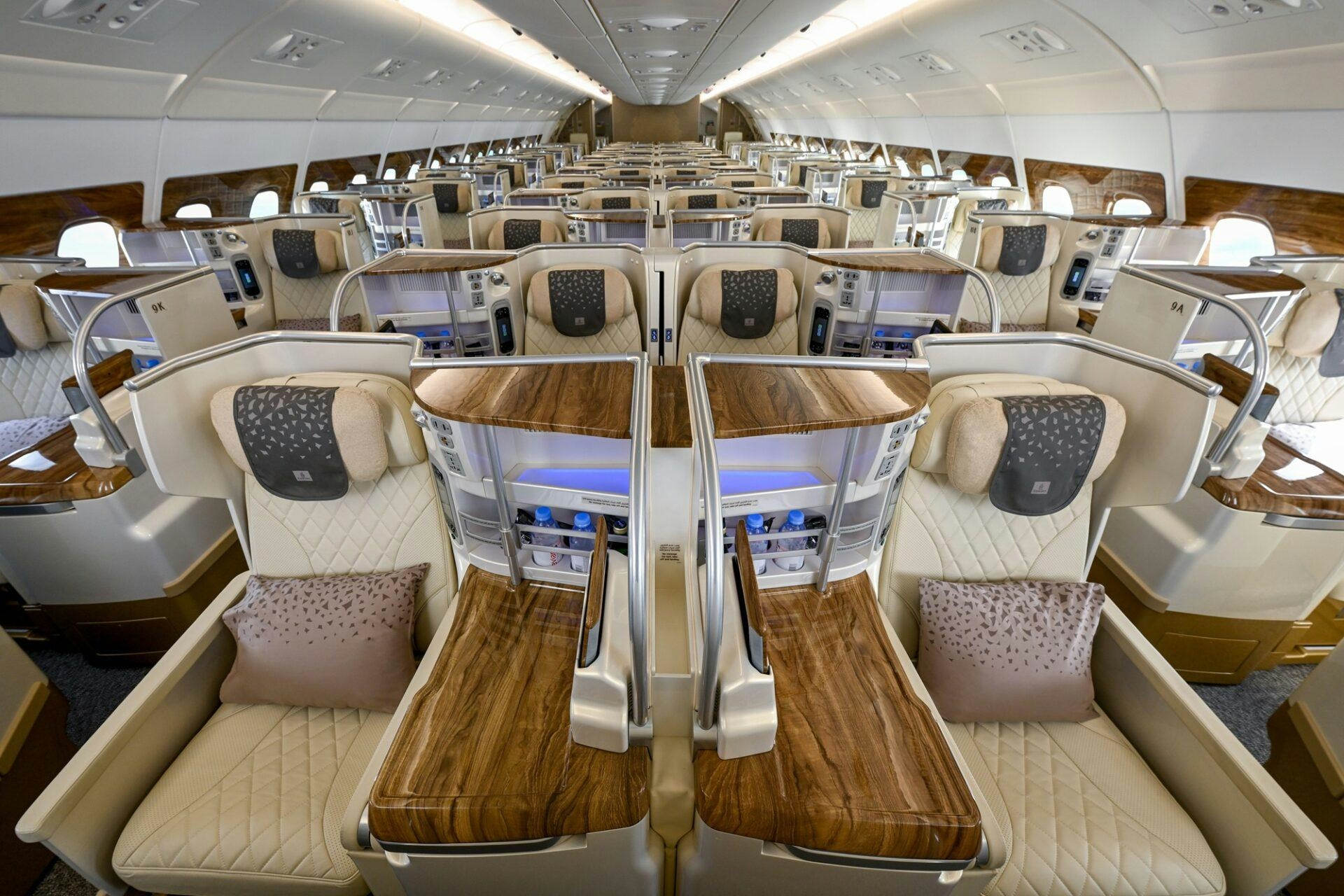
Unique Capabilities of the Airbus A380 for Airlines
London, June 21, 2026 — The Airbus A380 continues to hold a significant position within the fleets of several global airlines, particularly at slot-restricted airports and on premium long-haul routes. Although production of the aircraft has ceased, ten carriers still operate the double-decker superjumbo, capitalizing on its unparalleled passenger capacity and range to optimize network efficiency where increasing flight frequencies is not feasible.
Strategic Value at Congested Airports
Industry data highlights the A380’s critical role at congested hubs such as London-Heathrow, where stringent limits on takeoff and landing slots restrict the ability to add more flights. Airlines like British Airways and Emirates deploy the A380 during peak travel periods to maximize seat availability without the need for additional slot allocations. This strategy enhances revenue potential on high-demand routes by consolidating passenger loads into fewer flights, thereby making the most of limited airport infrastructure.
British Airways currently operates the A380 on routes to destinations including Boston, Dallas/Fort Worth, Dubai, Johannesburg, Los Angeles, Miami, Singapore, and San Francisco. While not all these routes face slot constraints, Heathrow’s restrictions often render frequency increases financially impractical. The A380’s large capacity allows the airline to maintain service levels and meet demand efficiently under these conditions.
Emirates, the largest operator of the A380 with 116 active aircraft, has committed to flying the type until at least 2041, citing sustained profitability on key routes. Other carriers such as Singapore Airlines and All Nippon Airways (ANA) maintain smaller A380 fleets, while some airlines have begun phasing out the aircraft in response to shifting market dynamics and economic pressures. The high operational costs associated with the A380, combined with a limited operator base, have led several airlines to retire or reduce their fleets, particularly in the aftermath of recent global travel disruptions.
Market Reception and Operational Challenges
The market response to the A380 has been mixed. Although its specialized cabin configurations and long-range capabilities continue to generate substantial revenue for certain operators, the aircraft did not achieve the commercial breakthrough Airbus initially anticipated. The program ultimately failed to turn a profit, with only 251 units ordered before production ended. Early resistance to the A380 stemmed from changing passenger preferences and concerns over fuel efficiency, prompting many airlines to favor smaller, more flexible widebody jets.
Competitors have shifted focus toward profitability and fleet modernization. For example, American Airlines has expressed interest in acquiring new widebody aircraft from Boeing or Airbus, emphasizing operational efficiency and competitive positioning rather than directly addressing the unique advantages of the A380.
Despite these challenges, the A380’s engineering remains remarkable. With a maximum takeoff weight of 575 tons and a range nearing 8,000 nautical miles (approximately 15,000 kilometers), the aircraft is considered overbuilt for many contemporary missions. However, these specifications enable airlines to serve high-yield, long-haul routes between major global hubs where capacity and payload are critical.
As airlines continue to navigate evolving market conditions, the future of the A380 will hinge on balancing its operational benefits at congested airports against the economic realities of maintaining such a large and specialized fleet. For the time being, the superjumbo remains a strategic asset for carriers aiming to maximize returns on their most valuable routes.

Etihad and Swissport Extend Global Partnership

Sepehran Airlines B737 Returns to Mashhad After Tyre and Engine Issues

Etihad Deploys Widebody Fleet to Meet Strong Demand

Korean Air Finalizes $36.2 Billion Deal with Boeing

Australia’s RFDS Queensland Section Orders Six King Air 260Cs

Korean Air Finalizes Order for 103 Boeing Jets and Engines

Embraer E195-E2 Features Distinctive Engine Placement Among Regional Jets

What Passengers Can Expect on Boeing’s New 777X Jet

How Ethiopian Airlines Became Africa’s Leading Carrier Amid Gulf Competition

Joby Aviation Extends Autonomous Flight Capabilities with Cross-Country Tour
