
AIによるインサイトを行動へとつなげる

現在のトレンド
Categories
United Airlines Cancels Airbus A350-900 Orders Following Dispute With Rolls-Royce
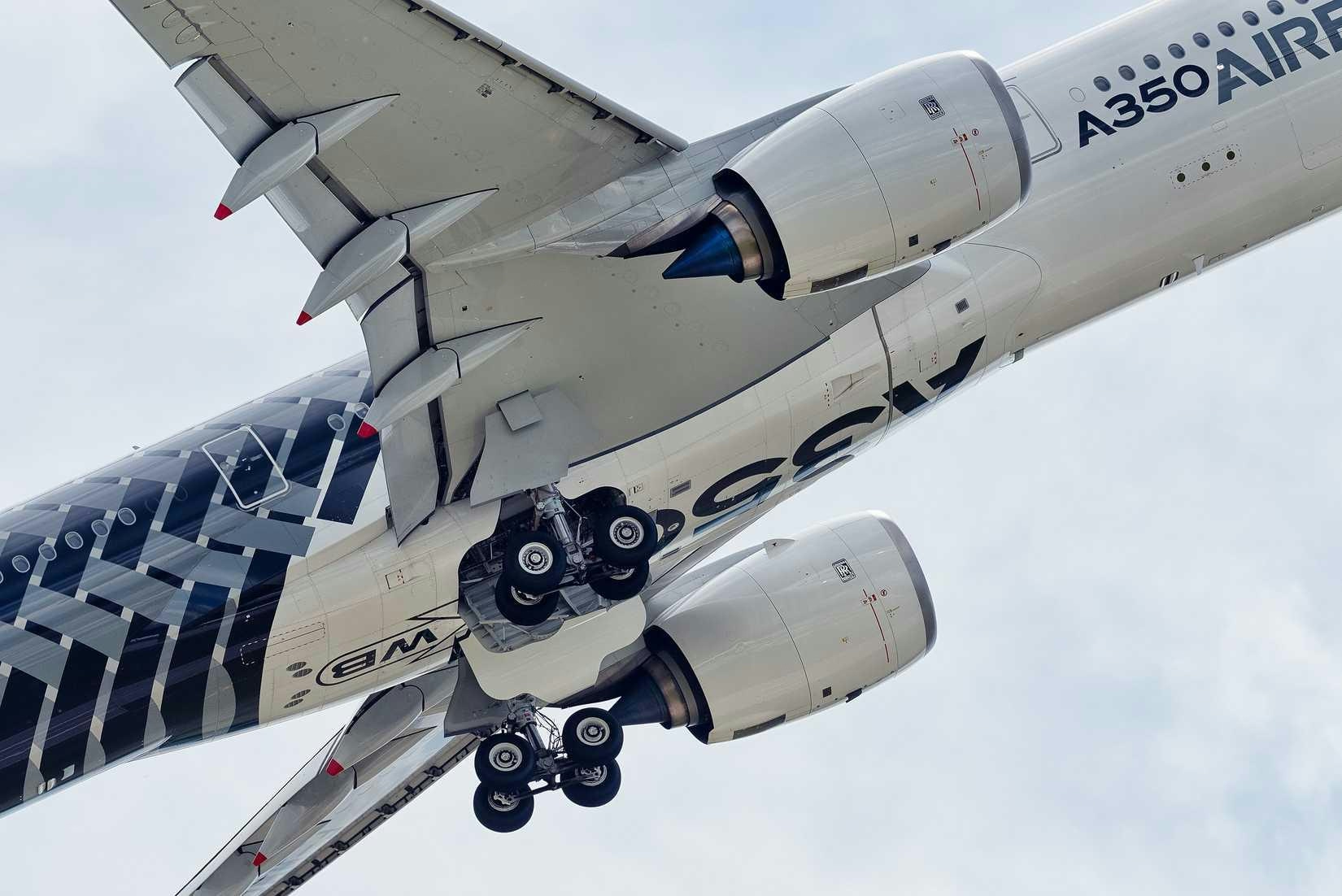
United Airlines Cancels Airbus A350-900 Orders Following Dispute With Rolls-Royce
United Airlines has officially canceled its longstanding order for 45 Airbus A350-900 aircraft, a decision stemming from a protracted legal dispute with Rolls-Royce, the exclusive engine supplier for the model. This development, first reported by The Airline Observer, represents a significant shift in United’s fleet strategy and raises important questions about the airline’s future widebody aircraft plans.
Background of the Dispute
The conflict traces back to agreements established in 2010, when United committed to purchasing Rolls-Royce engines and associated maintenance services for its widebody fleet. According to United’s most recent annual report filed with the U.S. Securities and Exchange Commission (SEC), the airline made a $175 million payment to Rolls-Royce in 2017 under these agreements. However, United alleges that Rolls-Royce breached the contract, prompting the airline to seek repayment of the initial commitment along with contractual escalations. Rolls-Royce declined to make the repayment and subsequently terminated the agreements, accusing United of breaching the terms.
United has since initiated legal action to recover the disputed funds and additional damages. The SEC filing also indicates that the airline is assessing the broader implications of the dispute, which could affect other business relationships. Rolls-Royce responded by affirming its confidence in its contractual position, stating, “We have complied with our obligations under a series of agreements that stretch back to 2010.” The company emphasized its desire to resolve the matter and maintain a strong strategic partnership with United but declined further comment due to ongoing legal proceedings.
Impact on Fleet Strategy and Market Implications
As a direct consequence of the dispute, United has amended its purchase agreement with Airbus. While specific details remain confidential, the airline’s 2024 annual report confirms that it no longer plans to take delivery of the A350-900 aircraft scheduled for 2026, 2027, or later. This marks a departure from earlier reports that suggested only deferred deliveries rather than outright cancellations.
This decision comes at a critical juncture for United’s widebody fleet, which includes aging Boeing 777-200 and 777-200ER aircraft, some exceeding 30 years in service. Despite the cancellation, United has announced no immediate plans to retire any of its 96 Boeing 777s through 2026. The withdrawal from the A350-900 program may complicate the airline’s efforts to modernize its fleet, as sourcing alternative aircraft that meet its operational and specification requirements could prove challenging.
Industry analysts suggest that United’s exit from the A350-900 program may bolster interest in Boeing’s 787 Dreamliner, of which United is scheduled to receive 20 units in 2026. Meanwhile, competitors such as Delta Air Lines and Air Europa continue to place substantial orders for the A350-900, underscoring the aircraft’s strong market demand. The recent introduction of a new premium cabin by Edelweiss Airlines on its A350 fleet further highlights ongoing enthusiasm for advanced widebody aircraft.
As United navigates the legal dispute with Rolls-Royce and reassesses its fleet strategy, the airline faces pivotal decisions regarding its long-haul operations and future aircraft acquisitions.

Etihad Airways Suspends Airbus A380 Flights on Key Route

Aditya Birla Group Seeks Approval for Aircraft Leasing in GIFT City

Qatar Airways Highlights Innovation and Connectivity at Arabian Travel Market 2026

Hong Kong's Five-Year Plan Includes Andrew Fan's Aircraft Parts Processing Hub Proposal

ACIA Aero Leasing Delivers ATR72-600 to Air Nostrum

RTX Appoints Jill Albertelli as Head of Pratt & Whitney

TAT Technologies Joins Beyond Aero Hydrogen Aircraft Program

AURAK Study Highlights Barriers to Air Taxi Adoption in Emerging Economies

Xiamen Air Selects Altitude for 787 Maintenance at Heathrow

Etihad and Swissport Extend Global Partnership
