
画像

AIによるインサイトを行動へとつなげる

今すぐAeroGenieのウェイティングリストに登録しよう!

現在のトレンド

Categories

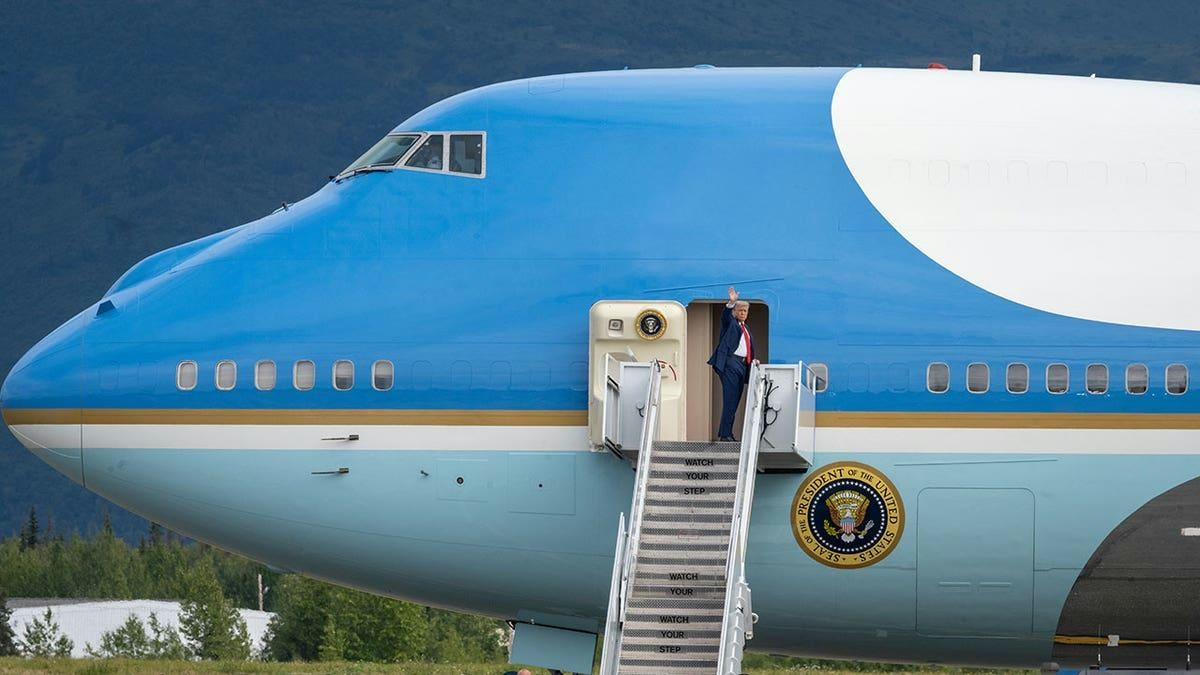
US Air Force Receives Interim VC-25B Air Force One
June 23, 2026By ePlane AI
US Air Force Receives Interim VC-25B Air Force One
0
0
VC-25B Air Force One
Boeing 747-8
Presidential Transport

US Air Force Receives Interim VC-25B Air Force One

The United States Air Force has officially taken delivery of the VC-25B Bridge aircraft, a Boeing 747-8(BBJ) generously donated by the Qatari government. This aircraft will serve as the interim Air Force One while the next generation of presidential aircraft is under development. The VC-25B Bridge arrived on June 19 at Joint Base Andrews, Maryland, just ahead of the nation’s 250th anniversary celebrations.

Refurbishment and Modifications

The aircraft, bearing manufacturer serial number 37075, underwent extensive refurbishment by L3Harris Technologies. It now sports a new red, white, and blue livery and has been outfitted with final government modifications to meet the rigorous standards required for presidential transport. Commissioning flights have commenced at Joint Base Andrews as the aircraft prepares for operational deployment.

Context and Future Plans

This delivery addresses delays in the refurbishment of two new Boeing 747-8s intended to replace the aging VC-25A aircraft currently in service. The new VC-25Bs are not expected to enter service until 2028. The interim solution was partly driven by former President Donald Trump’s dissatisfaction with Boeing’s timeline for the new aircraft. Consequently, the acceptance of Qatar’s donation in July 2025 was formally approved by the Trump administration the following month.

Secretary of the Air Force Troy Meink underscored the urgency and precision of the project, stating, “From the beginning, we meticulously evaluated every requirement to accelerate delivery while maintaining the high standards expected of the presidential mission. This effort proves that the US Air Force can move fast without sacrificing quality, security, or reliability.”

Ensuring Presidential Readiness

The Qatari-donated aircraft has been transformed into a secure and luxurious flying White House, ensuring continuity for the commander in chief during this transitional period. President Trump highlighted the aircraft’s upgraded features during its unveiling, emphasizing its critical role in maintaining presidential readiness.

With the VC-25B Bridge now operational, the Air Force guarantees uninterrupted, secure air transport for the president until the arrival of the next-generation Air Force One fleet.

More news
EASA Orders Urgent Wing-Spar Crack Inspections on Airbus A380 Fleet

EASA Orders Urgent Wing-Spar Crack Inspections on Airbus A380 Fleet

EASA Mandates Immediate Wing-Spar Crack Inspections on Airbus A380 Fleet The European Union Aviation Safety Agency (EASA) has issued an urgent airworthiness directive requiring comprehensive inspections of the Airbus A380 fleet following the discovery of cracks in a critical wing component. This directive affects 16 aircraft currently in operation worldwide and places particular emphasis on Emirates, the largest operator of the superjumbo. Discovery of Cracks in a Critical Wing Structure The cracks were identified during routine maintenance checks in the wing spar, a principal structural beam that extends along the wing and bears significant aerodynamic loads during flight. EASA has indicated that the affected area lies within the outer wing section, a region subjected to considerable stress. Although the agency has not revealed the precise number of aircraft with confirmed cracks, the broad scope of the directive suggests a precautionary approach aimed at preventing a wider structural issue across the global fleet. This directive follows a series of inspections conducted over the past two years, which uncovered cracks in both the rear and front spars of certain A380s. The urgency of the current mandate underscores the potential risk to the aircraft’s structural integrity if such damage remains undetected, compelling EASA to demand immediate inspections before further flights are permitted. Operational Implications and Industry Challenges The directive targets specific A380 airframes based on flight cycles and configuration, impacting major operators including Emirates, Singapore Airlines, British Airways, Qantas, Lufthansa, Qatar Airways, Korean Air, Etihad Airways, ANA, and Asiana Airlines. Emirates, which operates more than half of the active A380 fleet, faces significant operational challenges as the inspections may result in flight cancellations or the need to substitute aircraft in the short term. Airlines are required to complete the inspections within a stringent timeframe established by EASA. Aircraft found to have cracks must undergo repairs before returning to service, while those passing the inspections may continue operating under standard maintenance protocols. The aviation maintenance sector is already contending with labor and material shortages, escalating costs, and geopolitical uncertainties, all of which could complicate timely repairs and further disrupt airline operations. Inspection and Repair Procedures Technicians will employ non-destructive testing methods such as ultrasonic scanning and eddy-current testing to examine the wing spar without dismantling major structures. These advanced techniques can detect cracks invisible to the naked eye and typically require several hours per aircraft. Airlines with large A380 fleets are expected to stagger inspections to mitigate operational disruptions, though some delays are anticipated. If cracks are detected, repairs may range from reinforcement patches to more extensive structural interventions, potentially grounding affected aircraft for prolonged periods. The directive has also prompted increased scrutiny of Airbus’s maintenance protocols and speculation about similar issues in competitor fleets, which could lead to further regulatory measures. Historical Context and Ongoing Concerns The A380 has previously encountered wing-related structural issues. In 2012, EASA mandated inspections after cracks were found in wing rib feet and brackets. The current directive renews attention on the long-term durability of the world’s largest passenger aircraft, which entered service in 2007 and saw its final delivery in 2021 following the end of its production. As the aviation industry responds to this directive, it highlights the complexities involved in maintaining aging widebody fleets and underscores the persistent challenges confronting global aviation maintenance.
China Joins Global Leaders at AirExpo Shanghai to Advance Aviation Innovation

China Joins Global Leaders at AirExpo Shanghai to Advance Aviation Innovation

China Joins Global Leaders at AirExpo Shanghai to Advance Aviation Innovation China has solidified its position alongside established aviation powerhouses such as the United States, Germany, France, the United Kingdom, and Japan by participating prominently in AirExpo Shanghai. This event has rapidly become a pivotal gathering for global aerospace leaders to present cutting-edge advancements in aerospace technology, smart airport solutions, and aircraft innovation. With expectations of attracting over 100,000 visitors and more than 500 exhibitors from over 100 countries and regions, AirExpo Shanghai is emerging as a strategic hub for manufacturers, airlines, airports, and technology providers worldwide. Shanghai as a Gateway for Aerospace Cooperation As the aviation industry undergoes recovery and modernization, Shanghai is positioning itself as a critical gateway for international aerospace collaboration, investment, and forward-looking partnerships. AirExpo Shanghai is now recognized as one of China’s largest aerospace trade exhibitions, offering a platform for airlines, airports, aircraft manufacturers, suppliers, and technology innovators to accelerate global cooperation. The event reflects China’s growing influence in the aerospace sector, underscoring its ambition to play a central role in shaping the industry’s future over the next decade. The exhibition draws a diverse international contingent, with participants from the United States, Germany, France, the United Kingdom, Japan, South Korea, Singapore, Italy, Canada, and Australia. This broad representation highlights the event’s significance as a global marketplace for aviation stakeholders. However, China’s expanding presence also introduces challenges, particularly in navigating competition with established players from the United States and Europe. While some investors and industry participants view China’s involvement as a positive step toward enhanced global collaboration, others approach it with caution, mindful of the competitive dynamics at play. Industry Participation and Emerging Trends China’s role at AirExpo Shanghai is attracting close scrutiny regarding adherence to international aviation standards and regulations, as global competitors and regulatory bodies monitor its integration into the wider aviation ecosystem. Several leading Chinese aviation organizations are expected to maintain a strong presence, including COMAC, AVIC, China Eastern Airlines, Spring Airlines, Harbin Aircraft Industry Group, and China National Aviation Fuel Group. Alongside these domestic entities, international brands and technology providers will engage directly with buyers, government agencies, and aviation professionals. Exhibitors at the event represent a broad spectrum of sectors, ranging from aerospace materials and digital systems to drone technology, aerospace communications, and smart equipment solutions. This diversity illustrates the increasing interconnection of aviation with artificial intelligence, automation, and sustainability initiatives. While commercial aviation remains a dominant sector at AirExpo Shanghai, the event’s integrated approach—encompassing aerospace manufacturing, airport infrastructure, airline operations, and emerging technologies—positions it as a comprehensive international marketplace. This platform enables businesses to address current industry challenges and explore future opportunities, reflecting both China’s ambition to deepen international industrial cooperation and the global aviation sector’s pursuit of resilient supply chains and innovation.
FAA Selects Air Space Intelligence for AI-Based Traffic Control Tool

FAA Selects Air Space Intelligence for AI-Based Traffic Control Tool

FAA Selects Air Space Intelligence for AI-Based Traffic Control Tool The Federal Aviation Administration (FAA) has awarded a significant contract to Air Space Intelligence Inc. (ASI), a Boston-based startup, to implement artificial intelligence technologies aimed at revolutionizing flight traffic management. This contract represents a key milestone in the FAA’s multibillion-dollar initiative to modernize the United States airspace system. ASI was selected over larger competitors, including Palantir Technologies Inc. and Thales SA, in a competitive process announced jointly by the FAA and the Department of Transportation on June 22. AI Tools to Enhance Air Traffic Management Under the contract, ASI will deliver two integrated AI systems designed to optimize airspace operations. The first system processes a variety of data inputs—such as airline schedules, real-time aircraft positions, and weather conditions—to generate optimal flight trajectories. The second system focuses on identifying congestion and potential conflicts within the airspace, providing air traffic controllers with actionable insights. This includes predicting possible flight convergences and recommending route adjustments to mitigate delays and improve traffic flow. The U.S. government anticipates that these technologies will significantly reduce delays, enhance airspace capacity, and streamline overall traffic management. Transportation Secretary Sean Duffy emphasized the transformative potential of the initiative, stating, “Once implemented, we will fundamentally reshape how the airspace is managed—slashing thousands of delays and cancellations in the process.” The contract is valued at $875 million, with deployment scheduled to begin this fall and full implementation targeted by the end of 2028. The FAA is collaborating closely with airlines to integrate the new system into daily operations in a phased approach. Broader Modernization Efforts and Industry Implications The FAA’s adoption of AI-driven traffic control tools forms part of a wider strategy to modernize airspace management and scheduling by leveraging machine learning to address persistent inefficiencies. Congress has allocated $12.5 billion to upgrade the nation’s aging air traffic control infrastructure and reduce technology outages, though officials acknowledge that further funding will be necessary to complete these efforts. Despite the promise of AI integration, the FAA faces challenges in ensuring compatibility with existing legacy systems, maintaining regulatory compliance, and managing potential resistance from traditional air traffic control providers. Industry analysts predict that this move will intensify competition among AI solution providers. Companies such as Indra Group and Collins Aerospace may respond by enhancing their AI capabilities or expanding drone integration platforms to sustain their market positions. ASI CEO Phillip Buckendorf highlighted the commercial readiness of the technology, noting, “The FAA is embracing commercially proven technology already helping everyone from major airlines to the broader aviation community operate more efficiently and predictably.” ASI’s Position and Future Outlook Air Space Intelligence’s client portfolio includes prominent organizations such as the U.S. Department of Defense and Alaska Air Group Inc. The company’s early investors comprise notable venture capital firms including Andreessen Horowitz, Renegade Partners, and Bloomberg Beta, the investment arm of Bloomberg LP. As the FAA advances its modernization agenda, the integration of AI and machine learning is expected to drive significant changes across the aviation industry. This initiative has the potential to reshape airspace management practices and establish new benchmarks for efficiency and safety within U.S. aviation.
Vallair Receives A330neo Maintenance Certification

Vallair Receives A330neo Maintenance Certification

Vallair Receives A330neo Maintenance Certification Amid Industry Challenges Vallair Industry, a prominent French maintenance, repair, and overhaul (MRO) provider, has secured certification to conduct base maintenance on Airbus A330neo aircraft at its Châteauroux facility. This milestone, announced on June 23, 2026, expands Vallair’s existing widebody service portfolio, which already includes certifications for the A330ceo and A340 families, and positions the company for potential future certification on the A350. Navigating a Complex Industry Landscape The certification arrives at a critical juncture for the aviation maintenance sector, which continues to face significant challenges including labor and material shortages, escalating costs, and persistent geopolitical uncertainties. The industry is currently experiencing an extended maintenance ‘super cycle,’ characterized by heightened demand and increased expenditure on heavy checks and technical services. While this surge benefits MRO providers, it also exacerbates concerns over supply chain reliability. In response, many maintenance providers and airlines are consolidating and expanding their in-house capabilities to mitigate capacity constraints and exercise greater control over costs. These pressures are further compounded by delays in new aircraft deliveries, such as the recent postponements announced by Airbus for its A320neo series, complicating fleet management and maintenance scheduling for operators worldwide. Within this context, Vallair’s new certification enables the company to perform scheduled heavy maintenance checks, structural inspections, modifications, and related technical services on both the A330-800 and A330-900 models. The Châteauroux facility, covering 8,500 square meters and dedicated exclusively to Airbus aircraft, can accommodate up to five A321-sized aircraft or a combination of A330s and A321s. Vallair’s comprehensive service offerings include non-destructive testing (NDT), lease transitions, cabin refurbishment and reconfiguration, aerostructure services, engine repair and teardown, as well as logistics, parking, and storage solutions. Reinforcing France’s Industrial Capabilities Beyond enhancing its widebody maintenance capabilities, Vallair’s A330neo certification strengthens its contribution to France’s broader reindustrialization efforts. All of Vallair Industry’s operations are based within France, serving both domestic and international airline customers. By providing maintenance services to foreign operators from its French facilities, Vallair supports the country’s trade balance and industrial base. Grégoire Lebigot, President of Vallair Group, emphasized the significance of the certification, stating, “This new certification strengthens our position as a trusted maintenance partner for airlines operating modern widebody fleets, reinforces French industrial expertise, and consolidates the regional footprint of our activities.” He also highlighted the company’s commitment to workforce development through its Aircraft Academy, which currently offers Structured On-the-Job Training (SOJT) for the A320 and will soon extend this program to the A330neo, ensuring a steady pipeline of qualified technicians. About Vallair Industry Vallair Industry specializes in aircraft and engine storage, maintenance, conversion, and dismantling. As a founding member of the Aircraft Fleet Recycling Association (AFRA) and a member of GIFAS, the company operates advanced facilities in Châteauroux and Montpellier. These include 15,000 square meters of maintenance hangars and 10,000 square meters dedicated to aircraft dismantling, with capacity for over 40 aircraft parking positions. Vallair’s ongoing investments in widebody maintenance capabilities and technician training underscore its commitment to meeting the evolving needs of the aviation sector while supporting France’s industrial resurgence.
Utah Explores Drones and Air Taxis as Future Transportation

Utah Explores Drones and Air Taxis as Future Transportation

Utah Explores Drones and Air Taxis as Future Transportation Advancing Air Mobility in Utah Toni Drummond, co-founder of Future Flight Global, is at the forefront of transforming what was once considered science fiction into tangible reality. Her work focuses on integrating air taxis, drones, and electric vertical take-off and landing (eVTOL) aircraft into everyday transportation. For Drummond, an aviation enthusiast, the true excitement lies not in the novelty of these technologies but in their practical application and seamless incorporation into existing transport systems. Over recent years, both private enterprises and government agencies have been laying the foundation for advanced air mobility (AAM), a sector encompassing commercial drones, air taxis, medical supply transport, and eVTOL aircraft development. In March 2026, Utah was designated by the federal government as one of eight states to pilot these emerging technologies and support early-stage projects. This designation has attracted a range of national and local companies eager to capitalize on the state’s unique environment. Utah’s Strategic Role and Industry Developments Utah’s diverse landscape, combining urban centers with expansive rural areas, offers an ideal testing ground for AAM technologies. Local companies such as Vector Defense are developing unmanned systems for military applications, with active teams in conflict zones like Ukraine and Israel. Meanwhile, Fortem Technologies, based in Lindon, recently secured a $25 million investment from Lockheed Martin to advance anti-drone systems. These developments underscore Utah’s growing role as a hub for innovation in aerial technology, with potential applications spanning from package delivery to emergency medical transport. Drummond, who operates out of Arizona, highlights the similarities between the two states in terms of geography and transportation needs. She notes that Utah’s spread-out population creates a demand for new modes of intra-state travel, particularly in areas underserved by traditional charter flights. Advanced air mobility, she argues, could fill this gap by providing efficient, flexible transport options that complement existing infrastructure. Challenges and Industry Dynamics Despite the promise, Utah’s ambitions face significant hurdles. Regulatory frameworks governing the certification and operation of electric aircraft remain unsettled, complicating efforts to bring air taxis into commercial use. A recent U.S. government report identifies persistent challenges including regulatory ambiguity, questions about commercial viability, and operational complexities that could impede progress. Investor confidence has waned as leading air taxi manufacturers have repeatedly postponed certification deadlines, resulting in declining stock values and skepticism about the sector’s short-term outlook. The competitive landscape is further complicated by legal disputes among major industry players such as Joby, Archer, and Vertical. These companies are engaged in lawsuits over intellectual property and certification processes, which threaten to delay the deployment of air taxis even further. Such conflicts, combined with regulatory uncertainties and market pressures, have tempered the initial enthusiasm surrounding advanced air mobility. Utah at the Forefront of a New Aviation Era Nonetheless, Utah’s selection as a federal test site reflects a broader confidence in the state’s capacity to influence the future of transportation. As advanced air mobility continues to develop, Utah is positioned to navigate both the opportunities and challenges inherent in this emerging sector, potentially shaping the trajectory of aviation in the decades to come.
FAA Awards Contracts for New Air Traffic Control Software

FAA Awards Contracts for New Air Traffic Control Software

FAA Awards Contracts for New Air Traffic Control Software The Federal Aviation Administration (FAA) has awarded a significant contract to Air Space Intelligence (ASI) to develop and implement two advanced technologies designed to revolutionize flight scheduling and management across the National Airspace System. The announcement was made by U.S. Transportation Secretary Sean P. Duffy and FAA Administrator Bryan Bedford, who underscored the agency’s dedication to modernizing air traffic control and mitigating delays. Transforming Air Traffic Management Central to this initiative is the Flow Management Data and Services (FMDS) system, which will become the technological foundation of the FAA’s Air Traffic Control System Command Center. FMDS aims to balance air traffic demand with available capacity by providing essential data that supports more efficient traffic management. Embedded within FMDS is the Strategic Management of Airspace, Routes, and Trajectories (SMART) enhancement. This component utilizes FMDS data to proactively coordinate flight schedules and trajectories prior to departure, with the objective of preventing congestion and delays by identifying potential bottlenecks and available airspace well in advance—ranging from days to months. Together, FMDS and SMART are expected to significantly reduce flight delays, improve traffic flow, and increase overall airspace capacity. These systems will also allow air traffic controllers to integrate weather patterns and flight paths into a unified, centralized visualization, thereby enhancing situational awareness and facilitating more informed decision-making. Challenges and Industry Response Despite the promise of these technologies, their deployment presents notable challenges. Ensuring that the new software effectively prevents congestion and delays remains a primary concern. Airlines have raised questions regarding conflict resolution mechanisms and the predictability of the system’s operations. Moreover, integrating FMDS and SMART with existing infrastructure will require meticulous planning and coordination. Some carriers have expressed skepticism about the efficiency and reliability of the new platforms, highlighting the necessity for comprehensive testing and ongoing stakeholder engagement. The FAA’s move has also intensified competition within the air traffic control modernization sector. Industry players such as Indra Group and Collins are anticipated to accelerate their own development efforts to maintain competitive positioning in the evolving market. Secretary Duffy emphasized the broader implications of the contract, stating, “We’re already making remarkable progress on upgrading the radars, radios, and telecom wires air traffic controllers rely on thanks to the Working Families Tax Cut. But to really improve the flying experience for the traveling public, we must change how flights are managed. We’re thrilled to partner with ASI to begin deploying these two new software platforms. Once implemented, we will fundamentally reshape how the airspace is managed—slashing thousands of delays and cancellations in the process.” As the FAA advances with the deployment of FMDS and SMART, the agency and its partners face the dual challenge of integrating cutting-edge technology while addressing industry concerns, with the ultimate goal of delivering a more efficient and reliable air travel experience.
Airline Updates — June 23, 2026

Airline Updates — June 23, 2026

Airline Industry Developments — June 23, 2026 National Jet Express Expands Fleet to Meet Growing Demand National Jet Express (NJE) has announced the addition of its 13th De Havilland Q400 aircraft to its passenger fleet, with the new turboprop expected to enter service by the end of June. This latest delivery follows the earlier introduction of another Q400, VH-8QD, earlier this year. NJE’s Fly-In Fly-Out (FIFO) fleet now comprises 21 aircraft, including 13 Q400 turboprops and 8 Embraer E190 jets. To address increasing demand from clients in the resource sectors of Western Australia, South Australia, and Queensland, the company plans to introduce two more E190 jets in July and August. Robin Furber, Executive Director of NJE, emphasized the significance of this expansion, stating that the fleet growth reflects robust demand within the resources sector and the confidence clients place in the company. He highlighted that NJE’s in-house operation and maintenance of its Q400 and E190 aircraft provide the control and capacity necessary to support continued growth alongside its customers. Established in 1994, NJE is a prominent Australian FIFO charter operator employing over 600 staff. The company supports mining and resource industries from bases in Perth, Adelaide, and Brisbane. NJE also conducts its own aircraft maintenance domestically, operating a heavy maintenance facility and fixed-base operator (FBO) in Adelaide, which additionally offers third-party engineering services. Strategic Partnerships and Industry Challenges In a separate development, Air India and Booking.com have forged a strategic partnership designed to enhance the travel booking experience. Through a dedicated co-branded platform accessible via Air India’s website and mobile app, customers can now access Booking.com’s extensive global inventory, which includes over 31 million listings in 45 languages and 8.6 million unique stays. Members of Air India’s Maharaja Club will earn 5 Maharaja Points for every INR 100 spent on bookings made through the platform, redeemable for award flights and cabin upgrades. The partnership also features exclusive discounts of up to 15% on select properties, available from June 22 to July 21, 2026. Meanwhile, Malaysia Airlines (MAB) and Singapore Airlines (SIA) have launched their strategic joint business partnership, formalized earlier this year following regulatory approval. This collaboration introduces joint fare products for travel between Singapore and Kuala Lumpur, building upon their existing codeshare agreement. Customers will benefit from a broader range of fare options and enhanced connectivity across both carriers’ networks. The airlines are also working towards additional customer benefits, including reciprocal lounge access. These developments occur against a backdrop of significant challenges for the global airline industry. Ongoing conflicts in the Middle East have severely disrupted operations, halving industry profitability according to the International Air Transport Association (IATA). Elevated fuel prices and subdued demand have further strained airlines, with projected net profits for 2026 now estimated at $23 billion, a sharp decline from earlier forecasts of $41 billion. Despite these headwinds, European carriers such as Lufthansa, Air France-KLM, and International Airlines Group are pursuing consolidation through acquisitions and strategic partnerships. In the United States, JetBlue is reducing services in New York to concentrate on growth in Fort Lauderdale. Meanwhile, Riyadh Air has expanded its network by launching ticket sales for flights between Riyadh and Manchester, aiming to strengthen connections between the Middle East and northern England.
Flyte's AI Aviation Strategy Attracts Interest in VTAK Stock

Flyte's AI Aviation Strategy Attracts Interest in VTAK Stock

Flyte's AI Aviation Strategy Sparks Surge in VTAK Stock Shares of Catheter Precision Inc. [NYSE American: VTAK] soared by 33.38% on Tuesday, June 23, 2026, following the company’s strategic pivot into AI-driven private aviation through its Flyte subsidiary. This move represents a notable departure from Catheter Precision’s traditional focus on medical devices, positioning the firm at the forefront of the emerging regional air mobility sector. The broader market context, characterized by a surge in AI-related investments that have lifted equities by approximately 11% as of early June, has further amplified investor enthusiasm. Strategic Investment and Industry Collaboration Catheter Precision, via Flyte, spearheaded a $2.2 million private investment in public equity (PIPE) into Volato Group, a private aviation company specializing in AI-enabled operations. This transaction granted Flyte roughly 2.9 million shares of Volato (SOAR), amounting to a 7.5% ownership stake and establishing Catheter Precision as Volato’s largest shareholder. The announcement triggered an immediate market response, with VTAK shares rising nearly 3% on the day the deal and associated collaboration plans were disclosed. This investment is far from passive. By securing a significant stake in Volato, Catheter Precision is actively embedding itself within the rapidly evolving AI-powered aviation landscape, signaling a strategic shift beyond its core medical device business. The partnership extends to Flyte’s collaboration with GSE Worldwide and PGA TOUR golfer Emiliano Grillo, with plans to feature its Cirrus Vision Jet short-haul service at the 2026 U.S. Open, underscoring the company’s commitment to high-profile industry engagement. Financial Position and Operational Challenges Despite the positive market reaction, Catheter Precision’s financial fundamentals remain strained. The company reported quarterly revenues of approximately $432,000 and trailing revenues near $819,000, yet it incurred a net loss from continuing operations of $1.69 million alongside negative free cash flow of $2.8 million in the most recent quarter. While gross margins are robust at 91.5%, substantial overhead costs and aggressive growth expenditures continue to suppress profitability. The balance sheet reveals a precarious liquidity position, with cash reserves of just $441,000 against current liabilities totaling $19.7 million, resulting in negative working capital of $18.5 million. The company’s reliance on external financing is evident, having raised $4.47 million in the last quarter. This dynamic introduces dilution risk but also highlights management’s urgency in pursuing high-potential ventures such as Flyte to drive future growth. Industry Challenges and Competitive Dynamics Flyte’s AI aviation initiative faces significant technical and operational challenges. Integrating sophisticated AI systems within existing airline infrastructure demands careful navigation of complex data security concerns and the safeguarding of proprietary airline information. As AI becomes increasingly embedded in flight operations, maintaining control over sensitive data and ensuring system reliability will be critical. Moreover, the transition to AI-driven services may disrupt established customer relationships, necessitating strategic efforts to preserve trust and loyalty. Competitors are expected to accelerate their own AI initiatives in response, aiming to capture efficiencies and growth opportunities while mitigating the risks that AI integration poses to traditional aviation business models. Market Implications Catheter Precision’s bold foray into AI-enabled aviation has transformed VTAK from a speculative medical turnaround into a hybrid investment play encompassing private aviation and next-generation mobility technologies. Although significant financial risks persist, the company’s embrace of disruptive technology has clearly resonated with investors, at least in the near term.
Supply Chain Disruptions Pose Ongoing Challenges for Airlines

Supply Chain Disruptions Pose Ongoing Challenges for Airlines

Supply Chain Disruptions Pose Ongoing Challenges for Airlines Austrian Airlines CEO Annette Mann has highlighted that supply chain disruptions continue to present a significant and enduring challenge for the aviation sector. Delays in aircraft deliveries and shortages of essential components, including engines, are expected to affect airline operations and planning through at least 2028. Despite these persistent obstacles, Austrian Airlines has so far avoided capacity reductions by implementing robust contingency measures, maintaining fleet flexibility, and leveraging support from the wider Lufthansa Group. Persistent Supply Chain Issues and Industry Adaptation Mann noted that although supply chain disruptions no longer dominate headlines as they did immediately after the pandemic, they remain a critical concern for airline leadership. She explained that the industry is facing a dual impact: a shortage of new aircraft and a scarcity of parts necessary for maintenance and operations. As Austrian Airlines advances its fleet renewal program, these challenges continue to complicate its efforts. In response, the aviation industry has shifted its approach from passively awaiting supply chain normalization to actively embedding resilience and contingency planning into daily operations. For Austrian Airlines, this strategy involves preparing alternative operational scenarios and capitalizing on the resources available within the Lufthansa Group. The ability to share aircraft, engines, and capacity across the group, alongside group-wide wet leasing arrangements, has been instrumental in providing the necessary operational flexibility. Mann emphasized a collaborative approach, stating, “We are focusing more and more on the group optimum rather than an optimum for each airline. That means we collaborate and help each other out.” Broader Industry Pressures and Future Outlook The challenges posed by supply chain disruptions are compounded by a range of other pressures facing airlines globally. Economic uncertainty, cyber threats, rapid advancements in artificial intelligence, and increasingly severe weather events add layers of complexity to airline operations. Additionally, labor shortages, material scarcities, geopolitical instability, and tariffs continue to strain the industry. Rising operating costs and the imperative to transition to greener fuels further intensify these challenges. LATAM CEO Roberto Alvo recently cautioned that sustained high fuel prices could force additional capacity reductions, underscoring the mounting pressures on carriers worldwide. While some industry stakeholders had anticipated gradual improvements in aircraft availability and maintenance supply chains, Mann indicated that Austrian Airlines is preparing for ongoing disruption over the coming years. “Many deliveries are delayed, but we currently predict out to 2028, and we have plans in place to cope,” she said. This experience reflects a broader transformation in how airlines approach operational resilience. Fleet planning can no longer rely solely on expected delivery schedules or stable geopolitical conditions. Instead, carriers are now preparing for multiple scenarios simultaneously, drawing on lessons learned during the pandemic. Mann observed that network re-planning, which once took weeks, can now be accomplished in days or even hours, a capability that was not feasible before the pandemic. As airlines continue to navigate an environment marked by uncertainty—from supply chain constraints to geopolitical developments and volatile markets—Mann underscored the necessity of ongoing flexibility and resilience. “Airlines must be flexible and resilient because the next crisis is just around the corner,” she concluded.
Japan’s Aircraft Leasing Industry Faces New Challenges

Japan’s Aircraft Leasing Industry Faces New Challenges

Japan’s Aircraft Leasing Industry Faces New Challenges For over thirty years, Japan has been a cornerstone of global aviation finance. Through mechanisms such as Japanese Operating Leases (JOLs) and Japanese Operating Leases with Call Options (JOLCOs), Japanese investors have injected billions of dollars in equity capital into airlines worldwide. At its zenith, annual JOLCO issuances exceeded ¥1 trillion (approximately $7–10 billion), with Japanese investors accounting for an estimated 20 to 30 percent of global aircraft lease-equity funding. Alongside Ireland’s established leasing ecosystem and the more recent emergence of China’s state-backed financiers, Japan has been a vital source of capital for the aviation sector. This leasing model offered clear advantages: airlines could acquire aircraft with minimal upfront capital, investors benefited from attractive tax-adjusted returns—often ranging between 5 and 8 percent after depreciation—and banks secured stable lending income backed by globally mobile assets. The interests of airlines, investors, and lenders were closely aligned, creating a mutually beneficial framework. Structural Challenges Erode Established Advantages Despite these strengths, the foundations of Japan’s aircraft leasing model are increasingly under pressure. While industry participants often attribute current difficulties to cyclical factors such as rising interest rates, a weaker yen, delayed aircraft deliveries, and fluctuating airline profitability, the more profound challenges are structural in nature. Changes in accounting standards, evolving tax policies, tighter regulatory oversight, shifting investor preferences, and altered capital market conditions have gradually diminished the unique advantages that once made Japanese aircraft-leasing structures so attractive. Compounding these issues is the growing complexity of the international tax environment. Japanese investors now face intricate cross-border tax considerations arising from the OECD’s Base Erosion and Profit Shifting (BEPS) initiative, the implementation of a global minimum tax framework, and ongoing changes to international tax regulations. These developments are fundamentally reshaping the economic assumptions underpinning JOL and JOLCO transactions. A critical concern is whether domestic leasing companies and trading houses—the primary arrangers of these structures—can effectively communicate and manage these risks for investors. A lack of comprehensive understanding regarding international tax exposure could itself pose a significant risk to the market. The central question has shifted from whether JOLCO will endure to whether a financial model conceived in the late 20th century can remain competitive in the evolving landscape of the 21st century. The Three Pillars Under Pressure Historically, JOL and JOLCO transactions were supported by three principal advantages. First, tax efficiency was achieved through accelerated depreciation and interest deductions, enabling investors to reduce taxable income and enhance after-tax returns. Second, favorable accounting treatment allowed airlines to lease aircraft while minimizing the impact on their balance sheets compared to outright ownership or conventional debt financing. Third, the predictability of aircraft values, lease cash flows, and funding costs remained relatively stable throughout the 1990s and 2000s. Typically, a JOLCO deal involved 20 to 30 percent equity financing complemented by 70 to 80 percent debt. In an era characterized by ultra-low interest rates, leverage amplified returns while depreciation further improved investor economics. Today, however, all three of these pillars face significant challenges, undermining the model’s historical strengths. Emerging Players and Evolving Market Dynamics Amid these structural pressures, the industry has witnessed growing interest from global private investment firms. Notably, private equity giant KKR recently committed $1.4 billion to expand its commercial aircraft-leasing venture with Altavair, adding to over $8 billion in prior investments. This trend highlights the increasing appeal of aircraft leasing to private capital, despite the sector’s inherent challenges, including high risk, extended investment horizons, and limited returns. These factors complicate the entry and success of new players and startups, particularly as the industry moves toward the goal of net-zero aviation. Perhaps the most transformative development has been accounting reform. For decades, airlines worldwide favored operating leases because lease obligations remained largely off balance sheet, preserving financial ratios and flexibility. However, new accounting standards and a shifting regulatory environment are fundamentally redefining the traditional advantages of Japanese aircraft leasing, forcing the industry to adapt to a markedly different financial landscape.
line









