
AIによるインサイトを行動へとつなげる

現在のトレンド
Categories
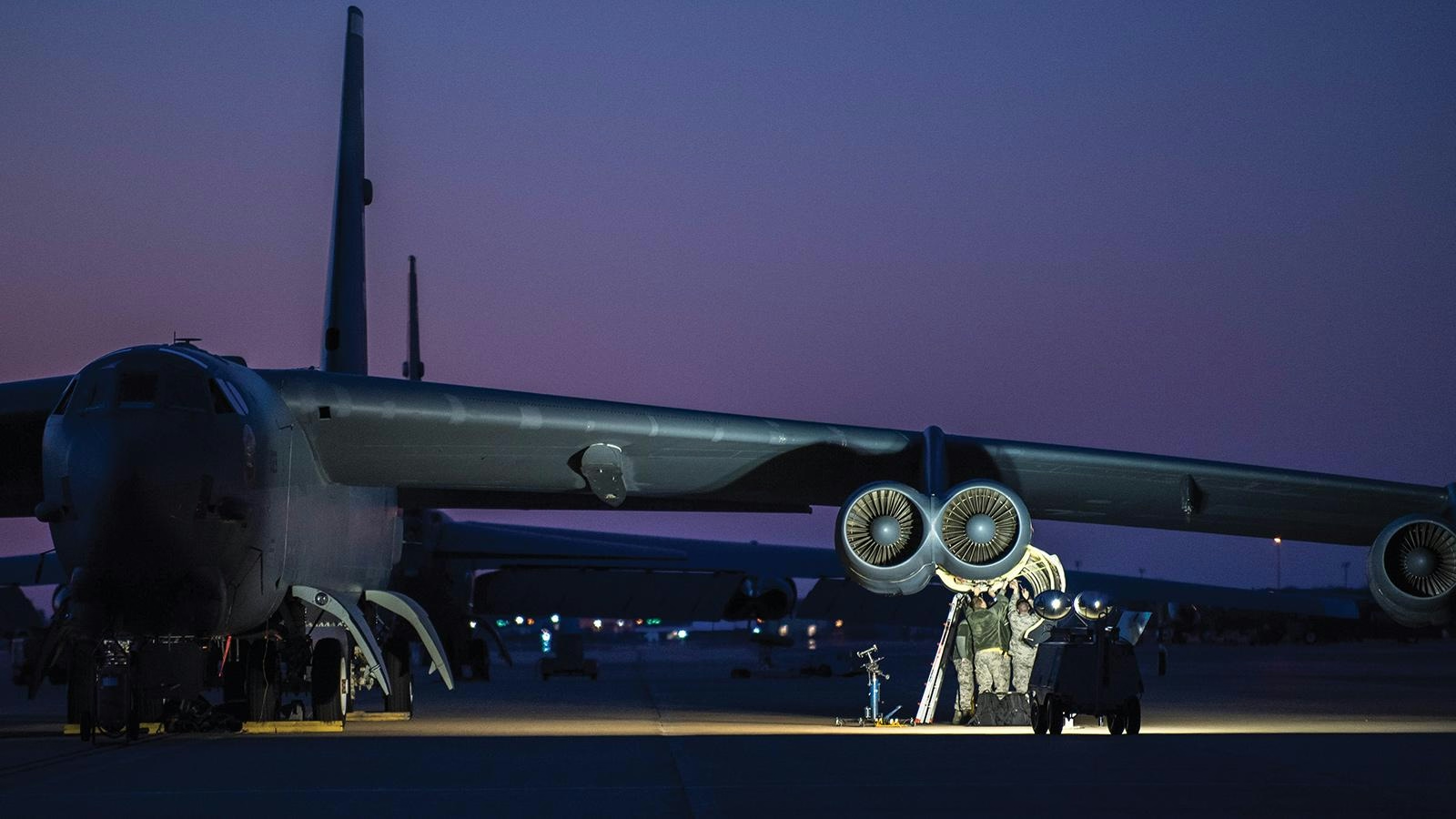
US Air Force Upgrades Engines on Largest Bomber, but Program Is Canceled
US Air Force Upgrades Engines on Largest Bomber, but Program Is Canceled
The Convair B-36 Peacemaker remains one of the most ambitious strategic bombers ever developed by the United States. Distinguished by its enormous size and unique six-engine pusher configuration, the B-36 was originally powered by Pratt & Whitney R-4360 Wasp Major piston engines. To enhance its performance, the aircraft was later equipped with four General Electric J47 turbojets, which significantly improved its takeoff capabilities, climb rate, and high-speed dash. These upgrades allowed the B-36 to maintain operational relevance amid rapid advancements in aviation technology. Nevertheless, the introduction of newer all-jet bombers, most notably the B-52 Stratofortress, soon displaced the B-36 from its primary role as a nuclear deterrent.
A total of 384 B-36 bombers were produced, each capable of carrying an unprecedented bomb load of up to 86,000 pounds (39,000 kilograms), making it the largest piston-engined combat aircraft ever to enter service. Today, four complete B-36 aircraft are preserved in museums, standing as enduring symbols of a critical period in strategic aviation history.
A Transitional Bomber for a New Era
The B-36 was conceived during World War II amid concerns that the United Kingdom might fall to Germany, which would have deprived the United States of forward bases for bombing missions in Europe. In response, the U.S. Army Air Forces sought a bomber with true intercontinental range. Consolidated Vultee, later known as Convair, began designing the B-36 in 1941, and the aircraft completed its maiden flight in August 1946. The Strategic Air Command received its first operational B-36 in June 1948.
Initially intended as a conventional bomber, the B-36 entered service just as the United States shifted its strategic focus toward nuclear deterrence. Its design was adapted to carry the heavy nuclear and thermonuclear bombs of the early Cold War, some weighing as much as 42,000 pounds (19,000 kilograms). Variants of the B-36 were also developed for photographic reconnaissance and as motherships capable of launching and recovering modified RF-84F/K reconnaissance aircraft.
Engine Upgrades and Modernization Challenges
The B-36’s evolution from piston engines to jet-assisted propulsion reflected the broader transformation of strategic bombers during the mid-20th century. This legacy continues as the U.S. Air Force endeavors to modernize its current bomber fleet. However, recent efforts to upgrade the engines of the B-52 Stratofortress, the B-36’s direct successor, have encountered significant difficulties. According to a Government Accountability Office report, the $21 billion B-52 modernization program, managed by Boeing, has been plagued by cost overruns, production delays, and quality control problems. The estimated cost for the engine upgrade’s development phase has increased from $11 billion in 2018 to approximately $15 billion, while the initial operational capability has been postponed by 15 months, now expected in 2033.
These challenges are further complicated by critical obsolescence in jet engine manufacturing, which affects not only the B-52 but also other aircraft such as the F-35. The Air Force has expressed concern that without proactive measures to address potential engine delays, scheduled maintenance and overall fleet readiness could be severely disrupted.
Legacy of the Peacemaker
Although the B-36 Peacemaker’s operational tenure was relatively short, its significance as the first purpose-built nuclear strategic bomber marked a pivotal moment in military aviation. Its development bridged the gap between World War II-era bombers and the jet-powered aircraft that define today’s strategic forces. The ongoing difficulties in modernizing the B-52 underscore the enduring complexity of sustaining and upgrading the core of America’s airborne nuclear deterrent.

Etihad and Swissport Extend Global Partnership

Sepehran Airlines B737 Returns to Mashhad After Tyre and Engine Issues

Etihad Deploys Widebody Fleet to Meet Strong Demand

Korean Air Finalizes $36.2 Billion Deal with Boeing

Australia’s RFDS Queensland Section Orders Six King Air 260Cs

Korean Air Finalizes Order for 103 Boeing Jets and Engines

Embraer E195-E2 Features Distinctive Engine Placement Among Regional Jets

What Passengers Can Expect on Boeing’s New 777X Jet

How Ethiopian Airlines Became Africa’s Leading Carrier Amid Gulf Competition

Joby Aviation Extends Autonomous Flight Capabilities with Cross-Country Tour
