
AIによるインサイトを行動へとつなげる

現在のトレンド
Categories
VietJet Air to Dry Lease Ten C909 Aircraft from Chinese Lessor
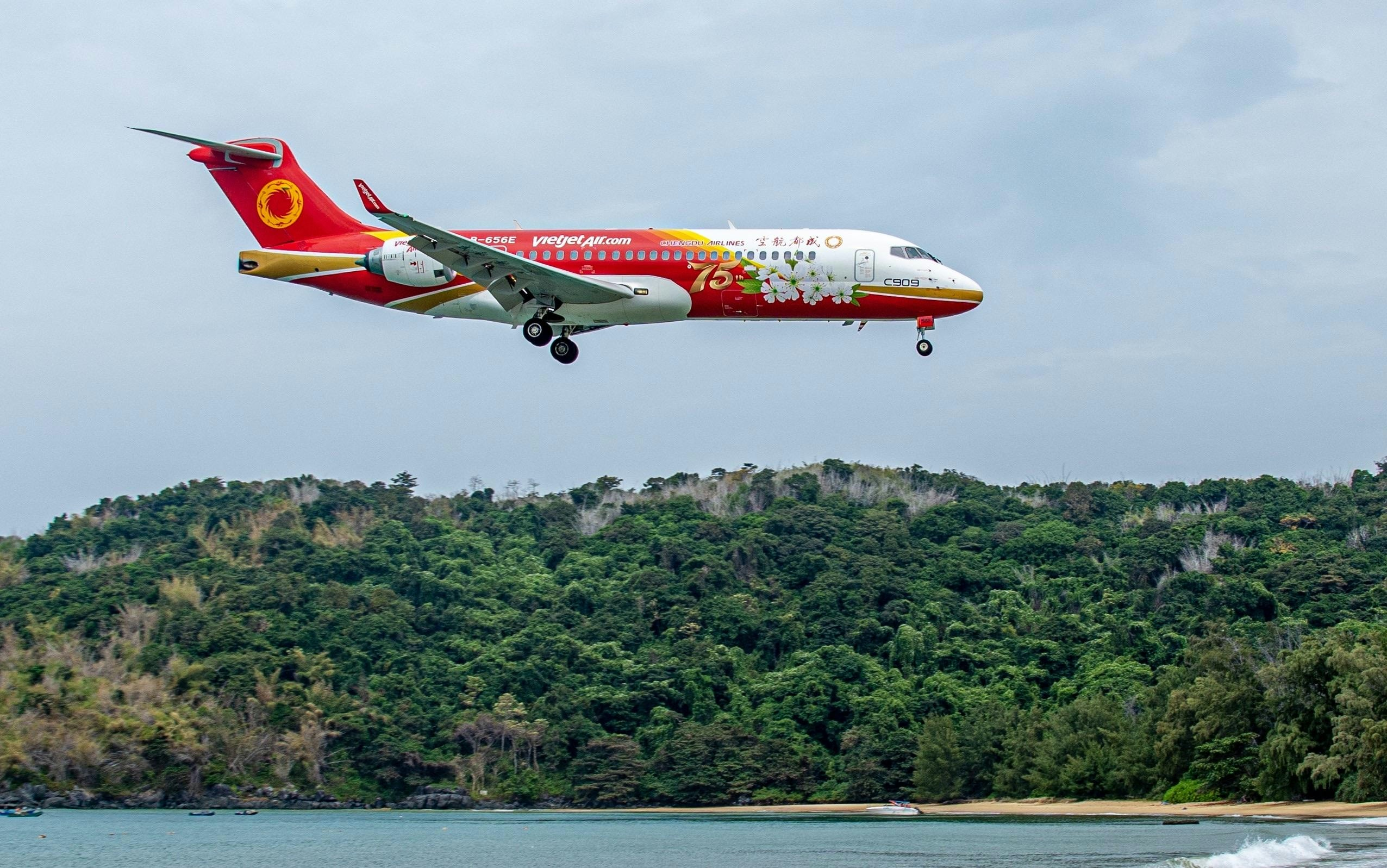
VietJet Air to Dry Lease Ten C909 Aircraft from Chinese Lessor
VietJet Air has announced a significant fleet expansion through a dry lease agreement to acquire up to ten C909 regional jets from SPDB Financial Leasing, a subsidiary of Shanghai Pudong Development Bank. The deal, disclosed in an airline press release dated April 16, 2026, represents a deepening partnership between the Vietnamese carrier and the Chinese lessor. The aircraft will be financed via operating leases, although the delivery schedule remains undisclosed.
Expansion of Regional Operations and Fleet Diversification
The C909, a relatively new Chinese-built regional jet, has limited presence outside China. Currently, only two non-Chinese airlines operate the type: TransNusa with five aircraft and Lao Airlines with two. Additionally, Air Cambodia has announced plans to acquire ten units. VietJet Air is already acquainted with the C909, having previously wet-leased two aircraft from Chengdu Airlines for domestic routes to Con Dao. This initial wet lease began in April 2025, concluded in October 2025, and resumed approximately one month later.
VietJet plans to deploy the C909s primarily on routes connecting Vietnam and China, complementing its broader strategy to strengthen its foothold in the regional market. Alongside the leasing agreement, the airline has unveiled five new routes to China. In early April 2026, VietJet launched flights from Hanoi Noi Bai International Airport to Enshi and from Ho Chi Minh City to Guilin. Additional services to Hangzhou and Huangshan, including a new Ho Chi Minh City–Huangshan route, are also scheduled to commence.
Challenges and Strategic Implications
Despite the promising expansion, VietJet’s decision to lease a substantial number of C909s carries inherent risks. The aircraft’s limited operational history outside China raises concerns regarding reliability and maintenance support. Industry analysts and investors may approach the financial commitment with caution, given the uncertainties involved in integrating a relatively new aircraft type into the airline’s existing fleet. Competitors might respond by reinforcing their use of more established aircraft models or optimizing their current fleets to offer more competitive pricing, potentially intensifying market competition.
This move also highlights VietJet’s strategic positioning within the Asian aviation sector. Successfully incorporating the C909 could enhance the airline’s capacity to adopt new technologies and diversify its fleet. However, this will require meticulous management to mitigate operational challenges and market uncertainties.
According to ch-aviation fleet data, VietJet currently operates a diverse in-house fleet comprising seventeen A320-200s, thirty-six A321-200s, eleven A321-200Ns, thirty-two A321-200NX jets, and eight A330-300s. SPDB Financial Leasing’s portfolio includes A320-200Ns, A321-200NX, A330-300, and B737-800 aircraft, with outstanding commitments for fifteen C909s and thirty-five C919-100STD jets.
As VietJet advances with its fleet expansion and new China routes, industry observers will closely monitor how the airline manages the operational and market challenges associated with introducing the C909 into its network.

Etihad Airways Suspends Airbus A380 Flights on Key Route

Aditya Birla Group Seeks Approval for Aircraft Leasing in GIFT City

Qatar Airways Highlights Innovation and Connectivity at Arabian Travel Market 2026

Hong Kong's Five-Year Plan Includes Andrew Fan's Aircraft Parts Processing Hub Proposal

ACIA Aero Leasing Delivers ATR72-600 to Air Nostrum

RTX Appoints Jill Albertelli as Head of Pratt & Whitney

TAT Technologies Joins Beyond Aero Hydrogen Aircraft Program

AURAK Study Highlights Barriers to Air Taxi Adoption in Emerging Economies

Xiamen Air Selects Altitude for 787 Maintenance at Heathrow

Etihad and Swissport Extend Global Partnership
