
画像

エアロジニー — あなたのインテリジェントな副操縦士。

何でも尋ねてください。全てを分析してください。即座に行動してください。

現在のトレンド

Categories

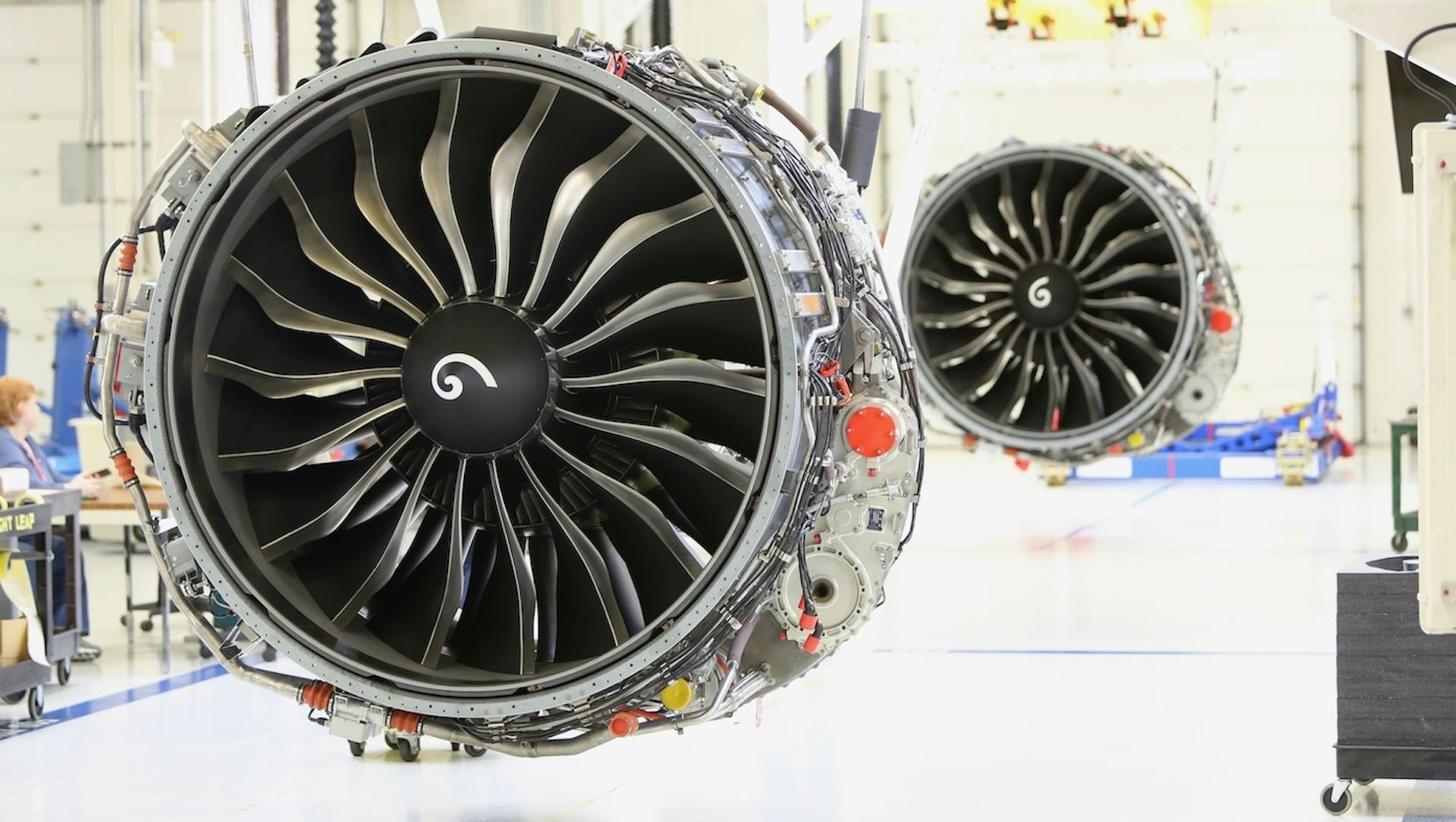
Why Airlines Are Choosing LEAP Engines in 2025
November 21, 2025By ePlane AI
Why Airlines Are Choosing LEAP Engines in 2025
0
0
LEAP Engines
Time On Wing
Engine Durability

Why Airlines Are Choosing LEAP Engines in 2025

Engine Durability and Operational Challenges

Time on wing (TOW)—the duration an engine remains in service before requiring major maintenance—is a crucial factor for airlines, directly influencing operational costs and fleet availability. This metric varies significantly depending on the operating environment. Engines deployed in cooler, low-dust regions tend to have longer service lives, whereas those operating in hot, dusty climates, such as the Middle East, experience accelerated wear, particularly in hot-section components like turbines.

The Pratt & Whitney PW1000G (GTF) and CFM International LEAP engines, both introduced around 2016–2017 for aircraft families including the A320neo, 737 MAX, A220, and E2, initially faced challenges in matching the durability of the legacy CFM56 engine. The CFM56 had matured to an average TOW of 18,000–20,000 cycles, roughly nine years of service. Although the newer engines offer improved fuel efficiency, their operation at higher temperatures and pressures has led to early durability issues.

Advances in LEAP Engine Reliability

By late 2025, both manufacturers have implemented hardware upgrades to address these durability concerns. The LEAP engine, in particular, has benefited from significant enhancements. High-Pressure Turbine (HPT) durability kits, certified between 2024 and 2025, featuring redesigned blades and nozzles, have become standard on all new and overhauled LEAP engines. Additionally, the introduction of the Reverse Bleed System (RBS) has eliminated the need for mid-cycle fuel nozzle replacements. These improvements have been widely adopted, with over half of the LEAP fleet upgraded by 2025. CFM International reports that LEAP engines now achieve TOW comparable to the CFM56 and are demonstrating faster maturation.

In contrast, Pratt & Whitney’s GTF engines continue to face persistent durability and recall challenges, especially in harsh operating environments. While the GTF’s geared architecture delivers notable fuel efficiency gains, these advantages have often been overshadowed by reliability concerns. Pratt & Whitney plans to introduce the Hot Section Plus (HS+) retrofit between 2025 and 2026, alongside the GTF Advantage upgrade, certified in 2025 and entering service in 2026, which are expected to nearly double TOW in demanding conditions. However, the current fleet remains affected by recalls, and the brand’s reputation has been impacted, leading many airlines to approach further adoption with caution.

Market Impact and Industry Response

Market trends reflect these technical realities. As of November 2025, LEAP engines power approximately 75 percent of A320neo orders, driven largely by their superior early reliability and more rapid resolution of hot-section issues. Airlines are also attracted to the LEAP’s fuel efficiency and lower emissions profile, factors underscored by Riyadh Air’s recent order for 120 LEAP-1A engines to equip its 60 Airbus A321neo aircraft.

The commercial implications are significant. GE Aerospace, co-producer of the LEAP engine, has seen its stock approach record highs, buoyed by engine contract wins and upward revisions to financial guidance. CFM International is actively negotiating with Airbus to increase LEAP-1A deliveries in support of ambitious production targets, while Safran, CFM’s partner, has announced the establishment of a new assembly line in Casablanca to meet growing demand. Meanwhile, Pratt & Whitney is engaged in discussions with Airbus to address increased production requirements but faces considerable challenges in regaining market share.

As airlines continue to prioritize reliability, operational efficiency, and emissions reductions, the LEAP engine has emerged as the preferred choice for single-aisle fleets in 2025. Although forthcoming GTF upgrades may narrow the performance gap from 2026 onward, recent reliability issues have left many carriers hesitant. For the time being, the LEAP’s combination of enhanced durability, efficiency, and proactive manufacturer support is driving its market dominance.

More news
Airbus Posts Strong Q1 Orders Despite Decline in A320neo Deliveries

Airbus Posts Strong Q1 Orders Despite Decline in A320neo Deliveries

Airbus Posts Strong Q1 Orders Despite Decline in A320neo Deliveries Airbus reported a robust first quarter in 2024, securing net orders for 398 aircraft despite a noticeable decline in deliveries of its A320neo-family jets. The European aerospace leader delivered 114 aircraft during the period, down from 136 in the same quarter last year. This reduction was largely driven by a slowdown in single-aisle jet deliveries, with only 81 A320neo-family aircraft handed over compared to 106 in the first quarter of 2023. Supply Chain Challenges and Delivery Impact The decline in deliveries follows Airbus’s mid-February warning regarding a shortage of Pratt & Whitney PW1100G engines, which has disrupted the company’s production ramp-up plans. These supply chain constraints have constrained Airbus’s ability to meet delivery targets, particularly for its popular single-aisle models. Despite these challenges, Airbus demonstrated resilience by securing significant new orders throughout the quarter. Strong Order Book and Key Contracts Among the notable deals, AerCap placed an order for 100 A320neo-family jets, which has been allocated to its US entity, NAS Aviation Services. China Eastern Airlines committed to 101 aircraft from the same family, while Juneyao Air of China ordered 25 jets in March. Airbus also recorded substantial twin-aisle aircraft agreements, including Delta Air Lines’ purchase of 16 A330-900s and 15 A350-900s, alongside 34 A321neos. Additionally, Atlas Air confirmed an order for 20 A350 freighters. Airbus further assigned 20 A220-300 aircraft to undisclosed customers through two separate orders of 10 jets each. However, a longstanding order for 10 A220-100s, originally placed by start-up Odyssey Airlines in 2011 when the program was known as the Bombardier CS100, was cancelled. Market Implications and Competitive Landscape The strong order intake has reinforced market confidence in Airbus’s long-term prospects, even as the company contends with ongoing supply chain issues. Industry analysts suggest that the surge in orders may bolster investor optimism regarding Airbus’s ability to sustain a healthy backlog. Meanwhile, competitors such as Boeing, which reported a nine-year high in deliveries in February, could potentially strengthen their market position in light of Airbus’s delivery setbacks. This dynamic may prompt rival manufacturers to intensify marketing efforts to capitalize on Airbus’s temporary production challenges. Despite the delivery slowdown, Airbus’s success in attracting substantial new orders highlights continued demand for its aircraft and positions the company for future growth as supply chain disruptions are gradually resolved.
United Airlines 787 Engine Fire Last Month Challenged Firefighting Efforts

United Airlines 787 Engine Fire Last Month Challenged Firefighting Efforts

United Airlines 787 Engine Fire Exposes Challenges in Firefighting and Raises Industry Concerns A persistent engine fire aboard a United Airlines Boeing 787-9 last month highlighted significant challenges in extinguishing in-flight blazes, causing extensive damage to critical engine components and prompting scrutiny of engine reliability and firefighting protocols within the aviation sector. Incident Overview and Immediate Response On 2 March, United flight 2127, departing Los Angeles International Airport for Newark Liberty, encountered a serious engine malfunction at approximately 17,000 feet. The aircraft, equipped with twin GE Aerospace GEnx-1B76A engines, experienced strong vibrations accompanied by a drop in the left engine’s N2 speed. Shortly thereafter, the flight crew received a “L ENGINE FIRE” warning via the engine indicating and crew alerting system (EICAS), initiating the engine fire checklist. Despite deploying the first fire extinguisher bottle, the warning briefly ceased but reappeared within 30 seconds. A second fire bottle was discharged, yet the fire warnings persisted. The crew declared an emergency and returned to Los Angeles, ultimately landing safely on a single engine. Following the landing, an evacuation was conducted on the runway using emergency slides. All passengers and crew evacuated without injury. Damage Assessment and Ongoing Investigation Subsequent inspections revealed extensive sooting and thermal damage concentrated around the external surfaces of the engine core module, extending toward the pylon connection. Borescope examinations identified damage within the high-pressure turbine, although the thrust reverser halves on both sides showed minimal thermal impact. A flight attendant reported observing flames emanating from the left engine after landing. The National Transportation Safety Board (NTSB) released a preliminary report detailing these findings but has yet to determine the root cause of the engine failure. The investigation remains active, with Boeing, GE Aerospace, and United Airlines yet to provide official comments. Industry Implications and Market Reactions The difficulties encountered in extinguishing the fire have intensified concerns regarding the reliability of the GEnx engine and the adequacy of current firefighting measures. Industry analysts suggest that this incident may prompt airlines and manufacturers to reassess safety protocols and engine design standards. Market responses could include increased scrutiny of fleets powered by GEnx engines and potential revisions to operational procedures at United Airlines and other carriers. In response to growing safety considerations, some competitors have adjusted their fleet strategies. For instance, All Nippon Airways (ANA) has reportedly converted certain 787-10 orders to the 787-9 variant, reflecting a broader reevaluation of aircraft procurement decisions. Concurrently, United Airlines has recently reduced its capacity by 5% to mitigate rising fuel costs, a development that may further influence market dynamics as the industry balances operational efficiency with safety imperatives. The NTSB’s investigation continues as the aviation community closely monitors the situation, anticipating potential impacts on engine safety standards and firefighting protocols worldwide.
The Importance of Supervising Apprentices in Aircraft Maintenance

The Importance of Supervising Apprentices in Aircraft Maintenance

The Importance of Supervising Apprentices in Aircraft Maintenance Addressing the Talent Shortage in Aerospace Supervising apprentices in aircraft maintenance has become increasingly vital amid a growing talent shortage in the aerospace sector. This challenge is particularly pronounced in business aviation, where the demand for skilled technicians significantly exceeds the available supply. In response, companies are intensifying their focus on training programs and forging partnerships with educational institutions to cultivate a new generation of qualified professionals capable of sustaining industry standards. The Critical Role of Supervision in Safety and Skill Development With over 45 years of experience in aircraft maintenance, I have observed the profound impact that inadequate supervision can have on safety and operational integrity. A notable example involved an apprentice who, without sufficient guidance, bent a torque wrench while attempting to torque the mast nut on a Bell 206 helicopter. This incident highlighted how a lack of proper oversight can lead to potentially hazardous errors. Apprentices require supervision calibrated to their level of experience and competence to prevent such risks and ensure quality workmanship. The disparity in knowledge and skill between licensed aircraft maintenance engineers (AMEs) or airframe and powerplant mechanics (A&Ps) and apprentices can be substantial. While some apprentices rapidly develop proficiency, others need close monitoring to maintain safety and quality standards. Despite the pressures of production deadlines, it is crucial that experienced staff resist the temptation to bypass training opportunities in favor of expediency. Recognizing that every expert begins as a novice underscores the importance of investing time in effective supervision, which ultimately benefits individuals, teams, companies, and the broader industry. Legal and Operational Imperatives for Supervision Effective supervision is not merely a best practice; it is a legal obligation in many jurisdictions. For instance, Canadian WorkSafe regulations assign supervisors the responsibility for worker safety through directing work, providing instruction, and identifying hazards. Supervisors must ensure worker competency, enforce safety procedures including the use of personal protective equipment (PPE), educate workers about potential risks, and collaborate with health and safety committees. These responsibilities have gained heightened significance in today’s market, where oversaturation in Europe’s aircraft, crew, maintenance, and insurance sectors has intensified the demand for rigorous operational standards. Industry competitors are responding by investing in innovative training solutions and strengthening collaborations with educational institutions to develop a workforce equipped to meet evolving challenges. To assist supervisors in fulfilling this critical role, I have developed a checklist designed to guarantee that every task assignment is accompanied by the appropriate level of information and oversight. This framework benefits not only apprentices but all personnel, particularly when experience levels vary, ensuring clarity and safety across operations. Ultimately, the duty to nurture and supervise apprentices lies with all AMEs and A&Ps. By dedicating the necessary time and attention to developing new talent, the aerospace industry can safeguard the safety, integrity, and future viability of its operations.
Airline Group Warns Jet Fuel Shortages Could Last Months Despite Potential Strait of Hormuz Reopening

Airline Group Warns Jet Fuel Shortages Could Last Months Despite Potential Strait of Hormuz Reopening

Airline Group Warns Jet Fuel Shortages Could Persist for Months Despite Potential Strait of Hormuz Reopening The escalating conflict between Iran and the United States has caused oil prices to surge by as much as 70% within weeks, placing significant strain on the global airline industry. Despite tentative signs of a ceasefire and the possible reopening of the Strait of Hormuz—a vital maritime chokepoint responsible for 20% of the world’s oil shipments—industry leaders warn that jet fuel shortages and elevated prices are likely to endure for several months. Prolonged Supply Challenges Amid Disrupted Refining Capacity Willie Walsh, director general of the International Air Transport Association (IATA), which represents airlines worldwide, emphasized that even if the Strait of Hormuz reopens and remains accessible, the recovery of jet fuel supply will be slow. He highlighted that the primary constraint lies not in crude oil availability but in the significant disruption to refining capacity across the Middle East. Unlike crude oil, jet fuel lacks strategic reserves, leaving airlines particularly vulnerable to supply shocks. “If [the Strait of Hormuz] were to reopen and remain open, I think it will still take a period of months to get back to where supply needs to be given the disruption to the refining capacity in the Middle East,” Walsh stated. According to data from S&P Global Energy, global refining capacity has declined by 10% to 12% since the conflict began, with over 2 million barrels per day of refining operations halted in the region. This reduction has triggered widespread supply chain disruptions, driving energy costs sharply higher. Industry Impact and Financial Strain The consequences of the jet fuel shortage are already manifesting across the aviation sector. Several European airports have imposed restrictions on aircraft refueling, and some airlines have preemptively canceled flights to manage limited fuel supplies. Executives from major carriers, including Delta’s Ed Bastian and United Airlines’ Scott Kirby, report that the conflict has increased their operating costs by approximately $400 million each. In response, United Airlines has raised checked luggage fees by $10—the first increase in two years—while Malaysia’s AirAsia X has increased airfares by up to 40% and fuel surcharges by 20%. United’s CEO Scott Kirby cautioned that sustaining operations amid persistently high fuel prices will be challenging if oil prices remain elevated. Industry analysts warn that ongoing fuel cost pressures and potential shortages could erode airline profits, particularly if passenger demand weakens. The sector may face significant financial strain, with some carriers potentially forced to reduce capacity to manage soaring expenses. Contextualizing the Crisis Despite the severity of the current disruptions, Walsh underscored that the situation does not compare to the scale of the COVID-19 pandemic, which decimated global aviation capacity by 95%. Instead, he likened the current crisis to the aftermath of 9/11 or the Great Recession, periods during which recovery took several months rather than years. “This is not similar to COVID. This is not a crisis anywhere close to what we experienced [then],” Walsh remarked, noting that the post-9/11 recovery spanned about four months, while the 2008-2009 downturn lasted 10 to 12 months. Nevertheless, the damage to energy infrastructure has left industry leaders cautious about a swift resolution. Thai Airways CEO Chai Eamsiri described the current oil shock as the worst in his nearly four-decade career, citing the destruction of critical infrastructure and the protracted process required to restore normal operations.
Eve Completes 50 eVTOL Flights with Just Over Two Hours of Total Air Time

Eve Completes 50 eVTOL Flights with Just Over Two Hours of Total Air Time

Eve Completes 50 eVTOL Flights, Logging Over Two Hours of Air Time Eve Air Mobility has successfully completed 50 test flights of its electric vertical takeoff and landing (eVTOL) prototype, accumulating just over two hours of total flight time since its inaugural flight in December 2025. All testing has been conducted at Embraer’s facility in Gavião Peixoto, Brazil, with the prototype remaining within the designated test area throughout the campaign. Prototype Testing and Flight Program Progress The aircraft involved is an uncrewed engineering prototype designed primarily to assess fundamental flight characteristics and system performance. Eve has reported a gradual increase in flight speeds during the program, alongside the collection of critical data on stability, control, and energy consumption. However, the prototype has yet to perform transition flights, which demonstrate the shift from vertical takeoff to forward flight. Compared to some of its competitors, Eve’s flight program remains in an earlier phase. For instance, Joby Aviation began flying a certification test aircraft in March, with the U.S. Federal Aviation Administration (FAA) expected to participate in evaluation flights. Similarly, Vertical Aerospace recently achieved a piloted thrustborne transition with its full-scale eVTOL, successfully demonstrating the transition from vertical to forward flight under operational conditions. Regulatory and Market Outlook Looking ahead, Eve plans to develop a fleet of six conforming prototypes to undergo certification testing with Brazil’s National Civil Aviation Agency (ANAC). The company faces potential regulatory challenges as ANAC is anticipated to soon establish the "means of compliance" required for type certification of air taxis in Brazil, a crucial step toward commercial deployment. Despite the nascent stage of its flight program, Eve has garnered positive market attention and secured sufficient funding to support its development efforts through 2028. The company is also forging strategic partnerships with Alt Air and Skyports Infrastructure to advance commercial eVTOL services, underscoring its ambition to become a significant player in the emerging urban air mobility sector. The competitive landscape remains highly dynamic. Recently, California-based Archer Aviation filed a counterclaim against rival Joby Aviation, alleging fraud and undisclosed business ties to China, highlighting the intense rivalry and high stakes within the eVTOL market. As Eve continues its incremental flight testing and prepares for forthcoming regulatory milestones, it is positioning itself through both technical development and strategic alliances to compete in the rapidly evolving air taxi industry.
Air India A320neo Makes Emergency Return to Mumbai

Air India A320neo Makes Emergency Return to Mumbai

Air India A320neo Makes Emergency Return to Mumbai After Engine Stall Incident Overview An Air India Airbus A320neo operating flight AI 2812 from Mumbai to Bengaluru was compelled to make an emergency return to Chhatrapati Shivaji Maharaj International Airport early Tuesday morning following a technical malfunction in one of its engines shortly after takeoff. The aircraft, originally scheduled to depart at 2:05 AM, took off around 2:15 AM. Within minutes, passengers reported hearing a loud noise accompanied by visible sparks emanating from the right engine during the initial climb. In response to the situation, the flight crew declared a “PAN PAN” urgency alert, a standard aviation protocol indicating a serious but not immediately life-threatening condition, and requested priority assistance from air traffic control. The aircraft safely landed back in Mumbai at approximately 2:35 AM, less than 20 minutes after departure. Emergency services were placed on standby as a precautionary measure. Technical Details and Passenger Impact An official, speaking anonymously, confirmed that the right engine (Engine 2) of the Airbus A320neo had experienced a stall, prompting the crew’s prompt decision to return to the airport. The aircraft involved was an Airbus A320-251N, registration VT-TNK, an eight-year-old model powered by two CFM LEAP-1A engines. Passengers, though understandably shaken by the abnormal sounds and visible sparks, were safely disembarked and subsequently transferred to another aircraft to complete their journey to Bengaluru. The likely cause of the engine issue was a compressor stall, a disruption in airflow through the engine’s compressor section that can result in a loss of thrust accompanied by loud noises and visible sparks. While such events are rare, they carry significant operational and reputational implications for airlines. Broader Industry Implications This incident may present challenges to Air India’s operational reliability and is expected to attract increased scrutiny from aviation authorities. The airline could also face adverse market reactions, including a potential decline in its stock price due to the negative publicity surrounding the event. The episode occurs amid wider industry concerns regarding the safety and reliability of the A320neo family, which remains a popular choice among carriers worldwide. Major operators of the A320neo, such as Delta Air Lines and China Eastern Airlines, may also encounter pressure to reassure both passengers and regulators about the safety of their fleets. Delta recently experienced an engine fire on an A330, underscoring ongoing safety challenges within the aviation sector. Meanwhile, China Eastern’s substantial orders for A320neo aircraft highlight continued demand for the model despite these incidents. Air India has yet to issue an official statement concerning the cause of the engine stall or the remedial measures being undertaken. Aviation authorities are expected to launch a comprehensive investigation into the circumstances surrounding the event.
Cessna 172 Crashes Following Nose Oil Seal Failure

Cessna 172 Crashes Following Nose Oil Seal Failure

Cessna 172 Crashes Following Nose Oil Seal Failure Incident Overview and Pilot Response A Cessna 172 experienced an engine failure near Palatka Municipal Airport (28J) in Florida, resulting in a crash landing after a nose oil seal malfunction, according to a preliminary investigation. The pilot was conducting a practice instrument approach and had increased power to climb from 2,500 to 3,000 feet mean sea level when the engine began running roughly. Observing low oil pressure and reduced climb performance, the pilot aborted the approach and attempted to return to the airport, located approximately 10 miles away. Unable to maintain altitude, he executed an emergency landing in a recently logged field about two miles short of the runway. The aircraft came to rest upright amid rough terrain with tall grasses and young pine trees. The pilot escaped without injury. Investigation Findings and Mechanical Condition An FAA inspector reported substantial damage to the fuselage but confirmed that both wing fuel tanks contained uncontaminated 100LL aviation fuel. Flight control continuity was intact, and the fuel strainer screen showed no signs of obstruction, ruling out fuel system issues. Examination of the engine revealed oil contamination on multiple surfaces, including the crankcase and lower cowling. Crucially, the crankcase nose oil seal was found protruding approximately 3/8 inch from its recess, with sealant smeared on its forward surface. Approximately two quarts of oil were drained from the engine during inspection. Further scrutiny uncovered significant corrosion pitting on the hydraulic tappet bodies and light scoring on the crankshaft journals and bearings. Maintenance records indicated the engine had accumulated 20.3 hours since its last 100-hour inspection and had been in service for 6,089 hours over 19 years since its last overhaul. According to Lycoming Service Instruction 1009BE, engine overhaul is recommended within 12 calendar years, indicating the engine was well beyond the advised interval. Implications for Aviation Safety and Industry This incident has intensified concerns among aviation regulators and industry stakeholders regarding the risks posed by aging aircraft components and deferred maintenance. Potential regulatory responses may include increased oversight, targeted safety investigations, and possible recalls. The event could also influence the market, with Cessna potentially facing a decline in sales and higher insurance premiums for pilots operating similar models. Competitors might capitalize on the situation by highlighting enhanced safety features and promoting alternative aircraft perceived as more reliable. As the investigation proceeds, the crash underscores the critical importance of adhering to manufacturer-recommended maintenance schedules and highlights the potential consequences of component failures in aging aircraft.
Chennai Aviation College Partners with Malaysian Institute for International Training

Chennai Aviation College Partners with Malaysian Institute for International Training

Chennai Aviation College Partners with Malaysian Institute for International Training Strengthening Global Aviation Education Chennai’s Amrita International Aviation College has formalized a strategic academic partnership with the University College of Aviation Malaysia (UniCAM) to enhance practical training and global exposure for students pursuing careers in aviation. The collaboration was established through a memorandum of understanding signed in the presence of academic leaders and representatives from the aviation training sector, marking a significant step toward aligning student education with evolving international industry standards. Comprehensive Training and International Exposure As part of this partnership, Amrita International Aviation College recently hosted a four-day international training programme from April 6 to 9. The sessions, led by aviation professionals and alumni, covered critical topics such as digital transformation in aviation, the integration of artificial intelligence, airport operations, and emerging career pathways within the sector. This initiative aims to equip students with the knowledge and skills necessary to navigate the rapidly changing aviation landscape. Under the new academic framework, students enrolled in aviation degree and diploma programmes will commence their studies in Chennai before advancing to further training and internships in Malaysia. The final year of study will be conducted at UniCAM, combining academic coursework with hands-on experience at Malaysian airports. This structure is designed to offer a balanced blend of classroom instruction and practical training, with a particular focus on simulation environments and real-world aviation operations to prepare students for professional roles in the industry. Navigating Challenges and Industry Demand While the partnership presents significant opportunities, it also entails challenges, including the need to reconcile differing regulatory frameworks and ensure mutual recognition of qualifications to facilitate smooth student progression. Despite these complexities, the collaboration is anticipated to attract increased interest from students seeking international training opportunities. This development coincides with industry forecasts predicting a growing demand for skilled aviation professionals—including pilots, cabin crew, engineers, and ground staff—over the coming decade. The recent expansion of Malaysia Airlines’ network across key Asian markets is expected to further stimulate demand for aviation professionals trained in Malaysia, indirectly benefiting participants in the programme. Market response to the partnership has been largely positive, with expectations that other aviation institutes may pursue similar international collaborations to maintain competitiveness. Such educational alliances are increasingly recognized as essential for addressing skill shortages by providing students with both global exposure and industry-relevant training. This initiative reflects a broader trend in higher education, where cross-border partnerships are leveraged to expand learning opportunities and better align academic programmes with the needs of the global workforce.
UK Court Orders SpiceJet to Pay $8 Million to Engine Lessor Over Unpaid Dues

UK Court Orders SpiceJet to Pay $8 Million to Engine Lessor Over Unpaid Dues

UK Court Orders SpiceJet to Pay $8 Million to Engine Lessor Over Unpaid Dues A UK court has mandated that Indian airline SpiceJet pay approximately $8 million to aircraft engine lessor Sunbird France 02 SAS, following unresolved rent and maintenance charges related to three leased engines. The judgment, issued by London’s Commercial Court on Wednesday, represents a significant legal setback for the financially embattled carrier. Details of the Court Ruling The court granted summary judgment in favor of Sunbird France 02 SAS, concluding that SpiceJet failed to present any viable defense against the claims. The outstanding rent dates back to January 2022, while maintenance-related charges have accumulated since November 2020. After issuing default notices in July 2022, Sunbird repossessed all three engines between late 2022 and mid-2023. According to court records, SpiceJet initially retained British legal counsel but did not file a defense or respond to Sunbird’s application. The airline has not provided any comment on the ruling. Financial and Operational Implications for SpiceJet This legal defeat compounds SpiceJet’s ongoing financial difficulties, which have been exacerbated by the grounding of Boeing 737 MAX aircraft and the broader impacts of the COVID-19 pandemic. The airline has also experienced a loss of market share to newer entrants such as Akasa Air. Recent audits have raised serious concerns about SpiceJet’s ability to continue as a going concern, highlighting mounting losses and a significant imbalance between current liabilities and assets in its latest financial statements. The court-ordered payment of $8 million is expected to place additional strain on SpiceJet’s finances and may damage its standing with creditors and investors. Market analysts anticipate that the ruling could prompt heightened scrutiny from lenders and potentially lead to a temporary decline in the airline’s stock price due to the increased financial burden. Competitors may seek to exploit SpiceJet’s weakened position by offering more competitive deals or enhanced services to customers. Broader Industry Context This dispute highlights the complex financial risks airlines face in their contractual relationships with lessors and engine manufacturers. Similar conflicts, such as the ongoing legal battle between Airbus and Pratt & Whitney, underscore the significant operational and financial consequences these disputes can impose on carriers. As SpiceJet contends with these challenges, the case serves as a cautionary example for other airlines managing strained finances and contractual obligations amid a volatile aviation environment.
Joby Air Taxi Explores Hydrogen for Extended Range

Joby Air Taxi Explores Hydrogen for Extended Range

Joby Air Taxi Explores Hydrogen for Extended Range Pioneering Electric Aviation When JoeBen Bevirt founded Joby Aviation in 2009, electric aircraft were largely an uncharted frontier. At a time when Tesla had just introduced its first electric car, few anticipated that electric propulsion would soon extend beyond automobiles to reshape the aviation industry. Bevirt, however, envisioned electric vertical take-off and landing aircraft (eVTOLs) as a transformative solution for urban transportation. Joby distinguished itself from traditional aerospace manufacturers by adopting a rapid, iterative design methodology known internally as “design, build, and test.” Jon Wagner, former Tesla battery engineering director and now Joby’s head of powertrain, emphasized that this approach enabled the company to swiftly identify and resolve design challenges. Wagner noted, “If you have a very good system for going through that iterative process quickly and at a low cost, then you can take risks, because if it fails, you just go again.” With no established supply chain for electric aircraft, Joby applied this iterative process to every component of its eVTOL, focusing particularly on the electric powertrain. The company experimented with multiple generations of geared electric motors before Wagner spearheaded the development of a direct-drive motor. This innovation improved reliability and performance while reducing noise, marking a significant advancement in eVTOL propulsion technology. Advancing Certification and Exploring Hydrogen As Joby’s S4 eVTOL air taxi progresses through certification with the U.S. Federal Aviation Administration (FAA), the company is simultaneously investigating hydrogen as a potential means to extend the aircraft’s operational range. This strategic exploration comes amid heightened regulatory scrutiny and intensifying competition within the advanced air mobility sector. The FAA’s close oversight of Joby’s certification process reflects both the challenges and opportunities that eVTOLs present for the future of urban flight. Despite these promising developments, Joby faces significant hurdles. The company is currently engaged in legal disputes with rival Archer Aviation, which has accused Joby of misrepresenting its relationships with foreign entities—particularly in China—and of mislabeling imports. These allegations threaten to undermine Joby’s credibility and could complicate its efforts to secure government contracts, injecting uncertainty into its trajectory. Meanwhile, competitors such as Eve Air Mobility are advancing rapidly, having secured substantial funding and progressed with their own flight testing programs. The competitive landscape is becoming increasingly fierce as multiple companies race to bring certified eVTOLs to market. Commitment to Innovation Amid Challenges Joby remains steadfast in its focus on technical innovation. Wagner described the company’s electric motor as a direct-drive system with a large diameter designed for high torque density, enabling propellers to operate more slowly and quietly than conventional designs. The motor incorporates redundancy through dual sets of coils and inverters, each powered by separate batteries, and is equipped with an advanced thermal management system to reduce weight. As Joby navigates regulatory complexities, legal challenges, and a rapidly evolving market, its dedication to innovation—including the exploration of hydrogen power—continues to be central to its vision of revolutionizing urban mobility.
line









