
AIによるインサイトを行動へとつなげる

現在のトレンド
Categories
Why Airlines Continue to Order Boeing and Airbus Aircraft
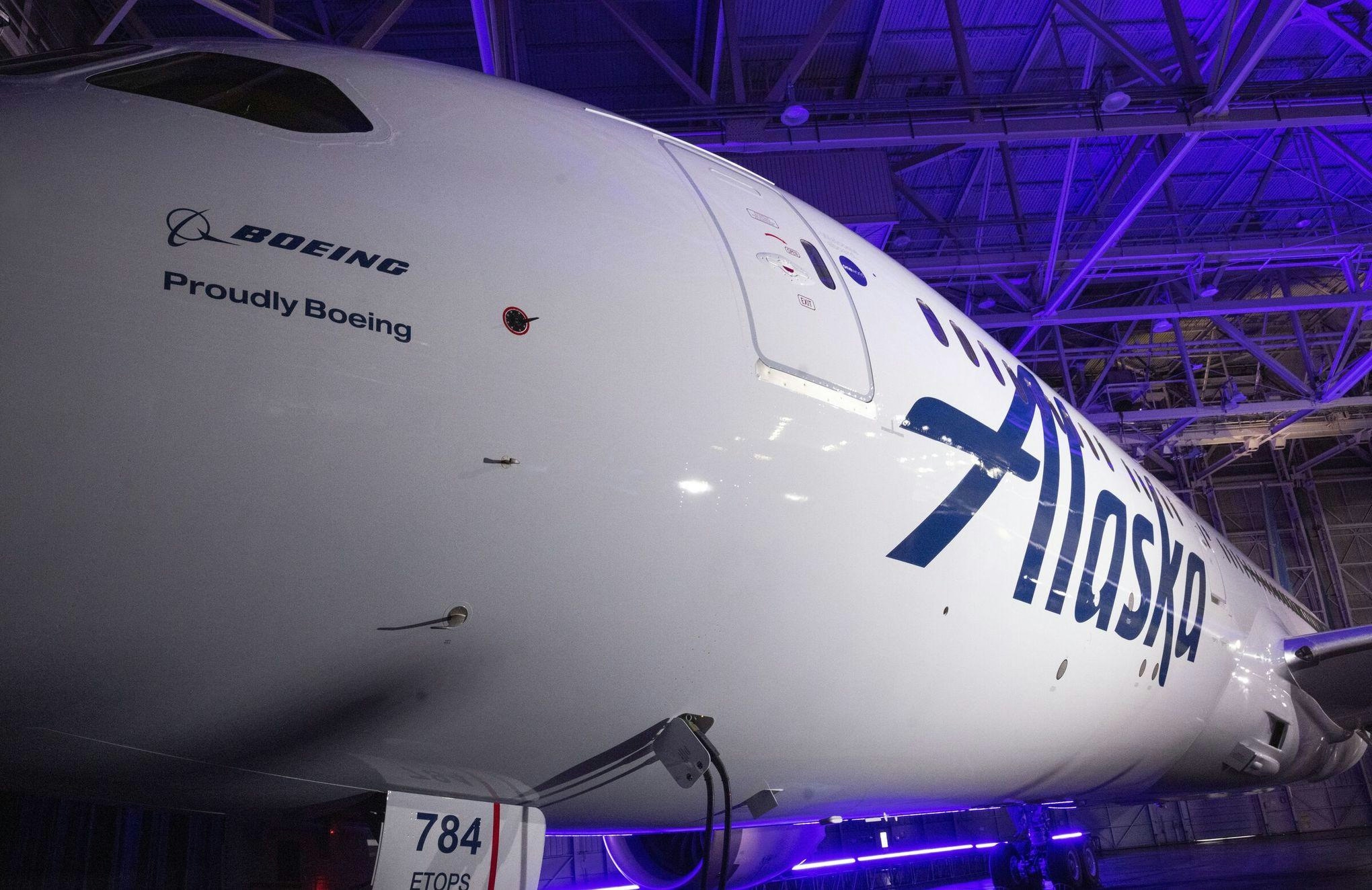
Why Airlines Continue to Order Boeing and Airbus Aircraft
Airbus and Boeing continue to dominate the global aircraft manufacturing industry, experiencing unprecedented demand as airlines seek to modernize their fleets and meet the resurgence in air travel. Both manufacturers currently face extensive order backlogs numbering in the thousands, a consequence of production slowdowns during the COVID-19 pandemic combined with a rapid recovery in passenger demand following the easing of travel restrictions. This dynamic has led to intense competition among airlines worldwide for limited delivery slots, often resulting in multi-year waits for new aircraft.
Fleet Renewal and Economic Imperatives
A key factor driving this sustained demand is the imperative for fleet renewal. Many airlines still operate aircraft that are over two decades old. While these older jets remain safe due to stringent regulatory oversight and maintenance protocols, they are increasingly expensive to operate. Aging aircraft require more frequent maintenance, consume more fuel, produce higher carbon emissions, and generally lack the modern passenger amenities found in newer models.
It is important to emphasize that an aging fleet does not imply compromised safety. Commercial aircraft are engineered for decades of service, provided they undergo regular inspections and component replacements. Some carriers continue to operate proven widebody models such as the Boeing 767, 777-200, Airbus A330, and A340 for 25 to 35 years or more. Nevertheless, the primary motivation for replacing these aircraft lies in economic efficiency and environmental responsibility.
Advantages of New-Generation Aircraft
New-generation aircraft families, including the Airbus A320neo and A350, alongside Boeing’s 737 Max, 777-9, and 787 Dreamliner, offer substantial benefits. These models deliver lower fuel consumption, reduced carbon emissions, decreased maintenance costs, and enhanced passenger comfort. Such advantages enable airlines to reduce operating expenses while aligning with increasingly stringent sustainability targets. Consequently, demand for these fuel-efficient aircraft remains robust despite ongoing production backlogs and delivery delays.
Proven Reliability and Global Support Networks
Airlines’ preference for Boeing and Airbus extends beyond technological innovation to encompass their proven reliability and extensive global support networks. Despite market fluctuations and competition from other manufacturers such as Embraer, Boeing and Airbus maintain a clear lead. Recent high-profile orders, including Air China and Shenzhen Airlines’ acquisition of 55 Airbus jets, highlight the enduring appeal of these manufacturers. Boeing, in particular, is focused on rebuilding its 737 production capacity and maintaining flexibility in propulsion options, reinforcing its position as a preferred supplier.
Fleet Age Overview
The average fleet ages of several major airlines illustrate the ongoing modernization efforts. Ryanair’s fleet averages around 10 years, Wizz Air’s approximately 5 to 6 years, Qatar Airways about 9 years, and Emirates’ widebody fleet averages 10 to 11 years. European carriers such as Lufthansa maintain fleets averaging 14 to 15 years, while U.S. airlines like Delta Air Lines, United Airlines, and American Airlines have average fleet ages ranging from 14 to 16 years, with Delta noted for rapid modernization.
2026 Order Trends
By June 2026, Airbus had secured 887 gross commercial aircraft orders (822 net after cancellations), significantly surpassing Boeing’s 324 gross orders. This surge was largely driven by strong demand for the A321neo family and several large single-aisle campaigns. Airbus’s orders for the first half of 2026 included 156 A220-300s, 128 A320neos, 546 A321neos, 1 A330-800, 45 A330-900s, 11 A350-900s, and 46 A350 freighters.
Despite delivery delays and fierce competition for production capacity, airlines’ continued reliance on Boeing and Airbus underscores their confidence in these manufacturers’ ability to provide advanced, efficient, and reliable aircraft essential to the future of global aviation.

Etihad and Swissport Extend Global Partnership

Sepehran Airlines B737 Returns to Mashhad After Tyre and Engine Issues

Etihad Deploys Widebody Fleet to Meet Strong Demand

Korean Air Finalizes $36.2 Billion Deal with Boeing
Australia’s RFDS Queensland Section Orders Six King Air 260Cs

Korean Air Finalizes Order for 103 Boeing Jets and Engines
Embraer E195-E2 Features Distinctive Engine Placement Among Regional Jets
What Passengers Can Expect on Boeing’s New 777X Jet
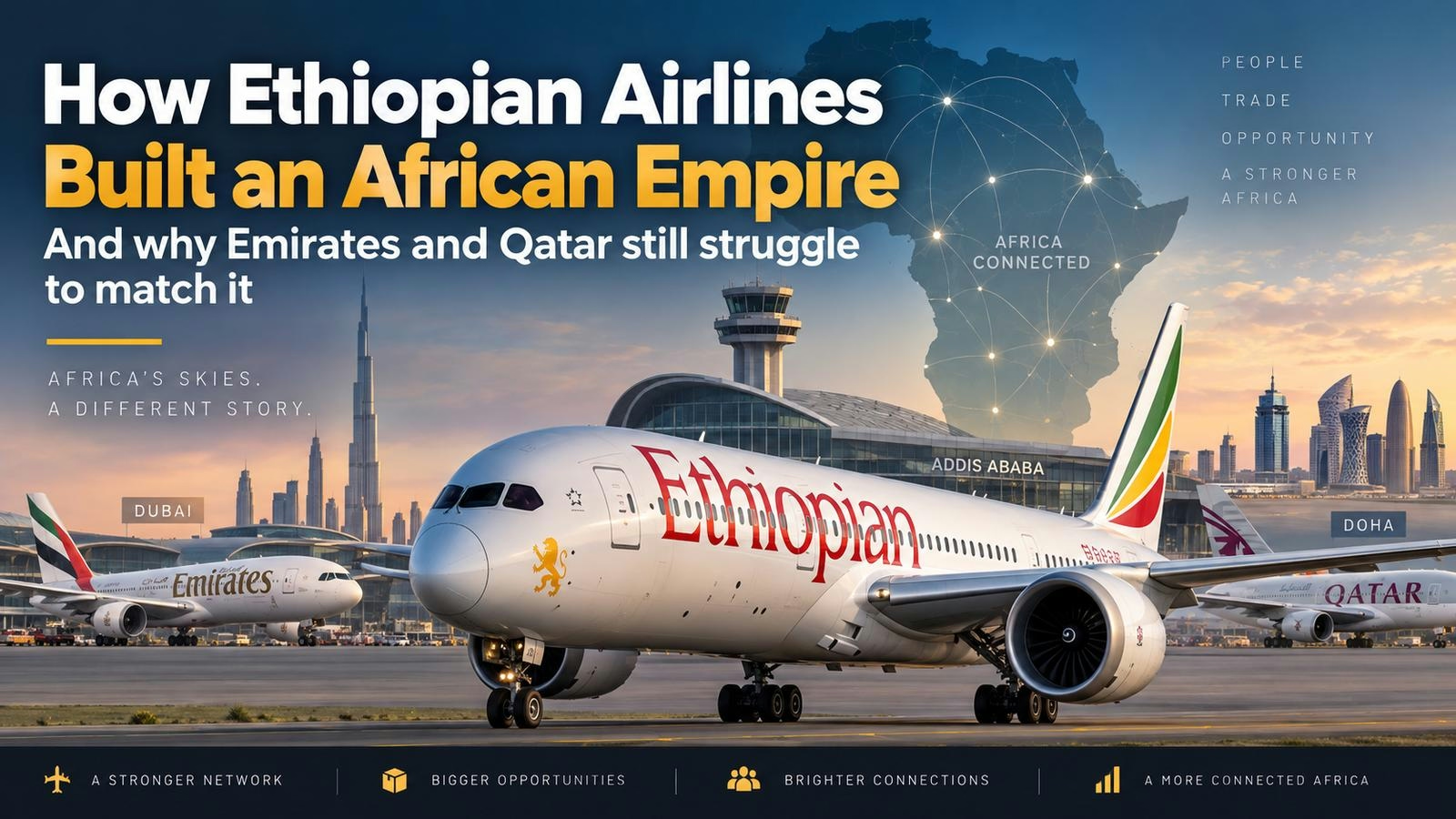
How Ethiopian Airlines Became Africa’s Leading Carrier Amid Gulf Competition

Joby Aviation Extends Autonomous Flight Capabilities with Cross-Country Tour
