
AIによるインサイトを行動へとつなげる

現在のトレンド
Categories
Why Does the Boeing 757 Board Passengers from the Mid-Cabin?
The Boeing 757’s Unique Mid-Cabin Boarding Process
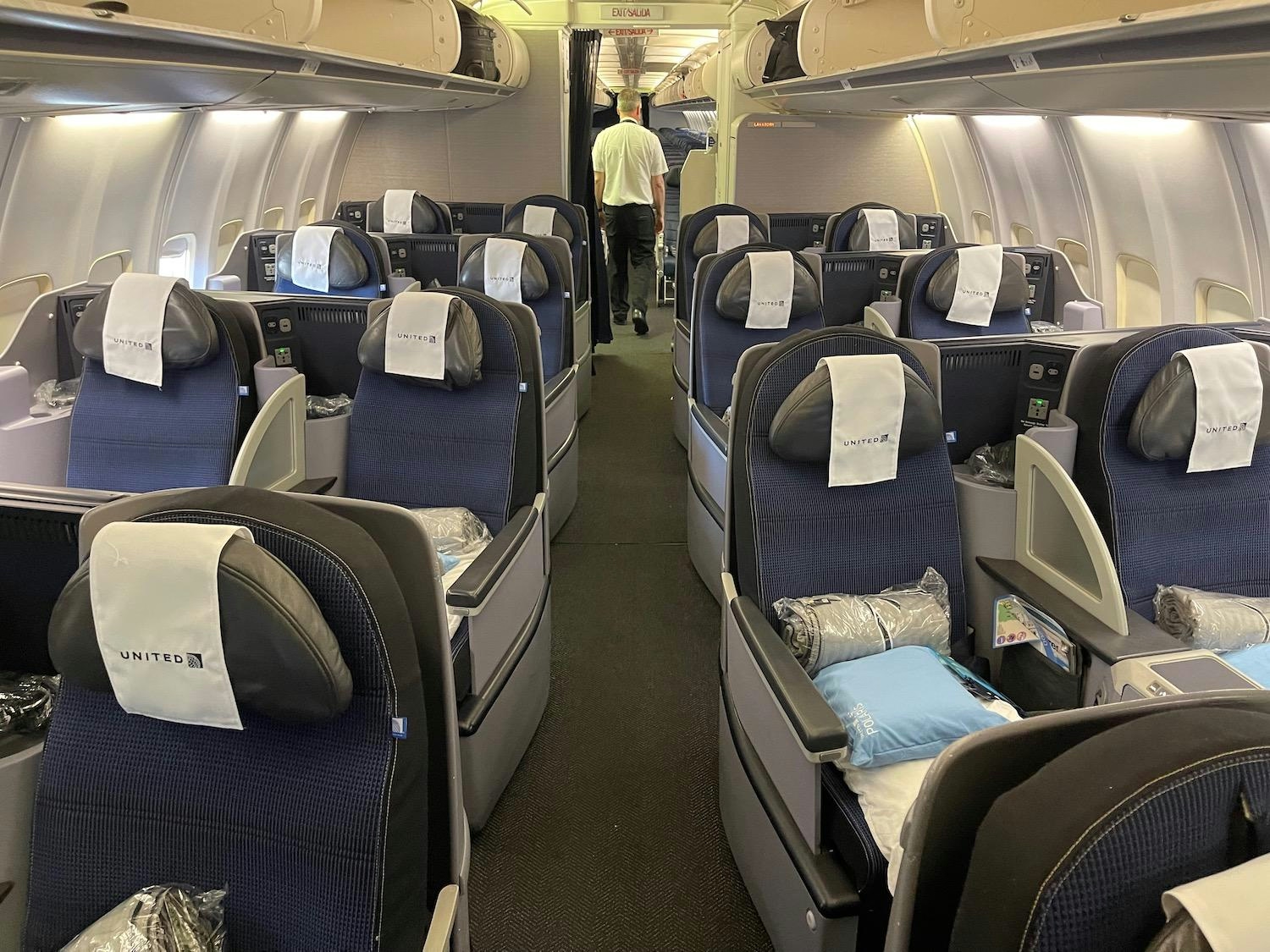
The Boeing 757 distinguishes itself among narrowbody aircraft through its unconventional boarding procedure. Unlike most single-aisle jets that board passengers exclusively through the front door, many 757 flights utilize the second door (2L), located at the midpoint of the cabin. Upon entering, first-class passengers proceed left toward the aircraft’s nose, while economy passengers move right toward the rear, effectively separating the flow of passengers during boarding.
This mid-cabin boarding arrangement was not intentionally designed to enhance passenger experience but rather emerged from the aircraft’s structural and regulatory requirements. Measuring 155 feet (47.24 meters) in length, the 757 is notably longer than comparable narrowbodies such as the Boeing 737-800 (129 feet) and the Airbus A321 (146 feet). To meet stringent FAA and EASA emergency evacuation standards—which require that all passengers be evacuated within 90 seconds—Boeing incorporated an additional set of doors forward of the wing. This design decision positioned door 2L at the natural division between premium and economy cabins, making it a practical entry point for boarding.
Boarding Practices Across Aircraft Types
Most narrowbody aircraft, including the Boeing 737 and Airbus A320 families, board passengers solely through the front door (1L). Passengers enter at the nose and proceed down a single aisle, filling the cabin sequentially from front to back. This straightforward approach aligns with the structural simplicity of these aircraft, which do not necessitate dividing boarding flows.
In contrast, widebody aircraft such as the Boeing 777 or Airbus A380 employ multiple doors and jetbridges to accommodate their larger passenger capacities, often ranging from 300 to 500 seats. Their twin-aisle configurations and wider fuselages facilitate simultaneous boarding through several entry points, expediting the process.
The 757 occupies a unique position between these categories. As a single-aisle narrowbody, it nonetheless boards through a mid-cabin door when gate infrastructure permits. This method resembles widebody boarding patterns but is primarily a consequence of regulatory compliance and aircraft design rather than a passenger-focused innovation.
Operational Implications and Industry Responses
While mid-cabin boarding offers a logical solution given the 757’s design, it introduces operational challenges. Boarding through door 2L can sometimes extend boarding times, potentially affecting on-time departures and frustrating passengers accustomed to more conventional procedures. Airlines must balance these factors carefully, and opinions on the practice vary. Some carriers embrace mid-cabin boarding as a distinctive characteristic of the 757, while others view it as misaligned with evolving passenger expectations.
In response, competitors have experimented with alternative boarding strategies, including front or rear-cabin entry, aiming to enhance efficiency and passenger satisfaction. These operational considerations are influencing broader fleet management decisions. For instance, airlines such as Icelandair are contemplating the accelerated retirement of older 757s in favor of newer, more efficient aircraft that support more conventional boarding processes.
Ultimately, the Boeing 757’s mid-cabin boarding remains a legacy of its unique design and regulatory environment, continuing to influence airline operations and fleet strategies within the competitive landscape of commercial aviation.

Etihad Airways Suspends Airbus A380 Flights on Key Route

Aditya Birla Group Seeks Approval for Aircraft Leasing in GIFT City

Qatar Airways Highlights Innovation and Connectivity at Arabian Travel Market 2026

Hong Kong's Five-Year Plan Includes Andrew Fan's Aircraft Parts Processing Hub Proposal

ACIA Aero Leasing Delivers ATR72-600 to Air Nostrum

RTX Appoints Jill Albertelli as Head of Pratt & Whitney

TAT Technologies Joins Beyond Aero Hydrogen Aircraft Program

AURAK Study Highlights Barriers to Air Taxi Adoption in Emerging Economies

Xiamen Air Selects Altitude for 787 Maintenance at Heathrow

Etihad and Swissport Extend Global Partnership
