Image

Orchestrate AI insights into action

Join the AeroGenie waitlist today!

Trending

Categories

10 futuristic VTOL aircraft that could transform how we fly
August 9, 2026By ePlane AI
10 futuristic VTOL aircraft that could transform how we fly
0
0
VTOL Aircraft
Urban Air Mobility
Electric Propulsion

10 Futuristic VTOL Aircraft That Could Transform How We Fly

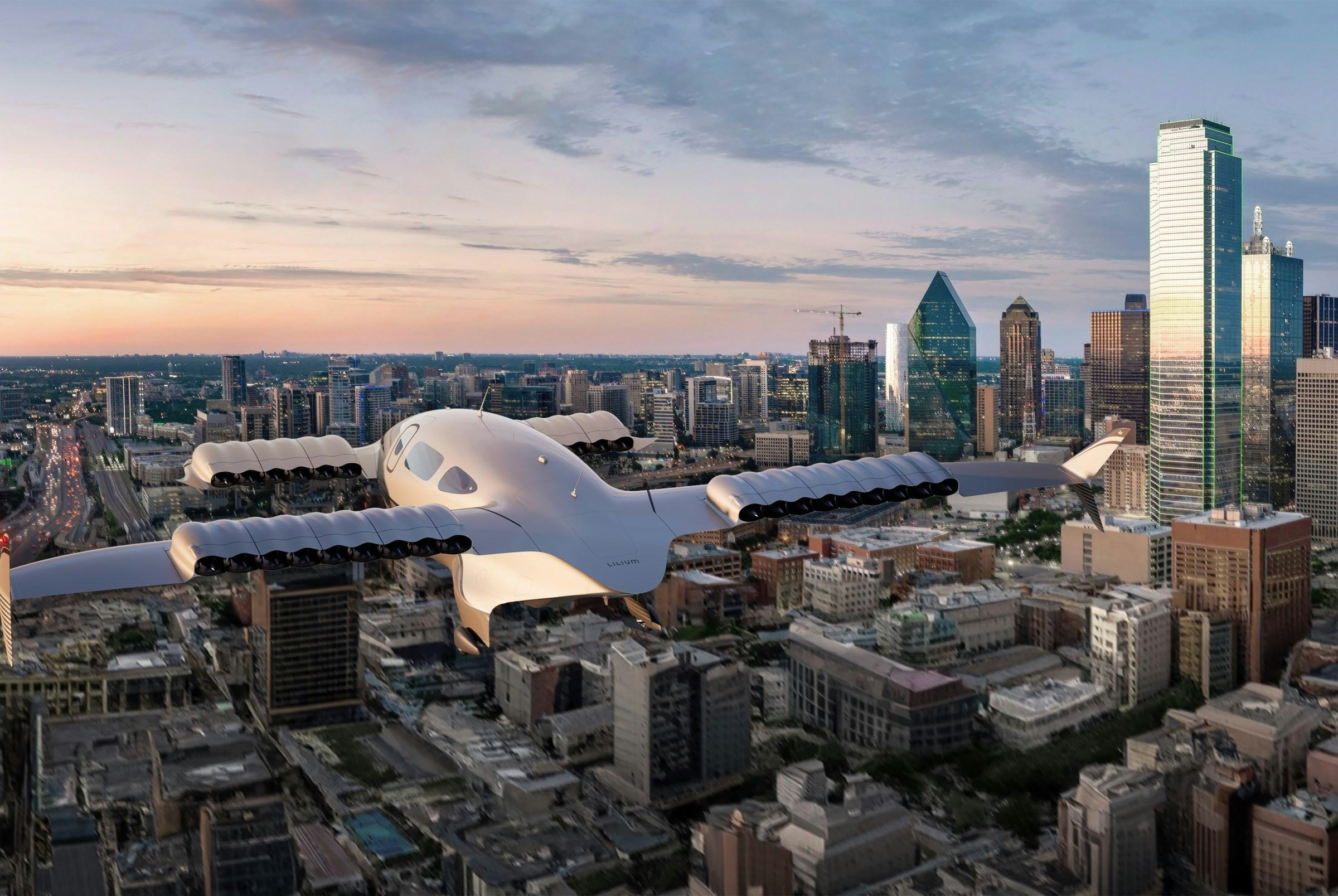
Vertical takeoff and landing (VTOL) technology is undergoing a significant transformation. No longer limited to helicopters, VTOL aircraft are now benefiting from advances in electric propulsion, autonomous flight systems, and lightweight materials. These innovations have given rise to a new generation of aircraft capable of vertical lift-off like helicopters but cruising efficiently like airplanes. This emerging class of VTOL vehicles holds the potential to revolutionize urban mobility, cargo transport, military operations, and personal aviation.

Despite the promise, widespread adoption faces considerable challenges. Regulatory approval processes, safety concerns, and the integration of these aircraft into existing air traffic control frameworks remain formidable obstacles. Nevertheless, market enthusiasm remains robust, with substantial pre-orders and investments from companies such as AirEV and Pivotal. Both established aerospace manufacturers and startups are accelerating technological development and extending operational range, with several next-generation models poised to enter service in the near future.

Leading VTOL Aircraft Shaping the Future of Flight

Joby Aviation’s electric air taxi stands out as one of the most advanced in the sector. Equipped with six tilting electric propellers, it can lift vertically and transition smoothly to forward flight. The aircraft accommodates a pilot and four passengers, reaching speeds of up to 200 mph and offering a range of approximately 100 miles. By December 2025, Joby had completed over 2,600 flights, covering 50,000 miles, underscoring its operational maturity.

Archer Aviation’s Midnight is tailored for frequent, short-distance urban flights. Featuring 12 electric motors and propellers to provide redundancy, it carries four passengers and a pilot at speeds up to 150 mph. While its maximum range is 100 miles, the aircraft is optimized for trips between 20 and 50 miles. In August 2025, a piloted Midnight successfully completed a 55-mile flight in 31 minutes, demonstrating its capability for efficient city-to-city travel.

BETA Technologies’ ALIA employs four horizontal propellers for vertical lift and a rear propeller for forward propulsion. It can transport five passengers or accommodate 200 cubic feet of cargo, reaching speeds up to 176 mph. BETA envisions its aircraft serving diverse roles, including passenger transport, medical missions, logistics, and military applications.

China’s AutoFlight is developing the Prosperity I, designed for longer intercity journeys. This aircraft combines 10 lifting propellers with three dedicated to forward flight, seating five passengers and carrying up to 350 kilograms. With a range exceeding 250 kilometers and cruise speeds above 200 km/h, Prosperity I is currently undergoing airworthiness certification, marking a significant step toward commercial deployment.

The British-built Vertical Aerospace Valo features eight tilt-shift propellers and a carbon-composite frame, carrying four passengers and a pilot up to 100 miles at speeds of 150 mph. A hybrid-electric variant with an extended range of 1,000 miles is also in development. The company aims to secure regulatory approval by 2028, positioning Valo as a competitive option in the evolving VTOL market.

Horizon Aircraft’s Cavorite X7 distinguishes itself by concealing its lift propellers within the wings, a design that reduces both drag and noise. Production is scheduled to commence in 2026. Horizon faces competition from established manufacturers such as Bell, whose MV-75 Cheyenne II is anticipated to enter service in 2028, highlighting the intensifying race to commercialize advanced VTOL platforms.

As competition heats up, companies like Bell and Horizon continue to push technological boundaries. The strong market response reflects growing demand for these next-generation aircraft. The coming years will be critical in determining how swiftly VTOL technology can overcome regulatory and technical challenges to fundamentally change the way we fly.

More news
Air Charter Service Reports $845 Million Revenue in First Half

Air Charter Service Reports $845 Million Revenue in First Half

Air Charter Service Reports $845 Million Revenue in First Half Amid Market Challenges Aircraft charter company Air Charter Service (ACS) has announced a strong financial performance for the first half of its fiscal year, with revenues increasing by 38% to exceed $845 million. The company, whose financial year commenced on February 1, also reported a rise in the number of charter flights, underscoring robust demand across its operations. Growth Across Divisions and Regions Chris Leach, Chairman and Founder of ACS, emphasized the solid results achieved across the company’s three primary divisions, which collectively saw a 16% increase in charter contracts. Leach attributed the revenue growth not only to higher charter volumes but also to a strategic shift toward securing higher-value contracts. Regionally, ACS experienced notable expansion in its US, European, and Greater China offices. The six new offices opened in 2025 contributed positively to the company’s performance, while three additional offices launched in the past six months—in Brussels, Monaco, and Stuttgart—have expanded ACS’s global presence to 43 locations. Among the divisions, the cargo segment demonstrated the most significant growth, with charter numbers rising 49% and revenue increasing by 38% compared to the same period last year. Leach identified several contributing factors, including supply chain disruptions linked to the conflict in Iran, port closures in Morocco caused by Storm Marta, and relief efforts in Venezuela. While these events accounted for a portion of the increased activity, Leach stressed that the underlying demand for cargo charters remains strong and diverse. The private jet division also recorded healthy gains, with charter contracts and revenue up 26%. This growth was driven by the use of larger aircraft and longer flight sectors, as major clients increasingly sought ACS’s global reach. Jet Card sales surged by 85%, generating nearly 60% more revenue. However, margins experienced slight compression due to the company absorbing higher fuel costs. The group charter division performed robustly as well, with charter contracts rising 34% and revenue increasing by 48%. The logistics surrounding the World Cup played a significant role in this growth, involving hundreds of flights across the US, Canada, and Mexico. ACS was responsible for transporting nearly 40% of World Cup squads back home. Additionally, the company participated in mass evacuations from the Middle East in March, further demonstrating its operational capacity in complex scenarios. Financial Strength Amid Industry Pressures Leach reported that earnings before interest, taxes, depreciation, and amortization (EBITDA) for the first half of 2026 rose by 35-40%, aligning with the revenue growth, while profit before tax continued to reflect the company’s financial resilience. Despite these strong results, the broader market environment remains challenging. Fluctuating petrochemical prices, as highlighted in Phillips 66’s recent earnings call, pose potential risks to operational costs for charter companies. Meanwhile, competitors such as Forward Air have reported significant operating losses, underscoring the pressures within the sector. These market conditions are likely to prompt increased scrutiny of operational efficiencies and pricing strategies across the industry, with competitors expected to adjust their approaches to maintain market share. Leach acknowledged that while exceptional events can temporarily boost activity, ACS’s growing role during market disruptions highlights the company’s resilience and adaptability in a volatile sector.
Solairus to Acquire Clay Lacy Management and Charter Divisions

Solairus to Acquire Clay Lacy Management and Charter Divisions

Solairus to Acquire Clay Lacy Management and Charter Divisions Solairus Aviation has announced a definitive agreement to acquire the aircraft management and charter divisions of Clay Lacy Aviation, a transaction poised to significantly impact the U.S. private aviation sector. The deal, whose financial terms remain undisclosed, is expected to close by the end of September 2026, subject to regulatory approvals. Upon completion, Solairus will operate a combined fleet exceeding 500 aircraft, consolidating its position as a leading private aviation provider. Strategic Rationale and Fleet Expansion Dan Drohan, founder and CEO of Solairus, emphasized that the acquisition is driven not by fleet size but by the alignment of corporate values and commitment to personalized service. “This has little to do with size—Solairus already manages the largest fleet of managed aircraft in the United States,” Drohan stated. “What matters is that this brings together two like-minded companies built on a passion for personalised service and the most forward-thinking support systems in the industry. We will work hard every day to be the best, not just the biggest.” The acquisition will add approximately 140 aircraft from Clay Lacy’s managed fleet to Solairus’s existing portfolio of around 360 aircraft. These assets are distributed across more than 100 bases throughout North America. Clay Lacy’s Part 135 certificate encompasses 51 aircraft, while Solairus holds certification for 144 aircraft, ranging from Beech twin turboprops to ultra-long-range jets such as the Gulfstream G700, G800, and Bombardier Global 7500. In total, 152 aircraft within the combined fleet fall into the large-cabin, long-range category or above, underscoring the scale and capability of the merged operation. Solairus anticipates that the merger will enable more effective management of rising operational costs, facilitate improved pricing negotiations, broaden access to aircraft, and enhance overall service offerings. The company will maintain its headquarters in Petaluma, California, with additional offices in Los Angeles and New York. Perspectives and Future Focus Brian Kirkdoffer, chairman of Clay Lacy’s board, expressed confidence in the transition, highlighting the shared philosophies between the two companies as a key factor in the decision. “We know that we're putting our valued clients in good hands with Solairus,” Kirkdoffer remarked. Following the divestiture, Clay Lacy will concentrate on its aviation infrastructure businesses, including fixed-base operations (FBOs), aviation real estate, and aircraft maintenance. Kirkdoffer noted that these sectors remain robust and full of growth potential, signaling a strategic refocus for the company. Industry Implications and Transaction Details The integration of two substantial fleets presents several challenges, including securing necessary regulatory approvals, harmonizing operational systems, and ensuring uninterrupted service for existing clients. Industry analysts suggest that this consolidation could intensify competition among private jet operators, potentially prompting rivals to pursue strategic acquisitions or adjust pricing strategies to safeguard market share. Jefferies served as the exclusive financial advisor to Clay Lacy in the transaction. Solairus has been under the ownership of private equity firm Ancient since 2022, which also holds Burgess, a prominent superyacht brokerage and management company.
Drone Innovations Explored by Hundreds at Air Force Museum

Drone Innovations Explored by Hundreds at Air Force Museum

Drone Innovations Take Center Stage at National Museum of the U.S. Air Force Hundreds of enthusiasts and industry experts convened at the National Museum of the U.S. Air Force in Dayton on Sunday to witness the culmination of the Defense Advanced Research Projects Agency (DARPA) Lift Challenge. This national competition, designed to push the boundaries of heavy vertical-lift drone technology, showcased the latest advancements in unmanned aerial systems. Participants from across the globe tested their custom-built drones, striving to meet the demanding objective of carrying payloads up to four times their own weight—a milestone that underscores both the potential and the technical challenges inherent in scaling drone capabilities for practical use. Although no team fully reached the ambitious target, the event highlighted significant progress in drone engineering and design. Stephen Winchell, Director of DARPA, emphasized the broader vision behind the challenge, stating, “If there were no limits, if there was nothing that was stopping me, what would I do? One of our goals is to inspire the next generation of young aerospace engineers to get started early and start imagining the impossible and doing it.” International Competition and Industry Implications Among the international contenders was Peter Jakaeowsky and his team, Xtreme Aerial Concepts, who traveled from Vienna, Austria. Their drone, weighing just under 55 pounds, successfully lifted approximately 190 pounds, achieving a lift ratio of about 3.5 times its own weight and securing third place. The top positions were claimed by Avidrone and M Tech Operations, reflecting the high level of innovation present at the competition. The Lift Challenge arrives at a critical juncture for the drone industry, as increased Pentagon support for startups signals a growing integration of drone technology into both commercial and military applications. Companies such as Ascent’s Aero Spirit have recently secured substantial contracts, while established defense contractors are intensifying their efforts. General Atomics, for example, has upgraded its SkyGuardian drone with enhanced weaponry, and BAE Systems is collaborating with Skunk Works on multi-mission air vehicles. These developments illustrate the fierce competition for dominance in a rapidly evolving market. Despite the enthusiasm surrounding these technological advances, significant obstacles remain. Scaling production to meet the demands of heavy-lift drones presents considerable technical and logistical challenges. Additionally, the shifting geopolitical landscape complicates the deployment and adoption of drone technology. Incidents such as Iran’s recent downing of a drone amid regional tensions underscore the strategic and security implications that accompany these innovations. Nonetheless, DARPA’s Winchell expressed optimism about the future. He remarked, “I hope we can get people started on this path to innovate and give them the tools they need to build successful companies and actually produce these things for the commercial market and for the military market.” Sunday’s event at Wright-Patterson Air Force Base not only celebrated the technical achievements of the Lift Challenge but also sought to inspire the next generation of aerospace innovators. As the drone industry continues to advance, competitions like this are shaping the future of flight and redefining the possibilities within aerospace engineering.
Is the World Facing a Shortage of Widebody Aircraft?

Is the World Facing a Shortage of Widebody Aircraft?

Is the World Facing a Shortage of Widebody Aircraft? The airline industry has experienced considerable disruption in the post-pandemic period. While some carriers have managed to recover and even thrive, many others continue to face significant challenges or have exited the market entirely. Amid this volatility, demand for new aircraft—particularly widebody jets—has surged sharply. However, manufacturers are struggling to keep pace with this demand. Although production of narrowbody aircraft is generally meeting market needs, with engine supply posing a notable constraint, the most pronounced imbalance between supply and demand is evident in the widebody segment. Production Delays and Market Consequences One of the most significant setbacks has been Boeing’s 777X program, which has been delayed by more than six years. This delay has created substantial difficulties for airlines awaiting new deliveries. Both Airbus and Boeing are contending with production bottlenecks across nearly all widebody models, unable to manufacture aircraft quickly enough to satisfy the accelerating demand. As global travel rebounds, airlines are increasingly unable to expand or modernize their fleets at the pace they desire. Meanwhile, aging widebody aircraft are being retired, and the slow pace of new deliveries is exacerbating the shortage. This supply-demand mismatch is clearly reflected in the market. Lease rates and residual values for highly sought-after models such as the Airbus A350 remain robust, underscoring the scarcity of available widebody aircraft. Airlines aiming to increase capacity over the coming decade are turning more frequently to leasing arrangements and the secondary market, as new production slots are effectively fully booked well into the 2030s. Current Widebody Offerings and Production Backlogs Airbus’s current widebody portfolio includes the A330neo series—comprising the A330-800 and A330-900 variants—and the A350 family, which consists of the A350-900, A350-1000, and the forthcoming freighter version, the A350F. Boeing’s widebody lineup features the 787 Dreamliner family (787-8, 787-9, 787-10) and the 777 family (777F, 777-8, 777-8F, 777-9), although deliveries of the 777X variants have yet to commence, representing a significant production constraint. The backlog of orders remains substantial. Airbus currently has 298 A330neos and 870 A350s on order, while Boeing faces outstanding orders for 1,145 787s, 657 777Xs, and 41 777Fs. Given current production rates, these backlogs will occupy manufacturing capacity well into the next decade. Airbus produces approximately four A330neos per month, with plans to increase to five by 2029, and six A350s monthly, targeting a ramp-up to 12 by 2028—though supply chain challenges have delayed this expansion. Boeing is manufacturing eight 787s per month, with ambitions to increase output to ten or potentially sixteen units monthly, while 777 production remains at three to four aircraft per month. Supply Chain Challenges and Industry Adaptation The persistent supply chain constraints, worsened by pandemic-related production slowdowns and the retirement of experienced workers, continue to impede suppliers’ ability to meet the renewed demand for aircraft. Shortages of critical components and difficulties in sourcing essential parts remain significant obstacles for both Airbus and Boeing. In response, industry stakeholders are implementing strategic measures to address these challenges. Airbus is considering new product launches aimed at better meeting market requirements, while Lufthansa Technik is investing in a new heavy-maintenance facility in Portugal to ensure sufficient widebody maintenance capacity in the future. These initiatives reflect a broader industry effort to adapt to a market environment characterized by a persistent shortage of widebody aircraft amid strong demand. With no immediate resolution in sight, the global shortage of widebody aircraft is expected to continue influencing airline fleet strategies and market dynamics for the foreseeable future.
Florida Redirects $200 Million From EV Charging Stations to Flying Car Development

Florida Redirects $200 Million From EV Charging Stations to Flying Car Development

Florida Redirects $200 Million From EV Charging Stations to Flying Car Development A Strategic Shift Toward Aerial Transportation Florida has announced a significant reallocation of nearly $200 million in federal funds originally designated for electric vehicle (EV) charging infrastructure, redirecting the money toward the development of battery-powered flying taxis. This initiative, reported by the Miami Herald, reflects the state’s ambition to bypass traditional EV infrastructure expansion in favor of establishing an “Aerial Highway Network” for electric vertical take-off and landing (eVTOL) vehicles. The Florida Department of Transportation (FDOT) intends to invest $197 million of these federal funds, initially allocated to increase public EV charging points, in building infrastructure to support flying taxis. This includes the construction of 32 “vertiports,” specialized hubs where electric aircraft can take off, land, and recharge. Each vertiport is projected to cost approximately $5.6 million. FDOT officials argue that the private sector has already sufficiently addressed the charging needs of conventional electric vehicles and that focusing on emerging aerial technologies will yield greater long-term benefits for the state’s residents. Controversy and Criticism The decision has drawn sharp criticism from clean energy advocates and community organizations. Florida currently ranks second in the nation for the number of electric vehicles but remains below the national average in terms of chargers per vehicle. Many residents, particularly those living in apartments and condominiums, continue to face challenges accessing reliable charging infrastructure. The federal National Electric Vehicle Infrastructure (NEVI) program was designed to close these gaps, especially for lower-income drivers and during critical situations such as hurricane evacuations. Opponents of the funding shift contend that prioritizing speculative aerial technology over immediate EV infrastructure needs undermines the broader goal of sustainable transportation. Stephen Smith, executive director of the Southern Alliance for Clean Energy, criticized the move, stating that public funds are being diverted from initiatives that would benefit a broad population to support technologies favored by a wealthy elite. The decision may also provoke concern among stakeholders invested in traditional EV infrastructure, as other states continue to expand their charging networks and position themselves as leaders in clean mobility. Transparency and Future Implications The process by which Florida arrived at this decision has also come under scrutiny. The Miami Herald reported that the state administration ceased publicly posting its EV charger deployment plans, only releasing relevant documents following legal pressure. These documents outline the ambitious scope of the flying taxi project but leave unresolved questions about the impact on everyday drivers who depend on accessible and affordable charging options. As Florida advances its vision for an aerial transportation network, the debate intensifies over whether the state is sacrificing practical solutions for the majority of its residents in favor of unproven, futuristic technology. The outcome of this initiative may not only redefine Florida’s transportation infrastructure but also influence its position in the national transition toward clean and innovative mobility solutions.
New Grant Supports Transformation of KBKV

New Grant Supports Transformation of KBKV

New Grant Supports Transformation of KBKV Federal Funding Accelerates Infrastructure Upgrades Hernando County, Florida, has secured a $13.6 million grant from the U.S. Department of Commerce’s Economic Development Administration (EDA) to advance significant infrastructure improvements at Brooksville-Tampa Bay Regional Airport (KBKV). This federal investment is intended to catalyze the airport’s transformation by enabling the construction of critical infrastructure, including roads, drainage systems, utilities, and electrical services, across approximately 600 acres of airport property. County officials emphasize that these upgrades will create shovel-ready sites tailored for aviation and aerospace companies seeking direct airfield access and expansion opportunities. The initiative targets a diverse range of businesses, such as Maintenance, Repair and Overhaul (MRO) operations, regional air cargo facilities, passenger-to-freight conversion centers, aerospace manufacturers, and other aircraft service providers. Strategic Developments and Market Context A pivotal element of the first phase involves converting a 5,000-foot former runway into a taxiway capable of accommodating wide-body aircraft. This conversion will expand aircraft parking, maintenance, and hangar capacity, while also unlocking adjacent parcels for immediate private investment. These enhancements are designed to position KBKV competitively within the broader aviation and industrial sectors. The airport’s development occurs amid intensified competition from other regions and industries, including the natural gas marketing sector, where companies are increasingly pursuing in-house integration strategies. Market responses to KBKV’s expansion have been cautiously optimistic, reflecting Hernando County’s positive growth outlook alongside the challenges of navigating a competitive environment. Industry analysts anticipate that competitor reactions may involve heightened strategic evaluations and the entry of new players, particularly in rapidly expanding markets such as the premium appliance sector in China. Workforce Development and Long-Term Vision Complementing the infrastructure investments, workforce development initiatives are underway to support the region’s growing aviation ecosystem. In June 2026, Pasco-Hernando State College will receive a $3 million Florida Job Growth Grant to establish an Airframe & Powerplant (A&P) training program at its forthcoming KBKV campus. This program aims to cultivate a skilled workforce aligned with the airport’s expanding aviation activities. Valerie M. Pianta, Economic Development Director for Hernando County, underscored the broader significance of these investments, stating, “These investments represent far more than infrastructure improvements. They represent a long-term commitment to building an aviation ecosystem where businesses have the facilities they need, the workforce they require, and the confidence to invest for decades to come.” For further details, visit HernandoCounty.us or FlyBKV.com.
Why Airlines Are Retaining Older Aircraft Longer

Why Airlines Are Retaining Older Aircraft Longer

Why Airlines Are Retaining Older Aircraft Longer The aviation industry is grappling with a persistent challenge that has evolved from a post-pandemic production slowdown into a long-term operational constraint. Airlines are compelled to keep older aircraft in service far beyond their originally planned retirement dates. This situation stems from significant delivery delays from major manufacturers such as Airbus and Boeing, exacerbated by ongoing shortages of parts, skilled labor, and limited production capacity. As a result, carriers have limited options other than extending the operational lifespan of aging fleets. Aircraft Shortages and Supply Chain Disruptions The current backlog of aircraft deliveries remains substantial, with more than 17,000 new planes on order and deliveries still approximately 30% below pre-pandemic levels. Airlines face wait times measured in years rather than months, unable to meet the surging demand for air travel. This backlog is not solely due to slowed production at the primary manufacturers but also reflects widespread disruptions throughout the aviation supply chain. Thousands of suppliers provide essential components—including engines, avionics, and advanced materials—and shortages in any segment can halt the entire manufacturing process. Engine availability has emerged as a particularly acute bottleneck, with extended maintenance turnaround times reducing aircraft availability. These constraints have increased demand for engine leasing, spare parts, and maintenance services, placing considerable strain on maintenance schedules and parts inventories across the industry. Extending the Life of Older Aircraft In response to these challenges, airlines are investing heavily in maintenance, cabin upgrades, and refurbishment programs to ensure older aircraft remain safe and operational. Planes once scheduled for retirement are now being retained for several additional years. While this approach is necessary, it carries inherent trade-offs. Older aircraft tend to be less fuel-efficient, incur higher maintenance costs, and require more frequent inspections and repairs. Airlines must carefully balance the financial pressures of fleet modernization with stringent safety requirements. Managing the residual value, retirement planning, and remarketing of older aircraft adds complexity, especially as new models gradually enter service. Operational and Growth Impacts The shortage of new aircraft is having a tangible impact on airline operations worldwide. Some carriers have postponed launching new routes, reduced flight frequencies, or delayed expansion plans due to the scarcity of available planes. The limited supply has also driven up leasing costs, intensifying competition for a shrinking pool of aircraft. For passengers, this translates into fewer flight options and reduced flexibility, while airlines must navigate rising demand with constrained resources. Environmental Concerns One of the most significant long-term consequences relates to the aviation sector’s climate goals. New-generation aircraft offer substantial improvements in fuel efficiency and emissions reductions. By retaining older, less efficient planes for longer periods, airlines are delaying the environmental benefits that fleet renewal would bring. This situation poses a considerable challenge to the industry’s ambitions to achieve net zero emissions. Looking Ahead At present, retaining older aircraft is less a strategic choice than a necessity. Until supply chain disruptions ease and production rates recover, airlines will continue to rely on aging fleets. This approach requires a delicate balance of safety, cost management, and environmental considerations as the industry navigates an uncertain path to recovery.
Inside Beta Technologies’ MV250 Autonomous Battlefield Aircraft

Inside Beta Technologies’ MV250 Autonomous Battlefield Aircraft

Inside Beta Technologies’ MV250 Autonomous Battlefield Aircraft Beta Technologies has developed the MV250, a hybrid-electric aircraft engineered for vertical takeoff and autonomous flight, positioning it at the cutting edge of next-generation battlefield logistics. This innovative platform is designed to meet the increasing demand for unmanned solutions in high-risk military environments, where minimizing human exposure is critical. Advancing Autonomy in Military Operations The drive toward autonomy in military aviation is underscored by the need to enhance operational safety and effectiveness. General Jim McConville, former Chief of Staff of the US Army and a member of Beta’s board, emphasized the strategic value of autonomous systems despite the concerns of pilots about job displacement. He stated, “Why do we all want autonomy? I’m a pilot. No pilot wants to see their job go away. But what we want to do is give commanders the ability to go into situations at extremely high risk.” This perspective highlights the balance between preserving human expertise and leveraging technology to reduce risk on the battlefield. Recent conflicts, notably in Ukraine, have accelerated the adoption of unmanned aerial and ground vehicles for logistics missions that are too dangerous for personnel. Ukrainian officials have articulated ambitions for fully automated battlefield logistics, reflecting a broader global trend toward integrating robotics to replace human roles wherever feasible. Challenges and Market Prospects Despite the promise of the MV250, Beta Technologies faces significant challenges in penetrating military markets. The defense procurement process is traditionally slow and complex, requiring the company to navigate lengthy contract negotiations and secure formal agreements with U.S. military branches. Additionally, growing interest from foreign governments introduces further complexity, as international sales often necessitate memorandums of understanding and compliance with export regulations. Market anticipation is mounting around the potential for military logistics contracts and the possibility of joint exercises featuring the MV250. However, Beta is not alone in this emerging field. Competitors such as Shield AI are advancing autonomous capabilities for both rotary and fixed-wing aircraft, with some aiming to transition these technologies into commercial applications. As autonomous battlefield logistics continue to evolve, Beta Technologies’ MV250 exemplifies the intersection of innovation and operational necessity. The aircraft embodies the potential to enhance safety and efficiency in military operations while confronting the realities of defense acquisition and a rapidly advancing competitive landscape.
Boeing Composites Malaysia Increases Manufacturing Capacity

Boeing Composites Malaysia Increases Manufacturing Capacity

Boeing Composites Malaysia Expands Manufacturing Capacity Amid Industry Challenges Boeing has announced a substantial expansion of its wholly owned subsidiary, Boeing Composites Malaysia (BCM), aimed at enhancing production capabilities and creating new opportunities for its all-Malaysian workforce of approximately 1,150 employees. The expansion coincides with BCM’s 25th anniversary and was marked by a ceremony at the Kedah facility attended by employees, government officials, and industry partners. Strategic Investment and Facility Expansion Faisal Sraieldin, Managing Director of Boeing Composites Malaysia, emphasized the significance of the investment, stating that Boeing’s continued commitment to Kedah reflects the strength of Malaysia’s industrial base and the exceptional talent within its all-Malaysian team. He noted that the advanced facility and skilled workforce play a crucial role in Malaysia’s growing aerospace sector. The expansion includes an additional 100,000 square feet of warehouse space dedicated to finished components and integrated logistics, supporting Boeing’s broader strategy to increase commercial airplane production. This development aligns with Boeing’s target to produce 10 787 Dreamliners per month by 2026, a response to rising global demand and customer commitments. Technical and Operational Challenges Despite the promising outlook, scaling up manufacturing capacity in advanced aerospace composites presents significant challenges. The production process involves high-performance composite materials that require substantial manufacturing and calibration investments. Moreover, these materials are susceptible to performance degradation when exposed to prolonged high temperatures, posing technical hurdles that BCM must address as it expands operations. Workforce Development and Industry Impact Boeing’s strategy in Malaysia extends beyond facility expansion to include workforce development through partnerships with local technical institutions such as the Institut Kemahiran Belia Negara (IKBN) and the Advanced Technology Training Centre (ADTEC). These collaborations are designed to cultivate a pipeline of high-precision skills, ensuring workforce readiness and supporting the region’s ambitions in advanced manufacturing. As Boeing strengthens its presence in Malaysia, BCM continues to produce composite products and subassemblies for all Boeing commercial airplane models. This expansion is expected to intensify competition among global aerospace manufacturers, with industry observers anticipating similar moves by competitors seeking to maintain market share in a rapidly evolving sector. Boeing’s investment underscores its confidence in Malaysia’s role as a key aerospace manufacturing hub and its commitment to nurturing local talent while supporting the broader growth of the aerospace industry.
Lilium Phoenix eVTOL Prototypes Donated to Museum

Lilium Phoenix eVTOL Prototypes Donated to Museum

Lilium Phoenix eVTOL Prototypes Donated to German Museums The ambitious vision of Lilium, a Munich-based start-up, was to develop an electric vertical takeoff and landing (eVTOL) jet capable of transporting passengers between cities in near silence. The aircraft was designed to lift off vertically from rooftops and cruise efficiently on wings equipped with dozens of small electric ducted fans. Despite raising over a billion dollars to realize this concept, Lilium succumbed to insolvency in 2024. Rather than being dismantled or scrapped, the company’s two pioneering prototypes—the Phoenix 2 and Phoenix 3—have been preserved and donated to prominent German museums. Innovative Design and Flight Achievements The Phoenix 2 and Phoenix 3 served as uncrewed technology demonstrators that validated Lilium’s unique approach to eVTOL propulsion. Unlike many competitors who favored a few large open rotors, Lilium embedded numerous small ducted fans within the wings and forward canards. These fans could tilt downward for vertical hover and transition forward for wing-borne flight, allowing the aircraft to operate like a conventional airplane at higher speeds. This complex design was successfully demonstrated in 2022 when the Phoenix 2 became, according to Lilium, the first full-size electric jet to transition from vertical hover to winged flight. During subsequent tests in southern Spain, the prototype surpassed speeds of 250 km/h (155 mph). Phoenix 2 alone accumulated nearly 200 flight hours before the company’s financial collapse. From Financial Collapse to Preservation Lilium’s downfall was driven not by technical failure but by financial challenges. Years of substantial expenditure depleted the company’s resources, and when the German government declined to provide a rescue loan in 2024, insolvency became inevitable. With no buyers for its assets, the Phoenix prototypes faced the grim prospect of being scrapped, marking a somber end to one of Europe’s most ambitious clean-aviation projects. This outcome also highlights broader market skepticism regarding the tangible progress of electric air taxis despite billions of dollars invested globally. Crowdfunding and Museum Acquisition In an unexpected turn, grassroots support played a crucial role in preserving Lilium’s legacy. A crowdfunding campaign raised approximately €10,000 to prevent the destruction of the Phoenix demonstrators. Subsequently, the aircraft were transferred to the Deutsches Technikmuseum in Berlin and the Luftfahrtmuseum Wernigerode in Saxony-Anhalt, where they are currently being reassembled for public exhibition. This donation presents challenges in preserving the technology in a manner that future generations can fully appreciate its significance, while also balancing the need to foster ongoing innovation within the electric aviation sector. Industry Implications and Reactions Lilium’s transition from active development to historical preservation has drawn attention within the eVTOL industry. Some competitors have used this moment to accelerate their own projects, seeking to capitalize on Lilium’s absence and maintain a competitive advantage. Meanwhile, the company’s shift has prompted scrutiny regarding its strategic focus, raising questions about the balance between honoring legacy achievements and pursuing commercialization. The Phoenix prototypes now stand as both a symbol of technical innovation and a cautionary example of the challenges inherent in transforming visionary concepts into sustainable realities in the evolving field of electric aviation.
line









