
Orchestrate AI insights into action

Trending
Categories
ACI World and Amadeus reveal the world’s most innovative airports
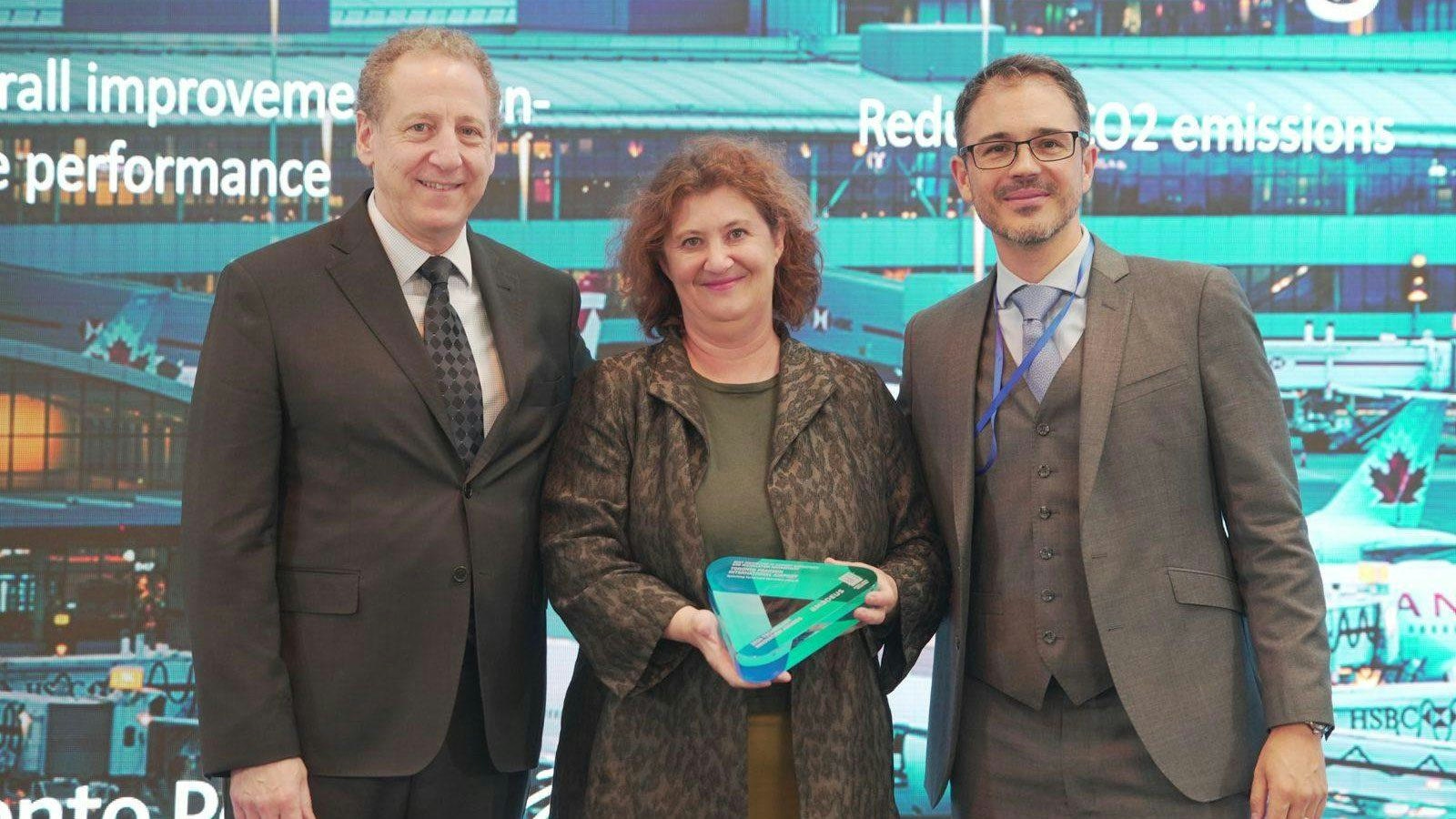
ACI World and Amadeus Announce the World’s Most Innovative Airports
Airports Council International (ACI) World, in collaboration with Amadeus, has unveiled the recipients of the 2025 Technology Innovation Awards, recognizing airports that are leading the way in digital transformation, data-driven operations, biometric self-service, and sustainable terminal design. The awards were presented during the Airports Innovate 2025 Gala Dinner held in Busan, Republic of Korea, as the aviation sector prepares for a period of unprecedented expansion.
Innovation Amidst Rapid Growth
Global air travel is expected to reach 9.8 billion passengers in 2025 and surge to 17.2 billion by 2043. This dramatic increase is compelling airports worldwide to accelerate their adoption of advanced technologies, automation, and data-centric operations. These innovations are critical to expanding capacity, enhancing operational resilience, and meeting the evolving expectations of passengers, all while advancing sustainability objectives.
The 2025 Technology Innovation Awards highlighted several exemplary achievements. Kempegowda International Airport was recognized for its biometric-enabled self-service baggage drop under the category of Best Innovation in Airport Passenger Related Processes. Queen Alia International Airport received the award for Best Innovation in Airport Operations and Installations Management for its Smart Cleaning System, which redefines facility management through technological innovation. Pablo Lopez Loeches, Head of Ideation & Entrepreneurship at Aena, was honored as the Best Airport Innovation Leader. Additionally, Roland Garros Airport earned the Best Innovation: Airport on the Rise award for its bioclimatic airport building, a notable achievement for airports handling five million passengers or fewer.
Justin Erbacci, Director General of ACI World, emphasized the practical impact of these innovations, stating, “The 2025 Technology Innovation Awards winners are about successful innovation implementation—solutions that run every day, in real airports, under real pressure. This year’s winners spotlight measurable advances in digital transformation, data-driven operations, identity-enabled self-service, and sustainable, climate-smart terminals. These are the types of innovations airports need now—meeting today’s passenger expectations while keeping pace with rapid growth in air travel.”
Rudy Daniello, Executive Vice President of Air Operations at Amadeus, added that the industry is on the brink of significant change. He noted, “Our industry stands on the cusp of huge change as airports across the world digitally transform to offer a seamless travel experience. Now mature technologies like digital identity and biometrics are proven to drastically improve the experience of travel, the door is open to even greater levels of innovation across the sector.”
Challenges and Competitive Pressures
Despite these advancements, airports face considerable challenges. Airports Council International-North America reports that $174 billion in infrastructure investment will be required over the next five years to accommodate future growth. This pressing need has intensified competition among airports striving for innovation leadership. Facilities such as Salt Lake City International Airport and Singapore Changi Airport have introduced new terminals and services to maintain their competitive edge. In response, other airports are increasing investments in technology and infrastructure, as demonstrated by Groupe ADP’s proposed airport fee increases and Birmingham Airport’s £300 million investment plan.
The Airports Innovate 2025 event, hosted by Korea Airports Corporation and jointly organized by ACI Asia-Pacific & Middle East, ACI Europe, and ACI World, convened global industry leaders to showcase the technologies and strategies shaping the future of airport travel. The award winners exemplify the vital role of innovation in preparing airports for the next phase of growth, where operational efficiency, biometric identity solutions, automation, and sustainable terminal design will be key determinants of success.

Etihad Airways Suspends Airbus A380 Flights on Key Route

Aditya Birla Group Seeks Approval for Aircraft Leasing in GIFT City

Qatar Airways Highlights Innovation and Connectivity at Arabian Travel Market 2026

Hong Kong's Five-Year Plan Includes Andrew Fan's Aircraft Parts Processing Hub Proposal

ACIA Aero Leasing Delivers ATR72-600 to Air Nostrum

RTX Appoints Jill Albertelli as Head of Pratt & Whitney

TAT Technologies Joins Beyond Aero Hydrogen Aircraft Program

AURAK Study Highlights Barriers to Air Taxi Adoption in Emerging Economies

Xiamen Air Selects Altitude for 787 Maintenance at Heathrow

Etihad and Swissport Extend Global Partnership
