
Orchestrate AI insights into action

Trending
Categories
Advancing Sustainable Aviation with Additive Manufacturing and Collaboration
Advancing Sustainable Aviation with Additive Manufacturing and Collaboration
The global drive toward net zero emissions is profoundly transforming the aerospace sector, prompting significant advancements in propulsion technologies, energy sources, and manufacturing techniques. As the aviation industry intensifies efforts to decarbonize, additive manufacturing (AM) has emerged as a critical enabler, facilitating the production of smarter, lighter, and more sustainable aircraft components.
At the forefront of this transformation is Conflux Technology, which views AM not merely as an innovative manufacturing method but as a key driver of sustainable flight. Through strategic collaborations with industry leaders such as Airbus, Honeywell’s TheMa4HERA consortium, and AMSL Aero, Conflux is addressing one of aviation’s most urgent technical challenges: effective thermal management.
The Critical Role of Thermal Management
Next-generation aircraft—whether powered by hydrogen fuel cells, hybrid-electric systems, sustainable aviation fuel (SAF), or batteries—generate significant heat that must be managed efficiently to ensure safety and optimal performance. Overheating in hydrogen fuel cell systems can diminish efficiency and reduce component lifespan, while insufficient cooling in battery or hybrid-electric configurations risks accelerated degradation and safety concerns.
Conventional heat exchangers often face design constraints that force compromises among weight, size, and thermal efficiency. Additive manufacturing overcomes these limitations by enabling the creation of complex geometries and optimized flow paths that enhance cooling performance without adding unnecessary weight or complexity. This design flexibility allows for the production of lightweight, high-performance heat exchangers that were previously unattainable through traditional manufacturing methods.
Collaboration and Real-World Impact
Conflux’s partnerships exemplify the practical application of AM in advancing sustainable aviation. For Airbus’s ZEROe program, Conflux is developing heat exchangers featuring intricate internal channels specifically designed for hydrogen fuel cell cooling—configurations achievable only through additive manufacturing. Within the TheMa4HERA consortium, the company is engineering scalable heat exchangers for hybrid-electric regional aircraft, drawing on expertise from 28 European partners to optimize energy efficiency and reduce material consumption.
These collaborative efforts highlight the vital role of shared knowledge and innovation in overcoming technical obstacles. Nonetheless, the path to sustainable aviation through AM is not without challenges. The substantial initial investment required for AM technology, the necessity of securing extensive offtake agreements to scale SAF production, and the complexities involved in integrating new technologies into existing aviation infrastructure all represent significant barriers.
Market and Industry Response
Despite these hurdles, the aerospace market is increasingly recognizing the potential of additive manufacturing to produce lightweight, durable aircraft components. Competitors are actively forming partnerships and investing in both AM and SAF initiatives to maintain a competitive advantage. As the industry evolves, collaboration and technological innovation remain essential to achieving the ambitious objective of cleaner, more sustainable flight.
Additive manufacturing is thus enabling engineers to prioritize optimal performance in design, unencumbered by the constraints of traditional manufacturing processes—a pivotal advancement in the pursuit of net zero aviation.

Etihad Deploys Widebody Fleet to Meet Strong Demand

Korean Air Finalizes $36.2 Billion Deal with Boeing
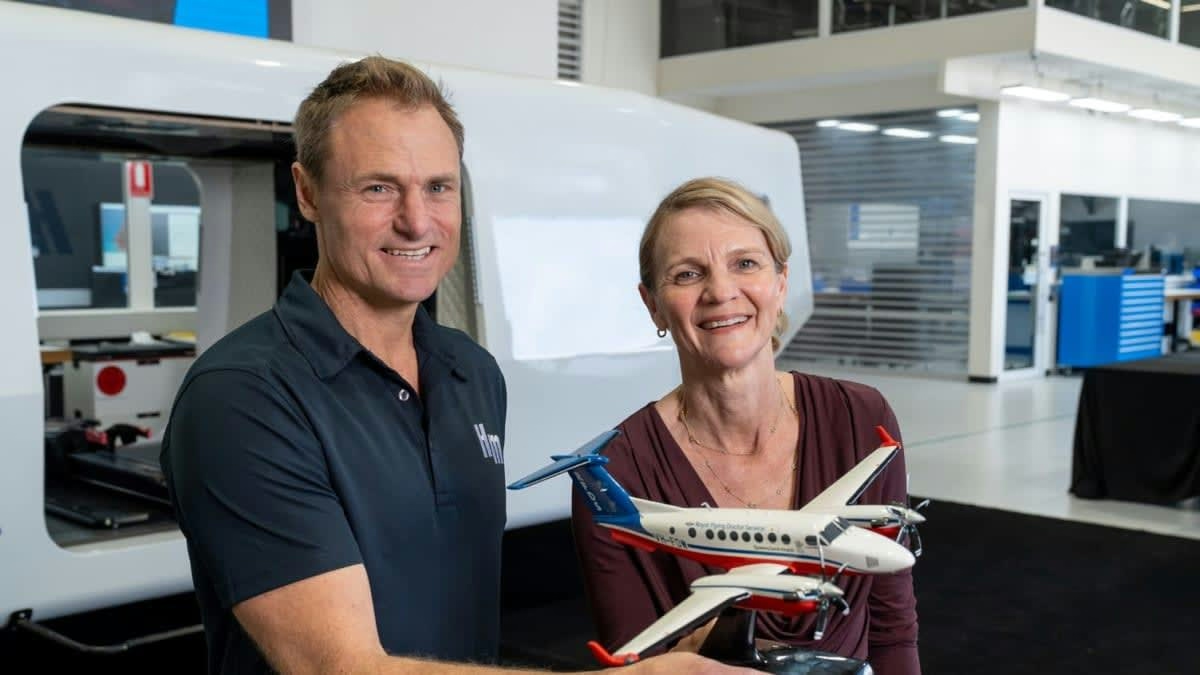
Australia’s RFDS Queensland Section Orders Six King Air 260Cs
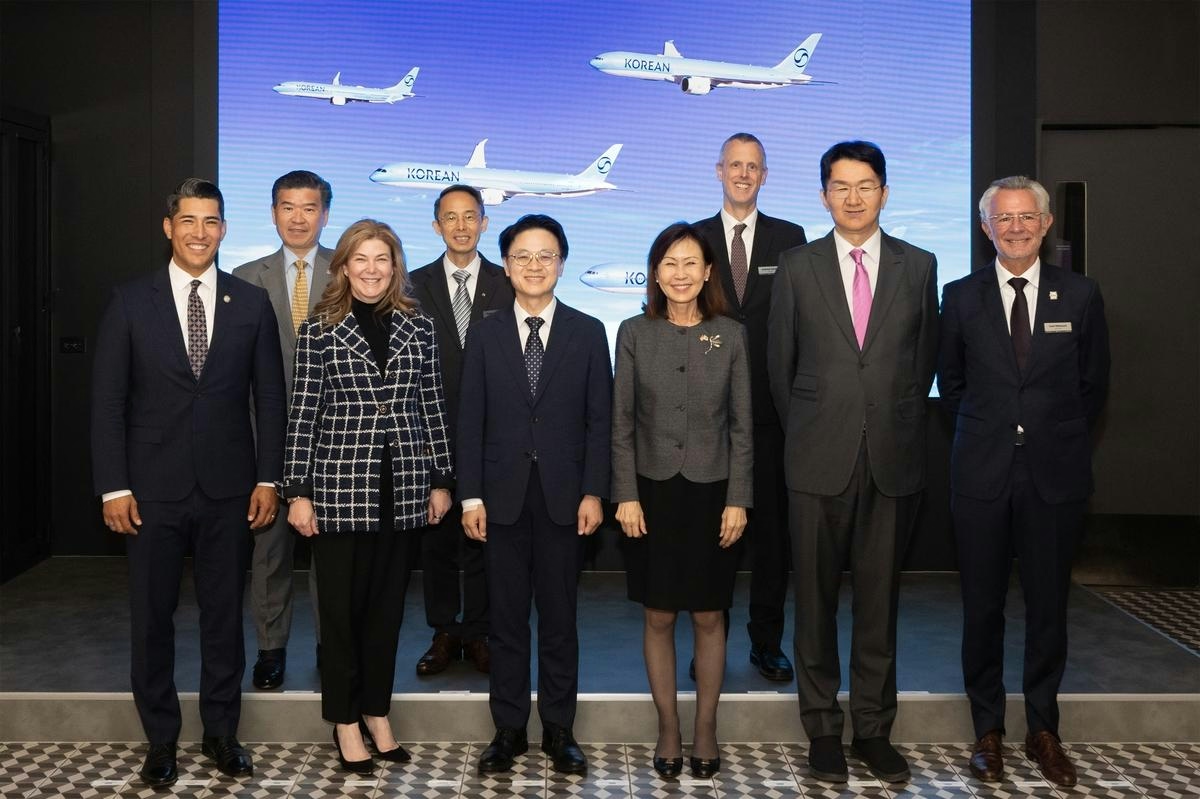
Korean Air Finalizes Order for 103 Boeing Jets and Engines

Embraer E195-E2 Features Distinctive Engine Placement Among Regional Jets

What Passengers Can Expect on Boeing’s New 777X Jet

How Ethiopian Airlines Became Africa’s Leading Carrier Amid Gulf Competition

Joby Aviation Extends Autonomous Flight Capabilities with Cross-Country Tour
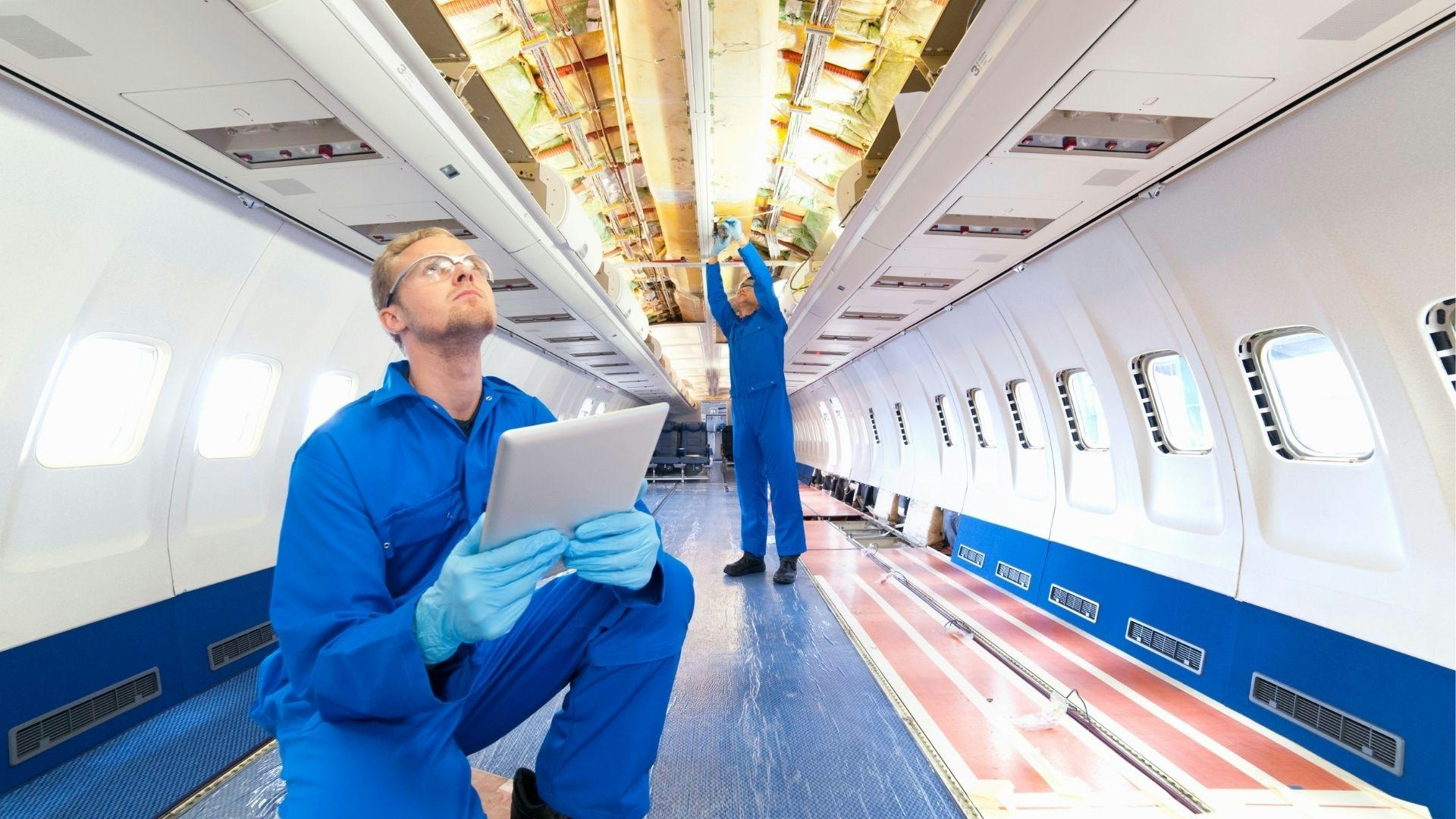
Strengthening Europe's Aviation Supply Chain Amid Uncertainty
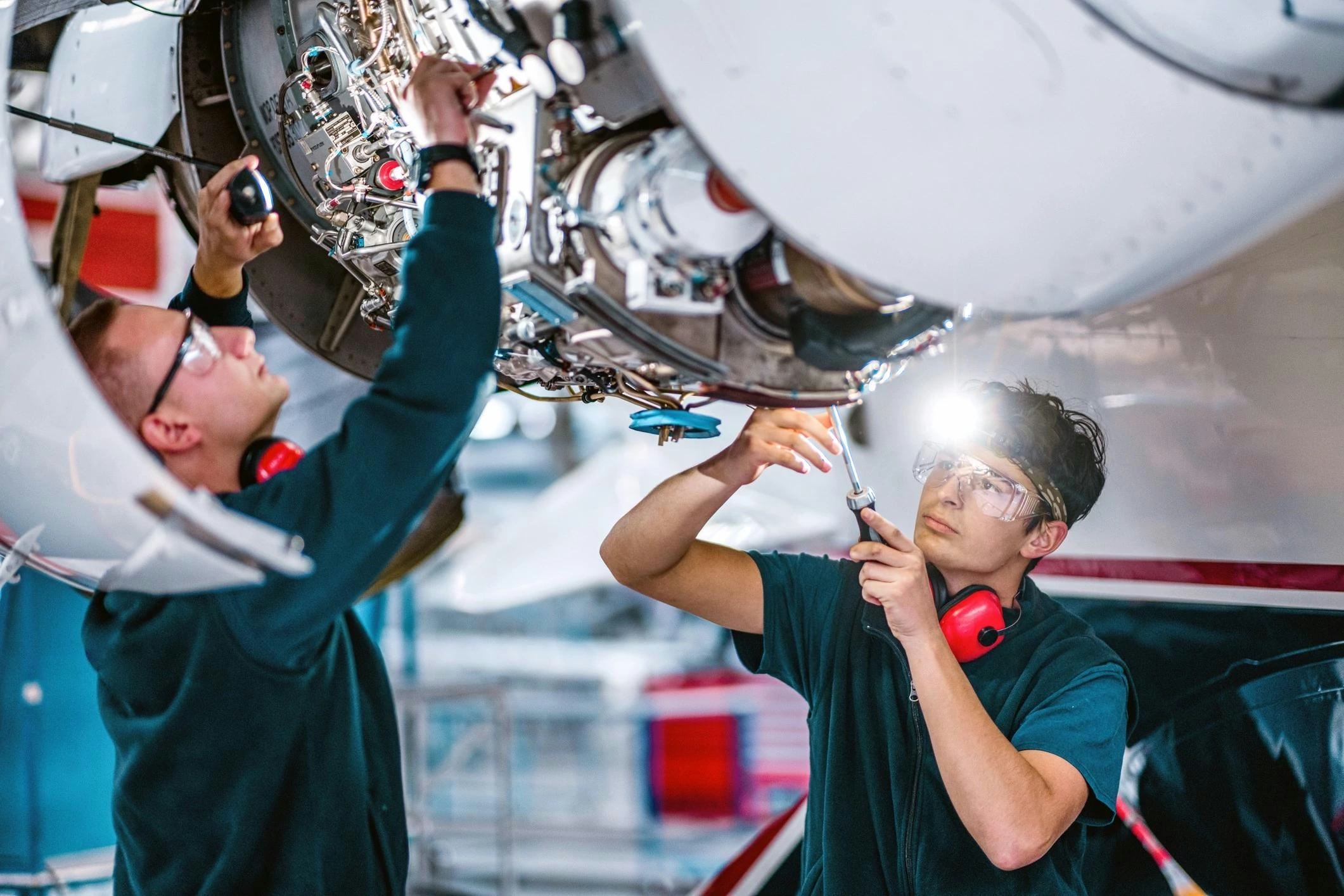
The Evolution of the Aircraft Maintenance Engineer Role
