
Orchestrate AI insights into action

Trending
Categories
Aerospace Supply Chain Delays Continue to Impact Airlines
Aerospace Supply Chain Delays Continue to Impact Airlines
Persistent Supply Constraints Hampering Industry Growth
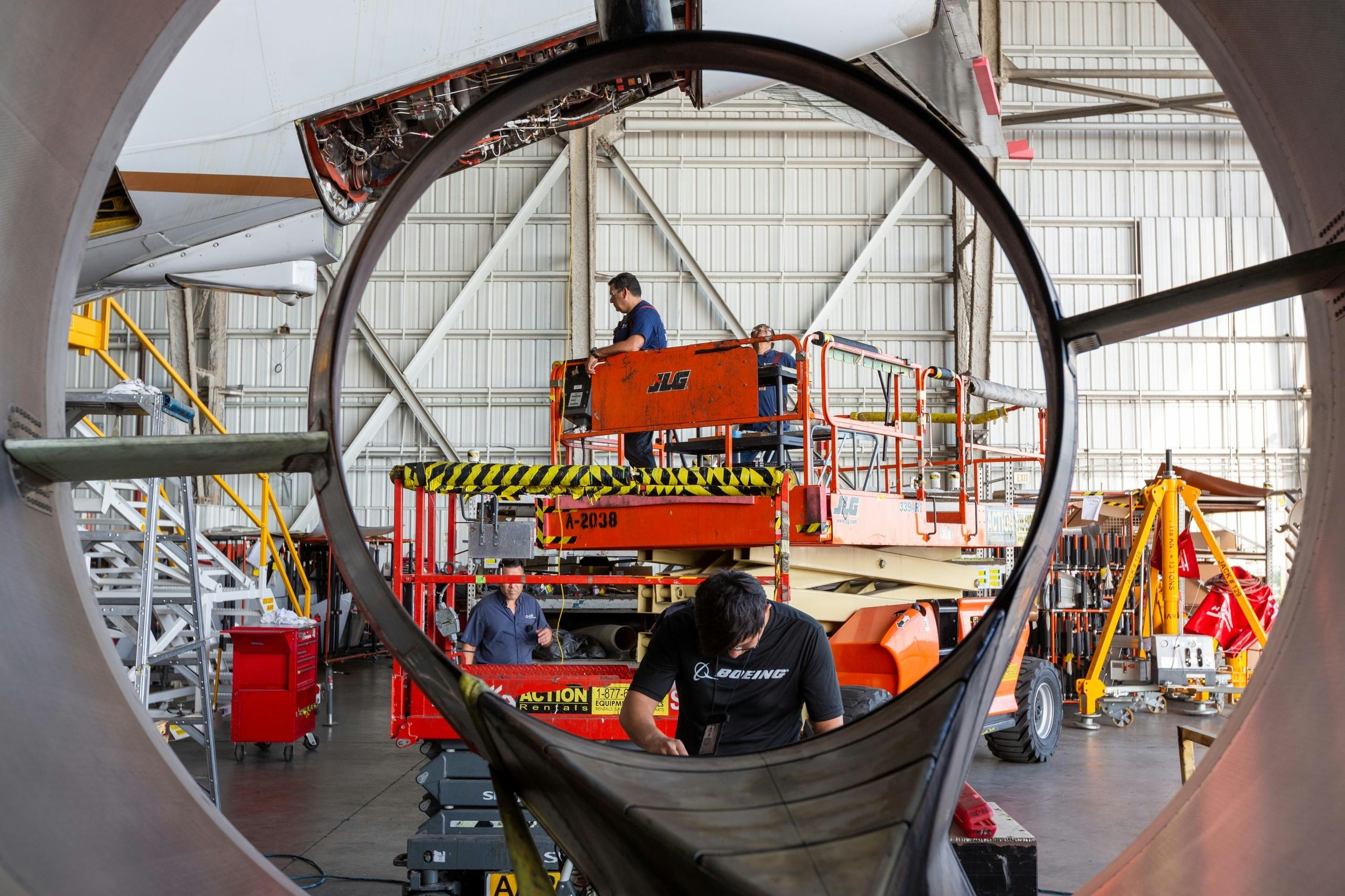
Geneva – The International Air Transport Association (IATA) has issued a stark warning regarding ongoing bottlenecks in the aerospace supply chain that continue to restrict airline expansion. Aircraft availability remains a critical challenge, with demand for new planes and engines significantly outstripping supply. According to IATA’s latest global outlook, although deliveries of new aircraft began to recover in late 2025 and production is expected to accelerate throughout 2026, the industry will face a prolonged period of supply shortages.
The current delivery shortfall stands at a minimum of 5,300 aircraft, while the backlog of orders has surged past 17,000 units. This backlog now represents nearly 60% of the active global fleet and corresponds to almost 12 years of production at current rates—a substantial increase from the historical backlog ratio of 30 to 40%. The average age of the global fleet has risen to 15.1 years, with passenger aircraft averaging 12.8 years, cargo planes 19.6 years, and wide-body jets 14.5 years. Paradoxically, despite the shortage of new aircraft, over 5,000 planes remain in storage, marking one of the highest levels on record.
Willie Walsh, IATA’s Director General, highlighted the broad impact of these supply chain challenges on airlines. He noted that higher leasing costs, diminished scheduling flexibility, delayed progress on sustainability initiatives, and increased reliance on less efficient aircraft types are among the most pressing issues. These factors collectively hinder airlines’ ability to enhance revenue, improve environmental performance, and deliver optimal customer service. Walsh also pointed out that travelers are facing higher costs due to the tighter demand-supply balance, urging all stakeholders to intensify efforts to resolve these issues before the situation worsens.
Underlying Causes of Delivery Delays
Several interrelated factors are contributing to the persistent delays in aircraft deliveries. Production imbalances have emerged as a key issue, with airframe manufacturing outpacing engine production. Engine supply remains constrained by ongoing technical challenges, resulting in completed airframes being held in storage while awaiting engines. Certification processes for new aircraft have also lengthened significantly, extending from the typical 12 to 24 months to as long as four or five years, particularly affecting the renewal of long-haul fleets.
Trade tensions, especially US-China tariffs on metals and electronics, have further exacerbated supply chain bottlenecks and increased maintenance costs. Additionally, labor shortages, particularly in engine and component manufacturing, are impeding efforts to ramp up production. The aerospace supply chain’s fragility is underscored by its heavy reliance on a limited number of suppliers for critical parts, meaning that even minor disruptions can escalate into significant delays.
Industry Responses and Strategic Adjustments
In response to these challenges, major aerospace manufacturers are adopting new strategies to enhance supply chain resilience and production efficiency. Boeing, for instance, is pursuing greater vertical integration to improve quality control and reduce dependency on external suppliers. This approach, while promising, may encounter initial integration difficulties. Boeing’s recent acquisition of Spirit AeroSystems has been positively received by the market, as reflected in a surge in its stock price, signaling investor confidence in the company’s efforts to regain control over key components.
Other industry players are also adapting to the evolving landscape. Taiwan’s Aerospace Industrial Development Corporation (AIDC) is investing in material innovations such as thermoplastic composites, aiming to streamline production processes and reduce reliance on traditional supply chains. Meanwhile, GE Aerospace has maintained an optimistic outlook, having raised its financial guidance and secured significant contracts, including a major engine deal with Turkish Airlines and the inauguration of a new On Wing Support facility in Dubai.
As the aerospace sector continues to navigate these complex disruptions, IATA stresses the urgent need for coordinated action among manufacturers, suppliers, and regulators. Such collaboration is essential to restore equilibrium between supply and demand and to support the industry’s long-term growth and sustainability objectives.

Etihad Airways Suspends Airbus A380 Flights on Key Route

Aditya Birla Group Seeks Approval for Aircraft Leasing in GIFT City

Qatar Airways Highlights Innovation and Connectivity at Arabian Travel Market 2026

Hong Kong's Five-Year Plan Includes Andrew Fan's Aircraft Parts Processing Hub Proposal

ACIA Aero Leasing Delivers ATR72-600 to Air Nostrum

RTX Appoints Jill Albertelli as Head of Pratt & Whitney

TAT Technologies Joins Beyond Aero Hydrogen Aircraft Program

AURAK Study Highlights Barriers to Air Taxi Adoption in Emerging Economies

Xiamen Air Selects Altitude for 787 Maintenance at Heathrow

Etihad and Swissport Extend Global Partnership
