
Orchestrate AI insights into action

Trending
Categories
Air Astana Adopts AI Technology to Enhance Ground Handling
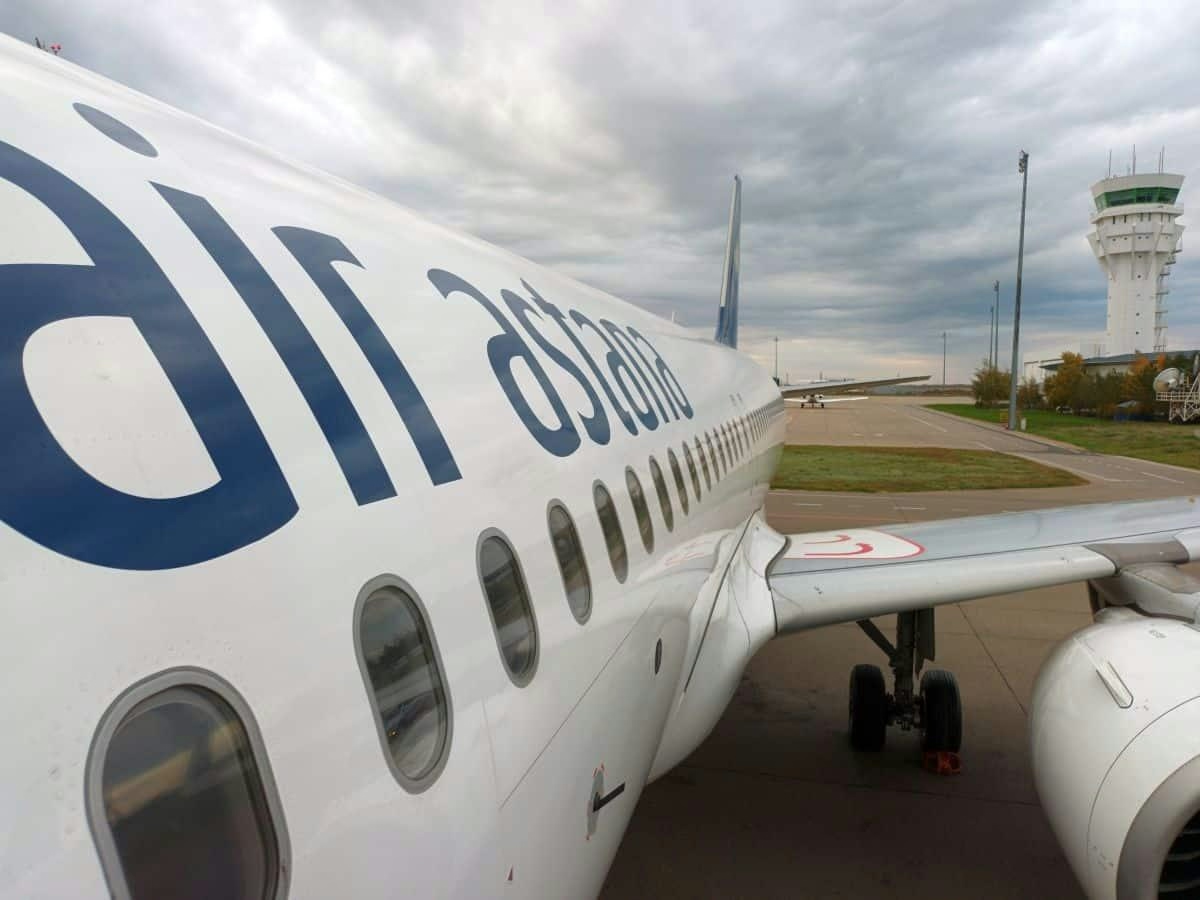
Air Astana Adopts AI Technology to Enhance Ground Handling
Strategic Digital Transformation with AI Integration
Air Astana Group, the leading aviation company in Central Asia, is advancing its digital transformation through a strategic collaboration with IT service provider ICRON. The airline has introduced "easie," an AI-powered Software-as-a-Service (SaaS) platform designed to digitize and optimize the management of ground handling resources. This initiative aims to deliver real-time, precise oversight of personnel and technical equipment, supporting the airline’s fleet of 62 aircraft and its expanding international network.
The implementation of "easie" forms a critical part of Air Astana’s comprehensive digitalization strategy, which extends across both its flagship brand and its low-cost carrier, FlyArystan. The platform employs predictive algorithms and scenario optimization to dynamically adjust shift schedules in response to actual passenger volumes and real-time flight movements. Filippos Siakkas, Chief Operating Officer, emphasized that enhancing operational resilience is essential as passenger numbers continue to grow.
Enhancing Operational Efficiency and Industry Implications
By centralizing real-time data, Air Astana’s operational teams across multiple locations can coordinate more effectively, significantly improving transparency and efficiency in ground operations. Industry analysts note that such investments are crucial for airlines in the Central Asia and Caucasus region, where competition with international carriers is intensifying. As a 14-time Skytrax Award winner for Central Asia and a company listed on the Astana, Almaty, and London stock exchanges, Air Astana is focusing on efficiency gains to maintain its competitive position.
Despite the clear benefits, integrating advanced AI systems into ground handling presents challenges. The airline must manage substantial costs and the complexities of embedding AI within existing operational frameworks. Market responses to such technological shifts have been mixed; some investors remain cautious, as reflected in recent declines in traditional software sector stocks like ServiceNow, amid concerns over AI’s disruptive potential.
Competitors are closely observing Air Astana’s adoption of AI, with some expected to implement similar solutions or increase their investments in artificial intelligence to sustain their competitive advantage. Experts highlight that automating ground operations is becoming increasingly vital for reducing turnaround times and ensuring punctuality across dense route networks spanning Europe, India, and the Far East.
Broader Industry Trends and Future Prospects
The partnership with ICRON exemplifies a broader global trend in aviation, where decision intelligence is progressively replacing manual planning processes. Beyond resource management, the "easie" platform also supports cargo revenue management and maintenance planning, offering potential synergies for the Air Astana Group moving forward.
By embracing real-time, AI-driven tools, Air Astana anticipates enhanced precision and reliability in its ground handling operations, directly contributing to improved flight punctuality and operational resilience. This technological advancement coincides with the airline group’s ongoing expansion of capacity on international long-haul routes, underscoring its commitment to innovation amid a rapidly evolving aviation landscape.

Etihad Airways Suspends Airbus A380 Flights on Key Route

Aditya Birla Group Seeks Approval for Aircraft Leasing in GIFT City

Qatar Airways Highlights Innovation and Connectivity at Arabian Travel Market 2026

Hong Kong's Five-Year Plan Includes Andrew Fan's Aircraft Parts Processing Hub Proposal

ACIA Aero Leasing Delivers ATR72-600 to Air Nostrum

RTX Appoints Jill Albertelli as Head of Pratt & Whitney

TAT Technologies Joins Beyond Aero Hydrogen Aircraft Program

AURAK Study Highlights Barriers to Air Taxi Adoption in Emerging Economies

Xiamen Air Selects Altitude for 787 Maintenance at Heathrow

Etihad and Swissport Extend Global Partnership
