Image

Orchestrate AI insights into action

Join the AeroGenie waitlist today!

Trending

Categories

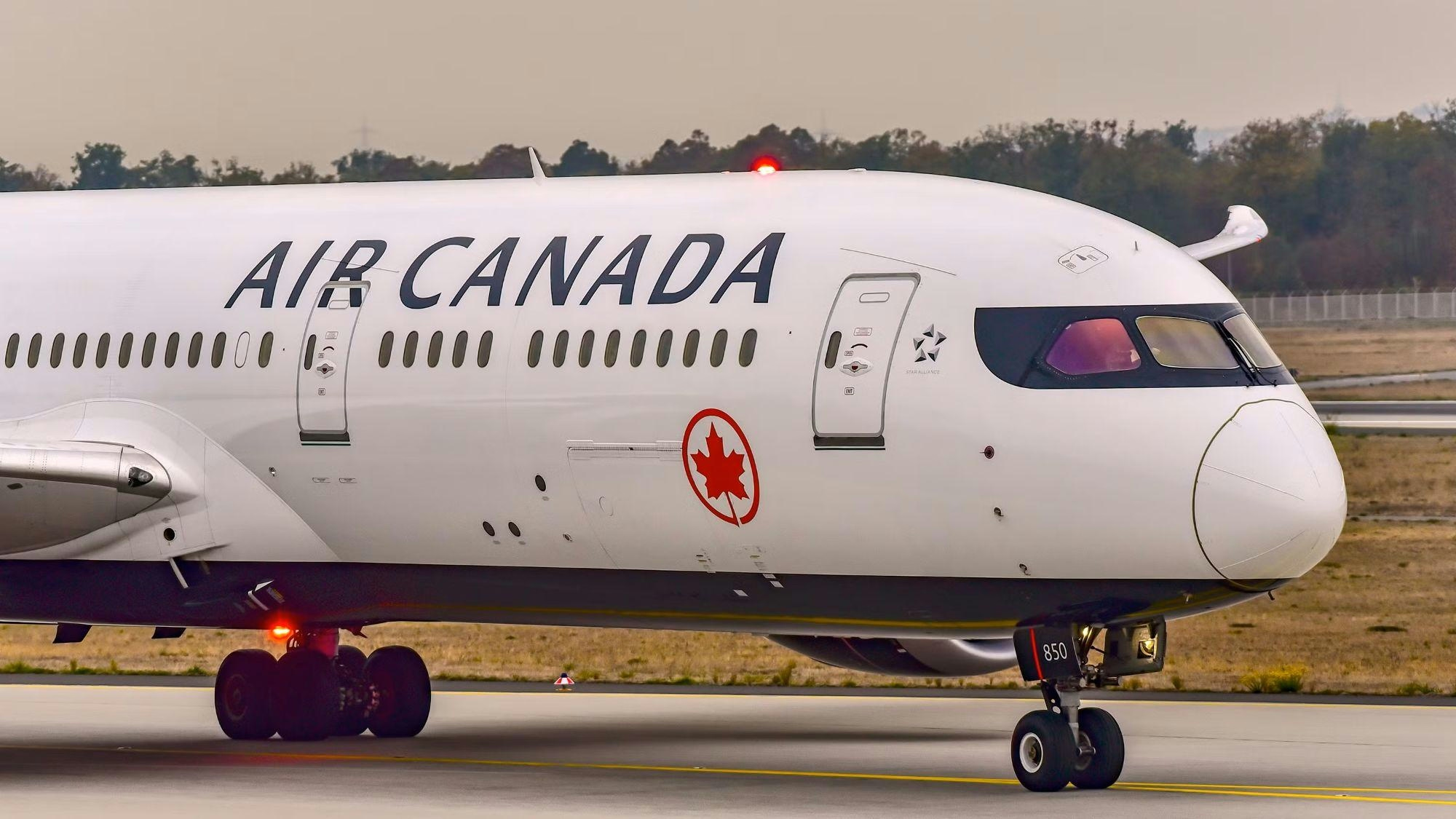
Air Canada Orders Eight Airbus A350-1000 Aircraft
February 11, 2026By ePlane AI
Air Canada Orders Eight Airbus A350-1000 Aircraft
0
0
Air Canada
Airbus A350-1000
Fleet Renewal

Air Canada Commits to Eight Airbus A350-1000 Aircraft to Renew Long-Haul Fleet

Air Canada has confirmed a firm order for eight Airbus A350-1000 aircraft, marking a pivotal advancement in the airline’s strategy to modernize its long-haul fleet. Initially reported as undisclosed in November 2025, this acquisition highlights Air Canada’s dedication to expanding its international network with state-of-the-art widebody aircraft.

Enhancing Global Connectivity and Efficiency

The Airbus A350-1000 is renowned for its cutting-edge technology, superior fuel efficiency, and an extended range of up to 9,000 nautical miles. These attributes are expected to provide Air Canada with a competitive advantage, facilitating non-stop flights from Canada to rapidly growing markets in the Indian subcontinent, Southeast Asia, and Australia. Mark Galardo, Air Canada’s Executive Vice President and Chief Commercial Officer, emphasized that the A350-1000 represents a natural progression in the airline’s fleet evolution. He noted that the aircraft’s advanced capabilities and improved efficiencies will unlock new long-haul opportunities worldwide, with the iconic Maple Leaf emblem symbolizing Air Canada’s commitment to connecting its customers, hubs, and country to the global stage.

Benoit de Saint-Exupéry, Airbus Executive Vice President of Commercial Aircraft Sales, described Air Canada’s choice as a strong endorsement of the A350-1000’s technological leadership. He highlighted that the decision reflects not only a fleet modernization effort but also Air Canada’s ambition to establish new benchmarks in range, performance, and passenger experience.

Technological Advancements and Environmental Considerations

The A350-1000 features the Airspace cabin, designed specifically for ultra-long-haul comfort. Passengers benefit from a lower cabin altitude and reduced noise levels, enhancing wellbeing during extended flights. Powered by the latest generation Rolls-Royce engines and constructed with lightweight materials, the aircraft achieves a 25% reduction in fuel consumption and emissions compared to previous-generation competitors. Furthermore, the A350 is capable of operating with up to 50% Sustainable Aviation Fuel (SAF), with Airbus targeting full 100% SAF capability by 2030, underscoring the aircraft’s role in advancing sustainable aviation.

Strategic and Operational Implications

While the order is widely viewed as a strategic move to strengthen Air Canada’s long-haul operations, it also entails significant financial and operational challenges. The acquisition requires substantial upfront investment and long-term financial commitments, raising concerns about potential fiscal pressures amid economic uncertainties. Market responses have been mixed, with some analysts cautioning that increased competition could trigger price wars as rival carriers may accelerate their own fleet upgrades. Additionally, integrating the new aircraft into Air Canada’s existing operations will demand considerable logistical and operational adjustments.

As of January 2026, the Airbus A350 family has amassed over 1,500 orders from 67 customers worldwide, reflecting robust demand for its efficiency and performance.

More news
The Impact of AI on the Global Aviation Industry

The Impact of AI on the Global Aviation Industry

The Impact of AI on the Global Aviation Industry The aviation sector is experiencing a profound transformation driven by the rapid integration of artificial intelligence (AI) technologies. Airlines, original equipment manufacturers (OEMs), and airports worldwide are increasingly adopting AI to enhance real-time decision-making, operational efficiency, and passenger experience. This expansion is fueled by the convergence of AI with aviation-specific technologies such as computer vision, natural language processing (NLP), and machine learning, resulting in a market growing at a double-digit pace. AI in Air Traffic Management and Urban Air Mobility As global air travel recovers and passenger numbers rise, airports face mounting pressure to manage increased throughput with limited resources. AI is poised to revolutionize air traffic management (ATM), especially as airspace becomes more congested with the emergence of drones and electric air taxis. Traditional radar and controller-based systems are approaching their operational limits, whereas AI-powered platforms can process real-time flight data, weather conditions, and potential conflicts with far greater speed and accuracy. Recent initiatives highlight AI’s expanding role in this domain. EUROCONTROL has piloted AI-based traffic prediction tools capable of forecasting aircraft trajectories up to 20 minutes ahead, thereby reducing mid-air conflicts and runway congestion. In the United States, NASA’s Airspace Technology Demonstration-2 (ATD-2) project achieved a 38% reduction in taxi times at Charlotte Airport by employing AI for surface management. This advancement not only lowered CO2 emissions and fuel consumption but also generated direct cost savings for airlines. Urban air mobility (UAM) represents another critical frontier for AI application. Companies such as Joby Aviation and Wisk Aero are developing fully autonomous electric vertical takeoff and landing (eVTOL) aircraft that depend on AI for obstacle avoidance, route planning, and communication with smart infrastructure. NASA’s National Campaign for Advanced Air Mobility utilizes AI models to simulate UAM traffic at scale, ensuring safety and regulatory compliance. AI also facilitates dynamic flight path rerouting, airspace deconfliction, and integration with unmanned traffic management (UTM) systems. With the International Air Transport Association (IATA) projecting that air traffic will double by 2040, the urgency for AI-enhanced ATM solutions is clear. Whether through AI-driven tower operations at major hubs or algorithmic conflict resolution in urban corridors, the future of scalable and safe airspace growth will depend heavily on advanced AI systems. AI’s Role in Air Cargo and Emerging Challenges The air cargo sector, which contributes over 12% of airline revenues, is also undergoing significant change due to AI. In 2023, global air cargo volumes exceeded 65 million metric tons, yet profitability remains constrained by capacity limitations, volatile demand, and reliance on manual processes. AI-driven forecasting, dynamic pricing, and route optimization are increasingly employed to address these challenges. Machine learning models trained on historical shipment data and external variables can now predict freight demand and yields up to two weeks in advance, enabling more agile and efficient capacity management. Despite these advancements, the rapid adoption of AI in aviation presents notable challenges. There are growing concerns about a potential AI investment bubble that could lead to reversals in spending, declines in equity prices, and bond defaults. Market dynamics may also shift as competition intensifies, particularly with Chinese AI firms offering high-quality services at lower costs. The concentration of essential AI inputs among a few global technology giants could further restrict market entry for smaller players. Moreover, the opaque "black box" nature of AI complicates the detection of anti-competitive behaviors such as collusion or exclusionary conduct, which could adversely affect industry competition. As aviation systems become increasingly dependent on interconnected digital infrastructure, addressing these economic and regulatory risks will be as critical as harnessing AI’s transformative potential.
Boeing Deal Shifts Archer’s Strategy as Joby Advances Commercial Air Taxis

Boeing Deal Shifts Archer’s Strategy as Joby Advances Commercial Air Taxis

Boeing Deal Shifts Archer’s Strategy as Joby Advances Commercial Air Taxis Archer Expands Horizons with Boeing Acquisition Archer Aviation and Joby Aviation, prominent contenders in the electric vertical takeoff and landing (eVTOL) sector, are pursuing the shared vision of commercial air taxis but are adopting markedly different strategic approaches, as reflected in their recent quarterly results. Archer reported second-quarter revenue of $5 million, representing a 213% increase from the previous quarter and surpassing analyst expectations. Despite this growth, the company recorded a net loss of $263.2 million, highlighting the substantial expenses involved in developing next-generation aviation technologies. A pivotal development for Archer is its agreement to acquire three Boeing-owned aerospace and defense entities—Wisk Aero, Insitu, and SkyGrid—in exchange for Boeing shares. This acquisition signals a strategic shift, positioning Archer as a more diversified player in commercial aerospace, defense, and autonomous flight technology, rather than focusing exclusively on air taxis. The acquired businesses bring significant capabilities to Archer’s portfolio. Wisk Aero specializes in eVTOL aircraft development, Insitu provides unmanned aerial systems primarily for surveillance and defense applications, and SkyGrid develops advanced technology for managing autonomous aircraft within complex airspace environments. Collectively, these companies have accumulated nearly two million flight hours, offering Archer valuable operational data and technological assets to enhance its ZEE AI platform, which integrates flight, weather, terrain, and aircraft data to improve safety and operational efficiency. Boeing’s decision to invest in Archer while integrating its flying-taxi venture Wisk Aero into Archer reflects a strategic recalibration. For Boeing, this move may represent a withdrawal from direct competition in the challenging air taxi market. For Archer, it presents an opportunity to consolidate capabilities in defense and autonomy, though it also introduces challenges related to scaling operations, navigating regulatory frameworks, and developing the necessary infrastructure to meet commercial demand. Joby Advances Through Partnerships and Commercial Momentum In contrast, Joby Aviation reported $39 million in revenue for the second quarter, an increase of $14 million from the previous quarter, and raised its 2026 revenue forecast to between $115 million and $125 million. This growth is largely driven by its Blade helicopter business, which generated $36.2 million in revenue with seat sales increasing by more than 50% year-over-year. Despite leading in revenue, Joby also posted a net loss of $245 million. Joby is capitalizing on its partnership with Blade and manufacturing support backed by Toyota to advance its commercial air taxi ambitions. CEO JoeBen Bevirt announced plans to commence pilot electric air taxi flights in Texas next month as part of a White House-supported initiative, marking a significant step toward operationalizing commercial services. Market Dynamics and Competitive Landscape The divergent strategies of Archer and Joby underscore the evolving dynamics within the eVTOL industry. Archer’s broadened focus through the Boeing acquisition may appeal to investors interested in defense and autonomous technologies but also introduces operational complexities and regulatory challenges. Meanwhile, Joby’s revenue growth and strategic partnerships position it as a formidable contender in the race to launch commercial air taxi services. Both companies continue to expend significant capital to develop and scale their technologies, eliciting mixed reactions from the market. Boeing’s move may be interpreted as a strategic retreat from a difficult market, while Archer’s expanded capabilities and Joby’s commercial progress highlight the intensifying competition. As the industry advances, the realization of electric air taxis as a commercial reality appears increasingly imminent.
Why The Next Generation Of Aircraft Engines May Not Need A Revolutionary New Design

Why The Next Generation Of Aircraft Engines May Not Need A Revolutionary New Design

Why the Next Generation of Aircraft Engines May Not Require a Revolutionary New Design For decades, the aviation industry has been propelled forward by landmark innovations in engine technology, from the introduction of the high-bypass turbofan in the 1960s to the more recent geared turbofan (GTF) advancements. Each of these developments has significantly transformed commercial aviation, often demanding substantial investment and extended development timelines. However, the forthcoming era of aircraft propulsion appears poised to rely less on radical new engine architectures and more on incremental enhancements to existing designs. Evolution Over Revolution in Engine Development At the recent Farnborough Airshow, MTU Aero Engines underscored this evolving approach. André Sinanian, Senior Vice President of Commercial Engine Programs, articulated the company’s confidence in the current GTF platform, stating, “We believe that with our current GTF engine, we have an excellent basis to further develop the engine to achieve the next generation requirements. We don't believe that we need a completely new engine architecture. We see a lot of potential in the current geared turbofan concept, and we are working on technologies that will make it even more efficient for the future.” This viewpoint mirrors a broader industry trend. Rather than anticipating a singular revolutionary breakthrough, manufacturers are concentrating on a series of incremental innovations. These include the adoption of advanced materials, refined manufacturing processes, digital engineering techniques, hybrid propulsion systems, and sustainable fuels. Collectively, these advancements aim to enhance fuel efficiency, reduce emissions, and improve reliability. Airlines continue to emphasize the importance of lowering operating costs, minimizing noise pollution, and increasing dependability. Industry Dynamics and Competitive Pressures The competitive environment remains vigorous, with aerospace giants Airbus and Boeing investing heavily in the refinement of their engine technologies. Market responses to the evolutionary strategy have been mixed; some investors and customers question whether incremental improvements can deliver the substantial performance gains the industry demands, potentially tempering enthusiasm for rapid adoption. In response, competitors are intensifying efforts to innovate within existing engine platforms, utilizing digital modeling and advanced wind tunnel testing to extract further efficiencies. Rolls-Royce, for instance, is actively seeking to re-enter the narrowbody jet market by enhancing its current technologies rather than pursuing entirely new engine designs. MTU Aero Engines, while less prominent among the general public compared to Pratt & Whitney, GE Aerospace, or Rolls-Royce, occupies a critical position within the aerospace ecosystem. The company operates across three primary sectors: original equipment manufacturing (OEM) of engine components, commercial maintenance and overhaul, and military engine production. Unlike some competitors that assemble complete engines, MTU specializes in designing and manufacturing essential components, which are then integrated by major engine manufacturers. As the industry looks to the future, there is a clear consensus that the next generation of aircraft engines will be shaped by a succession of evolutionary improvements rather than a single revolutionary leap. By maximizing the potential of proven concepts such as the geared turbofan and embracing continuous innovation, manufacturers aim to meet the evolving demands of the market, delivering propulsion systems that are cleaner, quieter, and more efficient for the future of flight.
AI Enhances Efficiency at Asian Airports Using Existing Capacity

AI Enhances Efficiency at Asian Airports Using Existing Capacity

AI Enhances Efficiency at Asian Airports Using Existing Capacity Optimizing Ground Operations to Manage Growing Demand KUALA LUMPUR — As passenger numbers surge across Asia, airports are increasingly turning to artificial intelligence (AI) to improve operational efficiency without the lengthy delays and high costs associated with expanding physical infrastructure. By maximizing the use of existing runways, gates, and terminals, AI technologies offer a practical solution to accommodate rising demand, according to Christiaan Hen, CEO of Assaia. Hen highlighted that many flight delays originate during ground operations, where aircraft turnaround involves a complex sequence of interdependent tasks such as baggage handling, passenger disembarkation, refueling, cleaning, catering, and boarding. “The turnaround is a highly interconnected operation, so even a small delay in one area can quickly cascade through the rest of the process,” he explained. Assaia’s annual Turnaround Report, which analyzed over 450,000 aircraft turnarounds worldwide, revealed that flights delayed by 15 minutes or more often experienced prolonged baggage offloading times. Furthermore, departure delays exceeding six minutes tend to be unrecoverable, increasing the likelihood of subsequent disruptions throughout an airline’s schedule. Real-Time Monitoring and Predictive Insights To mitigate these challenges, Assaia has developed ApronAI, a platform that employs computer vision and AI to monitor turnaround activities in real time. The system automatically timestamps critical milestones—including disembarking, baggage loading and unloading, refueling, and boarding—and compares progress against planned timelines. Operations teams receive immediate alerts when tasks fall behind schedule, enabling prompt intervention to prevent delays from compounding. Hen emphasized that AI’s capacity to identify recurring bottlenecks—whether linked to specific aircraft stands, particular processes, or certain times of day—allows airports to address systemic inefficiencies rather than merely reacting to isolated incidents. This capability is increasingly vital as Asian airports grapple with labor shortages, growing operational complexity, and the prohibitive costs and extended timelines of physical expansion. Adoption and Challenges Across the Region Japan’s New Chitose Airport in Hokkaido, the first in the Asia-Pacific region to implement Assaia’s technology, exemplifies the growing embrace of AI to sustain operational reliability amid rising passenger volumes. Serving as a key international gateway, New Chitose is central to Hokkaido Airports’ strategy to enhance connectivity, particularly with Southeast Asia. For travelers, the expanded use of AI promises fewer unexpected delays, more reliable departure times, and smoother journeys, including reduced waiting times for gates and baggage delivery. “Passengers rarely think about what happens while an aircraft is on stand, but those activities have a direct impact on their journey,” Hen noted. Despite its potential, the integration of AI into airport operations faces significant obstacles. High implementation costs, concerns over data security, and supply chain constraints present formidable challenges. The market is responding with increased investment in smart airport technologies and autonomous flight capabilities, while manufacturers are expanding production capacity for critical equipment such as grid systems and generators, particularly in Japan and Korea. Meanwhile, China’s limited access to advanced computing resources may hinder its progress relative to U.S. counterparts. As Asian airports strive to balance efficiency, reliability, and growth, AI is positioned to play a pivotal role—contingent on the ability of stakeholders to overcome the technological and operational hurdles ahead.
Florida governor touts air taxi testing, hoping to ease interstate traffic

Florida governor touts air taxi testing, hoping to ease interstate traffic

Florida Advances Air Taxi Testing to Address Interstate Congestion Florida Governor Ron DeSantis has announced a significant step toward integrating futuristic transportation solutions into the state’s infrastructure. On August 10, he unveiled plans to commence testing of flying electric taxis at SunTrax in Polk County by the end of the year. This initiative aims to transform the longstanding vision of airborne commuting into a practical reality, with the potential to alleviate chronic congestion along Interstate 4. Vision for Airborne Commuting Speaking to attendees, DeSantis emphasized the transformative potential of air taxis in reshaping travel between Florida’s cities. The demonstration showcased prototypes of electric vertical takeoff and landing (eVTOL) vehicles, engineered to transport passengers above heavily trafficked highways. The governor framed the project as a pioneering effort to position Florida at the forefront of transportation innovation, expressing optimism that successful trials could lead to broader adoption and help ease the state’s persistent traffic challenges. Challenges and Industry Outlook Despite the enthusiasm surrounding the initiative, significant obstacles remain before air taxis can become a mainstream mode of transport. Industry experts highlight the complex regulatory environment, noting that federal and state aviation authorities must establish new safety standards and airspace management protocols tailored to this emerging technology. Ensuring the reliability and safety of eVTOL vehicles in real-world conditions is critical to gaining public trust. Financial considerations also present a considerable hurdle. The development and certification of air taxi fleets, alongside the construction of necessary infrastructure such as vertiports and charging stations, demand substantial investment. While some investors are optimistic about the sector’s long-term potential, others remain cautious, questioning the readiness of the technology for widespread deployment. The competitive landscape reflects this cautious optimism. As Florida advances its testing program, other states and countries are accelerating their own air taxi initiatives to maintain a competitive edge. Major technology companies are increasing investments in eVTOL development, seeking to capture a share of what could evolve into a lucrative market. Testing of the air taxis is slated to begin before the end of the year, with officials closely monitoring the outcomes to evaluate the technology’s feasibility and its potential impact on Florida’s transportation network.
CF6 Thrust Reverser RVDT Explained

CF6 Thrust Reverser RVDT Explained

CF6 Thrust Reverser RVDT: Function and Maintenance The Rotary Variable Differential Transformer (RVDT) serves as a vital feedback sensor within the CF6 engine’s thrust reverser system, delivering accurate position data to the Center Drive Unit (CDU). This precise feedback is crucial for the safe and efficient operation of the engine’s thrust reverser mechanism. Proper rigging and installation of the RVDT are imperative, requiring strict adherence to approved aircraft or engine manuals. While resources such as GE Aviation’s Maintenance Minute provide valuable guidance on correct procedures, technicians must consistently employ appropriate safety measures during maintenance activities to ensure operational integrity. Industry Challenges and Market Dynamics The thrust reverser system landscape faces several significant challenges, including high development costs, regulatory complexities, and technical limitations, particularly in the integration of advanced materials. These factors present ongoing obstacles for manufacturers and maintenance providers alike. The competitive environment is further intensified by the strategic role of key suppliers such as GKN Aerospace, whose position within the commercial OEM supply chain highlights the critical importance of timely deliveries of narrow-body thrust reversers. Delays or disruptions in this supply chain can directly impact aircraft maintenance schedules and operational readiness. Compounding these issues are persistent supply chain constraints and material shortages that affect the Aerospace Fluid Conveyance Systems market, influencing the availability and integration of components like the RVDT. The industry must also navigate evolving regulatory standards, which impose additional pressures to innovate and maintain compliance while meeting market demands. Market Outlook and Regional Trends Despite these challenges, the Aircraft Reverse Thruster market is poised for substantial growth, with forecasts indicating a compound annual growth rate (CAGR) of 11.3% between 2026 and 2033. North America currently dominates as the largest market, benefiting from a mature aviation sector and established maintenance infrastructure. Meanwhile, the Asia Pacific region is anticipated to experience the fastest growth, driven by expanding aircraft fleets and a rising demand for efficient maintenance solutions. As the sector continues to evolve, the precision of component rigging, the reliability of supply chains, and strict adherence to safety and regulatory standards will remain critical. Advances in thrust reverser technology, including enhancements to the RVDT, will play an essential role in sustaining the operational efficiency and safety of commercial aviation on a global scale.
Lynchburg Regional Airport Receives $5.2 Million Federal Grant for Infrastructure Expansion

Lynchburg Regional Airport Receives $5.2 Million Federal Grant for Infrastructure Expansion

Lynchburg Regional Airport Awarded $5.2 Million Federal Grant for Infrastructure Expansion Lynchburg Regional Airport in Virginia has secured a $5.2 million federal grant from the Federal Aviation Administration, funded through the Infrastructure Investment and Jobs Act, marking a significant step forward in its development plans. The funding will support the North Development Project, which includes the construction of roads, parking facilities, and other site improvements adjacent to a recently completed apron and taxiway. These enhancements are intended to facilitate the future construction of a hangar facility, thereby expanding the airport’s operational capacity and opening new avenues for growth. Preparing for Future Growth and Economic Impact Airport Director Cedric Simon highlighted that the grant represents an investment in the airport’s next phase of development, with particular emphasis on the potential establishment of a maintenance, repair, and overhaul (MRO) facility. Simon noted that such a facility could create a pipeline for local talent, allowing individuals to train at nearby Liberty University and subsequently build careers within the region. “It really is an investment in the community,” he stated, underscoring the broader economic benefits anticipated from the project. The expansion arrives at a critical juncture for local aviation businesses, which are currently constrained by limited space. Kyle Falwell, owner of Bon Air—a Lynchburg-based company specializing in medical transport and private charter flights—described the increasing demand for aviation services. Bon Air operates a fleet of 10 jets, with plans to add three more, intensifying the need for additional hangar space. Falwell emphasized the challenges of managing a diverse fleet in limited quarters, noting that “hangar space is a commodity” and that maximizing operating room is essential, especially when accommodating both jets and smaller piston aircraft. Addressing Capacity Constraints and Attracting Investment The federal grant is expected to alleviate some of these spatial limitations, although accommodating a wide range of aircraft types remains a complex task. By expanding its infrastructure, Lynchburg Regional Airport aims to attract private investment and enhance its aviation capabilities, positioning itself as a competitive hub within the region. The improvements are anticipated to generate positive market reactions by fostering new business opportunities and creating well-paying jobs in the aviation sector. Falwell views the infrastructure investment as a catalyst for broader economic development, observing that enhanced facilities enable surrounding businesses to grow. As airport officials collaborate with contractors to finalize construction timelines, regional competitors may respond by upgrading their own facilities or monitoring the economic impact of Lynchburg’s expansion. This federal grant firmly establishes Lynchburg Regional Airport as a key player in the regional aviation landscape, poised to capitalize on emerging opportunities.
Archer Aviation Projects $5 Million Revenue and $263.2 Million Net Loss for 2026

Archer Aviation Projects $5 Million Revenue and $263.2 Million Net Loss for 2026

Archer Aviation Forecasts $5 Million Revenue and $263.2 Million Net Loss for 2026 Archer Aviation Inc. has announced projections indicating a modest revenue of $5 million alongside a substantial net loss of $263.2 million for the year 2026. This forecast marks the company’s initial transition into revenue generation, even as its financial losses deepen due to aggressive investments in aircraft development and operational expansion. Compared to the previous year, Archer expects revenue to rise from zero, while the net loss attributable to common stockholders is anticipated to increase from $206 million. Despite the widening loss, diluted loss per share is projected to improve slightly, moving from ($0.36) to ($0.34). Financial Performance and Revenue Drivers The projected revenue growth is primarily attributed to new income streams from leases at Hawthorne Airport and fixed-base operator (FBO) services, which have contributed $6.6 million year-to-date, alongside increased utilization of hangar facilities. Archer continues to advance the certification process for its Midnight electric vertical takeoff and landing (eVTOL) aircraft, with plans to initiate international deliveries, particularly targeting the United Arab Emirates. The company aims to commence initial passenger operations within the forecast period. Strategic partnerships remain a cornerstone of Archer’s expansion strategy. The company has been selected to participate in the U.S. eVTOL Integration Pilot Program and is collaborating with airlines, infrastructure providers, and defense technology firm Anduril. These collaborations focus on exploring both commercial applications and defense uses for Archer’s Halo unmanned aerial system (UAS) platform. Operationally, Archer has increased spending on research and development as well as general and administrative expenses to accelerate aircraft development, scale manufacturing capabilities, and deploy its aviation artificial intelligence system, ZEE. Challenges and Competitive Landscape Despite these advancements, Archer anticipates an adjusted EBITDA loss ranging from $170 million to $200 million in the second quarter of 2026, reflecting the high cash burn associated with ongoing R&D and certification efforts. Investor sentiment remains mixed, with some expressing caution over the company’s financial trajectory and concerns about potential dilution from insider share sales. Conversely, others maintain optimism regarding Archer’s progress toward Federal Aviation Administration (FAA) certification and the planned launch of commercial operations. The competitive environment is intensifying as rivals such as Joby Aviation pursue similar timelines for FAA certification and commercial eVTOL service launches. Established aerospace companies like Boeing are also demonstrating improved financial performance and regulatory compliance, potentially increasing competitive pressures as the urban air mobility sector evolves. Archer’s capacity to balance its ambitious growth objectives with financial discipline will be critical as it strives to secure a leading position in the emerging market for urban air mobility.
DeSantis Announces Air Taxi Testing in Central Florida by Year-End

DeSantis Announces Air Taxi Testing in Central Florida by Year-End

DeSantis Announces Air Taxi Testing in Central Florida by Year-End Florida is set to commence testing of electric air taxis in Central Florida by the end of this year, Governor Ron DeSantis announced on Monday. The initiative represents a significant advancement in the state’s efforts to embrace emerging transportation technologies. Speaking at the SunTrax testing facility in Auburndale, DeSantis outlined the potential of electric vertical takeoff and landing aircraft (eVTOLs) to revolutionize regional travel by enabling passenger transport between major Florida cities without reliance on traditional airports or runways. Advancing Air Mobility in Florida “These aircraft don’t need a runway,” DeSantis explained. “They’re going to lift off, fly, land, and bring people to different places, then come back.” He emphasized the prospect of establishing air taxi services between Tampa and Orlando, providing an alternative to the heavily congested Interstate 4 corridor. DeSantis likened the concept to “an Uber taxi in the air,” highlighting the convenience and efficiency such services could offer. Beyond passenger transport, he also noted the potential applications of eVTOLs in cargo delivery and emergency response operations. Florida’s selection by the Federal Aviation Administration (FAA) to participate in an Advanced Air Mobility integration pilot program places the state at the forefront of efforts to integrate these technologies into everyday transportation networks. This initiative arrives amid a complex industry landscape, where sustained venture capital investment underscores confidence in the sector’s future, even as companies face challenges related to high capital demands and rapid cash burn. The market remains fragmented, with a limited number of key players competing for dominance, intensifying the focus on scaling production and strengthening supply chains as technological differentiation narrows. The state’s commitment to this emerging sector includes plans to develop infrastructure such as air taxi pads. Notably, $200 million initially allocated for electric vehicle charging stations has been redirected to support the construction of vertiports and related facilities. However, integrating these new infrastructures into existing urban environments may present regulatory and logistical challenges. Autonomous Vehicle Testing and Safety Emphasis In addition to air mobility, DeSantis highlighted Florida’s ongoing initiatives in autonomous vehicle testing. The SunTrax facility offers companies a controlled environment to trial self-driving vehicles under conditions that simulate real-world scenarios, including adverse weather, urban congestion, pedestrian crossings, and varied terrain. Referencing vehicles such as Waymo’s Jaguar and Tesla’s Cybercab technology, DeSantis underscored the paramount importance of safety in the deployment of autonomous systems. “Clearly these things could potentially be very beneficial, but safety is important,” he stated. “They’ve got to pass these safety tests. You don’t want to be in an autonomous vehicle and it drives you into a ditch.” By advancing both autonomous vehicle and advanced air mobility technologies, Florida aims to enhance transportation options while positioning itself as a national hub for testing and innovation. Testing of eVTOL aircraft in Central Florida is anticipated to begin before the close of 2026.
PIT's xBridge Program Advances AI Solution for Airfield Safety

PIT's xBridge Program Advances AI Solution for Airfield Safety

PIT’s xBridge Program Pilots AI-Powered Airfield Safety Solution A Canadian artificial intelligence company is collaborating with Pittsburgh International Airport’s (PIT) xBridge innovation program to pilot an advanced foreign object debris (FOD) detection system in an operational airport setting. The initiative seeks to improve airfield safety by identifying hazardous debris—including litter, rocks, and broken branches—that can jeopardize aircraft operations. Bill Calhoon, airport duty manager at the Allegheny County Airport Authority (ACAA), emphasized the importance of addressing FOD risks. He noted that the airport continually seeks methods to enhance its airfield safety program, and testing this AI technology allows the Operations Team to determine whether it can augment existing inspection procedures by detecting debris more rapidly and enabling timely intervention before hazards escalate. FOD remains a significant contributor to airside safety incidents worldwide. The Federal Aviation Administration estimates that the global aviation industry incurs losses of approximately $4 billion annually due to direct damage and operational disruptions caused by such debris. In response, Illuminex AI has developed FODᴬᴵ, an AI-driven inspection system designed to integrate seamlessly with current airport inspection routines. The system automatically detects and records FOD, uploading data to its InspectEx Cloud platform for comprehensive review and analysis. This approach allows airport teams to prioritize swift response and remediation efforts. Brian Freed, CEO of Illuminex AI, praised the partnership with PIT’s xBridge program, describing it as an invaluable opportunity to test and refine FODᴬᴵ in a genuine operational environment. He highlighted the collaboration with PIT’s experienced Operations Team as critical to ensuring the technology effectively supports inspectors and fits smoothly within established operational workflows. Since its inception in April, the partnership has enabled Illuminex to validate its technology under real airport conditions, while PIT’s Operations Team assesses its potential to enhance both safety and the efficiency of routine runway inspections. Throughout the six-month pilot, the system is installed in an inspection vehicle and deployed at least twice weekly during standard airfield checks. Inspectors activate the system at the beginning and end of their rounds, ensuring minimal disruption to existing procedures. The xBridge program, operated by ACAA, serves as an innovation hub focused on developing and testing new technologies, processes, and systems aimed at improving airport operations, security, customer experience, and sustainability. It supports both internal initiatives and collaborations with early-stage companies to address the evolving needs of PIT. Despite the promise of AI-driven safety solutions, the path to widespread adoption presents challenges. The xBridge program, like many airport innovation efforts, contends with obstacles such as unclear procurement mandates, immature budget frameworks, and rapidly evolving regulatory landscapes. The pressing demand for robust safety tools has intensified market interest among AI developers, enterprises, regulators, and civil society organizations. Competitors in this space are emphasizing “safety-first” technologies, often backed by venture capital and support from institutions like the National Science Foundation, as exemplified by companies such as Mapless AI. Furthermore, ongoing aviation infrastructure projects—including upgrades to sub-structures, terminals, and concourses—are likely to influence competitive positioning and broader market dynamics. Calhoon reiterated the airport’s commitment to safety and operational efficiency, stating that the evaluation of the FOD detection system aims to determine whether it can help the Operations Team identify hazards more swiftly, reduce the time required for routine airfield inspections, and enable staff to concentrate on other critical responsibilities—all while upholding the highest safety standards.
line









