
Orchestrate AI insights into action

Trending
Categories
Air India Engine Shutdown: Pilots’ Body Explains FADEC Fuel Cut-Off Theory
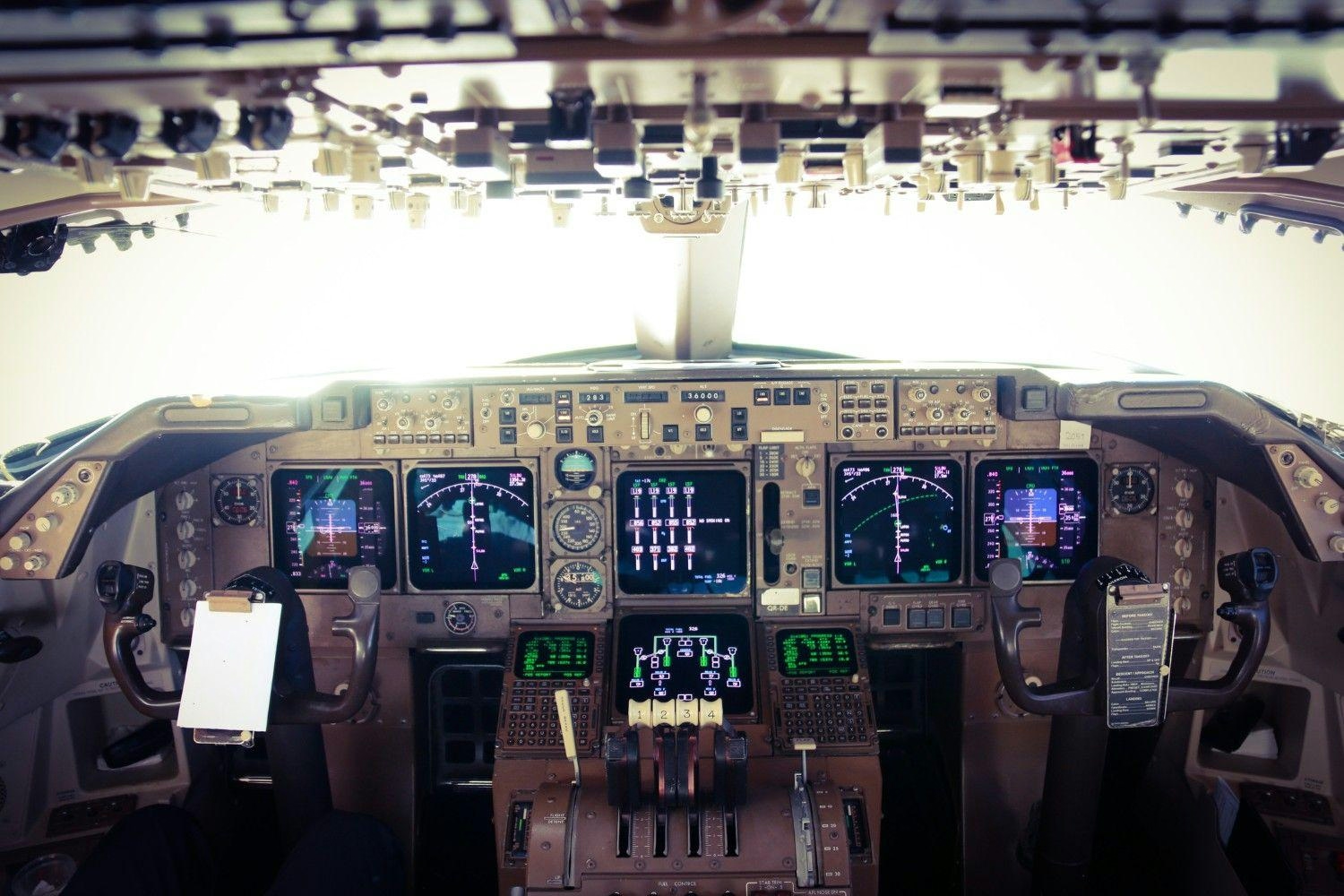
Air India Engine Shutdown: Pilots’ Body Highlights FADEC Fuel Cut-Off Theory
Emerging Theories on Engine Failure
The Aircraft Accident Investigation Bureau (AAIB) has suggested that a possible fuel switch error may have caused the catastrophic engine failure on Air India Flight 171. However, new perspectives are focusing on the aircraft’s advanced electronic systems, particularly the Full Authority Digital Engine Control (FADEC), as a potential factor in the incident. Preliminary reports indicate that the crash was initiated by the sudden movement of fuel-control switches to the "cut-off" position, which resulted in both engines being starved of fuel. Cockpit voice recordings reveal that the captain may have cut the fuel flow while the first officer was at the controls. Despite these findings, the Federation of Indian Pilots (FIP) has urged caution against attributing blame to the crew based on early assumptions, emphasizing the need to consider all possible technical causes.
The Role of FADEC and Related Systems
At the heart of the latest theory is the FADEC system, often described as the "brain" of modern aircraft such as the Boeing 787. FADEC is responsible for monitoring and managing critical engine functions, including fuel flow and engine speed, and it has the capability to override pilot commands based on sensor inputs. This system operates in conjunction with the Electronic Engine Controller (EEC) and the Thrust Control Malfunction Accommodation (TCMA) systems. The FIP has raised concerns that a malfunction within these interconnected systems—potentially triggered by faulty sensor data—could have caused FADEC to shut down both engines without any manual input from the crew. This possibility challenges the initial narrative by suggesting that the engine failure may have led to an automatic movement of the fuel switches to the cut-off position, rather than a manual error by the pilots.
Expert Insights and Calls for Thorough Investigation
Aviation attorney Mary Schiavo, speaking to FinancialExpress.com, underscored concerns regarding the TCMA system, which informs FADEC whether the aircraft is on the ground or airborne. She referenced previous incidents, including a 2019 All Nippon Airways (ANA) Boeing 787 flight where FADEC triggered a dual engine shutdown due to erroneous sensor input. Schiavo also mentioned an ongoing investigation into a 2025 United Airlines 787 incident involving uncommanded dives, believed to be linked to software or computer malfunctions. In light of these concerns, the FIP has called for a comprehensive reassessment of the roles played by FADEC, EEC, and TCMA malfunctions in the Air India crash. The pilots’ association is urging investigators to meticulously analyze data from the Flight Data Recorder (FDR), Cockpit Voice Recorder (CVR), and relevant Boeing service bulletins before reaching any conclusions.
In response to the preliminary findings, India’s aviation regulator has mandated inspections of Boeing fuel switches across airline fleets. Meanwhile, families of the victims continue to seek detailed answers as the investigation unfolds. The FIP stresses the importance of a thorough and impartial inquiry, cautioning against premature judgments regarding crew actions until all technical possibilities have been fully examined.
Comments

Etihad Airways Suspends Airbus A380 Flights on Key Route

Aditya Birla Group Seeks Approval for Aircraft Leasing in GIFT City

Qatar Airways Highlights Innovation and Connectivity at Arabian Travel Market 2026

Hong Kong's Five-Year Plan Includes Andrew Fan's Aircraft Parts Processing Hub Proposal

ACIA Aero Leasing Delivers ATR72-600 to Air Nostrum

RTX Appoints Jill Albertelli as Head of Pratt & Whitney

TAT Technologies Joins Beyond Aero Hydrogen Aircraft Program

AURAK Study Highlights Barriers to Air Taxi Adoption in Emerging Economies

Xiamen Air Selects Altitude for 787 Maintenance at Heathrow

Etihad and Swissport Extend Global Partnership
