
Orchestrate AI insights into action

Trending
Categories
Airbus and Volaris Back Sustainable Aviation Fuel Study in Mexico
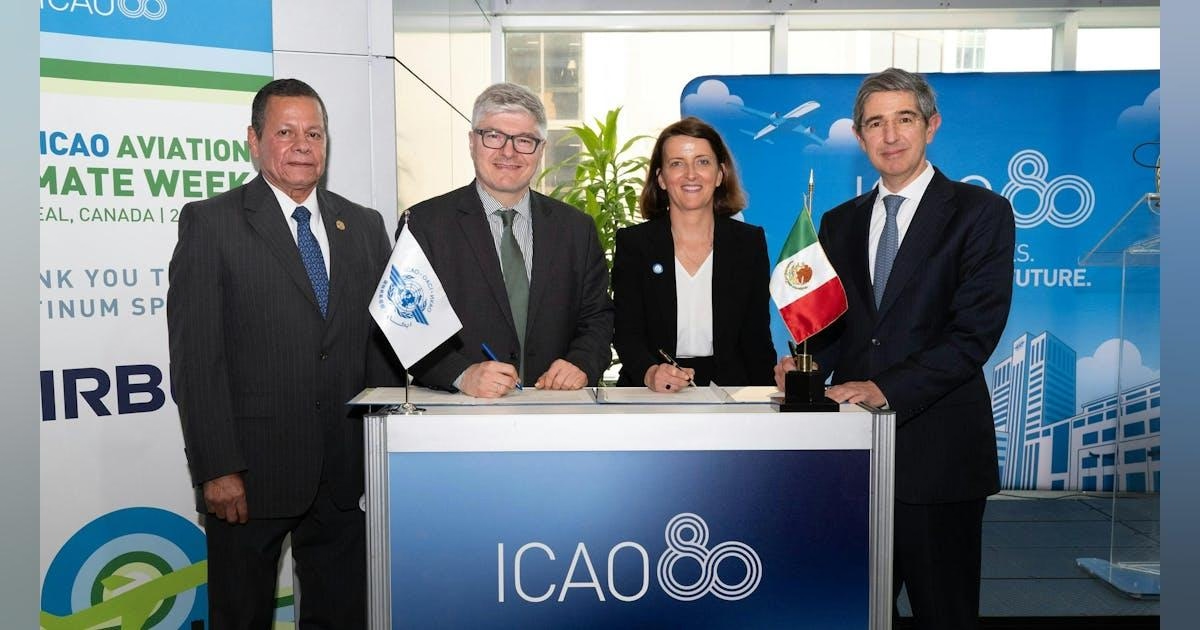
Airbus and Volaris Collaborate on Sustainable Aviation Fuel Initiative in Mexico
During the 2025 ICAO Aviation Climate Week, Airbus and Volaris formalized a partnership by signing a Letter of Intent to support the International Civil Aviation Organization’s (ICAO) Voluntary Environment Fund. This collaboration aims to promote the development and deployment of Sustainable Aviation Fuel (SAF) in Mexico through a feasibility study conducted under ICAO’s Assistance, Capacity Building and Training for SAF (ACT-SAF) Program. The initiative will be coordinated with Mexican Technical Working Groups responsible for the SAF Roadmap, co-led by the Federal Civil Aviation Authority (AFAC) and Aeropuertos y Servicios Auxiliares (ASA).
Advancing SAF Implementation in Mexico
The ACT-SAF program is designed to assist countries in evaluating their capacity for SAF adoption by providing comprehensive guidance on policy frameworks, regulatory measures, feedstock evaluation, production pathways, and financing strategies. Volaris’s participation marks a significant milestone as the first airline in the Americas to invest directly in the ICAO Voluntary Environment Fund, signaling a growing regional commitment to sustainable aviation practices.
Despite this progress, the aviation sector faces considerable challenges in scaling SAF usage. Persistent aircraft delivery backlogs and the slow expansion of green fuel production continue to impede rapid adoption. Additionally, the high cost of SAF poses a risk of increased airfares, which could affect consumer demand. Nonetheless, the industry is witnessing a gradual shift toward sustainability, even as it navigates funding limitations and complex regulatory environments. Responses from competitors vary, but the overall trend reflects heightened engagement with environmental initiatives.
Reinforcing Global Decarbonization Efforts
The partnership between Airbus and Volaris aligns with ICAO’s ambitious target of achieving net zero emissions by 2050. It complements similar feasibility studies recently announced in Argentina, Panama, and Peru, underscoring Airbus’s leadership role in aviation decarbonization across the Americas.
Sustainable Aviation Fuel is widely recognized as a critical tool for reducing greenhouse gas emissions, with the potential to lower CO2 emissions by up to 80% over its lifecycle compared to conventional jet fuel. Airbus continues to champion the large-scale development of SAF by collaborating with airlines, airports, fuel producers, research institutions, and civil aviation authorities worldwide. These efforts address the technical, regulatory, and market challenges essential to expanding the SAF ecosystem and advancing sustainable aviation globally.

Etihad Airways Suspends Airbus A380 Flights on Key Route

Aditya Birla Group Seeks Approval for Aircraft Leasing in GIFT City

Qatar Airways Highlights Innovation and Connectivity at Arabian Travel Market 2026

Hong Kong's Five-Year Plan Includes Andrew Fan's Aircraft Parts Processing Hub Proposal

ACIA Aero Leasing Delivers ATR72-600 to Air Nostrum

RTX Appoints Jill Albertelli as Head of Pratt & Whitney

TAT Technologies Joins Beyond Aero Hydrogen Aircraft Program

AURAK Study Highlights Barriers to Air Taxi Adoption in Emerging Economies

Xiamen Air Selects Altitude for 787 Maintenance at Heathrow

Etihad and Swissport Extend Global Partnership
