
Orchestrate AI insights into action

Trending
Categories
Airbus Faces Challenges from the World’s Most Environmentally Advanced Widebody Aircraft
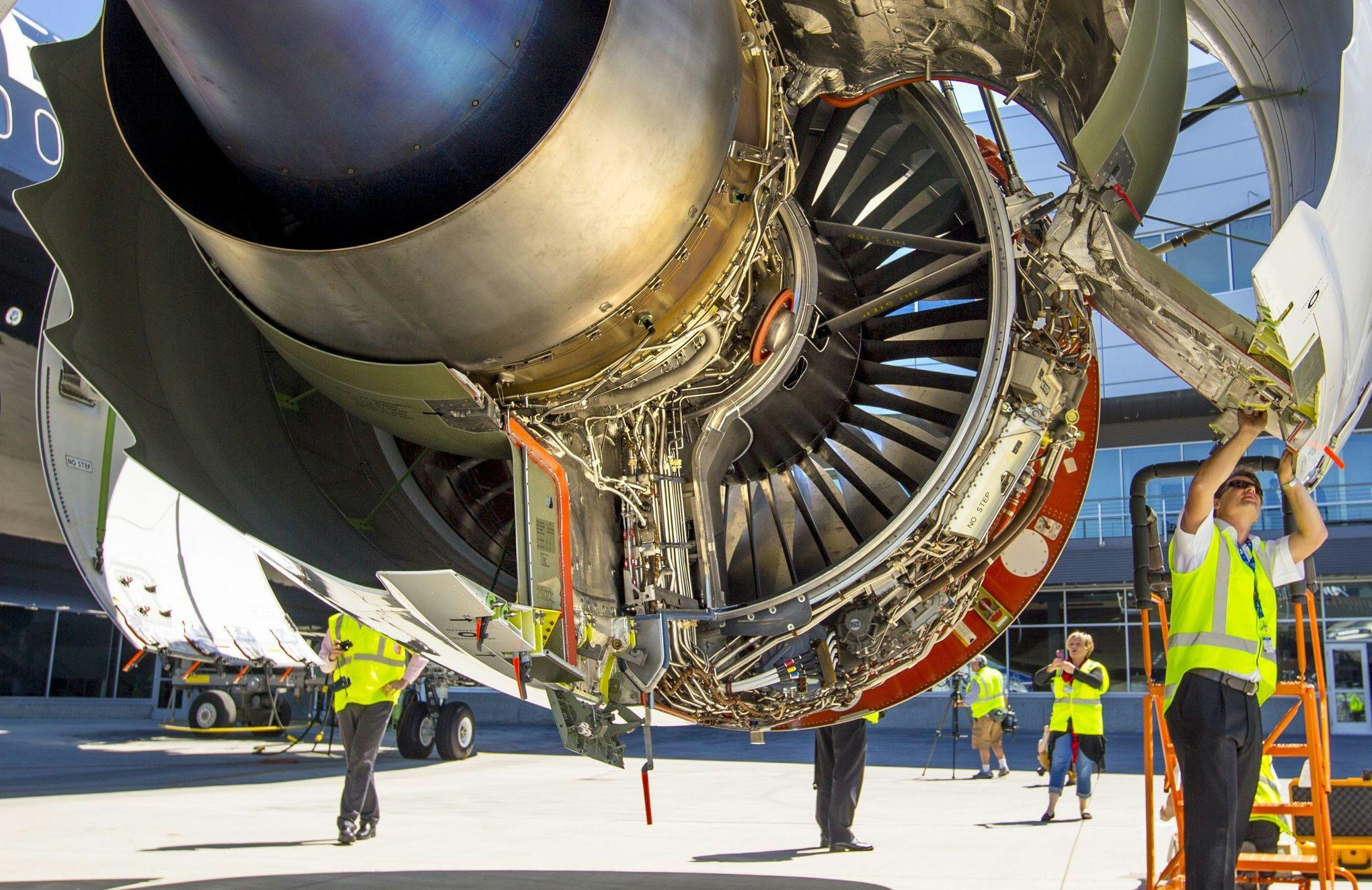
Airbus Faces Challenges from the World’s Most Environmentally Advanced Widebody Aircraft
The widebody aircraft sector has long been a stage for intense competition between Boeing and Airbus, two industry giants vying to set new benchmarks in performance, passenger comfort, and operational efficiency. As environmental concerns become increasingly central to airline strategies, Boeing’s forthcoming 777X program is positioning itself as the world’s most environmentally advanced widebody aircraft, presenting a significant challenge to Airbus’s established dominance.
Boeing’s 777X: A Leap in Environmental and Operational Efficiency
The 777X represents more than a series of incremental improvements in fuel efficiency. It promises substantial reductions in emissions and operating costs, alongside innovations aimed at enhancing the passenger experience. Key technological advancements include new composite wings with folding wingtips and the integration of the advanced GE9X engines. These features are designed to deliver superior range, improved cabin comfort, and greater sustainability, potentially influencing airlines’ fleet decisions in a market where even marginal efficiency gains can translate into billions of dollars in sales. This development threatens to erode Airbus’s market share, particularly in the lucrative long-haul segment where the 777X aims to outpace the A350.
Boeing’s strategy with the 777X is not merely to compete with the Airbus A350 but to surpass it, especially on transpacific and Middle Eastern routes where Airbus has enjoyed considerable success since the A350’s introduction in 2015. Should the 777X fulfill its ambitious promises, it could significantly alter the competitive landscape in these key markets.
Airbus’s Response and Continued Innovation
Despite the mounting pressure, Airbus remains resilient. The company recently marked a significant achievement as its A320 family overtook the Boeing 737 to become the most-delivered aircraft series in history, a milestone reached despite Boeing’s two-decade head start. This accomplishment highlights Airbus’s adaptability and strength in a rapidly evolving industry.
Beyond commercial success, Airbus is heavily investing in next-generation technologies to maintain its competitive edge. Its focus includes advancements in additive manufacturing techniques for thermal management in electric aircraft propulsion systems, which are critical to the development of its planned ZeroE airliners. Strategic collaborations, such as the partnership with Centech, are accelerating the integration of cutting-edge aerospace technologies, positioning Airbus to remain at the forefront of sustainable innovation.
The Broader Implications for the Aviation Industry
The stakes in this rivalry have never been higher. Airlines worldwide face increasing pressure from governments, regulators, and consumers to reduce carbon emissions and achieve ambitious net-zero targets. Aircraft that deliver lower emissions per passenger and enhanced long-haul efficiency are becoming essential to meeting these demands. While Boeing’s 777X is well-positioned to capitalize on this shift, Airbus’s sustained investments in sustainability and technological advancement indicate that the competition will continue to intensify.
Ultimately, the contest between Boeing and Airbus transcends aircraft design; it is a defining factor in shaping the future of international air travel. As both manufacturers push the boundaries of innovation, their ongoing rivalry will influence not only market leadership but also the trajectory of the aviation industry’s transition toward a more sustainable future.

Etihad Airways Suspends Airbus A380 Flights on Key Route

Aditya Birla Group Seeks Approval for Aircraft Leasing in GIFT City

Qatar Airways Highlights Innovation and Connectivity at Arabian Travel Market 2026

Hong Kong's Five-Year Plan Includes Andrew Fan's Aircraft Parts Processing Hub Proposal

ACIA Aero Leasing Delivers ATR72-600 to Air Nostrum

RTX Appoints Jill Albertelli as Head of Pratt & Whitney

TAT Technologies Joins Beyond Aero Hydrogen Aircraft Program

AURAK Study Highlights Barriers to Air Taxi Adoption in Emerging Economies

Xiamen Air Selects Altitude for 787 Maintenance at Heathrow

Etihad and Swissport Extend Global Partnership
