
Orchestrate AI insights into action

Trending
Categories
Airbus Faces Supply Chain Challenges Despite Strong Delivery Numbers
Airbus Faces Supply Chain Challenges Despite Strong Delivery Numbers
European aerospace giant Airbus continues to confront significant supply chain difficulties, even as it reports robust delivery figures for the first half of the year. The company delivered approximately 320 aircraft during this period, with CEO Guillaume Faury reaffirming the firm’s commitment to an ambitious annual target of 820 deliveries. However, Faury acknowledges that persistent material shortages and logistical disruptions are making this goal increasingly challenging to achieve.
Production Bottlenecks and Component Shortages
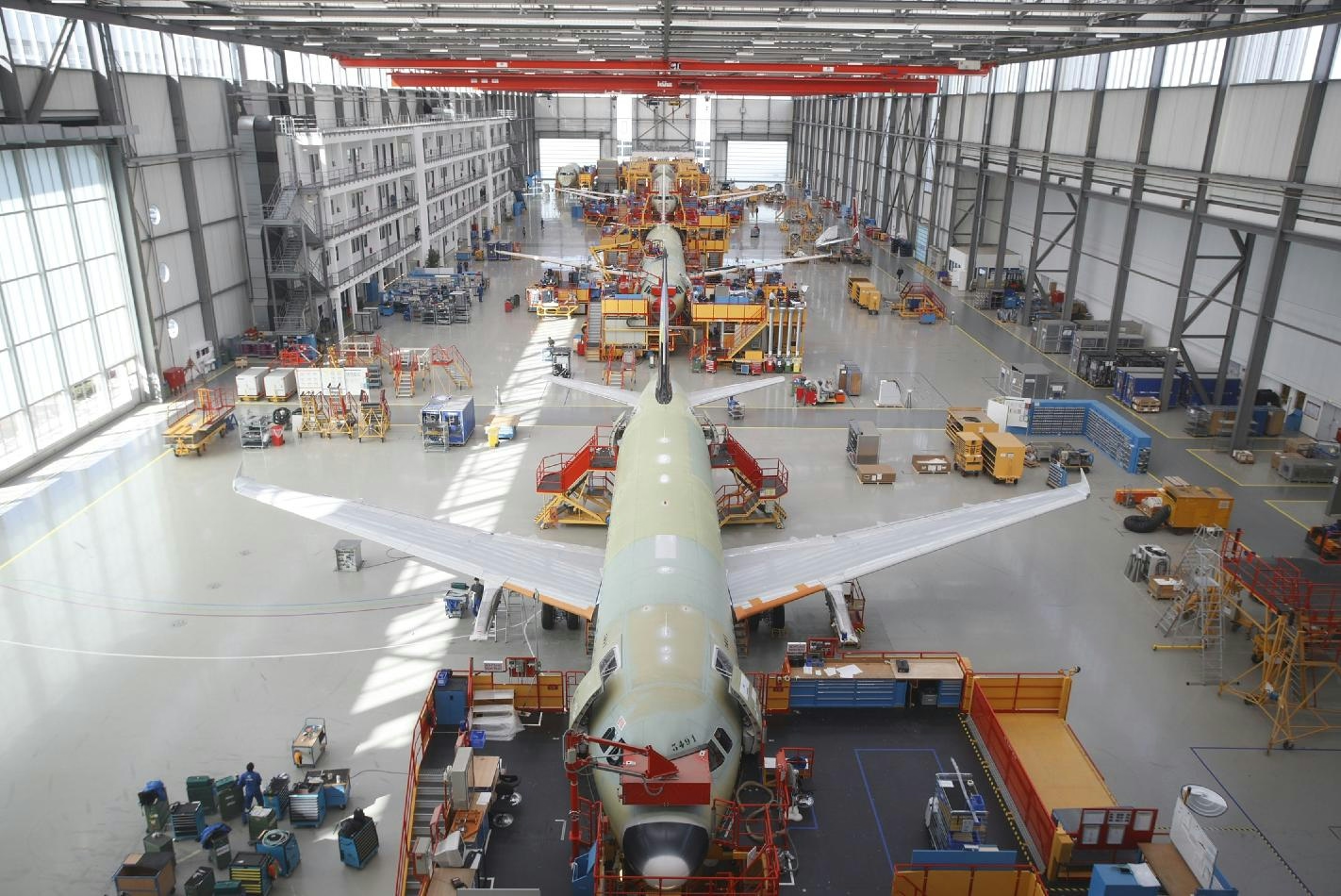
To meet its 2024 target, Airbus must deliver around 500 aircraft in the second half of the year, a demanding prospect given ongoing bottlenecks, particularly in engine supplies. Market analysts estimate that Airbus delivered about 60 aircraft in June, a figure below the company’s industrial capacity. The primary constraint remains the shortage of critical components, especially engines such as the CFM LEAP-1A models used in the A320neo series. These shortages have led to a growing backlog of completed airframes, often referred to as “gliders,” which are awaiting missing parts before they can be handed over to customers.
The supply chain disruptions are especially problematic as Airbus seeks to ramp up production. The company aims to increase output of its popular A320neo program to 75 aircraft per month by 2027. Yet, Faury has conceded that the annual delivery target has “become a little more ambitious” due to ongoing delays in engine and component deliveries. Internally, Airbus executives have suggested that absent these supply chain issues, the company could have already achieved four-digit annual production figures.
Industry Context and Future Outlook
Despite these challenges, Airbus asserts that its efforts to reset and stabilize its supply chain are beginning to show progress. Nonetheless, production rates remain below planned levels, reflecting the broader global supply chain difficulties that have affected the aviation sector since the pandemic. These disruptions continue to compel Airbus and its competitors to frequently adjust production plans and strategies.
The wider industry landscape highlights the complexity of the situation. Airlines and manufacturers are adapting to shifting market dynamics: All Nippon Airways (ANA) has confirmed orders for aircraft from Airbus, Boeing, and Embraer, while Saudi Arabia’s Riyadh Air recently placed an order for up to 50 Airbus A350-1000s. Looking ahead, Airbus projects demand for 34,250 single-aisle aircraft over the next two decades, signaling strong long-term market prospects. However, trade tensions and ongoing supply chain constraints remain significant concerns for the company.
As Airbus navigates these obstacles, its ability to adapt production strategies and sustain delivery momentum will be critical to meeting both its immediate targets and long-term growth ambitions.

Etihad Airways Suspends Airbus A380 Flights on Key Route

Aditya Birla Group Seeks Approval for Aircraft Leasing in GIFT City

Qatar Airways Highlights Innovation and Connectivity at Arabian Travel Market 2026

Hong Kong's Five-Year Plan Includes Andrew Fan's Aircraft Parts Processing Hub Proposal

ACIA Aero Leasing Delivers ATR72-600 to Air Nostrum

RTX Appoints Jill Albertelli as Head of Pratt & Whitney

TAT Technologies Joins Beyond Aero Hydrogen Aircraft Program

AURAK Study Highlights Barriers to Air Taxi Adoption in Emerging Economies

Xiamen Air Selects Altitude for 787 Maintenance at Heathrow

Etihad and Swissport Extend Global Partnership
