
Orchestrate AI insights into action

Trending
Categories
Airbus Order Talks Highlight Ongoing Demand in Aerospace Sector
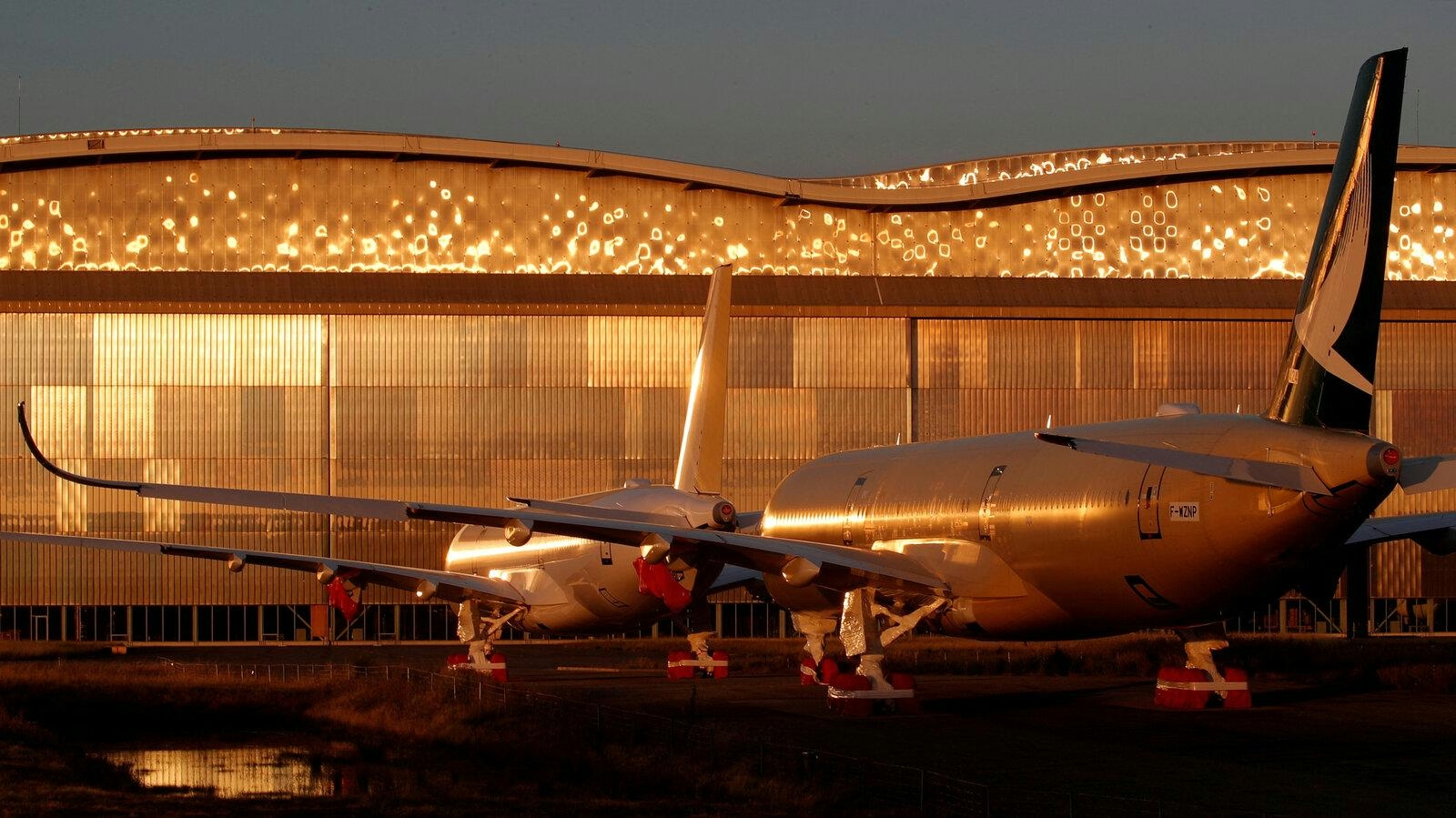
Airbus Order Talks Highlight Ongoing Demand in Aerospace Sector
Renewed speculation surrounding a significant Airbus order from Ethiopian Airlines has brought Boeing back into the spotlight, underscoring the persistent global demand for commercial aircraft. Recent discussions within the aviation industry emphasize that airline fleet expansion and replacement remain central to the outlook for major manufacturers such as Boeing and Airbus.
Market Dynamics and Competitive Landscape
Although Boeing shares have not reacted to any formal announcements, the broader context holds considerable importance for U.S. investors. Boeing and Airbus are direct competitors in securing global airline orders, particularly in the wide-body and single-aisle segments. These markets are characterized by long production cycles and substantial backlogs, which heavily influence expectations for future deliveries and cash flow. Even mere speculation about a new Airbus order—potentially involving the A350 and A220 models—can swiftly affect sentiment across the aerospace sector, as recent aviation media coverage has demonstrated.
For Boeing, commercial airplanes remain the most visible revenue driver. The 787 and 777X wide-body aircraft are critical to meeting long-haul demand, while the 737 family dominates short- and medium-haul markets. Although Boeing’s defense, space, and services divisions provide a degree of balance, investor focus often centers on airline fleet plans and order developments from competitors. The company’s business model depends on long-term customer relationships and production visibility, making it highly sensitive to shifts in airline expansion strategies and rival activities.
Airbus Challenges and Strategic Initiatives
Airbus faces its own challenges despite strong sales in the narrow-body segment and a growing North American services market, which is projected to expand from $38 billion in 2025 to $54.4 billion by 2044. The European manufacturer is currently grappling with a delivery bottleneck, fulfilling only 70.4% of planned deliveries. This constraint contributed to a 7% year-on-year decline in first-quarter 2026 revenues, following the delivery of just 114 aircraft. In response, Airbus is advancing the development of the A350F freighter, with first deliveries expected in 2026, aiming to challenge Boeing’s dominance in the cargo aircraft segment.
Implications for Investors and Industry Outlook
Competitor responses continue to shape the aerospace market landscape. Boeing is focused on stabilizing production of its 737 MAX to capitalize on sustained demand for single-aisle jets. Meanwhile, Airbus’s order book and delivery performance remain closely monitored indicators of the sector’s overall health.
For U.S. investors, Boeing’s exposure to both commercial aviation recovery and defense spending renders it particularly sensitive to changes in airline fleet strategies, supply chain execution, and government budgets. Market reactions tend to be swift when either manufacturer secures or discusses new large orders, as these developments signal active airline investment and fleet renewal—key indicators for industrial companies with a global footprint.
Ongoing order discussions and delivery challenges at both Airbus and Boeing reflect a dynamic aerospace sector where fleet renewal and expansion continue to be top priorities for airlines worldwide.

Etihad Airways Suspends Airbus A380 Flights on Key Route

Aditya Birla Group Seeks Approval for Aircraft Leasing in GIFT City

Qatar Airways Highlights Innovation and Connectivity at Arabian Travel Market 2026

Hong Kong's Five-Year Plan Includes Andrew Fan's Aircraft Parts Processing Hub Proposal

ACIA Aero Leasing Delivers ATR72-600 to Air Nostrum

RTX Appoints Jill Albertelli as Head of Pratt & Whitney

TAT Technologies Joins Beyond Aero Hydrogen Aircraft Program

AURAK Study Highlights Barriers to Air Taxi Adoption in Emerging Economies

Xiamen Air Selects Altitude for 787 Maintenance at Heathrow

Etihad and Swissport Extend Global Partnership
