
Orchestrate AI insights into action

Trending
Categories
Airbus Projects Aviation Growth Driven by Economic and Demographic Changes
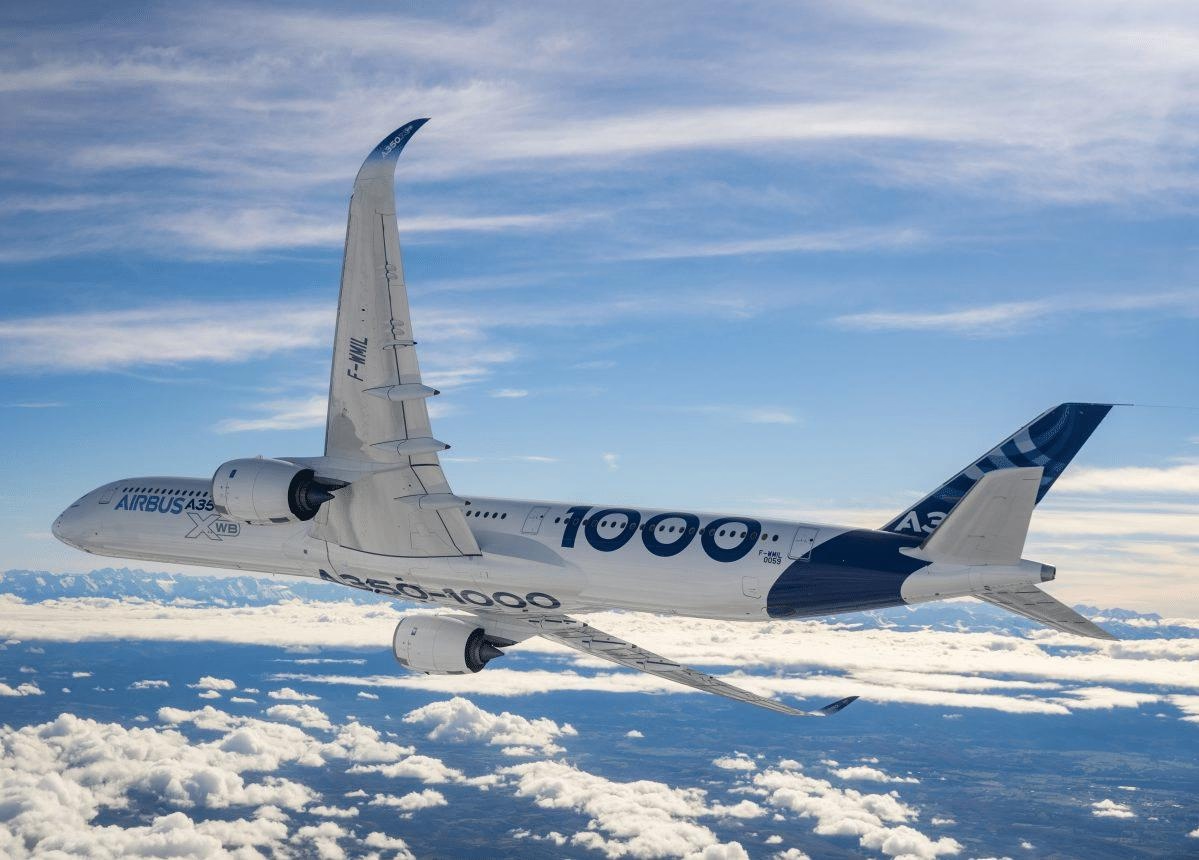
Airbus Projects Aviation Growth Driven by Economic and Demographic Changes
Airbus has released its Global Market Forecast for 2025, projecting sustained long-term growth in the global aviation sector despite significant challenges anticipated in the near term. The company forecasts passenger traffic to increase by an average of 3.6% annually over the next two decades. This expansion is supported by several key macroeconomic and demographic factors, including a projected global GDP growth rate of 2.5% per year, an urban population increase of 1.2 billion people, and a rise in the global middle class by approximately 1.5 billion individuals—demographics that traditionally drive demand for air travel.
Aircraft Demand and Fleet Modernization
To accommodate this growing demand, Airbus estimates that around 43,400 new aircraft will be required by 2044, encompassing both passenger and freighter models. Of these, 34,250 are expected to be single-aisle aircraft, while 9,170 will be wide-body planes. Importantly, nearly 44% of these deliveries—approximately 18,930 aircraft—will serve as replacements for older, less fuel-efficient models, thereby enhancing fleet efficiency and contributing to improved environmental performance.
Despite these optimistic projections, the aviation industry faces notable headwinds. In 2025, funding for sustainable aviation initiatives is expected to be curtailed, and the sector continues to grapple with existing order backlogs. These factors have tempered the overall outlook for aircraft delivery growth. Conversely, demand for business jets has surged by 11%, reflecting evolving market dynamics and shifting customer preferences.
Market Dynamics and Regional Growth
Responses from competitors to these conditions have been varied. Nonetheless, Airbus has revised its 20-year jet demand forecast upward, maintaining confidence in its capacity to serve emerging markets and adapt to changing travel patterns. India leads global domestic traffic growth with an annual increase of 8.9%, followed closely by emerging Asia to China at 8.5%, and the Middle East to emerging Asia at 5.3%. Airbus’s broad aircraft portfolio positions the company well to capitalize on these high-growth routes, with a discernible trend toward larger aircraft as demand intensifies.
The company’s emphasis on fleet commonality across its A320, A330, and A350 families allows airlines to operate mixed fleets more efficiently, providing greater crew flexibility through multi-type ratings. By 2044, the global in-service aircraft fleet is expected to more than double, exceeding 49,000 units. This expansion will generate substantial demand for skilled aviation professionals, including pilots, technicians, and cabin crew, while also creating opportunities throughout the wider aviation ecosystem.
Advancing Services and Sustainability
To support this anticipated growth, Airbus Customer Services is prioritizing advanced solutions such as predictive maintenance, comprehensive supply chain management, and increased utilization of used serviceable material (USM) to reduce operational costs and improve aircraft availability. The company is also advancing efforts in aircraft connectivity and recyclability, both of which are critical to enhancing operational efficiency and meeting the industry’s sustainability objectives.
While challenges remain, Airbus remains optimistic that ongoing economic and demographic shifts will continue to drive robust growth in aviation, even as the sector navigates a rapidly evolving global landscape.

Etihad Airways Suspends Airbus A380 Flights on Key Route

Aditya Birla Group Seeks Approval for Aircraft Leasing in GIFT City

Qatar Airways Highlights Innovation and Connectivity at Arabian Travel Market 2026

Hong Kong's Five-Year Plan Includes Andrew Fan's Aircraft Parts Processing Hub Proposal

ACIA Aero Leasing Delivers ATR72-600 to Air Nostrum

RTX Appoints Jill Albertelli as Head of Pratt & Whitney

TAT Technologies Joins Beyond Aero Hydrogen Aircraft Program

AURAK Study Highlights Barriers to Air Taxi Adoption in Emerging Economies

Xiamen Air Selects Altitude for 787 Maintenance at Heathrow

Etihad and Swissport Extend Global Partnership
