
Orchestrate AI insights into action

Trending
Categories
Airbus Surpasses 500 Jet Deliveries in First Nine Months
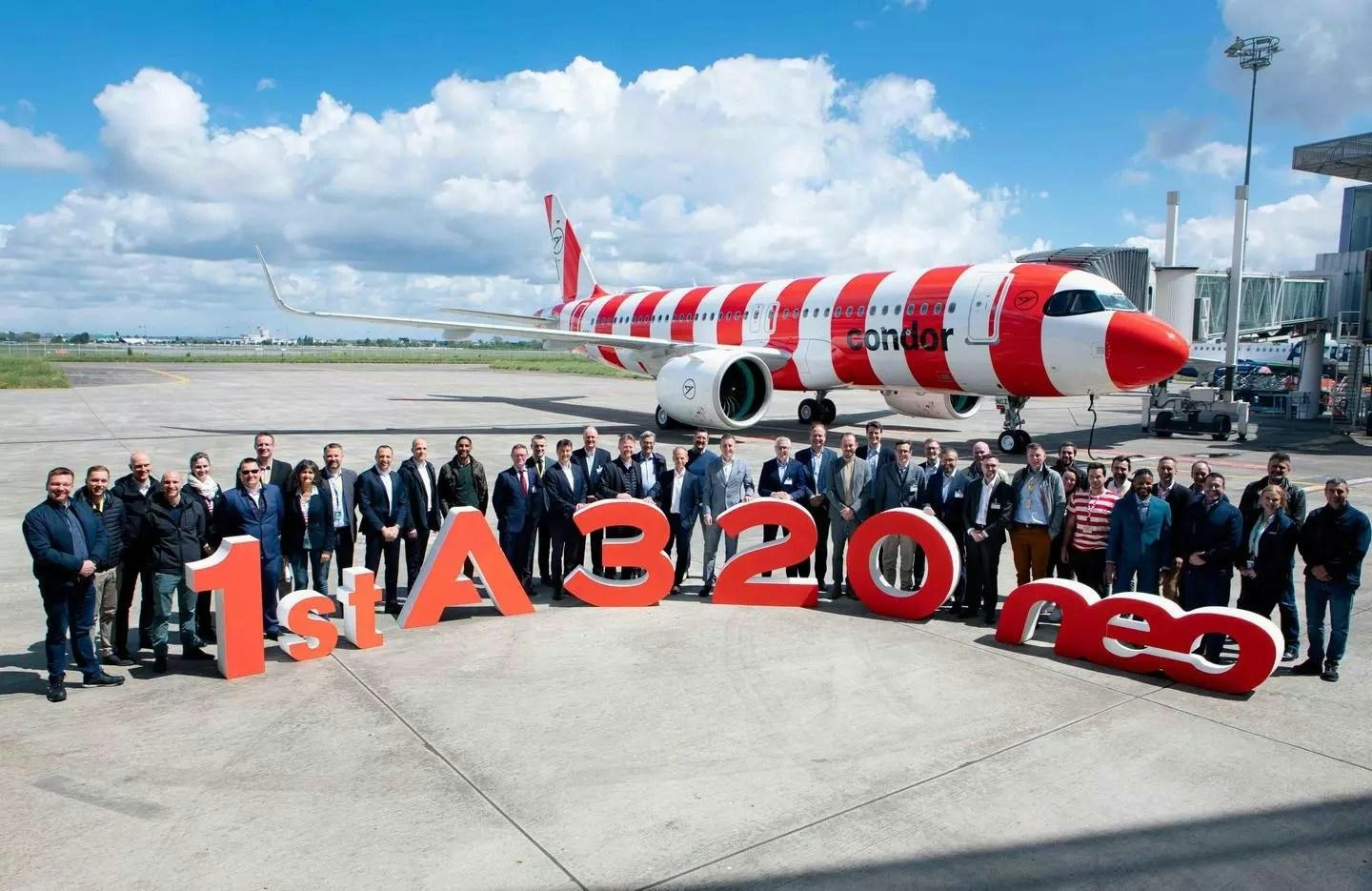
Airbus Surpasses 500 Jet Deliveries in First Nine Months of 2025
Record Deliveries Amid Supply Chain Challenges
Airbus has marked a significant achievement in 2025 by delivering 507 commercial aircraft in the first nine months of the year, reinforcing its position as a leader in the global aviation industry. This figure represents a 2% increase compared to the 497 jets delivered during the same period in 2024, reflecting a steady upward trajectory despite ongoing challenges within the sector. The milestone was underscored by a record-breaking September, when Airbus handed over 73 aircraft, signaling a gradual easing of persistent engine supply chain constraints.
The surge in deliveries during September not only surpassed analyst expectations but also marked the first time in 2025 that Airbus’s cumulative deliveries exceeded those of the previous year for the same timeframe. This progress positions the company well to achieve its ambitious full-year target of approximately 820 aircraft, thereby extending its lead over its American rival, Boeing.
Engine Supply Constraints and Production Bottlenecks
Airbus’s improved output comes despite continued difficulties with key engine suppliers, notably CFM International—a joint venture between GE Aerospace and Safran—and Pratt & Whitney, a division of RTX Corporation. Both suppliers have grappled with labor shortages, production delays, and component scarcities, which have constrained Airbus’s ability to accelerate production in response to strong market demand.
Pratt & Whitney’s geared turbofan (GTF) engines, particularly those powering the A320neo family, have been affected by a metal powder defect that led to a large-scale recall and the grounding of hundreds of aircraft. Similarly, CFM International has faced production challenges that have contributed to ongoing engine shortages into 2025. These issues resulted in a backlog of “gliders”—fully assembled aircraft awaiting engine installation—with as many as 60 units parked outside Airbus factories by July, tying up approximately €1 billion in inventory.
Recent improvements in engine deliveries have helped reduce the number of gliders, alleviating financial pressures and supporting Airbus’s delivery targets. In some instances, airlines have accepted glider deliveries due to limited availability of delivery slots, highlighting the strong demand for new aircraft.
Market Implications and Competitive Landscape
Surpassing 500 jet deliveries in the first three quarters of 2025 not only represents a production milestone for Airbus but also signals a shift in the competitive dynamics of the commercial aviation market. The Airbus A320 family has now overtaken the Boeing 737 as the most-delivered jetliner, intensifying competition and placing additional pressure on both manufacturers to innovate and defend their market shares.
This development has attracted increased interest from airlines and investors, while Boeing faces mounting challenges in maintaining its competitive position. In response, Boeing may accelerate its development programs or explore new markets to regain momentum. Meanwhile, Airbus is closely monitoring the rise of China’s Comac C919 jet, as the growing presence of Chinese manufacturers could further reshape the global commercial aircraft landscape.
Despite ongoing supply chain hurdles, Airbus’s robust delivery performance in 2025 underscores the company’s resilience and adaptability in a rapidly evolving aviation market.

Etihad Airways Suspends Airbus A380 Flights on Key Route

Aditya Birla Group Seeks Approval for Aircraft Leasing in GIFT City

Qatar Airways Highlights Innovation and Connectivity at Arabian Travel Market 2026

Hong Kong's Five-Year Plan Includes Andrew Fan's Aircraft Parts Processing Hub Proposal

ACIA Aero Leasing Delivers ATR72-600 to Air Nostrum

RTX Appoints Jill Albertelli as Head of Pratt & Whitney

TAT Technologies Joins Beyond Aero Hydrogen Aircraft Program

AURAK Study Highlights Barriers to Air Taxi Adoption in Emerging Economies

Xiamen Air Selects Altitude for 787 Maintenance at Heathrow

Etihad and Swissport Extend Global Partnership
