
Orchestrate AI insights into action

Trending
Categories
Airline and Aerospace Industries Warn Trump Tariffs Threaten Air Safety and Supply Chains
Airline and Aerospace Industries Warn Trump Tariffs Threaten Air Safety and Supply Chains
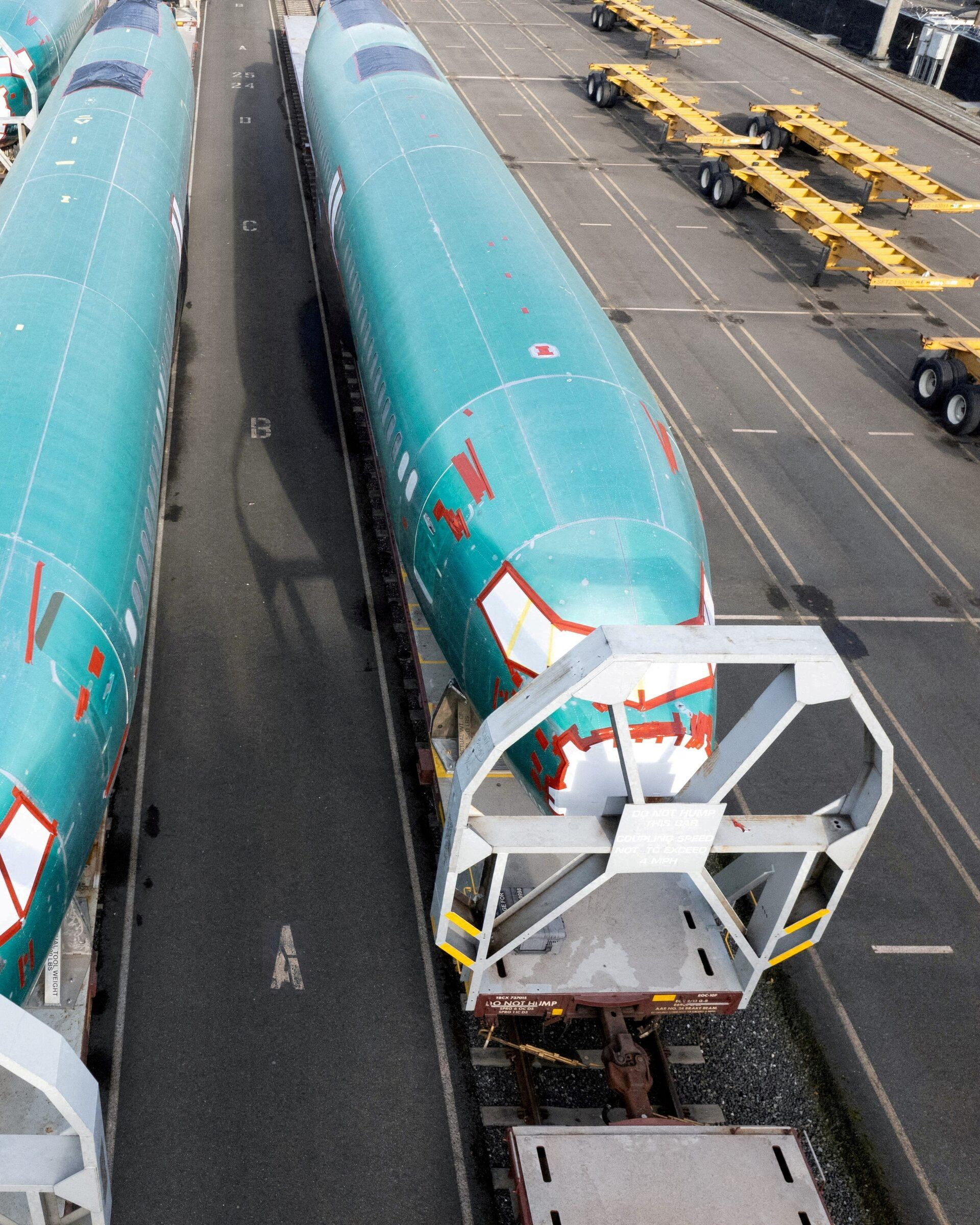
President Donald Trump’s administration has imposed a 10% tariff on imported commercial aircraft, jet engines, and related parts, prompting significant concern within the airline and aerospace sectors. Industry groups have issued warnings that these tariffs, along with a pending Section 232 investigation by the Commerce Department, could jeopardize air safety and disrupt critical supply chains essential to the industry’s functioning.
Industry Concerns Over Tariffs and Supply Chain Disruptions
The Commerce Department’s ongoing Section 232 investigation is examining whether imported aircraft and components pose a threat to U.S. national security, a determination that could lead to even higher tariffs. The Aerospace Industries Association (AIA), which represents major companies including Boeing, Airbus, and GE Aerospace, has formally cautioned the department against escalating tariffs without thorough consultation with industry stakeholders. In a filing, the AIA emphasized that additional tariffs risk significant supply chain disruptions and could compromise aviation safety. The association has requested a 90-day extension for public comments and a suspension of new tariffs for at least 180 days to allow for more comprehensive evaluation.
These warnings come amid existing pressures on the airline and aerospace industries. Airlines are contending with rising operational costs and persistent supply chain challenges, while aerospace manufacturers face a production crisis exacerbated by labor shortages. Industry leaders argue that imposing further tariffs would intensify these difficulties, potentially weakening demand and creating new operational obstacles.
Economic and Safety Implications for Airlines
Airlines for America, a trade group representing major U.S. carriers such as American Airlines, United Airlines, and Delta Air Lines, has echoed the concerns raised by the aerospace sector. The group highlighted that increased tariffs could lead to higher ticket prices and shipping costs, impede the recovery of aviation supply chains, and elevate the risk of counterfeit parts entering the market. In comments submitted to the Commerce Department, Airlines for America warned that these measures would undermine both economic and national security interests, severely impacting the domestic commercial aviation industry’s capacity to grow, compete, innovate, and invest.
The potential imposition of new tariffs arrives at a precarious moment for U.S. airlines. Several major carriers have recently withdrawn their profit forecasts for the year and reduced summer flight schedules, citing economic uncertainty and declining travel demand. Industry experts caution that additional cost pressures and supply disruptions could exacerbate these challenges, threatening the stability of the airline and aerospace sectors.
As the Commerce Department proceeds with its Section 232 review, industry representatives continue to urge policymakers to carefully consider the potential consequences for air safety and supply chain integrity before implementing further tariffs.

Etihad Airways Suspends Airbus A380 Flights on Key Route

Aditya Birla Group Seeks Approval for Aircraft Leasing in GIFT City

Qatar Airways Highlights Innovation and Connectivity at Arabian Travel Market 2026

Hong Kong's Five-Year Plan Includes Andrew Fan's Aircraft Parts Processing Hub Proposal

ACIA Aero Leasing Delivers ATR72-600 to Air Nostrum

RTX Appoints Jill Albertelli as Head of Pratt & Whitney

TAT Technologies Joins Beyond Aero Hydrogen Aircraft Program

AURAK Study Highlights Barriers to Air Taxi Adoption in Emerging Economies

Xiamen Air Selects Altitude for 787 Maintenance at Heathrow

Etihad and Swissport Extend Global Partnership
