
Orchestrate AI insights into action

Trending
Categories
Airline Uses AI to Hold Flights for Passengers with Tight Connections
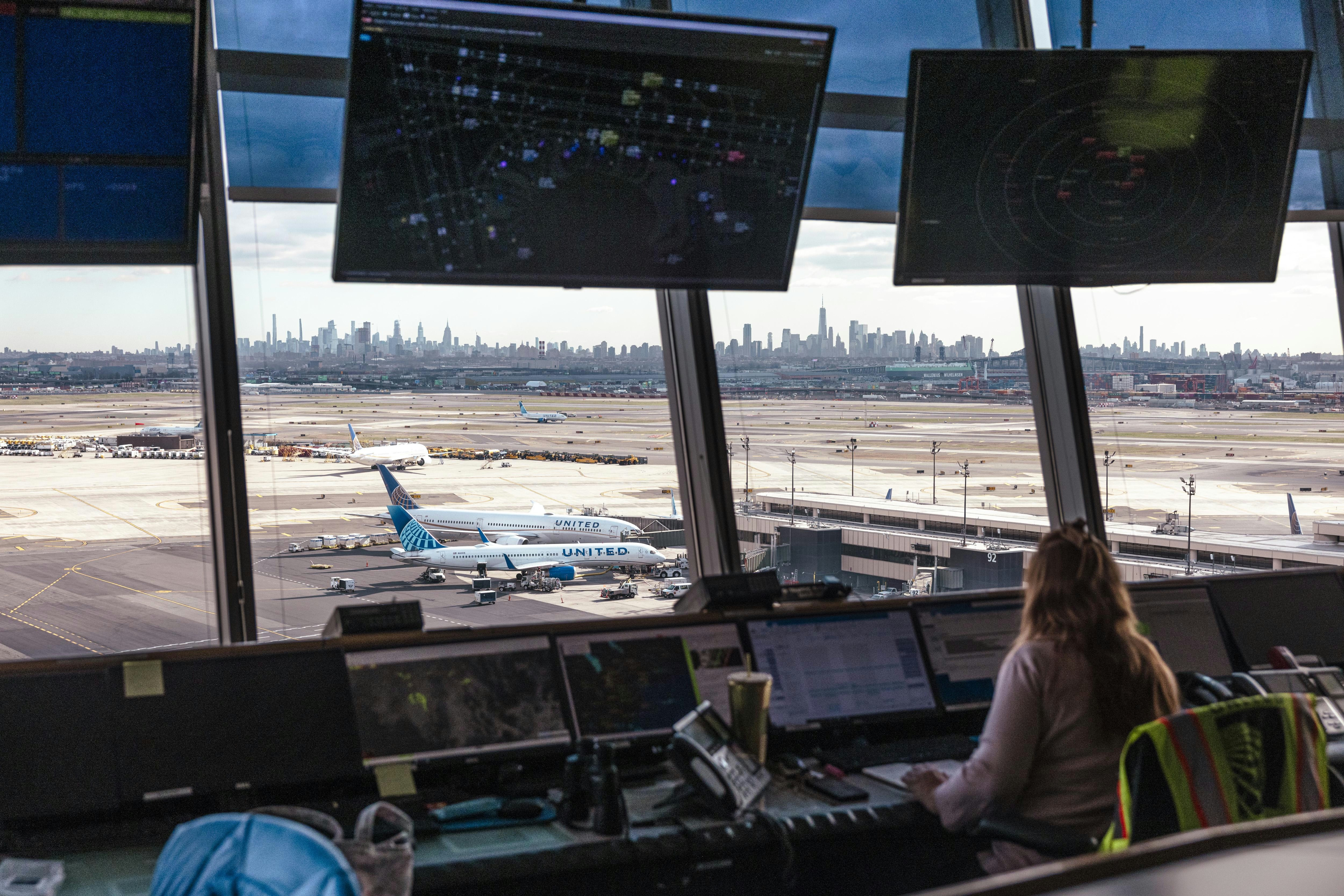
American Airlines Employs AI to Facilitate Tight Flight Connections
American Airlines has introduced an innovative artificial intelligence system designed to assist passengers with tight connecting flights, aiming to alleviate the stress associated with missed connections while maintaining overall schedule integrity. This new approach allows the airline to briefly delay certain departures, providing arriving passengers from delayed inbound flights a better chance to board their subsequent flights, contingent on the network’s capacity to absorb such delays without causing broader disruptions.
Connect Assist: AI at the Core of Flight Holding Decisions
Central to this initiative is Connect Assist, American Airlines’ proprietary generative AI tool that operates in conjunction with ground personnel. The system continuously monitors departing flights with connecting passengers who are at risk of missing their next leg. It then evaluates whether a short delay is feasible without negatively impacting downstream schedules or other customer itineraries. According to spokesperson Luisa Barrientos Flores, the AI analyzes numerous variables to ensure that any hold does not cascade into wider operational issues.
When a flight is held, affected passengers receive automated notifications specifying the duration of the delay at the gate. While most domestic flights begin boarding approximately 40 minutes before departure, American Airlines sometimes schedules connections as brief as 25 minutes, a challenging timeframe for travelers, especially when gates are located far apart. On average, flights are held for about 10 minutes, providing a critical window for passengers to make their connections.
Addressing Passenger Frustrations and Industry Implications
The introduction of AI-driven flight holds responds to growing passenger frustrations over tight connections and missed flights, a frequent topic of discussion on social media platforms. One passenger recounted on Reddit how, after a 50-minute delay on their initial flight, they received a notification that their connecting flight would be held for 17 minutes, enabling them to catch the last flight out that evening. Many travelers have welcomed this development, noting that timely notifications significantly reduce the anxiety associated with tight connections.
American Airlines’ deployment of AI tools reflects a broader industry trend toward integrating artificial intelligence into various operational aspects, including pricing strategies. However, this shift raises important questions regarding transparency and fairness. Regulators and consumer advocates have expressed concerns that AI-driven pricing models may lead to personalized fares or diminished clarity for consumers, prompting increased scrutiny from both regulatory bodies and the public.
Moreover, the energy consumption associated with advanced AI systems has attracted attention amid the aviation industry’s efforts to meet sustainability targets. Experts caution that the substantial power demands of large-scale AI could compete with investments in sustainable aviation fuels, potentially complicating environmental commitments.
Competitors are closely observing American Airlines’ approach, with other major carriers expected to adopt similar AI-driven solutions to remain competitive. As this technology becomes more widespread, airlines will face the challenge of balancing operational efficiency with ethical considerations and environmental responsibilities.
For the time being, American Airlines’ AI-powered flight holds represent a practical advancement for passengers navigating tight connections, while underscoring the complex interplay between innovation, customer service, and broader industry challenges.

Etihad Airways Suspends Airbus A380 Flights on Key Route

Aditya Birla Group Seeks Approval for Aircraft Leasing in GIFT City

Qatar Airways Highlights Innovation and Connectivity at Arabian Travel Market 2026

Hong Kong's Five-Year Plan Includes Andrew Fan's Aircraft Parts Processing Hub Proposal

ACIA Aero Leasing Delivers ATR72-600 to Air Nostrum

RTX Appoints Jill Albertelli as Head of Pratt & Whitney

TAT Technologies Joins Beyond Aero Hydrogen Aircraft Program

AURAK Study Highlights Barriers to Air Taxi Adoption in Emerging Economies

Xiamen Air Selects Altitude for 787 Maintenance at Heathrow

Etihad and Swissport Extend Global Partnership
