
Orchestrate AI insights into action

Trending
Categories
American Airlines A321 Returns to Dallas Following Engine Failure
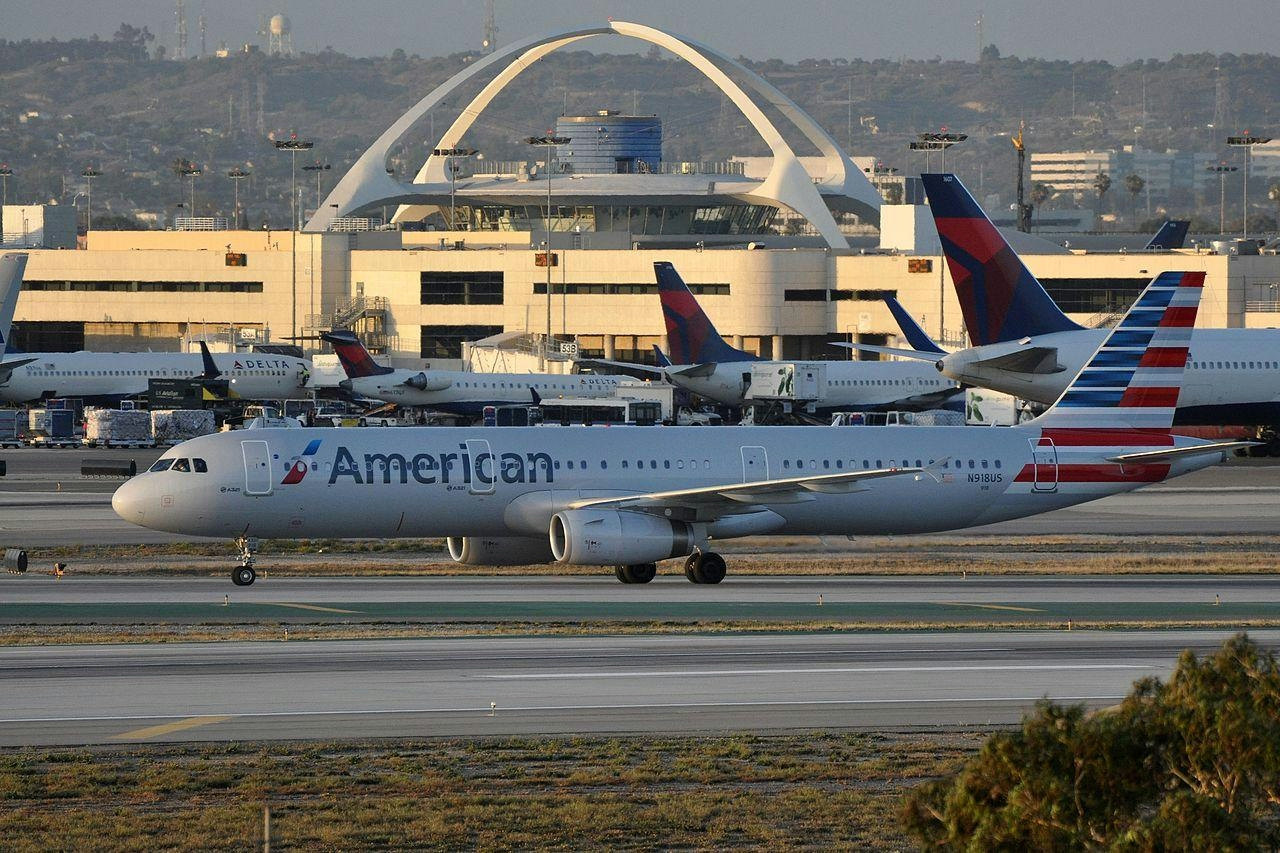
American Airlines A321 Returns to Dallas Following Engine Failure
Incident Overview
On October 9, 2025, an American Airlines Airbus A321 operating Flight AA679 was compelled to return to Dallas-Fort Worth International Airport (DFW) shortly after takeoff due to a left engine failure. The aircraft, carrying 197 passengers and crew, had departed for Jacksonville International Airport (JAX) when the pilots detected the malfunction. Declaring a MAYDAY, the flight crew promptly coordinated with air traffic control (ATC) and requested emergency services before executing a safe return and landing at DFW.
After the engine failure was reported, the aircraft climbed to 4,000 feet and was vectored by ATC for a visual approach to Runway 17C. The plane touched down approximately 15 minutes after departure, briefly halted on the runway, and then taxied to the gate without further incident. The swift and composed response by the crew ensured the safety of everyone on board.
Communication and Response
Transcripts of the communication between the flight crew and Dallas ATC highlight the professionalism and urgency with which the situation was managed. The pilots immediately informed controllers of the engine failure and requested priority handling and emergency response teams. ATC provided clear instructions and facilitated the aircraft’s return, maintaining constant contact throughout the event. The crew confirmed the failure involved the left engine and reported the number of souls on board along with fuel status, demonstrating thorough situational awareness.
Emergency services were positioned on standby during the landing, but their intervention was ultimately unnecessary. The incident was handled with precision, reflecting the effectiveness of crew training and coordination with ground control.
Operational and Industry Implications
This engine failure incident brings renewed attention to American Airlines’ maintenance and operational procedures. Such events typically trigger internal investigations and may attract regulatory scrutiny from the Federal Aviation Administration, which is expected to conduct a formal inquiry as part of standard protocol.
The timing of the incident presents additional challenges for American Airlines, which is already facing anticipated earnings declines due to recent adverse weather disruptions at key hubs. The engine failure could exacerbate operational and financial pressures in the short term. Market reactions may include a temporary dip in investor confidence, although these effects often subside if the airline addresses the issue transparently and effectively.
Competitors may leverage the situation to emphasize their own safety records and operational reliability in marketing campaigns. Nonetheless, the successful handling of the emergency underscores the airline’s commitment to safety and the proficiency of its flight crews in managing critical situations.

Etihad Airways Suspends Airbus A380 Flights on Key Route

Aditya Birla Group Seeks Approval for Aircraft Leasing in GIFT City

Qatar Airways Highlights Innovation and Connectivity at Arabian Travel Market 2026

Hong Kong's Five-Year Plan Includes Andrew Fan's Aircraft Parts Processing Hub Proposal

ACIA Aero Leasing Delivers ATR72-600 to Air Nostrum

RTX Appoints Jill Albertelli as Head of Pratt & Whitney

TAT Technologies Joins Beyond Aero Hydrogen Aircraft Program

AURAK Study Highlights Barriers to Air Taxi Adoption in Emerging Economies

Xiamen Air Selects Altitude for 787 Maintenance at Heathrow

Etihad and Swissport Extend Global Partnership
