
Orchestrate AI insights into action

Trending
Categories
American Airlines Grounds Promising New Aircraft
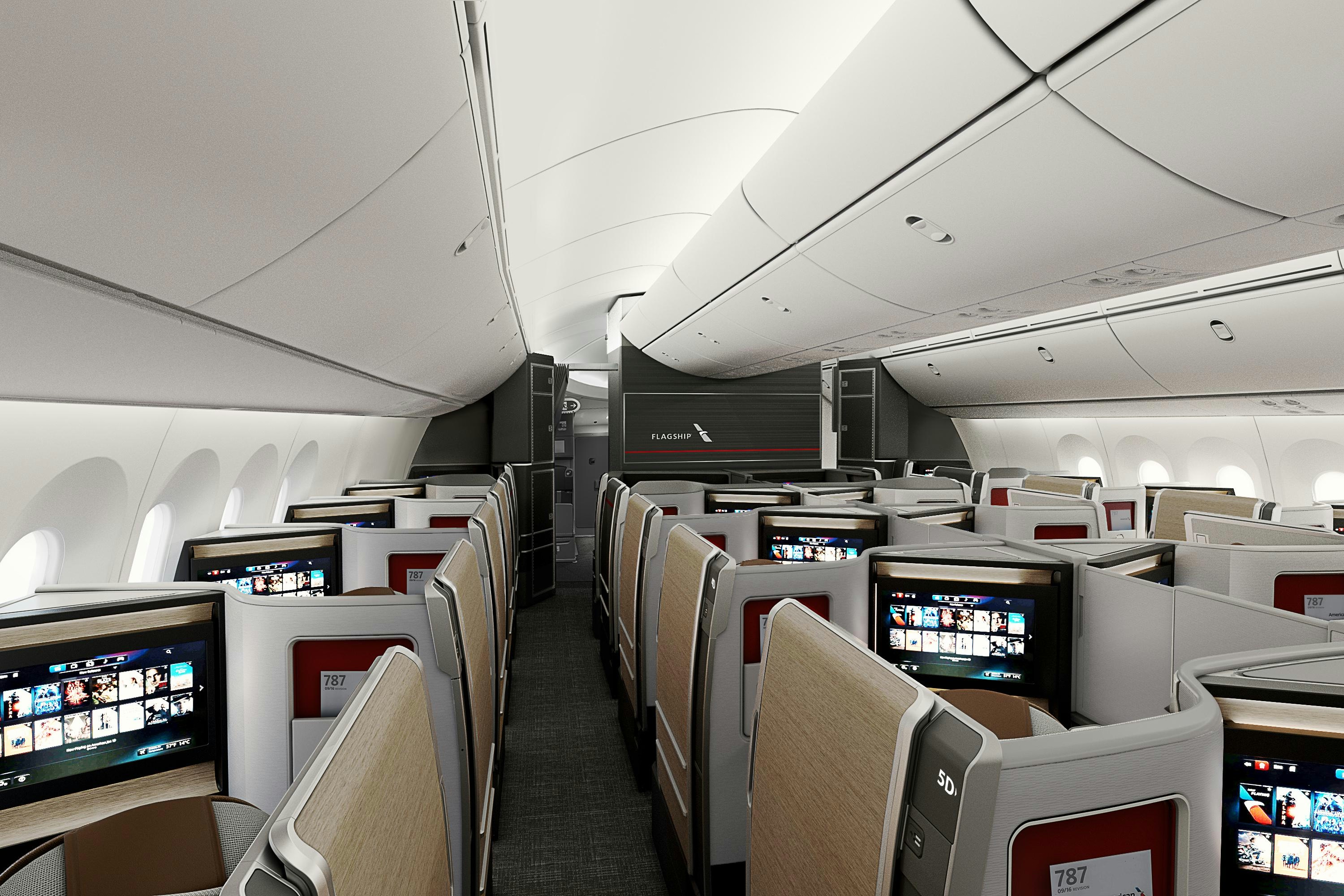
American Airlines Scales Back Airbus A321XLR Order Amid Strategic Shift
American Airlines has announced a significant reduction in its order for the Airbus A321XLR, a narrowbody aircraft once heralded as a transformative asset for the carrier’s international expansion. Initially committed to acquiring 50 of the long-range jets, American has now trimmed its order by 20%, bringing the total down to 40 aircraft. This decision reflects a broader recalibration of the airline’s fleet strategy amid mounting financial and competitive pressures.
Changing Fleet Priorities and Market Challenges
The A321XLR was widely regarded as a versatile solution for serving lower-demand transatlantic routes, offering the ability to connect smaller cities without the higher costs associated with larger widebody aircraft. American had positioned the model as a key component in expanding its international footprint, particularly across the Atlantic. However, the recent order reduction coincides with a $1.14 billion bond issuance, the proceeds of which are intended to fund the purchase of 17 new aircraft, primarily more conventional models such as the A321neo and Boeing 737 MAX 8. These aircraft are already integral to the airline’s mainline operations and suggest a strategic pivot toward proven, established platforms.
This fleet adjustment comes at a critical juncture for American Airlines, which faces intensifying competition from rivals Delta and United. Both competitors continue to invest heavily in widebody aircraft, strengthening their positions on lucrative international routes. By scaling back its commitment to the A321XLR, American risks losing ground in the narrowbody long-haul segment, potentially limiting its ability to expand into emerging markets and smaller city pairs.
Financial Pressures and Industry Dynamics
The airline’s decision is further complicated by rising operational costs, particularly fuel expenses. The ongoing 2026 Iran Crisis has contributed to a sharp increase in jet fuel prices, which now constitute approximately 25% of American’s operating costs. The carrier recently projected an annual fuel expense increase exceeding $4 billion. Despite reporting record first-quarter revenue of $13.91 billion and an 11% year-over-year revenue growth, American posted a loss of over $380 million. On a positive note, the airline has managed to reduce its debt to the lowest level since 2015.
Adding to the uncertainty are industry rumors of a potential megamerger between American Airlines and United Airlines. Such a consolidation would have profound implications for competition, particularly at major hubs like Chicago O’Hare International Airport, and could trigger significant antitrust scrutiny. This looming possibility underscores the high stakes for American as it seeks to maintain profitability and market share in a rapidly evolving landscape.
Commitment to Long-Haul Service and Passenger Impact
Despite the reduction in A321XLR orders, American Airlines remains committed to enhancing its long-haul product. A company spokesperson highlighted the carrier’s reputation for offering some of the highest-rated and most consistent long-haul services among U.S. network airlines. The spokesperson noted plans to expand this offering in 2026 with the delivery of 10 additional A321XLRs and the full deployment of 11 premium Boeing 787-9 aircraft.
For passengers, the scaling back of the A321XLR order may translate into fewer new long-haul route options and reduced flexibility in international travel. As American navigates economic volatility and operational challenges, its ability to adapt its fleet composition and strategic focus will be critical in determining its future competitiveness on the global stage.

Bangladesh Launches Initiative to Become Regional Aviation Hub
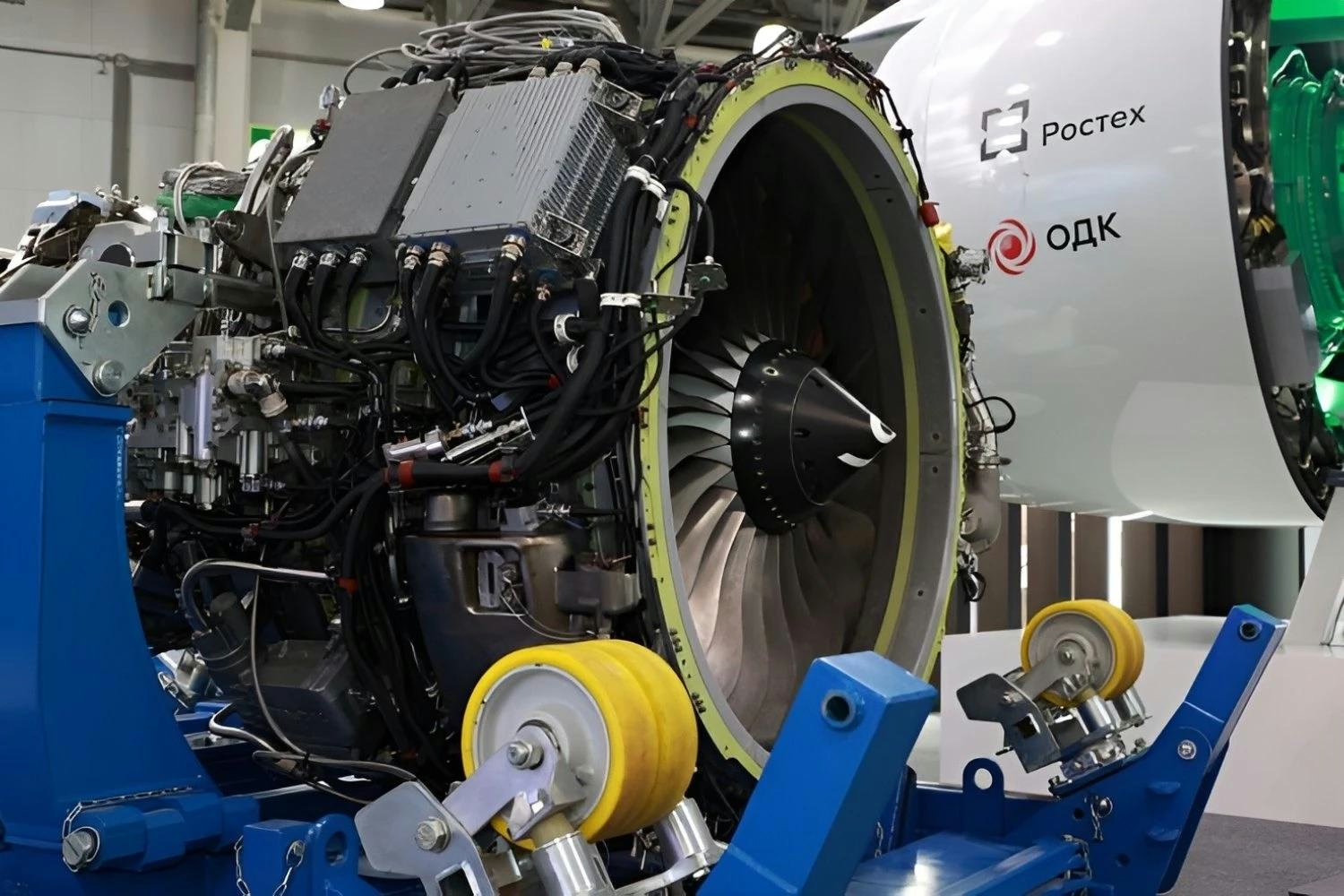
Russia Transports PD-8 Engine to India for International Certification

Kyrgyzstan to Adopt EMPIC GmbH Software for Flight Safety Oversight

Why Hawaiian Airlines Is Waiting Until 2028 To Add A Premium Economy Cabin To Its Airbus A330 Fleet

Engine Fault Causes Royal Navy Helicopter Crash Fatality

Joby Aviation Begins Texas Air Taxi Test Flights Amid Stock Decline

Iberia Receives Full Approval for Airbus A350 Heavy Maintenance

NetJets to Construct Terminal and Hangar at Dallas Love Field

Using AI in Aircraft Purchases

CIAM Unveils RPD-150T Engine to Replace Rotax 150 hp Model
