
Orchestrate AI insights into action

Trending
Categories
Analysis of the Aviation Cargo Bearing Market by Application, Type, Technology, and Region
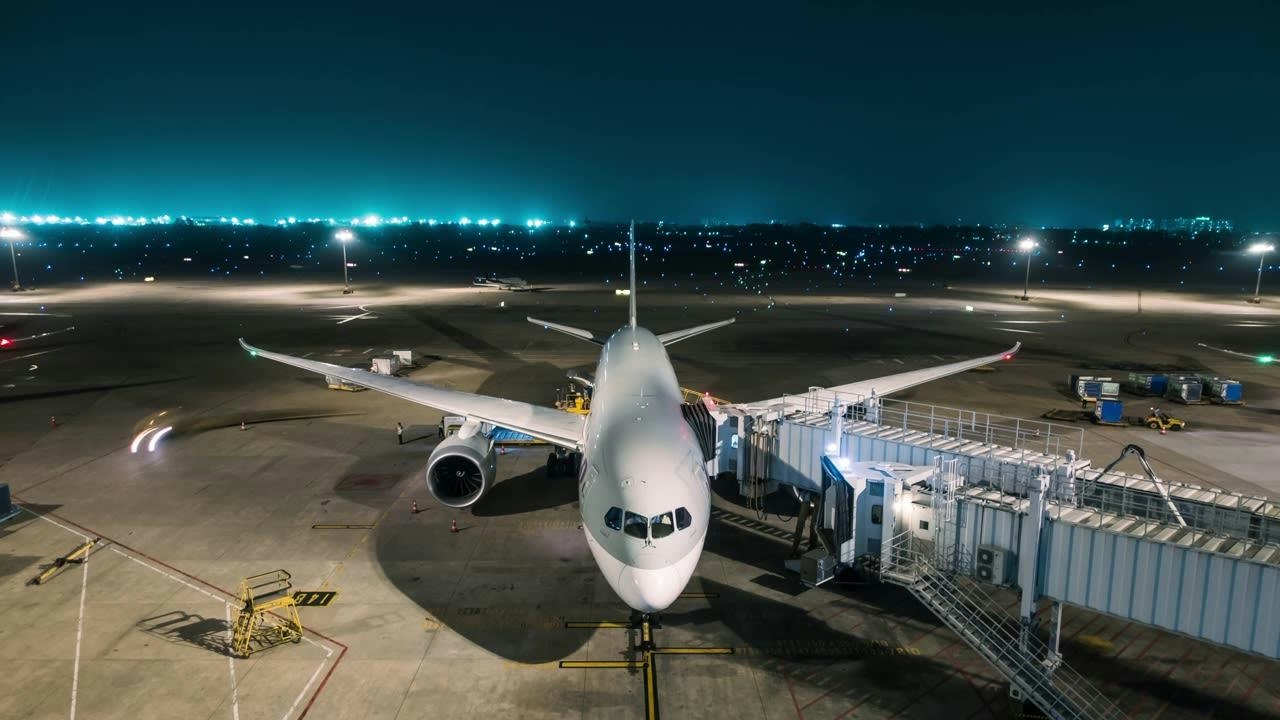
Analysis of the Aviation Cargo Bearing Market by Application, Type, Technology, and Region
The global aviation cargo system bearing market is anticipated to experience significant growth, with its valuation expected to increase from $11.81 billion in 2026 to approximately $34.22 billion by 2035. This growth corresponds to a compound annual growth rate (CAGR) of 14.22%, driven by rising demand across industrial, commercial, and technology sectors, alongside continuous innovation and heightened investment in key end-use industries.
Market Overview
The aviation industry’s rapid transformation, propelled by expanding global trade, increasing passenger traffic, and the development of logistics networks, has highlighted the critical role of efficient cargo handling systems. Central to these systems are specialized bearings that facilitate the smooth operation of mechanical components such as conveyor belts, loading bridges, and automated storage and retrieval systems.
In aviation environments, bearings must perform reliably under extreme conditions, including wide temperature variations, persistent vibrations, and exposure to lubricants and contaminants. As airports and logistics hubs upgrade to accommodate larger aircraft and higher cargo volumes, the demand for durable and dependable bearing components has intensified. Manufacturers are responding by producing advanced bearings with enhanced load capacities, reduced maintenance requirements, and extended service lives—factors essential to minimizing operational downtime and ensuring compliance with stringent safety standards.
Technological Advancements and Market Dynamics
The aviation cargo bearing market is marked by technological sophistication and rigorous safety regulations. Innovations in materials science, particularly the adoption of ceramic and composite materials, have resulted in bearings that offer superior durability and performance under high-stress conditions. Furthermore, the integration of sensor technologies for real-time condition monitoring is becoming increasingly prevalent, enabling predictive maintenance and mitigating the risk of unexpected failures.
Global economic trends, including the growth of international trade and the expansion of e-commerce, continue to influence the market landscape. Investments in airport capacity and infrastructure modernization further elevate the importance of advanced bearing systems. Additionally, there is a growing focus on sustainability, with new bearing designs contributing to reduced energy consumption and lower emissions, aligning with broader environmental objectives.
Challenges and Competitive Landscape
Despite promising growth prospects, the aviation cargo bearing market faces several challenges. Regulatory complexities, rapid technological evolution, and intensified competition from emerging market entrants are prompting companies to reassess their investment strategies. In response, industry players are increasing research and development expenditures and forging strategic partnerships to sustain and expand their market presence.
Recent developments, such as Reliable Robotics’ successful funding round and its emphasis on autonomous flight systems, underscore the sector’s competitive and innovative nature. These trends suggest that market leaders are prioritizing technological advancement and collaborative ventures to maintain a competitive edge in a rapidly evolving environment.
Outlook
As the aviation sector continues its trajectory of modernization and expansion, the demand for specialized cargo system bearings is expected to grow correspondingly. The market’s future will be shaped by ongoing technological innovation, evolving regulatory frameworks, and the capacity of industry participants to adapt to emerging technologies and competitive challenges. With sustained investment and a focus on reliability and efficiency, aviation cargo system bearings will remain vital to the seamless functioning of global logistics networks.

Etihad Airways Suspends Airbus A380 Flights on Key Route

Aditya Birla Group Seeks Approval for Aircraft Leasing in GIFT City

Qatar Airways Highlights Innovation and Connectivity at Arabian Travel Market 2026

Hong Kong's Five-Year Plan Includes Andrew Fan's Aircraft Parts Processing Hub Proposal

ACIA Aero Leasing Delivers ATR72-600 to Air Nostrum

RTX Appoints Jill Albertelli as Head of Pratt & Whitney

TAT Technologies Joins Beyond Aero Hydrogen Aircraft Program

AURAK Study Highlights Barriers to Air Taxi Adoption in Emerging Economies

Xiamen Air Selects Altitude for 787 Maintenance at Heathrow

Etihad and Swissport Extend Global Partnership
