
Orchestrate AI insights into action

Trending
Categories
Bearhawk Crash Linked to Coolant Leak and Unstable Approach
Bearhawk Crash Linked to Coolant Leak and Unstable Approach
A recent accident involving a Bearhawk aircraft in Roxbury, Maine, has been attributed to a coolant leak and an unstable approach, according to a National Transportation Safety Board (NTSB) investigation. The incident, which took place in August 2024, has drawn significant attention from aviation regulators and industry stakeholders amid growing concerns over similar operational risks.
Details of the Incident
The pilot reported observing a puff of white smoke near the rudder pedals shortly after takeoff while flying the airport traffic pattern. This smoke was identified as burned coolant, prompting the pilot to initiate a precautionary landing. Despite being above the optimal glide path during the approach, the pilot elected to continue. During the landing flare, the engine lost power entirely, causing the aircraft to float approximately three-quarters down the runway before touchdown.
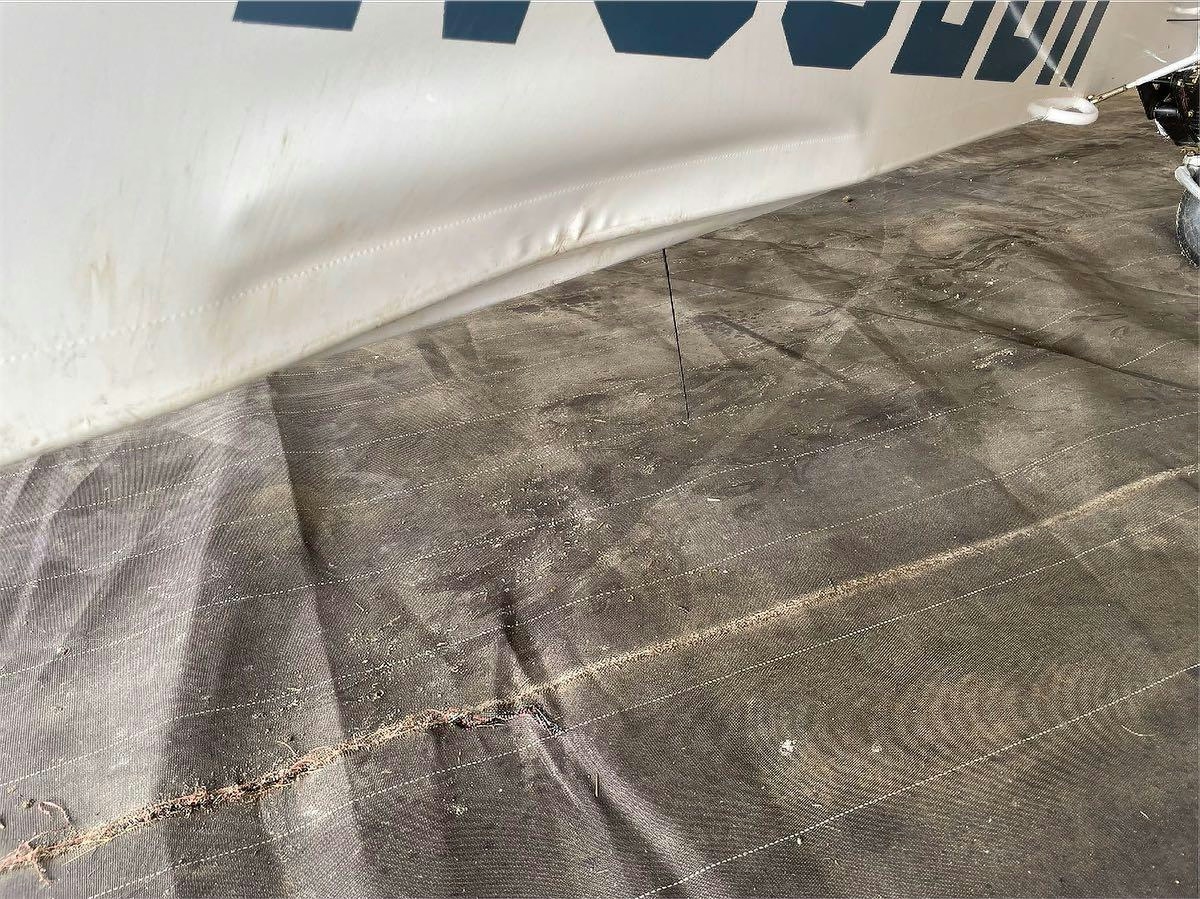
As the Bearhawk approached the runway’s end, the pilot executed a ground loop maneuver to avoid overrunning into a nearby river. The aircraft ultimately collided with the river embankment, sustaining substantial fuselage damage.
A post-accident inspection by a Federal Aviation Administration (FAA) official uncovered residual coolant within the engine cowling and around the radiator cap. The pilot speculated that a compromised rotor coolant seal in the aircraft’s automotive engine may have allowed air to enter the coolant system, resulting in overpressurization and the expulsion of coolant through the radiator cap.
Investigation Findings and Industry Implications
The NTSB identified the probable cause of the accident as the pilot’s unstable approach, which led to a landing with insufficient runway remaining to stop safely, culminating in the collision with the river embankment. The anomaly in the engine coolant system was cited as a contributing factor.
This incident occurs amid heightened scrutiny from aviation authorities, including the UK Civil Aviation Authority, which has recently expressed concern over an increase in pilots choosing to continue unstable approaches. Such decisions have been linked to elevated risks of hard landings, tail strikes, and runway overruns. The Bearhawk crash underscores the critical importance of strict adherence to stabilized approach criteria.
Industry observers suggest that the repercussions of such incidents may include increased insurance premiums and potential operational disruptions for operators of similar aircraft. In response, some competitors are reportedly reviewing and enhancing their safety protocols and considering modifications to their fleets to mitigate the risk of comparable failures.
The NTSB’s forthcoming final report on the Bearhawk accident is intended to serve as an educational resource, emphasizing the necessity of vigilance in both aircraft maintenance and operational decision-making to prevent future occurrences.

Etihad Airways Suspends Airbus A380 Flights on Key Route

Aditya Birla Group Seeks Approval for Aircraft Leasing in GIFT City

Qatar Airways Highlights Innovation and Connectivity at Arabian Travel Market 2026

Hong Kong's Five-Year Plan Includes Andrew Fan's Aircraft Parts Processing Hub Proposal

ACIA Aero Leasing Delivers ATR72-600 to Air Nostrum

RTX Appoints Jill Albertelli as Head of Pratt & Whitney

TAT Technologies Joins Beyond Aero Hydrogen Aircraft Program

AURAK Study Highlights Barriers to Air Taxi Adoption in Emerging Economies

Xiamen Air Selects Altitude for 787 Maintenance at Heathrow

Etihad and Swissport Extend Global Partnership
