
Orchestrate AI insights into action

Trending
Categories
Bell 505 Surpasses 700 Flight Hours Using Blended Sustain Technology
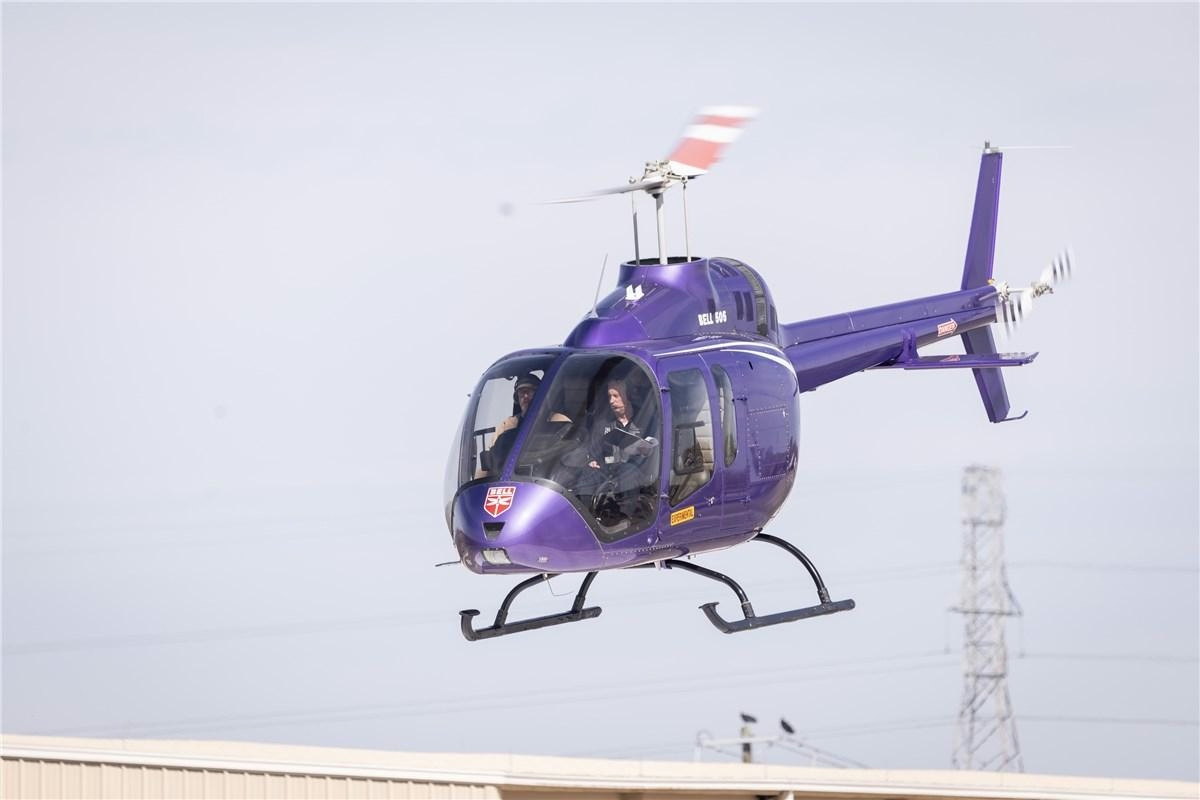
Bell 505 Surpasses 700 Flight Hours Using Blended Sustainable Aviation Fuel
Bell Textron Inc., a subsidiary of Textron Inc., announced at European Rotors 2025 that its Bell 505 helicopter has surpassed 700 flight hours powered by blended sustainable aviation fuel (SAF). This milestone highlights Bell’s commitment to advancing sustainability within the aviation sector and underscores the company’s efforts to incorporate environmentally responsible practices into its flight operations.
Collaboration and Technical Achievements
Bell’s partnership with Safran Helicopter Engines, initiated in March 2022, has been central to this achievement. The collaboration focused on assessing the technical performance and economic implications of using SAF in the Bell 505, which is equipped with the Arrius 2R engine. Within a year, the Bell 505 became the first single-engine helicopter to complete a demonstration flight using 100% SAF. Since July 2022, the aircraft has accumulated over 700 flight hours on blended SAF at the Bell Training Academy. Continuous evaluations of engine operability and aircraft performance have yielded positive outcomes, reinforcing the feasibility of sustainable fuels in rotary-wing aviation.
Robin Wendling, Managing Director of Europe at Bell, emphasized the significance of this progress, stating, “Bell is proud to celebrate this next step in industry carbon reduction objectives. Working alongside Safran Helicopter Engines has given us the cutting-edge advantage of exploring opportunities in greener aviation practices.”
Industry Context and Market Outlook
Despite this advancement, the broader aviation industry continues to grapple with challenges related to maintenance and operational readiness. The U.S. Army’s recent difficulties with Apache helicopter maintenance, which have impeded flight school progress, illustrate the critical need for robust support systems as new technologies are integrated. Bell’s ability to sustain high operational readiness with the Bell 505 may serve as a valuable example amid these ongoing industry challenges.
Market response to Bell’s progress has been largely positive, with the company maintaining a confident outlook on sales growth in regions such as the Middle East and Africa, particularly within the military sector. As the drive toward sustainability intensifies, competitors are also pursuing innovative technologies. For instance, companies like JetZero are investing in blended-wing designs for commercial airliners, signaling a broader industry shift toward fuel-efficient aircraft. However, specific competitor reactions to Bell’s SAF achievements have not been publicly disclosed.
With over 700 flight hours on blended SAF, Bell continues to demonstrate the practical viability of sustainable fuels in helicopter operations, reinforcing its leadership role in the aviation industry’s transition toward lower-carbon solutions.

Etihad Airways Suspends Airbus A380 Flights on Key Route

Aditya Birla Group Seeks Approval for Aircraft Leasing in GIFT City

Qatar Airways Highlights Innovation and Connectivity at Arabian Travel Market 2026

Hong Kong's Five-Year Plan Includes Andrew Fan's Aircraft Parts Processing Hub Proposal

ACIA Aero Leasing Delivers ATR72-600 to Air Nostrum

RTX Appoints Jill Albertelli as Head of Pratt & Whitney

TAT Technologies Joins Beyond Aero Hydrogen Aircraft Program

AURAK Study Highlights Barriers to Air Taxi Adoption in Emerging Economies

Xiamen Air Selects Altitude for 787 Maintenance at Heathrow

Etihad and Swissport Extend Global Partnership
