
Orchestrate AI insights into action

Trending
Categories
Bird Aviation Museum Preserves Legacy of Innovation
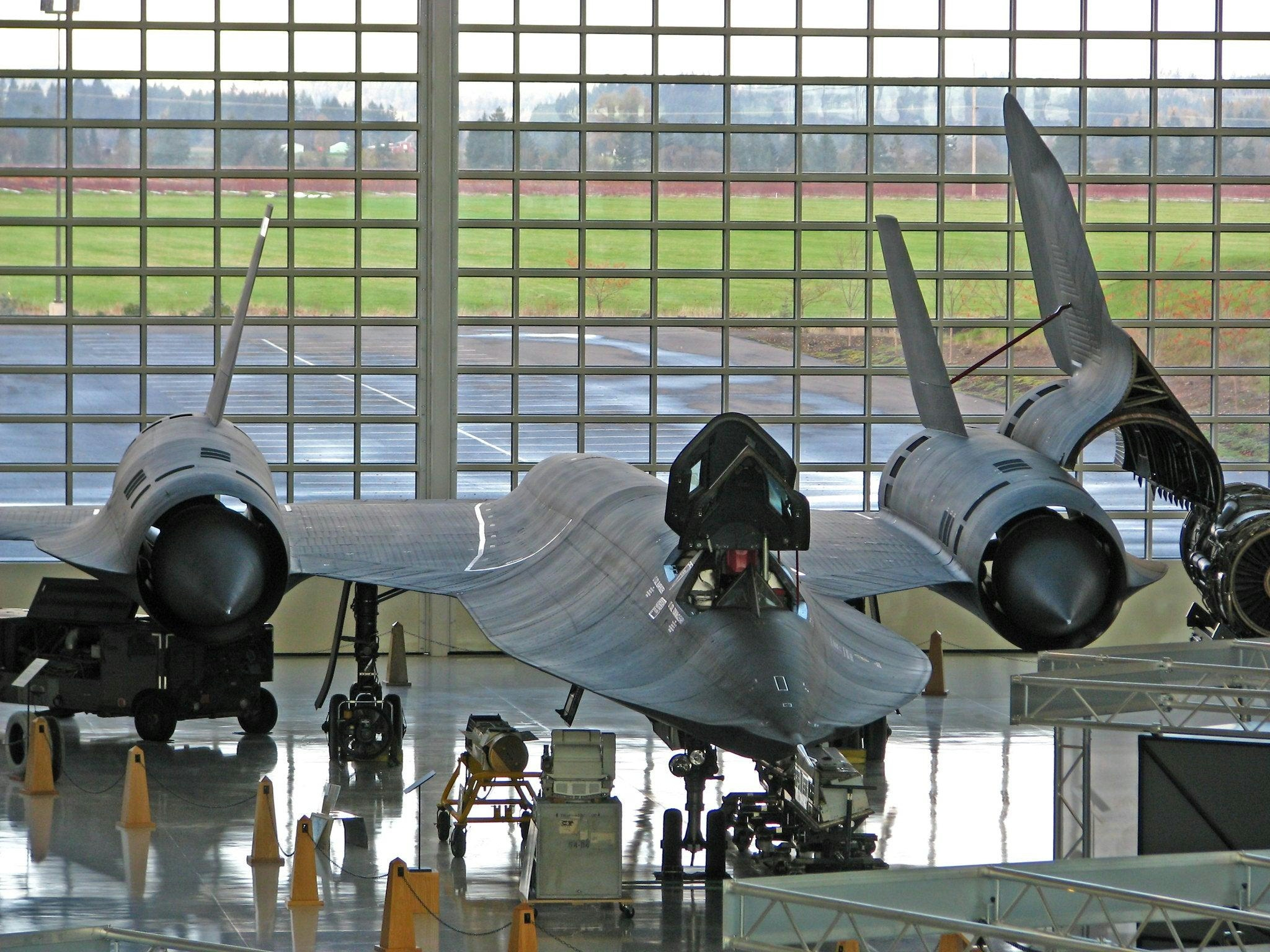
Bird Aviation Museum Preserves Legacy of Innovation Amid Industry Shifts
Nestled within the Coeur d’Alene Airport since 2019, the Bird Aviation Museum and Invention Center stands as a testament to the enduring spirit of aviation innovation. On a recent Thursday morning, volunteers gathered for their bi-monthly social hour, surrounded by vintage aircraft and U.S. Air Force memorabilia. This dedicated group of inventors, pilots, mechanics, and engineers convenes regularly to share stories, expertise, and a mutual passion for aviation over coffee and donuts. Museum Director Rachel Schwam describes these gatherings as vital opportunities for volunteers to connect and network, fostering a close-knit community bound by a shared commitment to preserving aviation history.
Founded in 2007 in Sagle by aviator and inventor Dr. Forrest Bird and his wife Pamela, the museum honors Dr. Bird’s groundbreaking contributions, most notably his invention of the mechanical ventilator, which significantly reduced infant mortality caused by respiratory complications. Over the years, the museum has cultivated a loyal volunteer base, many of whom have been involved since its inception. Among them is Paul Nowaske, a former Flying Tigers pilot, who takes pride in educating visitors about aviation’s rich history. “Glass half-full people come to the museum,” Nowaske remarked, emphasizing the positive atmosphere that permeates the institution. Similarly, Ross Welburn, a retired electrical engineer with eight patents, leads interactive demonstrations to engage children in the principles of electricity and magnetism, highlighting the museum’s educational mission.
Fostering Innovation and Navigating Industry Change
As the Bird Aviation Museum approaches its 20th anniversary, Schwam reflects on the institution’s growth and the pivotal role volunteers have played in its success. A significant development has been the partnership with Beth Brubaker, founder of the nonprofit Invent Idaho, which has integrated student innovation into the museum’s programming. This collaboration has resulted in a dedicated space on the museum’s second floor showcasing children’s inventions, alongside regular visits from homeschool groups aimed at inspiring the next generation of inventors. Brubaker describes the museum as “the home of innovation,” a place that nurtures young problem solvers. Schwam’s dedication to education has also earned her a nomination for the Idaho Out-of-School Network STEM Educator Award, underscoring the museum’s commitment to fostering learning.
However, the museum faces challenges amid a rapidly evolving aviation landscape. The recent successful flights of the GE Aerospace Saab 340B Hybrid-Electric Test Bed Aircraft exemplify the industry’s shift toward electric and hybrid-electric technologies, compelling institutions like Bird Aviation to adapt in order to remain relevant. Broader geopolitical and economic factors further complicate the environment. Optimism surrounding a potential US-Iran agreement could influence global stability and aviation investments, while new market entrants such as North African oil giant Sonatrach’s Jet A1 fuel supply to Niger threaten to disrupt established supply chains. Additionally, Honeywell Aerospace’s recent stock decline following weak earnings has heightened market skepticism toward aviation-related equities, reflecting the sector’s volatility.
Despite these uncertainties, the Bird Aviation Museum community remains resilient and continues to attract new volunteers. Welburn captures the spirit of the museum’s social gatherings with a smile: “You get somebody talking and pretty soon it’s a big social event. Nobody wants to leave because everyone’s having so much fun.” As the museum looks ahead, its unwavering dedication to preserving aviation history and fostering innovation endures, even as the industry itself embarks on a new era.

Etihad Airways Suspends Airbus A380 Flights on Key Route

Aditya Birla Group Seeks Approval for Aircraft Leasing in GIFT City

Qatar Airways Highlights Innovation and Connectivity at Arabian Travel Market 2026

Hong Kong's Five-Year Plan Includes Andrew Fan's Aircraft Parts Processing Hub Proposal

ACIA Aero Leasing Delivers ATR72-600 to Air Nostrum

RTX Appoints Jill Albertelli as Head of Pratt & Whitney

TAT Technologies Joins Beyond Aero Hydrogen Aircraft Program

AURAK Study Highlights Barriers to Air Taxi Adoption in Emerging Economies

Xiamen Air Selects Altitude for 787 Maintenance at Heathrow

Etihad and Swissport Extend Global Partnership
