
Orchestrate AI insights into action

Trending
Categories
Boeing Adds 163 Orders to Backlog in March
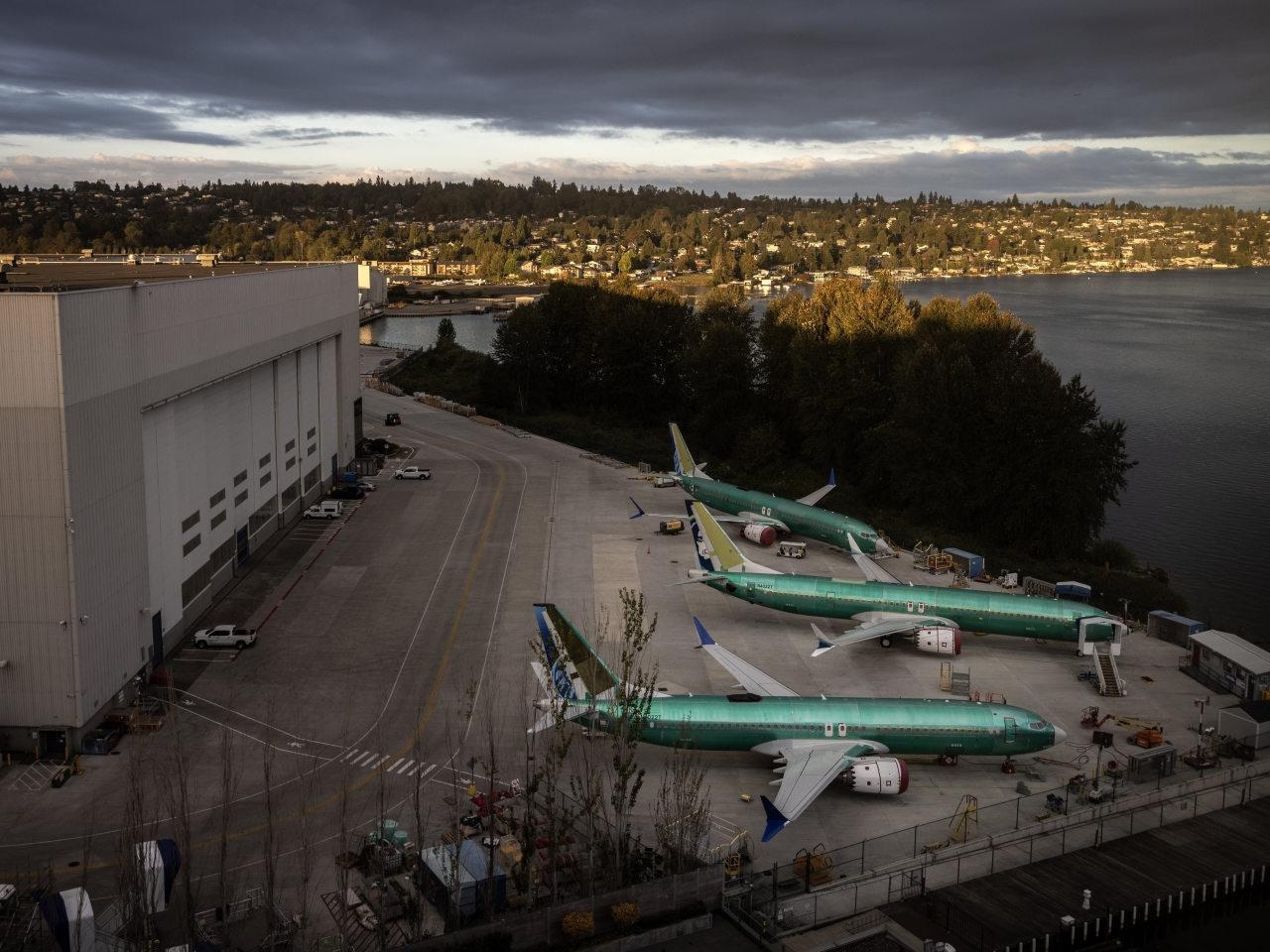
Boeing’s Backlog Expands with 163 Net Orders in March
Boeing experienced a notable increase in aircraft orders during March, securing net new orders for 163 jets—the company’s highest monthly total since December 2023. The figures, released on April 8, reflect strong demand from both airlines and aircraft lessors, with substantial commitments across Boeing’s 737, 777, and 787 families.
Key Orders and Backlog Growth
Among the significant transactions, FedEx placed an order for eight 777 Freighters, while several unnamed customers committed to 20 of the in-development 777X, 33 787s, 21 737 Max jets, and an additional three 777 Freighters. Boeing also finalized previously announced agreements, including BOC Aviation’s order for 50 737 Max aircraft, Japan Airlines’ purchase of 17 Max jets, and Korean Air’s commitment to 20 777X and 20 787 aircraft.
Gross orders for March reached 192 aircraft; however, cancellations—including 27 737 Max and two 777 Freighter orders—reduced the net total to 163. This increase raised Boeing’s backlog to 5,648 jets at the end of March, up from 5,528 at the close of February.
Deliveries and Market Challenges
In March, Boeing delivered 41 aircraft, a slight decrease from 44 in February. The deliveries comprised 33 737 Max jets, four 777 Freighters, and four 787s. For the first quarter of 2024, Boeing has delivered a total of 130 aircraft and secured net new orders for 204 jets.
Despite the robust order activity, Boeing continues to confront persistent trade risks and ongoing supply chain challenges, issues that similarly affect its main competitor, Airbus. Both manufacturers are navigating a complex global environment as they strive to meet rising demand.
Industry Outlook
Industry analysts attribute the recent surge in orders to the gradual recovery of international travel and renewed airline confidence in the 737 Max following safety enhancements. While supply chain constraints and geopolitical uncertainties persist, analysts anticipate further growth as airlines modernize their fleets and prepare for increased passenger volumes.
Boeing’s recent performance highlights its resilience and adaptability amid a challenging market. As the aviation sector continues its recovery, Boeing’s diversified portfolio and strategic positioning position the company to capitalize on the industry’s upward trajectory, even as it contends with the broader aerospace sector’s headwinds.

Etihad Airways Suspends Airbus A380 Flights on Key Route

Aditya Birla Group Seeks Approval for Aircraft Leasing in GIFT City

Qatar Airways Highlights Innovation and Connectivity at Arabian Travel Market 2026

Hong Kong's Five-Year Plan Includes Andrew Fan's Aircraft Parts Processing Hub Proposal

ACIA Aero Leasing Delivers ATR72-600 to Air Nostrum

RTX Appoints Jill Albertelli as Head of Pratt & Whitney

TAT Technologies Joins Beyond Aero Hydrogen Aircraft Program

AURAK Study Highlights Barriers to Air Taxi Adoption in Emerging Economies

Xiamen Air Selects Altitude for 787 Maintenance at Heathrow

Etihad and Swissport Extend Global Partnership
