
Orchestrate AI insights into action

Trending
Categories
Boeing Names Fahad Al Mheiri Vice President for Middle East and North Africa
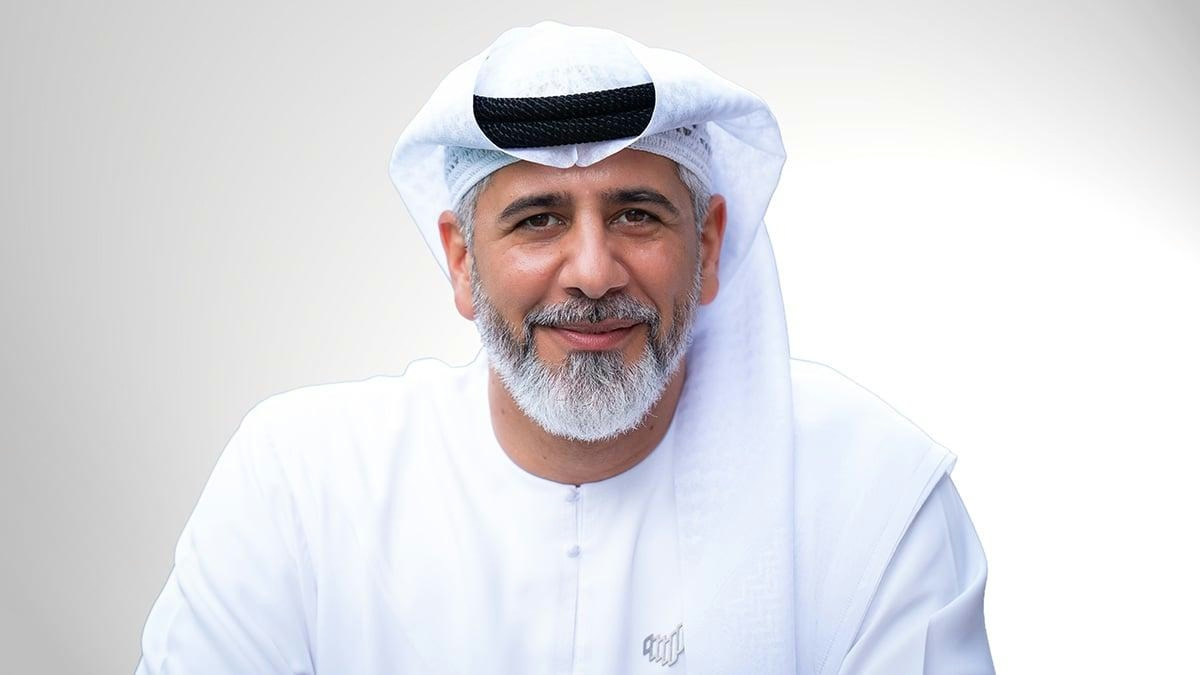
Boeing Appoints Fahad Al Mheiri as Vice President for Middle East and North Africa
Boeing has announced the appointment of Fahad Al Mheiri as Vice President for the Middle East and North Africa, effective January 2026. Based in Dubai, Al Mheiri will be responsible for overseeing the company’s strategic initiatives and partnerships throughout the region, aligning with national ambitions to expand the aerospace sector.
Leadership and Regional Expertise
Al Mheiri joins Boeing from Raytheon Emirates, where he held the position of Managing Director. His extensive experience spans the energy, space, and defense industries, bringing a wealth of executive leadership and regional knowledge to his new role. He succeeds Kuljit Ghata-Aura, who has moved to another executive position within Boeing. The company also confirmed that its Saudi Arabian operations will remain under the management of country vice president Asaad Aljomoai.
Boeing’s presence in the Middle East and North Africa is well established, with a workforce exceeding 700 employees and support extended to more than 30 commercial airline customers and 12 armed forces across the region. The company actively engages with regional partners such as Strata and EPI in the United Arab Emirates, highlighting its commitment to local industrial participation and the development of supply chains.
Strategic Outlook and Market Context
An Emirati national, Al Mheiri holds a Bachelor of Science degree in Mechanical Engineering from Boston University. His appointment is expected to enhance Boeing’s collaboration with governments, industry partners, and customers in the region, reflecting the company’s ongoing investment in local leadership and sustainable relationships.
Al Mheiri assumes his role amid a complex geopolitical environment. Boeing faces challenges related to regional dynamics, including recent Chinese sanctions targeting its defense operations. Despite these obstacles, market response has been largely positive. Boeing’s stock experienced a notable increase following the completion of its $4.7 billion acquisition of Spirit AeroSystems, a strategic move intended to improve production quality and supply chain resilience.
The competitive landscape remains intense. Airbus, Boeing’s principal competitor, has recently reduced its delivery targets due to technical difficulties, while Boeing has reiterated its goal of achieving positive cash flow by 2026. Nevertheless, Boeing’s share price continues to be affected by regulatory developments, production rates, and certification processes for its aircraft models.
Under Al Mheiri’s leadership, Boeing aims to deepen its regional engagement by supporting investment in local infrastructure, research, and innovation, navigating both the opportunities and challenges presented by the evolving aerospace market.

Etihad Airways Suspends Airbus A380 Flights on Key Route

Aditya Birla Group Seeks Approval for Aircraft Leasing in GIFT City

Qatar Airways Highlights Innovation and Connectivity at Arabian Travel Market 2026

Hong Kong's Five-Year Plan Includes Andrew Fan's Aircraft Parts Processing Hub Proposal

ACIA Aero Leasing Delivers ATR72-600 to Air Nostrum

RTX Appoints Jill Albertelli as Head of Pratt & Whitney

TAT Technologies Joins Beyond Aero Hydrogen Aircraft Program

AURAK Study Highlights Barriers to Air Taxi Adoption in Emerging Economies

Xiamen Air Selects Altitude for 787 Maintenance at Heathrow

Etihad and Swissport Extend Global Partnership
