
Orchestrate AI insights into action

Trending
Categories
Boeing Reports Smaller Loss as Aircraft Deliveries Increase, Anticipates 737 Max Certifications This Year
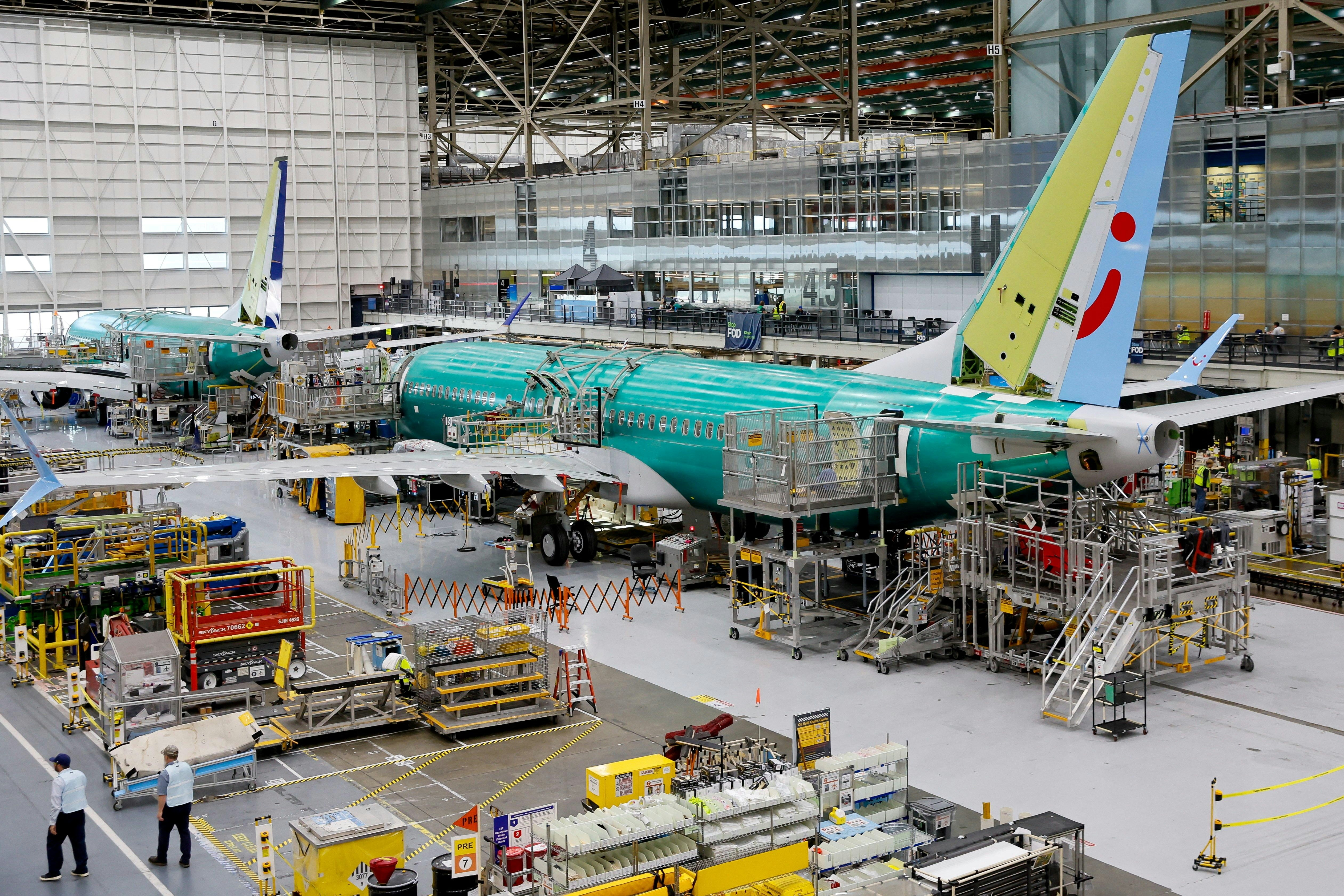
Boeing Reports Smaller Loss as Aircraft Deliveries Increase
Boeing has reported a narrower-than-expected loss for the first quarter of 2026, driven by a rise in aircraft deliveries and improved performance across its various business segments. The aerospace giant continues to navigate its recovery from several years of financial and operational difficulties, even as it contends with intensifying competition from Airbus and ongoing regulatory scrutiny surrounding its 737 Max program.
First-Quarter Financial Performance
In the first quarter, Boeing posted an adjusted loss per share of 20 cents, significantly better than analysts’ forecasts of an 83-cent loss, according to estimates compiled by LSEG. The company’s revenue increased by 14% year-over-year, reaching $22.22 billion and surpassing the anticipated $21.78 billion. The net loss narrowed substantially to $7 million, or 11 cents per share, compared to a $31 million loss, or 16 cents per share, in the same period last year.
Boeing’s commercial aircraft division, the company’s largest segment, delivered 143 airplanes during the quarter, marking a 10% increase from the previous year. This unit generated $9.2 billion in revenue, up 13%, although it continued to operate at a loss. Production of the 737 Max jets has been ramped up to approximately 42 units per month. However, any further increases in output will require approval from the Federal Aviation Administration (FAA) following a high-profile fuselage door plug incident in January 2024.
Focus on 737 Max Certifications
Boeing reaffirmed its expectation to obtain certification for the long-delayed 737 Max 7 and Max 10 variants later this year. These models, representing the smallest and largest in the Max family, are scheduled for deliveries beginning in 2027. The certification process remains under intense regulatory scrutiny, and delays have allowed competitors, particularly Airbus, to capture additional market share.
Competitive Pressures and Market Dynamics
Despite Boeing’s improved financial results and increased deliveries, concerns linger regarding the pace of 737 Max certifications and ongoing production challenges. Airbus has been leveraging these setbacks by accelerating its own production schedules and intensifying marketing efforts, aiming to expand its presence in the commercial aircraft market further.
Growth in Other Business Segments
Boeing’s defense division also demonstrated robust growth, with revenue rising 21% to $7.6 billion. Meanwhile, the services segment experienced a 6% increase from 2025, reaching $5.37 billion in the first quarter.
Leadership Perspective and Outlook
Since assuming the role of CEO in August 2024, Kelly Ortberg has acknowledged the company’s recent difficulties but commended employees for their resilience. In a note to staff, Ortberg stated, “Though we’ve faced some challenges, I’m proud of how our team has pulled together and worked through them to keep us on plan for the year.”
As Boeing strives to restore its reputation and stabilize operations, its ability to meet the 737 Max certification timeline and resolve production issues will remain under close observation by investors and industry competitors alike.

Etihad Airways Suspends Airbus A380 Flights on Key Route

Aditya Birla Group Seeks Approval for Aircraft Leasing in GIFT City

Qatar Airways Highlights Innovation and Connectivity at Arabian Travel Market 2026

Hong Kong's Five-Year Plan Includes Andrew Fan's Aircraft Parts Processing Hub Proposal

ACIA Aero Leasing Delivers ATR72-600 to Air Nostrum

RTX Appoints Jill Albertelli as Head of Pratt & Whitney

TAT Technologies Joins Beyond Aero Hydrogen Aircraft Program

AURAK Study Highlights Barriers to Air Taxi Adoption in Emerging Economies

Xiamen Air Selects Altitude for 787 Maintenance at Heathrow

Etihad and Swissport Extend Global Partnership
