
Orchestrate AI insights into action

Trending
Categories
Boeing Shares Drop After Juneyao Airlines Delays Jet Order
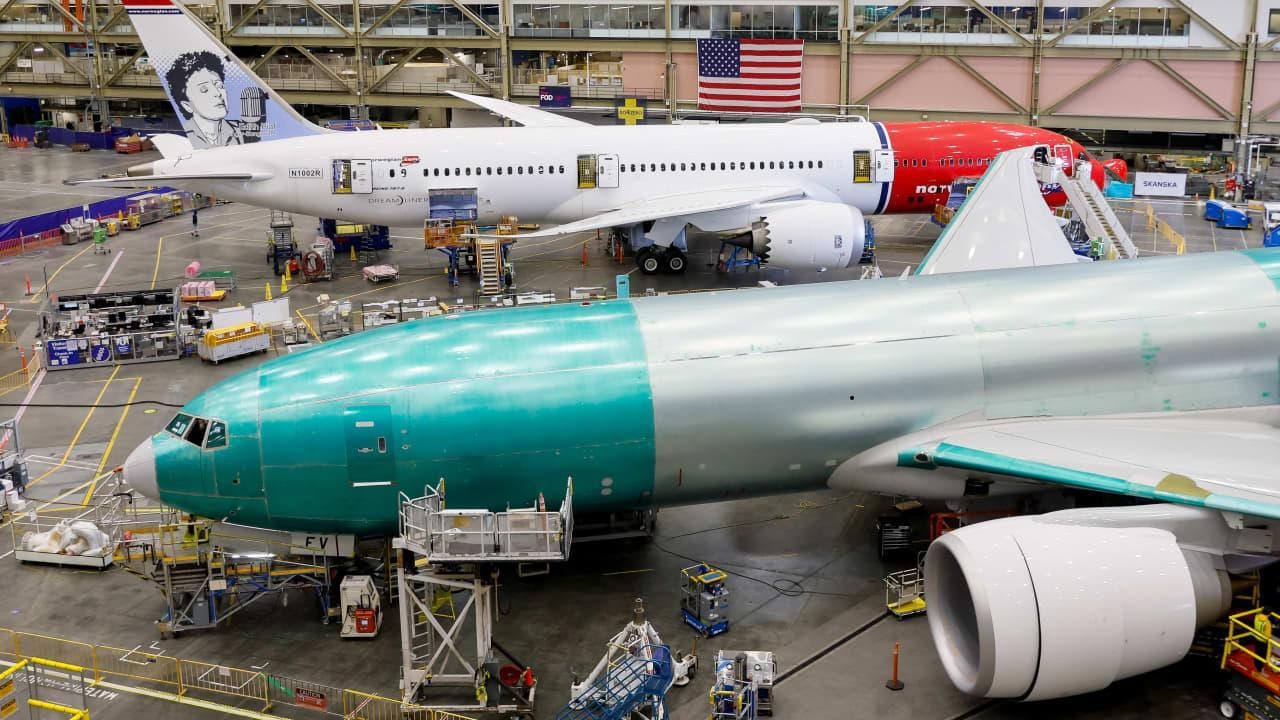
Boeing Shares Decline Following Juneyao Airlines’ Delay of Dreamliner Delivery
Boeing’s shares dropped approximately 2% on Friday morning after China’s Juneyao Airlines announced a postponement in the delivery of a 787-9 Dreamliner, an aircraft valued at around $120 million. The jet had been scheduled for delivery in the coming weeks, but the airline’s decision to delay reflects the ongoing impact of renewed trade tensions and tariffs between the United States and China. This development highlights the persistent influence of geopolitical disputes on the global aviation industry.
Impact on Juneyao Airlines and Boeing
Juneyao Airlines had planned to deploy the long-range Dreamliner to expand its international routes, particularly targeting European destinations this summer. The delay threatens to disrupt the airline’s growth strategy amid an already uncertain global environment. For Boeing, this setback compounds a series of challenges as the company continues to navigate a market still recovering from the effects of the COVID-19 pandemic. Boeing has previously cautioned that escalating trade disputes could further destabilize global supply chains, which had only recently begun to stabilize. The postponement by Juneyao Airlines underscores how political tensions continue to reverberate through the aviation sector, complicating efforts to restore stability and growth.
Broader Market Implications
Boeing’s competitors and the wider market are closely observing the situation, though specific reactions from rival manufacturers have yet to emerge. The uncertainty surrounding potential responses from competitors adds complexity to Boeing’s efforts to maintain its market position amid volatility. Industry analysts had expressed cautious optimism about a rebound in international travel, supported by the gradual easing of travel restrictions and renewed consumer confidence. However, Juneyao Airlines’ decision serves as a stark reminder of the fragile nature of the aviation industry’s recovery and the unpredictable interplay between political developments and commercial interests.
As Boeing faces these headwinds, investors and industry observers remain vigilant, recognizing that the company’s performance often serves as an indicator of broader economic trends. The ramifications of such delays extend beyond Boeing and Juneyao Airlines, posing risks to the fragile recovery underway in the international aviation sector.

Etihad Airways Suspends Airbus A380 Flights on Key Route

Aditya Birla Group Seeks Approval for Aircraft Leasing in GIFT City

Qatar Airways Highlights Innovation and Connectivity at Arabian Travel Market 2026

Hong Kong's Five-Year Plan Includes Andrew Fan's Aircraft Parts Processing Hub Proposal

ACIA Aero Leasing Delivers ATR72-600 to Air Nostrum

RTX Appoints Jill Albertelli as Head of Pratt & Whitney

TAT Technologies Joins Beyond Aero Hydrogen Aircraft Program

AURAK Study Highlights Barriers to Air Taxi Adoption in Emerging Economies

Xiamen Air Selects Altitude for 787 Maintenance at Heathrow

Etihad and Swissport Extend Global Partnership
