
Orchestrate AI insights into action

Trending
Categories
Boeing Surpasses Airbus in Deliveries for First Time Since MAX Crisis
Boeing Surpasses Airbus in Deliveries for First Time Since MAX Crisis
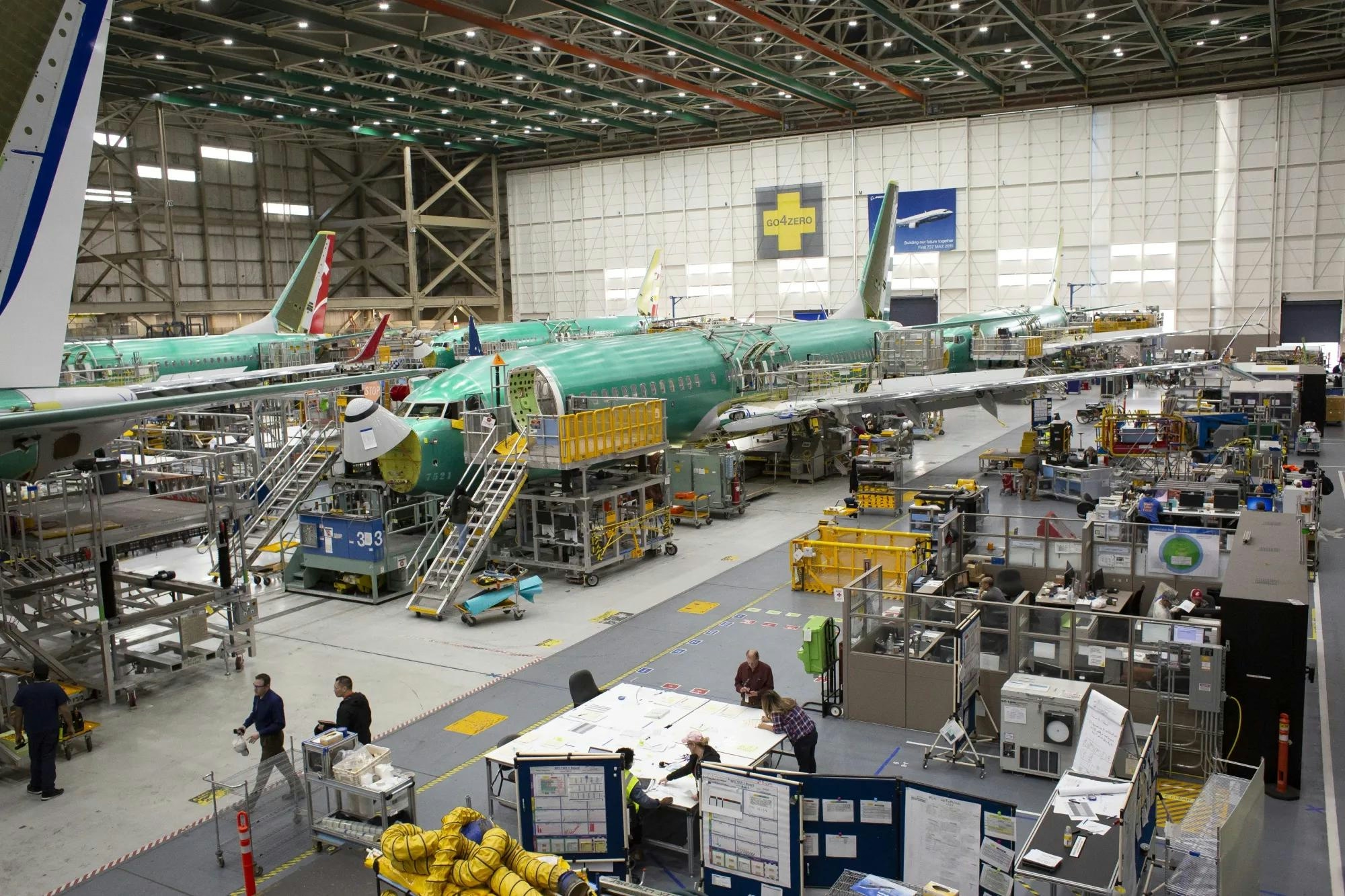
Boeing has reached a notable milestone by surpassing Airbus in quarterly commercial aircraft deliveries for the first time since the 737 MAX crisis began in 2018. In the first quarter of 2026, the American manufacturer delivered 143 aircraft, outstripping Airbus’s 114 deliveries. This achievement represents Boeing’s highest first-quarter delivery volume since 2019 and reflects a 10% year-over-year increase, in stark contrast to Airbus’s 16% decline over the same period.
Recovery Driven by 737 MAX Amidst Airbus Supply Challenges
Boeing’s delivery lead is largely attributable to the robust performance of its 737 MAX program, which accounted for 114 of the total deliveries—nearly 80% of Boeing’s output in the quarter. This marks the company’s strongest first quarter for narrowbody aircraft since 2018, signaling a significant recovery of its core program following years of setbacks, including the 2024 Alaska Airlines door plug incident and subsequent Federal Aviation Administration (FAA) production restrictions. Despite a late-quarter disruption caused by wiring repairs on approximately 25 undelivered 737 MAX jets, which deferred around ten deliveries into the second quarter, Boeing maintained its delivery momentum, according to Chief Financial Officer Jay Malave.
Conversely, Airbus faced considerable challenges, particularly with its A320neo family. The European manufacturer’s narrowbody deliveries declined sharply, with 25 fewer aircraft delivered compared to the previous year. Persistent supply-chain disruptions, especially delays in Pratt & Whitney (P&W) geared turbofan (GTF) engine deliveries, have hindered Airbus’s production ramp-up. The company has publicly acknowledged “very, very late” engine arrivals, which have led to production slowdowns and strained relations with suppliers. Reuters reports that the scarcity of GTF engines remains the core issue limiting Airbus’s ability to meet its delivery targets.
Geopolitical and Market Pressures Shape Competitive Landscape
Beyond supply-chain difficulties, the competitive environment is further complicated by ongoing geopolitical tensions, notably between the United States and China. These frictions pose risks to Boeing’s delivery schedules and order book in the Asia-Pacific region, a critical market for both manufacturers. Additionally, shifts in market dynamics are emerging. Atlas Air Worldwide Holdings Inc., a significant operator of Boeing 747 freighters, recently placed its first order for Airbus freighters, signaling potential shifts in customer loyalty that could challenge Boeing’s dominance in the cargo sector.
While Boeing’s quarterly delivery lead marks a significant recovery, it may prove temporary as Airbus continues efforts to resolve its engine supply constraints. The first quarter of 2026 underscores both Boeing’s resurgence in narrowbody deliveries and the fragility of global supply chains. As both companies navigate operational challenges and geopolitical headwinds, the competition for market leadership remains intensely contested.

Etihad Airways Suspends Airbus A380 Flights on Key Route

Aditya Birla Group Seeks Approval for Aircraft Leasing in GIFT City

Qatar Airways Highlights Innovation and Connectivity at Arabian Travel Market 2026

Hong Kong's Five-Year Plan Includes Andrew Fan's Aircraft Parts Processing Hub Proposal

ACIA Aero Leasing Delivers ATR72-600 to Air Nostrum

RTX Appoints Jill Albertelli as Head of Pratt & Whitney

TAT Technologies Joins Beyond Aero Hydrogen Aircraft Program

AURAK Study Highlights Barriers to Air Taxi Adoption in Emerging Economies

Xiamen Air Selects Altitude for 787 Maintenance at Heathrow

Etihad and Swissport Extend Global Partnership
