
Orchestrate AI insights into action

Trending
Categories
Boeing Wins $2 Billion Contract to Upgrade B-52 Engines
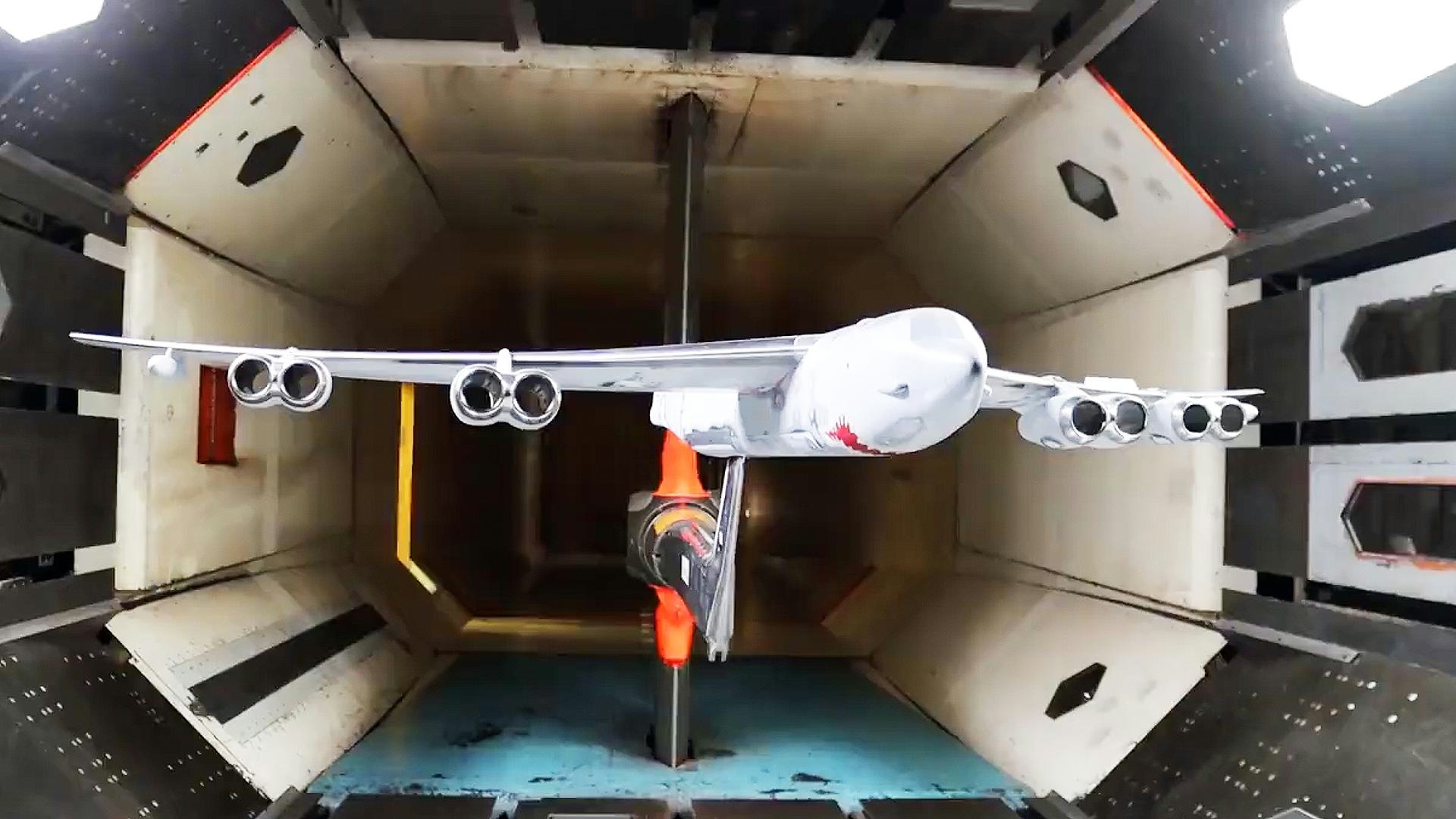
Boeing Awarded $2 Billion Contract to Upgrade B-52 Bomber Engines
Boeing has secured a $2.04 billion contract to advance the U.S. Air Force’s B-52H Commercial Engine Replacement Program (CERP), a pivotal initiative aimed at modernizing the venerable bomber fleet. The contract encompasses the integration, modification, and testing of two B-52 aircraft equipped with new Rolls-Royce F130 engines and related subsystems. Work is scheduled to continue through May 2033, reflecting the long-term commitment to extending the operational life of the B-52H Stratofortress.
Scope and Execution of the Program
The task order, awarded to Boeing Defense Systems in Oklahoma City, follows the program’s Critical Design Review and will focus on completing system integration, aircraft modification, and comprehensive testing. Activities will be conducted across multiple locations, including Oklahoma City; San Antonio, Texas; Seattle, Washington; and Indianapolis, Indiana. An initial funding tranche of $35.8 million has been obligated, with further allocations anticipated beginning in Fiscal Year 2026 under research, development, test, and evaluation budgets. Oversight of the contracting process is managed by Tinker Air Force Base in Oklahoma.
The B-52H CERP is currently executed as a Middle Tier of Acquisition rapid prototyping program, with plans to transition into a Major Capability Acquisition effort. The Air Force is employing a digital Virtual System Prototype tool to facilitate early performance analysis, production planning, system support, and initial training. This engine replacement represents the final phase of a broader modernization campaign, replacing the aging TF33 engines with more efficient and reliable Rolls-Royce F130 commercial derivative engines.
Anticipated Benefits and Challenges
According to program documentation, the new engines are expected to enhance system reliability, reduce long-term sustainment costs, and improve fuel efficiency. Additional advantages include increased onboard electrical power generation, modern digital engine controls, and upgraded cockpit displays. These improvements will support the integration of future avionics, sensors, and weapons systems planned for the aircraft.
Despite the contract’s significance, Boeing faces considerable challenges in executing this complex engine replacement program. The company must navigate the technical complexities of integrating new engines into legacy airframes, ensure the reliability and performance of the F130 engines, and maintain close coordination with the Pentagon and other stakeholders to meet critical program milestones. Success in these areas is essential as the Air Force seeks to keep the B-52H operational into the 2050s, making propulsion modernization vital for extending the aircraft’s service life and operational flexibility.
The market has responded positively to Boeing’s contract award, potentially bolstering investor confidence in the company’s long-term prospects. Meanwhile, competitors such as Lockheed Martin and other aerospace firms may intensify efforts to secure similar contracts or accelerate the development of competing technologies in response to Boeing’s latest achievement.
The B-52H remains a cornerstone of U.S. long-range strike capability, supporting a diverse range of missions from strategic attack and nuclear deterrence to maritime mining and close air support. The current phase of the CERP program advances beyond design validation to hands-on aircraft modification and testing, enabling engineers to verify integration and performance before broader fleet implementation.
Comments

Etihad Airways Suspends Airbus A380 Flights on Key Route

Aditya Birla Group Seeks Approval for Aircraft Leasing in GIFT City

Qatar Airways Highlights Innovation and Connectivity at Arabian Travel Market 2026

Hong Kong's Five-Year Plan Includes Andrew Fan's Aircraft Parts Processing Hub Proposal

ACIA Aero Leasing Delivers ATR72-600 to Air Nostrum

RTX Appoints Jill Albertelli as Head of Pratt & Whitney

TAT Technologies Joins Beyond Aero Hydrogen Aircraft Program

AURAK Study Highlights Barriers to Air Taxi Adoption in Emerging Economies

Xiamen Air Selects Altitude for 787 Maintenance at Heathrow

Etihad and Swissport Extend Global Partnership
