
Orchestrate AI insights into action

Trending
Categories
CCA Increment 2 Introduces New Engines for Next-Generation Drone Fighter
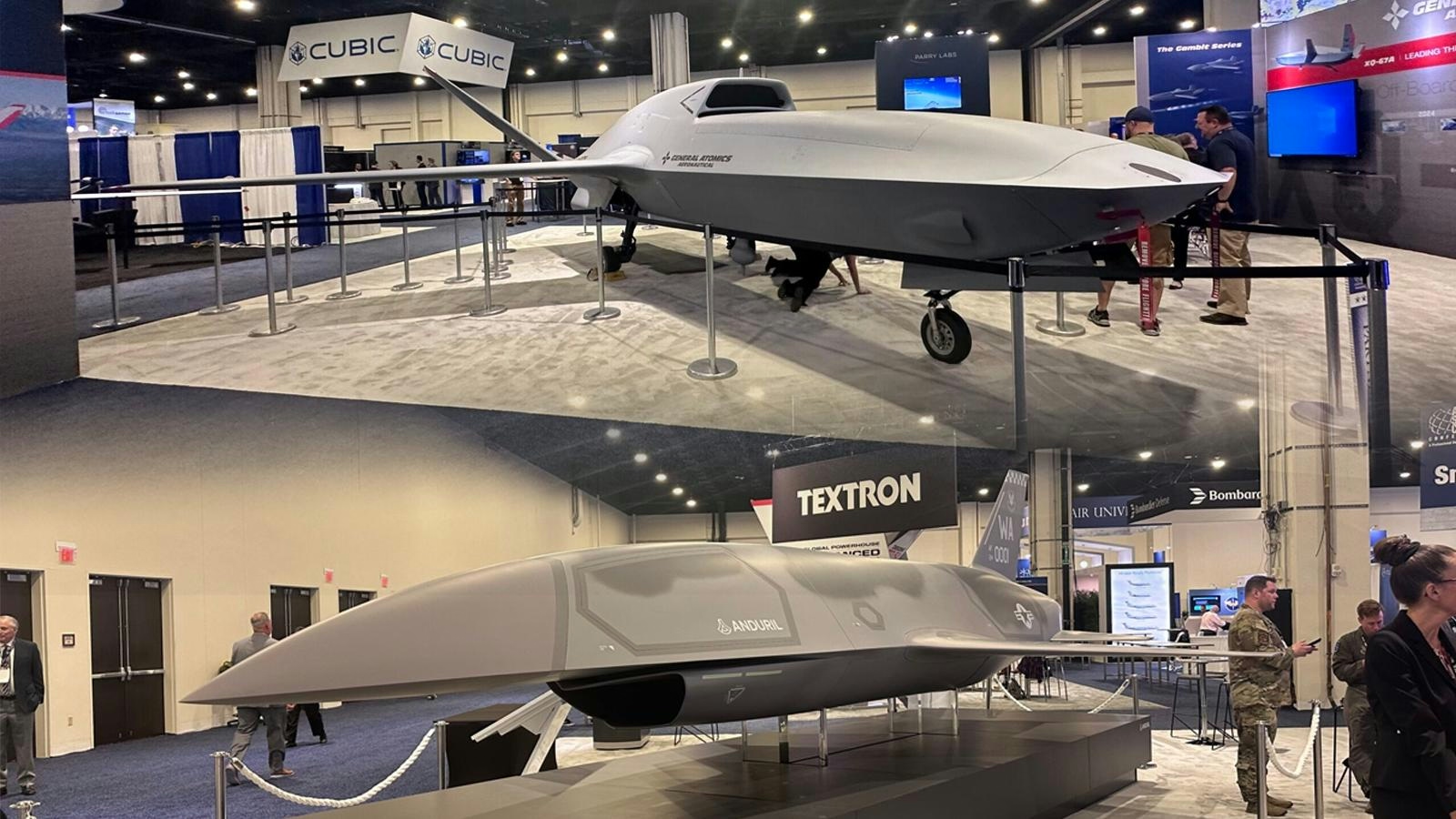
CCA Increment 2 Introduces New Engines for Next-Generation Drone Fighter
The U.S. Air Force is entering a critical phase in its development of next-generation drone fighters through the Collaborative Combat Aircraft (CCA) Increment 2 program. While Increment 1 platforms, including the General Atomics YFQ-42A and Anduril YFQ-44A, have progressed into production, Increment 2 remains in the concept refinement stage. Currently, nine unnamed vendors are competing to meet a mid-2027 deadline, focusing on the development of entirely new engines tailored to the evolving demands of future drone fleets.
Engine Development: A New Frontier
Increment 2 distinguishes itself from its predecessor by pursuing novel propulsion solutions rather than relying on existing engine technology. The Air Force has identified the need for two distinct engine classes: a small engine producing between 1,400 and 1,600 pounds of thrust, and a medium engine delivering 5,000 to 6,000 pounds of thrust. These engines may emerge either from clean-sheet designs or through substantial modifications of commercial models.
This ambitious undertaking faces significant challenges. The jet engine manufacturing sector is currently contending with production delays, quality control concerns, and the looming threat of critical obsolescence. Such issues could jeopardize the timely delivery and operational reliability of the new engines, thereby affecting the overall Increment 2 timeline. John Sneden, the Air Force’s portfolio acquisition executive for propulsion, emphasized the heightened requirements, stating, “We think that the requirements and the needs are going to be greater for CCA,” highlighting the imperative for propulsion innovation.
Competitive Dynamics and Market Engagement
The Air Force’s approach to Increment 2 continues its established strategy of broad industry engagement followed by progressive narrowing of contenders. From the current pool of nine vendors, up to six designs will be selected to advance to subsequent development phases. However, the competition remains open, with Col. Timothy Helfrich, portfolio acquisition executive for fighters and advanced aircraft, affirming, “We will open back up to have competition. That is the way that we have continually executed the CCA program.”
A sources-sought notice issued on July 24 signals a shift toward greater transparency and ongoing market research, inviting new entrants to participate. This openness is expected to intensify competition, as vendors not initially selected may continue to invest in their platforms—sometimes with Air Force support—or explore alternative manufacturers and engine solutions to maintain their viability in the program.
Outlook for Increment 2
As the CCA Increment 2 program progresses, the balance between technical innovation and industrial capacity will be pivotal. The Air Force’s commitment to maintaining competition and engaging a wider market could help mitigate risks associated with engine development and manufacturing. With concept refinement extending through mid-2027 and the competitive field still fluid, the effort to define the next generation of collaborative combat aircraft—and the propulsion systems that will power them—remains a dynamic and evolving challenge.

Etihad Airways Suspends Airbus A380 Flights on Key Route

Aditya Birla Group Seeks Approval for Aircraft Leasing in GIFT City

Qatar Airways Highlights Innovation and Connectivity at Arabian Travel Market 2026

Hong Kong's Five-Year Plan Includes Andrew Fan's Aircraft Parts Processing Hub Proposal

ACIA Aero Leasing Delivers ATR72-600 to Air Nostrum

RTX Appoints Jill Albertelli as Head of Pratt & Whitney

TAT Technologies Joins Beyond Aero Hydrogen Aircraft Program

AURAK Study Highlights Barriers to Air Taxi Adoption in Emerging Economies

Xiamen Air Selects Altitude for 787 Maintenance at Heathrow

Etihad and Swissport Extend Global Partnership
