
Orchestrate AI insights into action

Trending
Categories
China Marks Milestone with New Helicopter Engine
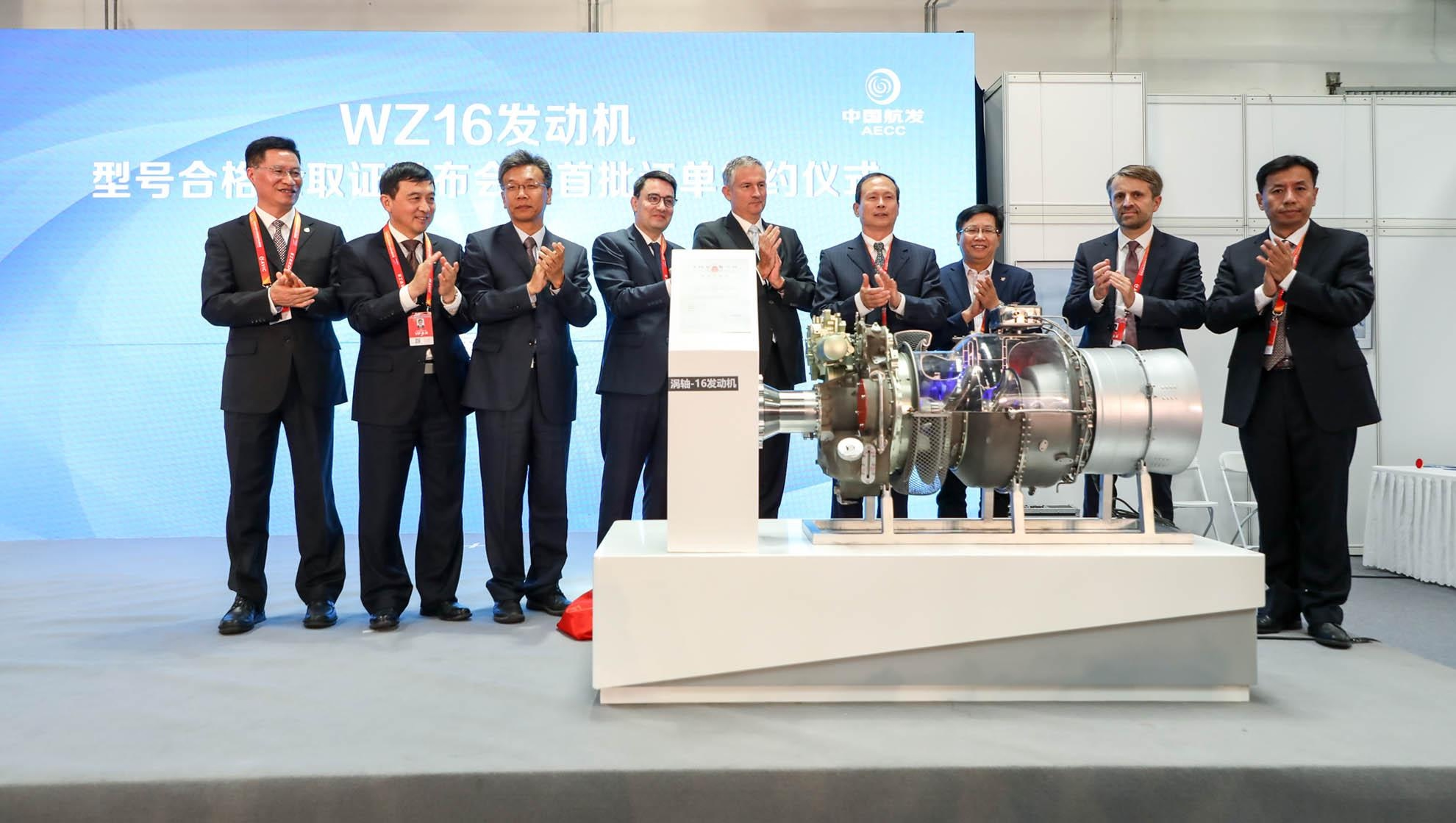
China Advances Aviation Industry with New Helicopter Engine Approval
China has reached a significant milestone in its aviation sector with the approval of its first domestically developed 1,000-kilowatt helicopter engine for mass production. The AES100 engine, created by the state-owned Aero Engine Corporation of China (AECC), received its production license on Thursday, according to the state news agency Xinhua. Officials hailed the approval as a crucial step that “lays a solid foundation for its market launch,” underscoring the nation’s commitment to advancing its aerospace capabilities amid increasing international pressures.
Context of U.S. Export Controls and Technological Independence
This development occurs against the backdrop of escalating U.S. export restrictions aimed at limiting China’s access to critical aerospace technologies. The latest round of controls specifically targets jet engine-related technologies, directly affecting Chinese state-owned enterprises such as the Commercial Aircraft Corporation of China (COMAC). Although the AES100 is a turboshaft engine designed for helicopters—distinct from the jet engines powering COMAC’s commercial aircraft—its successful development represents a broader strategic advance in China’s aviation ambitions.
Li Gaiqi, the chief designer of the AES100, emphasized that the production license is a testament to “China’s ability to independently develop and manufacture advanced civil turboshaft engines.” This achievement is particularly significant given China’s ongoing dependence on foreign suppliers for several key components in its commercial jets, despite COMAC’s rapid progress in developing aircraft intended to rival industry leaders Airbus and Boeing.
Implications for the Global Aerospace Industry
Industry analysts suggest that China’s breakthrough with the AES100 may invite heightened scrutiny from international competitors and regulatory bodies. The intensified U.S. export controls are expected to accelerate Chinese efforts to reduce reliance on foreign technology, potentially spurring increased domestic research and development initiatives. In response, global aerospace companies may seek to capitalize on their existing technological advantages or expedite innovation to preserve their competitive positions.
The approval of the AES100 not only marks a technical achievement for China but also signals a potential shift in the global aerospace landscape. Market dynamics and international collaboration are likely to evolve as geopolitical tensions continue to influence the development and distribution of advanced aerospace technologies.

Etihad Airways Suspends Airbus A380 Flights on Key Route

Aditya Birla Group Seeks Approval for Aircraft Leasing in GIFT City

Qatar Airways Highlights Innovation and Connectivity at Arabian Travel Market 2026

Hong Kong's Five-Year Plan Includes Andrew Fan's Aircraft Parts Processing Hub Proposal

ACIA Aero Leasing Delivers ATR72-600 to Air Nostrum

RTX Appoints Jill Albertelli as Head of Pratt & Whitney

TAT Technologies Joins Beyond Aero Hydrogen Aircraft Program

AURAK Study Highlights Barriers to Air Taxi Adoption in Emerging Economies

Xiamen Air Selects Altitude for 787 Maintenance at Heathrow

Etihad and Swissport Extend Global Partnership
