
Orchestrate AI insights into action

Trending
Categories
China Unveils First Domestic eVTOL Engine
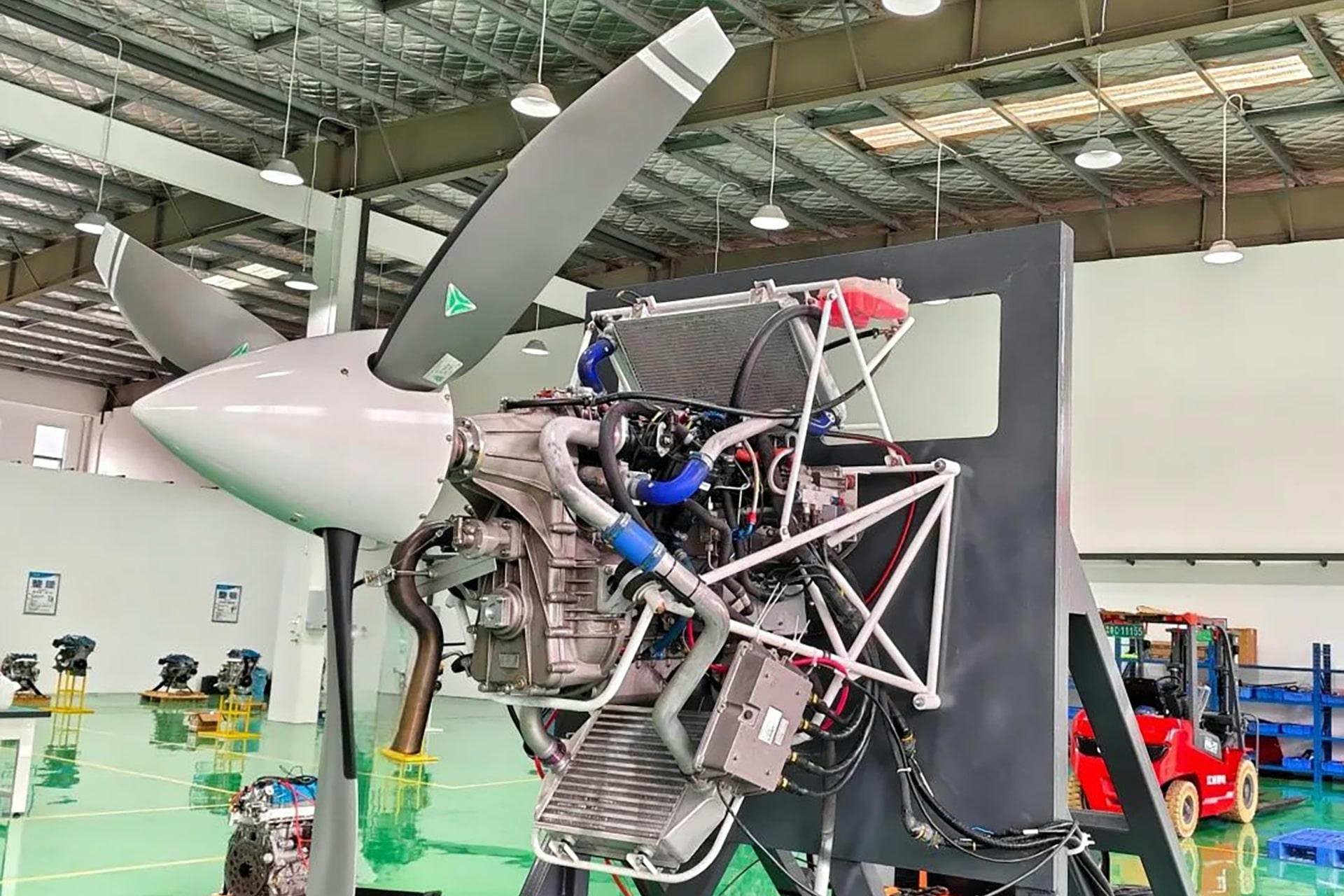
China Unveils First Domestic eVTOL Engine
China has achieved a significant advancement in its low-altitude aviation sector with the introduction of its first domestically developed engine specifically designed for electric vertical takeoff and landing (eVTOL) aircraft. The AEE25 aviation electric engine, produced by the Aero Engine Corporation of China (AECC) Aeroengine Control System Institute, was officially delivered in Wuxi City, Jiangsu Province, marking a key milestone in the country’s pursuit of innovation in electric aviation propulsion.
Technical Innovation and Design Integration
The AEE25 sets a new national standard for torque density, achieving 40 newton-meters per kilogram, the highest among China’s publicly disclosed 200-kilowatt-class aviation electric engines. This enhanced torque density results in a lighter engine, allowing eVTOL aircraft to increase their payload capacity for passengers or cargo. The engine efficiently converts electrical energy from onboard batteries into lift and thrust for rotor systems, with performance levels reportedly meeting internationally advanced benchmarks.
A distinctive feature of the AEE25 is its high degree of integration. The engine consolidates six core components—including the main motor and controller, cooling system motor and controller, and variable-pitch actuator and controller—into a single unit. Liu Guoping, deputy director of the AECC institute, emphasized that this integration simplifies the aircraft design process, stating, “For aircraft manufacturers, it can start to work after being installed with the propeller and connected to power and the bus.” The engine also incorporates safety measures such as redundant motors and dual-channel controllers to maintain power output in the event of a single-point failure.
Deployment and Industry Implications
The AEE25 is slated for installation on the E20 eVTOL aircraft developed by Shanghai TCab Technology Co., Ltd (TCab Tech) and has already entered the airworthiness certification process alongside the aircraft program. While the unveiling of the AEE25 represents a major breakthrough in China’s aviation electric propulsion technologies, it also introduces new challenges. Both the engine and its associated aircraft must undergo rigorous testing and certification, navigating regulatory requirements domestically and internationally.
This development is expected to draw increased scrutiny from aviation authorities and may influence investment strategies among global competitors. Industry analysts suggest that established players in the eVTOL market could respond by accelerating their own development timelines or pursuing strategic partnerships to maintain their competitive positions. As China advances its ambitions in the low-altitude economy, the successful deployment and certification of the AEE25 will be closely monitored by regulators and industry stakeholders worldwide.

Etihad Airways Suspends Airbus A380 Flights on Key Route

Aditya Birla Group Seeks Approval for Aircraft Leasing in GIFT City

Qatar Airways Highlights Innovation and Connectivity at Arabian Travel Market 2026

Hong Kong's Five-Year Plan Includes Andrew Fan's Aircraft Parts Processing Hub Proposal

ACIA Aero Leasing Delivers ATR72-600 to Air Nostrum

RTX Appoints Jill Albertelli as Head of Pratt & Whitney

TAT Technologies Joins Beyond Aero Hydrogen Aircraft Program

AURAK Study Highlights Barriers to Air Taxi Adoption in Emerging Economies

Xiamen Air Selects Altitude for 787 Maintenance at Heathrow

Etihad and Swissport Extend Global Partnership
