
Orchestrate AI insights into action

Trending
Categories
China Withholds Report on China Eastern 737 Crash Citing National Security After Engines Shut Down
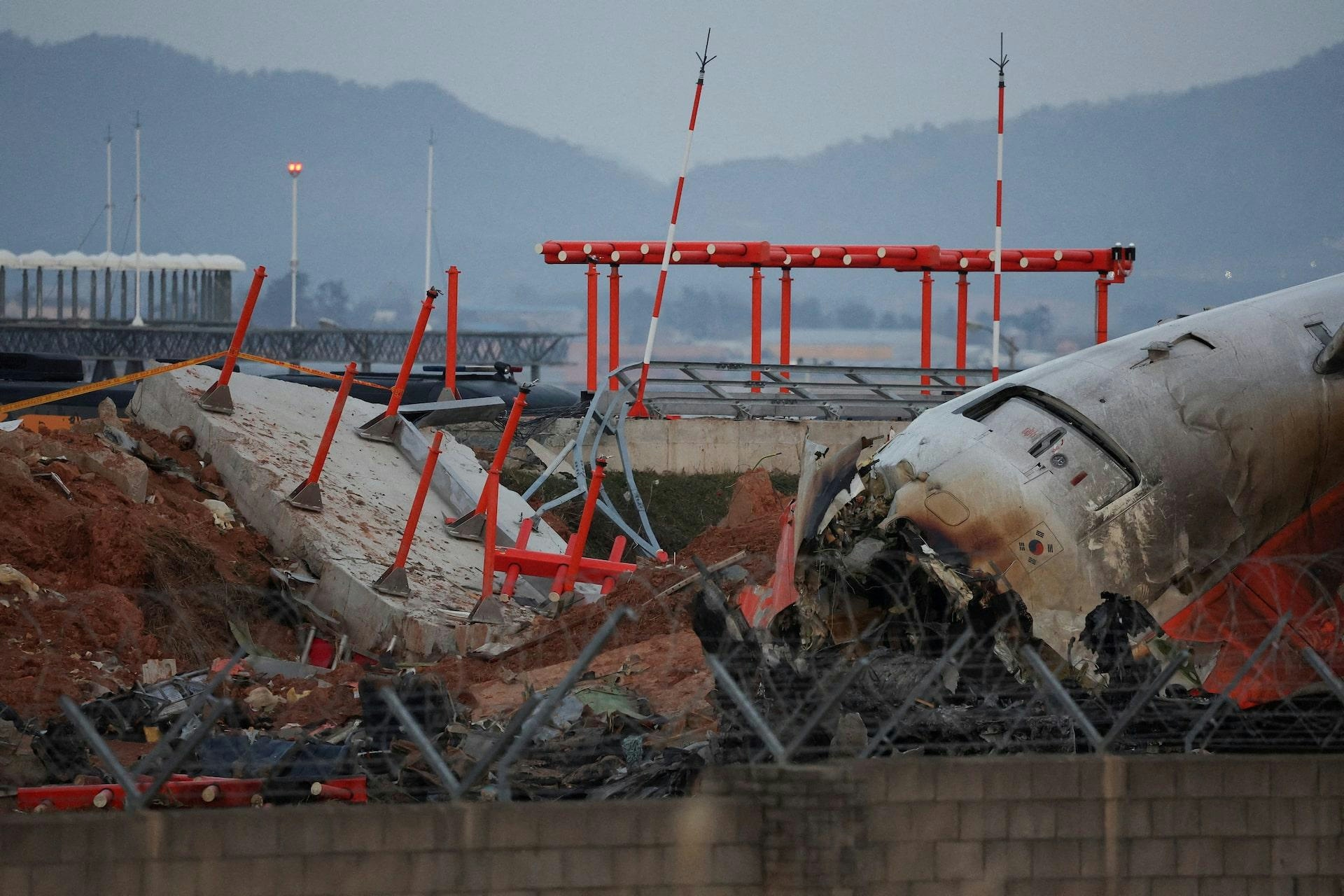
China Withholds Final Report on China Eastern 737 Crash Citing National Security
Four years after the tragic crash of China Eastern Flight MU5735, Chinese authorities have yet to release the final accident report, citing concerns over national security. This decision has sparked international scrutiny and raised significant questions regarding transparency and aviation safety standards within China.
Details of the Crash and Investigation
The incident occurred on March 21, 2022, when a Boeing 737-800 operating Flight MU5735 from Kunming to Guangzhou abruptly descended from cruising altitude and crashed in a remote area, resulting in the deaths of all 132 passengers and crew on board. During the rapid descent, air traffic controllers made repeated attempts to contact the flight crew but received no response.
Given the aircraft’s Boeing make, the U.S. National Transportation Safety Board (NTSB) was involved in the investigation. Following a Freedom of Information Act request, the NTSB released a report outlining findings from the cockpit voice recorder and flight data recorder. The report revealed that while cruising at 29,000 feet, both engine fuel switches were deliberately moved from RUN to CUTOFF—a maneuver that cannot be attributed to mechanical failure alone. The flight data recorder lost power when the second engine shut down at approximately 26,000 feet.
The cockpit voice recorder was initially unreadable, but audio was eventually recovered and transferred to Chinese authorities. The NTSB did not retain copies of this audio, leaving China as the sole custodian of this critical evidence. The cockpit crew consisted of three pilots: a captain with 6,709 flight hours, a first officer with 31,769 hours, and a second officer with 556 hours. The report does not identify which pilot initiated the engine shutdown.
Flight data further indicated that both engines were shut down simultaneously at the moment the aircraft lost control, coinciding with the disengagement of the autopilot. Throughout the descent, the flight data recorder captured continuous and forceful inputs on the control wheel, suggesting active manipulation of the controls, potentially by more than one pilot.
Implications of Withholding the Report
The Civil Aviation Administration of China (CAAC) has refrained from publishing a final accident report, intensifying speculation about the crash’s cause. This lack of transparency has frustrated international investigators and aviation experts, with some evidence pointing toward intentional sabotage.
China’s decision to withhold the report carries broader implications for the global aviation industry. It has raised concerns about the country’s aviation safety standards and its willingness to collaborate with international partners. In response, industry competitors have reportedly increased safety audits and intensified scrutiny of Chinese aviation practices. The aviation market has also reacted, with airlines adjusting routes and capacities amid heightened geopolitical tensions and shifting travel demand.
If the crash is confirmed to be intentional, it would represent the deadliest accident in China Eastern Airlines’ history and rank as the eighth deadliest involving a Boeing 737. The ongoing absence of a comprehensive report continues to cast a shadow over China’s aviation sector and its reputation within the global aviation community.

Etihad Airways Suspends Airbus A380 Flights on Key Route

Aditya Birla Group Seeks Approval for Aircraft Leasing in GIFT City

Qatar Airways Highlights Innovation and Connectivity at Arabian Travel Market 2026

Hong Kong's Five-Year Plan Includes Andrew Fan's Aircraft Parts Processing Hub Proposal

ACIA Aero Leasing Delivers ATR72-600 to Air Nostrum

RTX Appoints Jill Albertelli as Head of Pratt & Whitney

TAT Technologies Joins Beyond Aero Hydrogen Aircraft Program

AURAK Study Highlights Barriers to Air Taxi Adoption in Emerging Economies

Xiamen Air Selects Altitude for 787 Maintenance at Heathrow

Etihad and Swissport Extend Global Partnership
