
Orchestrate AI insights into action

Trending
Categories
Comparing the Boeing 777XF and Airbus A350F Freighters
Comparing the Boeing 777XF and Airbus A350F Freighters
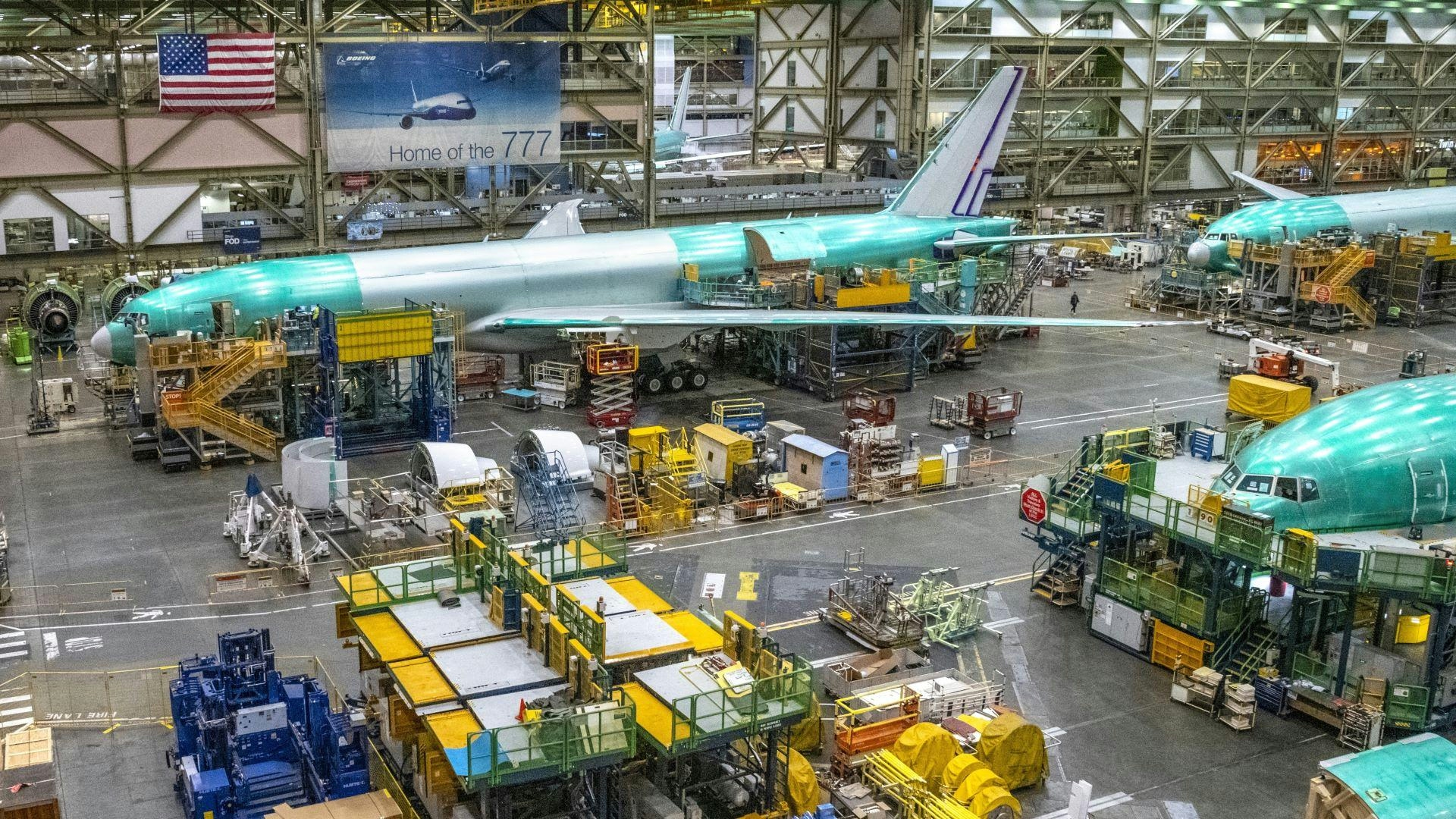
The cargo aviation sector is poised for a significant transformation as Boeing and Airbus prepare to introduce their latest widebody freighters: the Boeing 777XF and the Airbus A350F. These next-generation aircraft are designed to replace aging fleets of 747-400Fs and 767Fs, targeting integrators, lessors, and legacy cargo carriers alike. Although neither model has yet commenced revenue service, anticipation is mounting. The A350F is approaching its maiden flight, while the 777XF remains several years from delivery.
Sales Race: Airbus Leads, Boeing Maintains Competitive Value
In the competition for orders, Airbus currently holds a lead. By late August, the A350F had secured 115 firm orders, a figure strengthened by a recent undisclosed purchase of eight aircraft. Atlas Air Worldwide emerged as the largest single customer with a 20-aircraft order placed in March, followed by Air China Cargo’s commitment to ten additional units.
Boeing’s 777XF has garnered over 80 orders, with momentum increasing after MSC Air Cargo’s acquisition of five jets at the Farnborough Airshow in July. Qatar Airways remains the cornerstone of Boeing’s programme, having launched the 777XF in 2022 with a firm order for 34 aircraft and options for 16 more. This package is valued by Boeing at over $20 billion at list prices.
Both manufacturers have encountered challenges. Airbus lost its original launch customer when Air Lease withdrew seven aircraft in 2025, and Air France KLM subsequently reduced its order. Boeing’s primary difficulty has been maintaining the 777XF’s delivery schedule rather than its order volume. While Airbus leads by approximately 35 aircraft in total orders, Boeing’s larger average deal size, anchored by Qatar’s substantial commitment, keeps the competition closely matched in terms of overall value.
Operational Comparison: Range, Payload, and Efficiency
The two freighters offer distinct operational advantages. Boeing highlights the 777XF’s 5,000 nautical mile range with a 110-tonne payload capacity, a maximum structural payload of 118 tonnes, and 31 main deck pallet positions—representing a 17% increase in volume compared to the current 777F. Powered by the GE9X engine, Boeing positions the 777XF as the largest twin-engine freighter ever built, promising the lowest operating cost per tonne in its class.
Airbus emphasizes the A350F’s advanced composite airframe, which contributes to lower fuel consumption and reduced emissions. Although detailed specifications vary, Airbus focuses on efficiency, environmental performance, and the aircraft’s ability to comply with future regulatory standards.
Market Dynamics and Future Challenges
Industry response to both aircraft has been largely positive, with analysts viewing them as potential game-changers in the freighter market. Nevertheless, both face significant hurdles, including securing regulatory approvals, converting orders into deliveries, and responding to strategic initiatives from established competitors. Boeing is expected to continue enhancing its existing freighter portfolio, while Airbus prepares for the A350F’s maiden flight scheduled for September and its first delivery anticipated in the second half of 2027.
Looking beyond these immediate developments, new entrants could alter the competitive landscape. The recent international debut of China’s COMAC C919 passenger jet signals potential long-term competition, although the C919 still depends heavily on foreign components and lacks certification from major global aviation regulators.
Outlook
With the A350F approaching its first flight and the 777XF still under development, the contest for dominance in the freighter market remains open. Airbus currently leads in orders, but Boeing’s strong customer base and established reputation ensure a competitive race. As both programmes progress, the coming years will determine which aircraft—and which manufacturer—emerges as the leader in the evolving global cargo sector.

Etihad Airways Suspends Airbus A380 Flights on Key Route

Aditya Birla Group Seeks Approval for Aircraft Leasing in GIFT City

Qatar Airways Highlights Innovation and Connectivity at Arabian Travel Market 2026

Hong Kong's Five-Year Plan Includes Andrew Fan's Aircraft Parts Processing Hub Proposal

ACIA Aero Leasing Delivers ATR72-600 to Air Nostrum

RTX Appoints Jill Albertelli as Head of Pratt & Whitney

TAT Technologies Joins Beyond Aero Hydrogen Aircraft Program

AURAK Study Highlights Barriers to Air Taxi Adoption in Emerging Economies

Xiamen Air Selects Altitude for 787 Maintenance at Heathrow

Etihad and Swissport Extend Global Partnership
