
Orchestrate AI insights into action

Trending
Categories
Comparing the PD-35 and Rolls-Royce Trent 1000 Engines
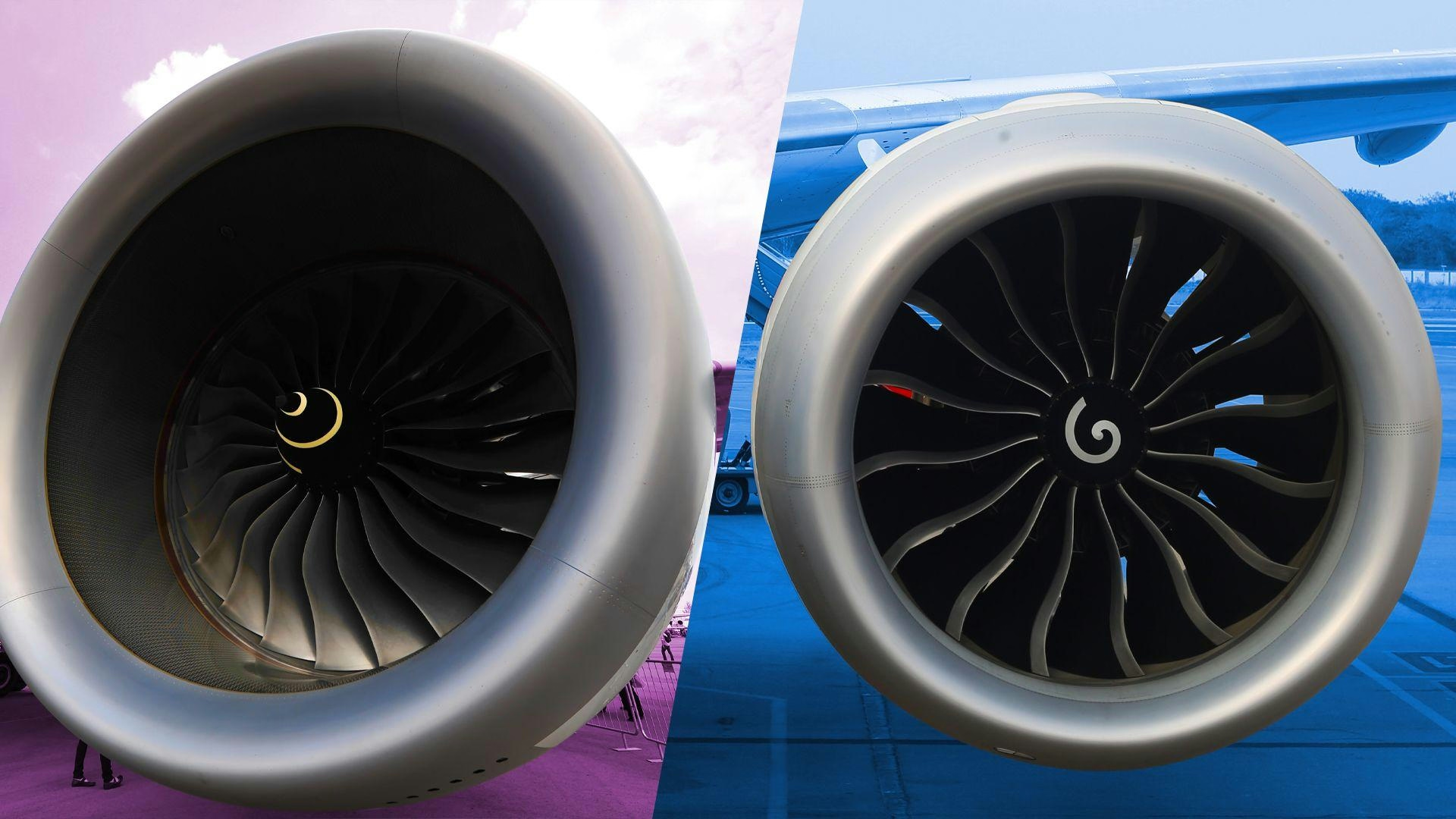
Comparing the PD-35 and Rolls-Royce Trent 1000 Engines
The Russian PD-35 and the British Rolls-Royce Trent 1000 are prominent contenders in the high-bypass turbofan engine market, primarily designed for widebody aircraft. While the Trent 1000 has been a proven powerplant for the Boeing 787 Dreamliner over several years, the PD-35 remains in the testing phase. Despite their differing stages of development, both engines aim to deliver substantial thrust and incorporate advanced technological features. This analysis compares the two engines across key criteria including thrust, technology, fuel efficiency, readiness, and strategic independence.
Thrust and Technological Advancements
The PD-35 distinguishes itself with its considerable size and power output. Engineered to provide a maximum takeoff thrust of 35 tons, it has demonstrated capabilities exceeding this threshold, reaching up to 40 tons in certain test configurations. The Trent 1000, depending on its variant, offers thrust ranging from 29 to 35 tons (64,000 to 78,000 pounds). In terms of raw thrust capacity, both engines are closely matched, resulting in a draw.
From a technological standpoint, the Trent 1000 is widely regarded as one of the most advanced production engines of its generation. It features a Full Authority Digital Engine Control (FADEC) system, a high bypass ratio of approximately 10:1, and wide-chord titanium fan blades that enhance aerodynamic efficiency. The PD-35 also incorporates FADEC and builds upon technologies developed for the PD-14 family. Its primary innovation lies in the use of composite fan blades, a technology Rolls-Royce plans to introduce in its forthcoming UltraFan engine. However, as the PD-35 is still undergoing testing, the practical effectiveness of these innovations remains to be validated. Consequently, this category is also considered a draw.
Fuel Efficiency and Operational Readiness
Fuel efficiency remains a critical consideration for airlines seeking to reduce operating costs and environmental impact. The Trent 1000 was specifically developed for the Boeing 787, contributing to the aircraft’s approximately 20% reduction in fuel consumption compared to its predecessor, the Boeing 767. While the PD-35 is anticipated to offer significant improvements in specific fuel consumption relative to earlier Russian engines, definitive performance data will only become available once it enters commercial service. At present, the Trent 1000 holds a clear advantage in fuel efficiency.
Regarding readiness, the Trent 1000 is a fully certified engine with millions of operational hours and a well-established service record. Rolls-Royce has continuously enhanced the engine’s durability and performance through design improvements, including new blade configurations that have extended time-on-wing and reduced aircraft-on-ground incidents. In contrast, the PD-35 has recently progressed beyond the design stage, with its first demonstrator undergoing bench testing. The engine still faces an extensive process of refinement, flight testing, and certification before entering commercial operation. This category decisively favors the Trent 1000.
Strategic Independence and Market Position
A notable advantage of the PD-35 is its status as Russia’s first fully domestic engine in its class, developed to reduce dependence on foreign suppliers. The Trent 1000, while a leader in its segment, remains fully integrated within Rolls-Royce’s global production and service network. This aspect grants the PD-35 a strategic edge in terms of national industrial autonomy.
In terms of market dynamics, the PD-35, developed by Pratt & Whitney, enters a sector dominated by the established Trent 1000. Initial market responses to the PD-35 have been positive, particularly due to its projected improvements in fuel efficiency and emissions. Nevertheless, Rolls-Royce has responded by focusing on durability upgrades and performance enhancements for the Trent 1000, maintaining strong customer loyalty and a robust order book. The Trent 1000’s ongoing improvements and proven reliability continue to present significant challenges for the PD-35 as it seeks to secure new contracts.
Conclusion
Currently, the Rolls-Royce Trent 1000 leads the comparison with advantages in operational readiness, proven fuel efficiency, and continuous technological upgrades, scoring 2:1 over the PD-35. The British engine’s established market presence and ongoing enhancements sustain its competitive position, while the PD-35’s future success will depend on its performance in commercial service and its ability to fulfill its ambitious technological objectives.

Etihad Airways Suspends Airbus A380 Flights on Key Route

Aditya Birla Group Seeks Approval for Aircraft Leasing in GIFT City

Qatar Airways Highlights Innovation and Connectivity at Arabian Travel Market 2026

Hong Kong's Five-Year Plan Includes Andrew Fan's Aircraft Parts Processing Hub Proposal

ACIA Aero Leasing Delivers ATR72-600 to Air Nostrum

RTX Appoints Jill Albertelli as Head of Pratt & Whitney

TAT Technologies Joins Beyond Aero Hydrogen Aircraft Program

AURAK Study Highlights Barriers to Air Taxi Adoption in Emerging Economies

Xiamen Air Selects Altitude for 787 Maintenance at Heathrow

Etihad and Swissport Extend Global Partnership
